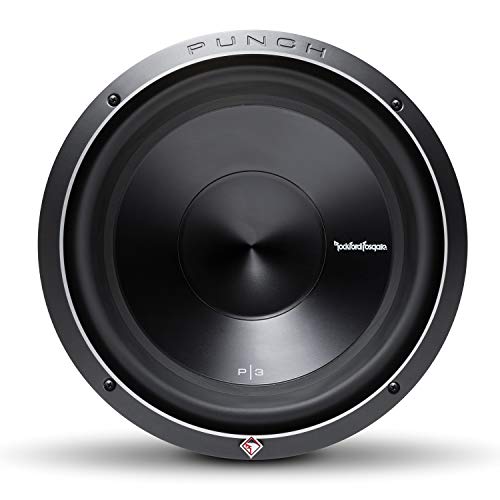
Have you ever installed new car speakers and noticed the bass sounds weak or the music feels flat? A common culprit is out of phase speakers. This happens when positive and negative wires are reversed on one speaker, causing it to push when another pulls. The result is canceled sound, especially in the low frequencies. Fortunately, you can test and fix speaker phase yourself with a few simple methods.
What Does Speaker Phase Mean?
In car audio, phase refers to the timing of the speaker cone movement. When all speakers move in and out together, they are in phase. This creates accurate sound with good bass and a centered soundstage. When one speaker is wired backwards, it moves opposite to the others. This is called being out of phase.
Out of phase speakers produce a thin, hollow sound. You might notice the bass seems to disappear, especially when you sit in the center of the car. The stereo image sounds unfocused, and vocals may seem to come from everywhere except the center.
Why Do Speakers Get Out of Phase?
Most phase issues happen during installation. If you are replacing speakers and accidentally swap the positive and negative wires on one side, that speaker will be out of phase. It is an easy mistake to make, especially if the factory wiring colors are not clear or if you are working in a tight space.
Another cause is using aftermarket speakers with different terminal configurations. Some speakers have positive on the left, others on the right. If you assume the connection points are the same as the old speaker, you could wire it incorrectly.
How to Test Speaker Phase by Ear
You can often detect phase issues by listening carefully. Play a track with a strong bass line and set the fade to the center. If you notice the bass is weak or seems to come from behind you, suspect a phase problem.
Next, use the balance control to isolate one speaker. Listen to the left front speaker alone, then the right front. If the bass sounds fuller when you listen to one speaker alone compared to both together, you likely have a phase issue.
- Play a bass-heavy track and switch between mono and stereo if your head unit has that option.
- Listen for a lack of low end when both speakers are on.
- Check that the soundstage is not lopsided.
Using a 9 Volt Battery to Test Phase
You can test each speaker’s polarity with a standard 9 volt battery. This is a reliable method that works on any speaker. Start by disconnecting the speaker wire from the head unit or amplifier. Then, touch the battery terminals to the speaker wires.
When you touch the positive battery terminal to the positive wire and the negative to the negative wire, the speaker cone should push outward. If it pulls inward, the polarity is reversed. Mark each wire clearly so you know the correct connection.
Repeat this for every speaker in your system. Make sure all speakers push outward when connected to the battery in the same orientation. This ensures they are all in phase with each other.
Checking Phase with a Multimeter
If you have a multimeter, you can test phase without removing the speaker. Set the multimeter to DC voltage and connect the probes to the speaker terminals. When you gently push the speaker cone inward, a positive voltage should appear if the positive probe is on the positive terminal.
This method works well for speakers that are already mounted. It requires a bit of care to avoid damaging the cone. Use a soft touch and watch the meter’s reading.
If the meter shows a negative voltage, your wiring is reversed. You will need to correct the polarity at the speaker or the head unit.
Fixing Phase Issues
Once you identify which speakers are out of phase, the fix is simple: swap the positive and negative wires on that speaker. You may need to remove the speaker from the door or dash to access the terminals.
Use wire strippers to expose a little wire, then reconnect with the correct polarity. Solder and heat shrink tubing are best, but crimp connectors work too. Ensure the connections are secure and insulated.
After fixing the wiring, reinstall the speaker and listen to the system. The bass should be stronger, and the music should have a clear center image. You may be surprised how much better everything sounds.
When Phase Issues Are Not the Problem
If your speakers are all in phase but you still have weak bass, look for other issues. Poor speaker placement, small magnets, or lack of sound deadening can all reduce bass. Also check if your head unit has any bass boost or loudness settings that may be causing distortion.
Some aftermarket amplifiers have a phase switch on the subwoofer channel. If you have a sub, try flipping that switch to see if it improves the blend with your main speakers.
Remember, correct phase is just one piece of a good car audio system. But it is a critical one that is often overlooked.
Frequently Asked Questions
How do I know if my car speakers are out of phase?
Listen for weak bass and a hollow, unfocused sound. If the bass improves when you fade to one speaker, you likely have a phase issue.
Can I test speaker phase without removing the speakers?
Yes, you can use a multimeter set to DC voltage. Gently push the cone and check the voltage reading to determine polarity.
What happens if only one speaker is out of phase?
It will cancel sound with the other speaker, especially low frequencies. Bass will be weak and the stereo image will be off.