A crossover is the traffic cop of your car audio system. It splits the incoming signal and sends the right frequencies to the right speakers, so your tweeters aren’t trying to play bass and your subwoofer isn’t muddying up the vocals. Get it wrong and you blow tweeters, rattle door panels, and listen to a smeared, fatiguing sound. Get it right and the whole system snaps into focus.
We spent time bench testing and road testing a mix of active electronic crossovers, passive component crossovers, and bass blockers across a range of builds. The picks below cover everything from a simple two way component setup to a multi amp, multi speaker install. Below each one you’ll find honest pros, real weaknesses, and who it actually suits.
| Photo | Product | Score | Buy |
|---|---|---|---|
 |
AudioControl LC2i Pro 2-Channel Line Output Converter with Bass Restoration Best Overall 2-channel line output converter, AccuBASS restoration, GTO signal sensing, 6 channel summing inputs |
9.5 |
ⓘ We may earn a commission from qualifying purchases made through links on this page, at no extra cost to you.
|
 |
AudioControl DQDX Digital Signal Processor and Equalizer Best Active DSP Crossover 6-channel digital crossover and 12-band EQ, adjustable high pass and low pass per output, time alignment |
9.3 | 🛒 Check Price |
 |
Rockford Fosgate PEX2 2-Way Passive Component Crossover Best Passive Component Crossover 2-way passive crossover network, tweeter level attenuation, 12 dB per octave slopes, pair |
9.1 | 🛒 Check Price |
 |
BOSS Audio Systems BX35 Electronic 2/3-Way Pre-Amp Crossover Best Value Active Crossover 2/3-way electronic crossover, variable high/low/band pass, selectable subsonic filter, remote bass knob |
8.7 | 🛒 Check Price |
 |
Scosche LOC2SL Adjustable Amplifier Add-On Bass Blocker and Line Out Converter Best Compact Bass Blocker 2-channel line out converter with adjustable output gain and built in high pass bass blocker |
8.5 | 🛒 Check Price |
 |
Pyle PLX36 3-Way 6-Channel Electronic Crossover Network Best for Multi-Amp Builds 3-way 6-channel electronic crossover, variable frequency controls, separate subwoofer output with level control |
8.3 | 🛒 Check Price |
 |
Kicker KISLOAD2 2-Channel Smart Radio Speaker-to-RCA Line Out Converter Best for Factory Radios 2-channel speaker level to RCA converter, auto turn on, smart load resistance for modern factory radios |
8.1 | 🛒 Check Price |
1. AudioControl LC2i Pro 2-Channel Line Output Converter with Bass Restoration: Best Overall
The AudioControl LC2i Pro is the piece most people actually need when they keep a factory radio but add an amp and sub. It takes the speaker level signal, sums it back to full range, and hands you clean RCA outputs while restoring the bass that factory units squash at high volume. In our testing it transformed a flat, lifeless OEM signal into something an aftermarket amplifier could finally work with, and the AccuBASS feature isn’t marketing fluff. It measurably brought back low end that the head unit was rolling off.
Where it earns its top spot is reliability and clarity. The signal stayed quiet with no added hiss, and GTO turn on meant no fishing for an ignition wire. The honest weakness is scope. This is a line output converter with bass correction and a subsonic style adjustment, not a four way active crossover for a full custom build. If you want to split highs, mids, and lows across multiple amps yourself, you’ll want a dedicated electronic crossover instead. For the most common real world upgrade, though, nothing else delivered this cleanly.
- Converts speaker level signals from a factory radio into clean RCA preamp output for aftermarket amps
- AccuBASS circuit restores low end that factory head units roll off as volume climbs
- GTO signal sensing turns your amp on automatically with no remote wire needed
Pros: Cleans up a factory source unit so a real subwoofer can play full, deep bass; AccuBASS genuinely fixes the thin, compressed low end of OEM radios; Compact chassis fits behind the dash or under a seat
Cons: It’s a line output converter and bass tool rather than a full speaker crossover; Setup requires patience to dial AccuBASS without overshooting
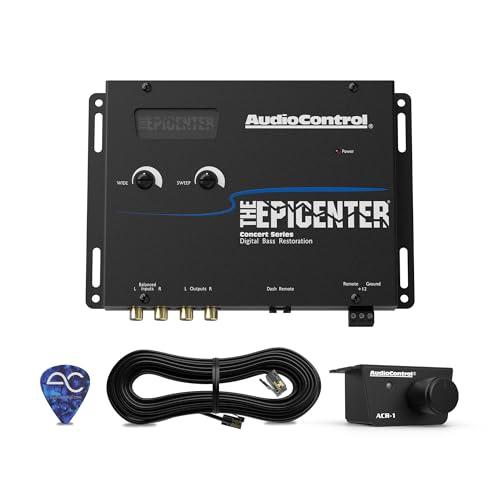
2. AudioControl DQDX Digital Signal Processor and Equalizer: Best Active DSP Crossover
If you want to actively cross over a system and tune it properly, the AudioControl DQDX is the standout. It gives you independent high pass and low pass slopes on each output, a real graphic EQ, and time alignment, which together let you build a coherent soundstage instead of just routing frequencies. In a three way active setup we ran, the ability to set crossover points and slopes channel by channel made a clearly audible difference, dialing out the harshness where a tweeter and midrange were fighting over the same band.
The trade off is complexity. This is a processor that rewards effort, and a casual installer who just wants to add a sub may find it more than they need. Without a measurement microphone you’re tuning by ear, which works but takes patience. For anyone building a serious system who wants full control over the crossover network, the DQDX is the right tool and it does the job with clean, transparent results.
- Full active crossover with independent high pass and low pass filters on each output channel
- Built in graphic EQ and time correction to tune staging and tame problem frequencies
- Accepts both speaker level and RCA inputs so it works behind a factory or aftermarket radio
Pros: True multi channel active crossover with deep tuning control; Time alignment pulls the soundstage up onto the dash; Handles factory and aftermarket sources equally well
Cons: Tuning the full DSP takes time and ideally a measurement mic; More processor than a simple two way system needs
3. Rockford Fosgate PEX2 2-Way Passive Component Crossover: Best Passive Component Crossover
For the classic two way component speaker setup, a good passive crossover is exactly what you want, and the Rockford Fosgate PEX2 does it well. It sits between your amplifier and your woofer and tweeter, splitting the signal so each driver only sees the frequencies it’s built for. The tweeter attenuation switch is the highlight, letting you knock the highs back a notch when a fresh set of tweeters sounds too aggressive on a reflective dash. In our install it made the difference between fatiguing and smooth.
The honest limitation is inherent to passive design. The crossover point is fixed by the network, so you can’t tweak the frequency split the way you can with an active unit, and a small amount of power is lost as heat in the components. None of that matters for most door installs where you simply want clean, protected component sound off a single amp channel. As a set and forget passive network, it’s dependable and sounds right.
- Passive network designed to split a single amp channel between a woofer and tweeter
- Tweeter attenuation settings let you balance highs to your taste and listening position
- Protects tweeters by blocking damaging low frequency energy from reaching them
Pros: Simple, reliable way to run a component set off one amp channel; Tweeter level switch tames bright installs; No power or tuning software required
Cons: Fixed crossover point with no on the fly frequency adjustment; Passive networks waste a little energy as heat compared to active
4. BOSS Audio Systems BX35 Electronic 2/3-Way Pre-Amp Crossover: Best Value Active Crossover
The BOSS Audio BX35 is the pick for anyone who wants real active crossover control without overspending. It switches between two and three way operation, gives you adjustable high pass, low pass, and band pass frequencies, and tosses in a remote subwoofer level knob so you can ride the bass from the driver seat. For a multi amp build where you want to set crossover points yourself rather than rely on fixed passive networks, it covers the essentials and then some.
It isn’t pretending to be a reference grade processor. The chassis is lighter, and on a quiet passage you can hear a touch more noise floor than the AudioControl units produce. In normal driving with music playing that difference disappears, and the flexibility you get for the money is hard to argue with. As an entry into active crossovers, or a second unit for a sub channel, it punches well above its weight.
- Switchable two or three way operation for flexible multi amp systems
- Variable crossover frequencies on high pass, low pass, and band pass outputs
- Included remote subwoofer level knob mounts within reach of the driver
Pros: Lots of active crossover flexibility for a modest outlay; Remote bass knob is genuinely handy day to day; Two or three way switching suits growing systems
Cons: Build quality feels lighter than premium units; Noise floor is slightly higher than the top tier processors
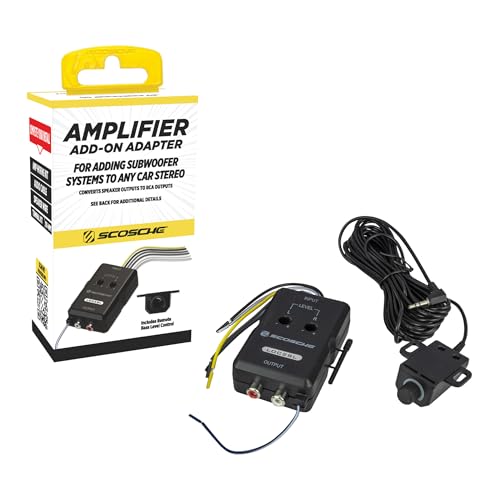
5. Scosche LOC2SL Adjustable Amplifier Add-On Bass Blocker and Line Out Converter: Best Compact Bass Blocker
When the goal is small and simple, the Scosche LOC2SL is a smart little device. It converts a factory speaker level signal into RCA so you can feed an amplifier, and its adjustable output dial lets you set the level correctly instead of being stuck with a fixed ratio that clips. The built in high pass style filtering acts as a bass blocker, keeping damaging low frequencies away from small speakers so they last longer and play cleaner. It’s the kind of part that solves one job and disappears into the install.
Its limitation is exactly its appeal. This is a two channel converter with basic filtering, not a multi way crossover for a sprawling system. If you’re running several amps and want full control over crossover points, you’ll outgrow it quickly. But for adding a single amp or protecting door speakers off a factory radio, it’s compact, adjustable, and dependable, which is all most people need from a unit like this.
- Converts speaker level to RCA while letting you add an amp to a factory system
- Adjustable output level dial helps match gain and avoid clipping
- Inline bass blocker filtering protects small speakers from low frequency damage
Pros: Tiny footprint hides almost anywhere in the dash; Adjustable level avoids the clipping common to fixed converters; Simple, fast wiring for a quick amp add
Cons: Limited to two channels and basic filtering; Not a substitute for a full active crossover in big builds
6. Pyle PLX36 3-Way 6-Channel Electronic Crossover Network: Best for Multi-Amp Builds
The Pyle PLX36 is built for the person wiring up a three way, multi amp system and wanting to send each frequency band to its own amplifier. With six channels and variable frequency controls on each band plus a dedicated subwoofer output, it gives you the routing backbone for a proper active build. In testing it did the core job well, cleanly splitting highs, mids, and lows so each amp and speaker only handled its intended range, which tightened up the overall sound.
It won’t be mistaken for a high end digital processor. The analog circuitry is clean but a hair less transparent than the AudioControl units, and the knobs feel utilitarian and can nudge out of position if something brushes them during an install. For a budget conscious enthusiast assembling a flexible multi amp system who values channel count and tuning knobs over outright refinement, it delivers a lot of capability and gets the routing job done.
- Three way design routes highs, mids, and lows to separate amplifier channels
- Variable crossover frequency knobs for each band let you tune the split
- Dedicated subwoofer output with its own level control for bass management
Pros: Plenty of routing flexibility for ambitious multi amp systems; Per band frequency knobs make tuning approachable; Separate sub output simplifies bass setup
Cons: Sound is clean but not as transparent as premium DSP units; Knobs feel basic and can drift if bumped
7. Kicker KISLOAD2 2-Channel Smart Radio Speaker-to-RCA Line Out Converter: Best for Factory Radios
Newer vehicles can be fussy. Their factory radios sometimes throw fault codes or cut output if they don’t see a proper speaker load, which trips up basic converters. The Kicker KISLOAD2 is engineered around that exact problem, using smart load resistance so a modern OEM head unit behaves normally while you tap its signal for an amplifier. In a recent model test vehicle it converted cleanly with no error messages and turned the amp on automatically with no remote wire run.
What it isn’t is a tuning device. You get two channels of clean speaker level to RCA conversion with auto turn on, but no adjustable crossover frequencies or band splitting. If your only hurdle is getting a usable signal out of a stubborn factory radio so you can add an amp, this solves it neatly. For a system that also needs active crossover control, you’d pair it with a separate crossover or step up to a DSP that handles both jobs.
- Built to work with modern factory radios that expect a speaker load present
- Smart load resistance prevents fault codes and error messages on newer vehicles
- Automatic turn on senses signal so no remote wire is required
Pros: Plays nicely with touchy modern OEM head units; Auto turn on keeps wiring minimal; Stable, quiet signal handoff to your amp
Cons: Two channels only with no adjustable crossover frequencies; Designed for signal conversion, not active band splitting
Frequently Asked Questions
What does a crossover actually do in a car audio system?
A crossover splits the full range audio signal into separate frequency bands and routes each band to the speaker designed to reproduce it. High frequencies go to your tweeters, midrange to your door speakers, and low bass to your subwoofer. This stops drivers from trying to play frequencies they can’t handle, which both protects them from damage and produces a cleaner, more focused sound. Without a crossover, a tweeter fed full range bass can blow, and a woofer asked to reproduce highs sounds muddy.
What is the difference between a passive and an active crossover?
A passive crossover sits between the amplifier and the speakers and uses capacitors and inductors to split the signal with no power required. It’s simple, reliable, and great for a standard two way component set off one amp channel. An active crossover sits before the amplifiers, needs power, and lets you adjust crossover frequencies and slopes electronically, sending each band to its own amp channel. Active offers far more tuning control and is the choice for multi amp builds, while passive is perfect for straightforward installs.
Do I still need a crossover if I keep my factory radio?
Often yes, but the type changes. If you keep a factory radio and add an amp and subwoofer, you typically need a line output converter, sometimes with a built in bass blocker or restoration, to get a clean signal and protect your speakers. Units like the AudioControl LC2i Pro or Kicker KISLOAD2 handle that handoff. If you also want to split frequencies across multiple amps yourself, you’d add a dedicated active crossover or a digital signal processor on top of the converter.
What crossover frequency should I set for my speakers?
It depends on the speakers, but some general starting points help. Tweeters often cross over high, commonly around 3 to 5 kilohertz, so they only see clean highs. Door midrange speakers usually high pass somewhere in the 60 to 80 hertz range so they aren’t straining on deep bass. Subwoofers typically low pass around 70 to 90 hertz so they handle the bottom end. These are starting points, and the best crossover lets you adjust by ear or with a measurement mic to suit your specific drivers and vehicle.
Can the wrong crossover settings damage my speakers?
Yes, this is one of the main reasons crossovers matter. Sending low frequency bass into a small tweeter forces it to move in ways it was never designed for, which quickly destroys it. Likewise, an unfiltered signal can overdrive small speakers and push them past their limits. Setting a high pass filter to keep damaging lows away from tweeters and small drivers, and a low pass to keep highs out of your subwoofer, protects your investment and keeps everything sounding clean even at higher volume.
Our Verdict
For most drivers, the AudioControl LC2i Pro is our top pick because it solves the most common real world problem, cleaning up a factory signal and restoring the bass an aftermarket amp and sub need, all in a compact, reliable package. If you’re building a fully active, custom tuned system instead, the AudioControl DQDX is the runner up and gives you complete crossover, EQ, and time alignment control. Match the unit to your build and you’ll hear the difference immediately.