Choosing the right ply for your trailer tires is really a question of load range, and getting it wrong is how blowouts happen on the highway. The old “ply” number printed on a tire is now expressed as a load range letter: Load Range C is the modern equivalent of 6 ply, D is 8 ply, E is 10 ply and F is 12 ply. The higher the letter, the more air pressure the tire holds and the more weight each tire can safely carry. The trick is matching that capacity to your loaded trailer weight with a healthy safety margin left over.
We looked at how these Special Trailer (ST) tires actually behave under sustained heat, what their real load capacity is at rated pressure, and how the rubber holds up against the trailer tire’s worst enemy, which is sidewall cracking from sitting in the sun. Below are seven trailer tires worth your attention, ranked best first and spread across the load ranges so you can pick the right ply for your setup rather than just buying the biggest letter you can find.
| Photo | Product | Score | Buy |
|---|---|---|---|
 |
Carlisle Radial Trail HD Trailer Tire (Load Range E) Best Overall Load Range E (10 ply), radial ST, steel-belted, 65 mph rated |
9.5 |
ⓘ We may earn a commission from qualifying purchases made through links on this page, at no extra cost to you.
|
 |
Goodyear Endurance Trailer Tire (Load Range E) Premium Pick Load Range E (10 ply), 87 mph capable, Made in USA, DuraWall sidewall |
9.4 | 🛒 Check Price |
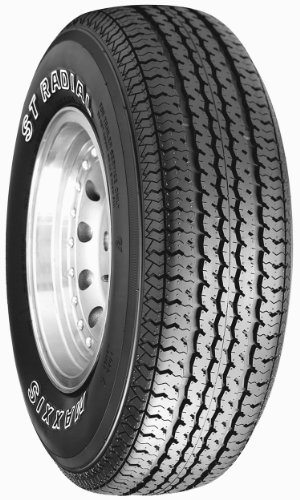 |
Maxxis M8008 ST Radial Trailer Tire (Load Range D) Best Load Range D Load Range D (8 ply), radial ST, double steel belts, low-heat compound |
9.2 | 🛒 Check Price |
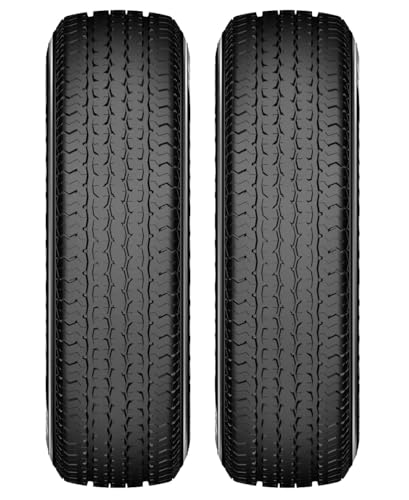 |
Trailer King ST Radial Trailer Tire (Load Range C) Best Load Range C Load Range C (6 ply), radial ST, 65 mph rated, utility-trailer focused |
8.9 | 🛒 Check Price |
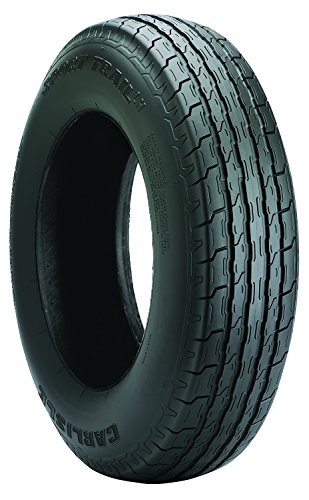 |
Carlisle Sport Trail LH Bias Trailer Tire (Load Range C) Best Bias-Ply Load Range C (6 ply), bias-ply ST, stiff sidewall, low-speed haul |
8.6 | 🛒 Check Price |
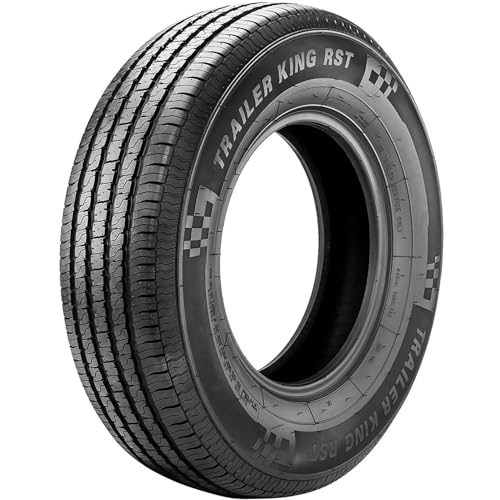 |
Trailer King RST Radial Trailer Tire (Load Range E) Best Value Heavy-Duty Load Range E (10 ply), radial ST, steel-belted, 65 mph rated |
8.4 | 🛒 Check Price |
|
🚗
|
Freestar M-108+ ST Radial Trailer Tire (Load Range F) Best Heavy 12-Ply Load Range F (12 ply), radial ST, high-pressure, max-capacity haul |
8.2 | 🛒 Check Price |
1. Carlisle Radial Trail HD Trailer Tire (Load Range E): Best Overall
The Carlisle Radial Trail HD in Load Range E is our top pick because it nails the most common real-world need: a heavy-duty 10 ply radial for tandem-axle utility, boat and travel trailers that actually get loaded up. The steel-belted radial construction runs noticeably cooler than the budget bias-ply tires people often default to, and heat is what kills trailer tires. With the higher rated pressure of Load Range E, you get a genuine safety margin so you aren’t riding the ragged edge of capacity every time the trailer is full.
The honest weakness is that this tire is built for weight, not finesse. On a light single-axle trailer that never approaches the load rating, the stiff E-rated carcass can ride a little harsh and you’re carrying more tire than you need. It’s also heavier to handle during a roadside change. But for the buyer who wants one tire that disappears into the background on long hauls, the Radial Trail HD earns the top spot.
- Load Range E construction holds high pressure for heavy tandem-axle trailers
- Steel belts and a deeper tread for long highway tread life
- Optimized shoulder design runs cooler on sustained tows
Pros: Excellent heat resistance over long highway miles; High load capacity gives a comfortable safety margin; Reliable radial ride with less trailer sway
Cons: Heavier and stiffer than lighter load ranges; Load Range E is overkill for small single-axle utility trailers
2. Goodyear Endurance Trailer Tire (Load Range E): Premium Pick
If you want the most trusted name in trailer tires, the Goodyear Endurance in Load Range E is the one most seasoned RV and boat owners recommend without hesitation. The DuraWall sidewall technology directly targets the failure mode that strands people, which is sidewall cuts and cracking, and the tire carries a higher speed rating than the typical 65 mph ST tire. For a 10 ply trailer tire you trust to do 70 on the interstate, this is the benchmark.
The catch is value relative to its competitors, since the Endurance sits firmly at the premium end of the trailer tire shelf. You’re paying for the brand, the USA manufacturing and the proven track record, and for a daily-driven utility trailer that may be more tire than the job demands. But for travel trailers and long-distance towing where a failure means a ruined trip, the confidence is genuinely worth it.
- DuraWall technology resists cuts and curb-side sidewall damage
- Built in the USA with a higher speed rating than most ST tires
- Scuff guard rib protects the sidewall against curbs
Pros: Premium build quality and consistent balance; Strong cut and puncture resistance from DuraWall; Higher speed rating suits faster interstate towing
Cons: Sits at the top of the price ladder for ST tires; Availability in less common sizes can be spotty
3. Maxxis M8008 ST Radial Trailer Tire (Load Range D): Best Load Range D
The Maxxis M8008 is the trailer tire boat owners pass around as a recommendation, and in Load Range D it hits the sweet spot of 8 ply capacity for mid-weight single and tandem-axle trailers. The double steel-belted radial design keeps the contact patch stable, and Maxxis built the compound specifically to fight heat, which is exactly what you want for a tire that bakes in the sun at the boat ramp and then runs hot on the way home.
Its limitation is simply capacity ceiling: Load Range D tops out below the heaviest loaded fifth wheels and big tandem RVs, so buyers near the upper end of the weight range should step up to an E. The M8008 also commands a price closer to premium tires despite being an 8 ply. For mid-weight trailers though, it’s a very dependable, cool-running tires you can bolt on.
- Double steel-belted radial for a stable, low-flex carcass
- Engineered for low rolling resistance and reduced heat buildup
- Even wear profile that extends usable tread life
Pros: Runs cool thanks to a heat-resistant compound; Long, even tread wear; Strong reputation among boat trailer owners
Cons: Load Range D capacity may not suit the heaviest fifth wheels; Premium pricing for an 8 ply tire
4. Trailer King ST Radial Trailer Tire (Load Range C): Best Load Range C
Not every trailer needs a 10 ply tire, and the Trailer King ST Radial is our pick when Load Range C (6 ply) is genuinely the right answer. For light single-axle utility trailers, small landscaping trailers and pop-up campers, a C-rated radial gives you a smoother ride and better fuel economy than overbuilt heavy tires while still carrying the load with margin to spare. Matching ply to actual weight is smarter than just buying the biggest number, and this is the tire that proves it.
The trade-off is obvious: this is a 6 ply tire, so the moment your loaded trailer creeps toward heavier territory it’s the wrong choice and you should move up a load range. Tread life also trails the premium tires here. But used within its weight window on a light trailer, the Trailer King delivers honest performance at a value that’s hard to argue with.
- Load Range C suits light single-axle utility and small trailers
- Radial construction for a smoother ride than bias-ply
- Center groove design helps tracking and reduces sway
Pros: Ideal ply for lighter utility and landscaping trailers; Good value for the capacity; Smoother radial ride at highway speed
Cons: 6 ply capacity is too low for heavy hauling; Tread life is shorter than premium options
5. Carlisle Sport Trail LH Bias Trailer Tire (Load Range C): Best Bias-Ply
Bias-ply still has a place, and the Carlisle Sport Trail LH is the tire to reach for when you want stiff sidewalls over highway smoothness. In Load Range C, the bias construction gives this tire excellent resistance to point loads and sway, which is why it remains popular on boat trailers and utility trailers that spend more time backing down ramps and maneuvering than cruising the interstate. For short trips and lower speeds, that stiff carcass is an asset.
The honest weakness is heat. Bias-ply tires build heat faster than radials at sustained highway speed, so on long, fast hauls a radial will run cooler and last longer. Treat the Sport Trail as a low-speed, short-distance, stiff-sidewall specialist rather than a road-trip tire. Within that role, it’s a durable and sensible value.
- Bias-ply construction gives stiff sidewalls for heavy point loads
- Resists trailer sway when parking and maneuvering
- Proven design for boat and utility trailers
Pros: Very stiff sidewalls handle uneven loads well; Strong sway resistance at low speed; Good value for an occasional-use trailer
Cons: Bias-ply runs hotter than radial at highway speed; Lower speed tolerance over long distances
6. Trailer King RST Radial Trailer Tire (Load Range E): Best Value Heavy-Duty
When you need a 10 ply Load Range E tire but don’t want to pay premium money, the Trailer King RST Radial is the value play. It delivers genuine E-rated capacity with steel-belted radial construction, so heavy tandem-axle trailers get the air pressure and load support they need without breaking the bank. For owners replacing a full set of four or six tires at once, that value adds up fast while still keeping you in the right load range.
The reason it sits here rather than higher is refinement and consistency. It doesn’t wear as long as the Carlisle Radial Trail HD or carry the cut resistance of the Goodyear Endurance, and reports of batch-to-batch variation mean you should inspect each tire on arrival. But as a no-nonsense heavy-duty replacement that puts you in the correct ply, it does the job well.
- Load Range E capacity for heavy tandem-axle trailers
- Steel-belted radial for stable highway tracking
- Reinforced shoulders to resist scrubbing in turns
Pros: Strong 10 ply capacity at a sensible value; Steel belts add stability and durability; Good fit for budget-conscious heavy haulers
Cons: Not as refined or long-wearing as premium E tires; Quality control can vary between batches
7. Freestar M-108+ ST Radial Trailer Tire (Load Range F): Best Heavy 12-Ply
For the heaviest haulers, ply goes all the way up to Load Range F (12 ply), and the Freestar M-108+ is built for exactly that extreme. Big fifth wheels, gooseneck equipment trailers and loaded toy haulers can exceed the capacity of even E-rated tires, and that’s where this high-pressure 12 ply radial earns its place. Each tire carries a serious load at maximum inflation, giving heavy rigs the margin they need to tow safely without overloading the tires.
This is also the easiest tire to buy by mistake. Twelve ply is far more tire than a normal utility, boat or travel trailer will ever need, and the high inflation pressure makes for a firm, stiff ride that only makes sense when the weight is actually there. Buy it only if your loaded trailer weight genuinely demands Load Range F. For everyone else, an E or D is the correct, more comfortable choice.
- Load Range F (12 ply) for the heaviest fifth wheels and toy haulers
- High-pressure rating maximizes per-tire load capacity
- Solid shoulder blocks for stability under maximum weight
Pros: Highest load capacity of any tire on this list; Designed for big fifth wheels and gooseneck trailers; Stable under maximum loaded weight
Cons: 12 ply is far too much tire for ordinary trailers; Stiff, firm ride and demands high inflation pressure
Frequently Asked Questions
What does ply mean on trailer tires?
Ply originally referred to the literal number of fabric layers in a tire, but modern trailer tires use a load range letter instead. The letter tells you how much air pressure the tire can hold and therefore how much weight it can carry. Load Range B equals 4 ply, C equals 6 ply, D equals 8 ply, E equals 10 ply and F equals 12 ply. No tire today actually contains that many physical layers, the rating just describes the equivalent strength and capacity.
What ply trailer tire do I need?
Match the ply to your trailer’s fully loaded weight, not its empty weight. Find your trailer’s Gross Vehicle Weight Rating, divide by the number of tires, and pick a load range whose per-tire capacity comfortably exceeds that number. Light single-axle utility trailers are usually fine on Load Range C, mid-weight boat and tandem trailers suit D, heavy travel trailers and tandems want E, and only the heaviest fifth wheels and toy haulers need F. Always leave a safety margin rather than running right at the limit.
Is a higher ply trailer tire always better?
No, more ply isn’t automatically better. A higher load range tire carries more weight but also rides stiffer, requires higher inflation pressure, and can be heavier and harder to handle. Putting a 12 ply Load Range F tire on a light utility trailer just gives you a harsh ride and wasted capacity. The right answer is the lowest load range that still carries your loaded weight with a sensible safety margin, not the biggest letter on the shelf.
What is the difference between radial and bias-ply trailer tires?
Radial tires have belts running across and around the tire, which lets them run cooler, ride smoother and last longer at highway speed. Bias-ply tires have layers crossing at angles, giving stiffer sidewalls that resist sway and handle point loads well at low speed but build heat faster on long fast hauls. For most highway towing, a radial ST tire is the better choice, while bias-ply suits short-distance, low-speed trailers that maneuver more than they cruise.
How long do trailer tires last regardless of ply?
Trailer tires usually age out before they wear out. Most should be replaced every three to five years even with plenty of tread left, because the rubber degrades from sun, ozone and sitting still under load. Sidewall cracking, not tread depth, is the most common reason a trailer tire fails. Keep them properly inflated to the pressure on the sidewall, cover them when parked for long periods, and inspect for cracks before every trip no matter what load range they’re.
Our Verdict
The right ply for your trailer tires is the one that matches your loaded weight, and across the load ranges our top pick is the Carlisle Radial Trail HD in Load Range E, which delivers cool-running, heavy-duty 10 ply capacity that covers the most common towing needs with a real safety margin. If you tow faster or longer and want the most proven sidewall durability, the Goodyear Endurance is the premium runner up worth the extra spend. For lighter trailers, don’t overbuy, a Load Range C or D radial from this list will ride better and serve you just as well within its weight window.

