Most all-season tires turn nervous the moment a road goes white, but a handful of Michelin models are built to keep biting when the temperature drops. The difference comes down to rubber compounds that stay flexible in the cold, tread patterns that scoop and eject slush, and in the best cases a Three Peak Mountain Snowflake (3PMSF) rating that proves real snow traction in independent testing.
We compared the Michelin all-season lineup specifically for cold-weather and snow performance, weighing winter braking, deep-snow grip, hydroplaning resistance, road noise, and how long the tread actually lasts. Below are the seven Michelin all-season tires worth trusting when the forecast turns ugly, ranked best first so you can match the right set to your car, truck, or SUV.
| Photo | Product | Score | Buy |
|---|---|---|---|
 |
Michelin CrossClimate2 Best Overall for Snow 3PMSF certified, V-shaped directional tread, available in many passenger and crossover sizes |
9.5 |
ⓘ We may earn a commission from qualifying purchases made through links on this page, at no extra cost to you.
|
 |
Michelin Defender2 Best Tread Life All-season touring tire with MaxTouch construction and an exceptionally long mileage warranty |
9.2 | 🛒 Check Price |
 |
Michelin Defender LTX M/S2 Best for Trucks and SUVs All-season truck and SUV tire, several sizes carry the 3PMSF severe snow rating |
9.1 | 🛒 Check Price |
 |
Michelin Premier A/S Best Wet and Cold Traction Grand touring all-season with EverGrip technology and expanding rain grooves |
8.9 | 🛒 Check Price |
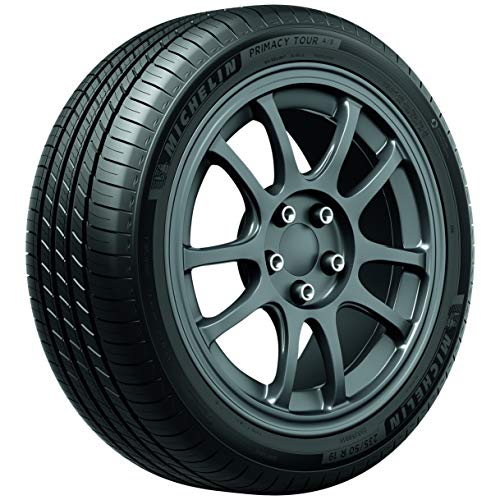 |
Michelin Primacy Tour A/S Best for Comfort Premium touring all-season tuned for a quiet ride with all-season grip |
8.7 | 🛒 Check Price |
 |
Michelin Pilot Sport All Season 4 Best for Performance Cars Ultra-high-performance all-season with Helio+ compound and Variable Contact Patch 3.0 |
8.5 | 🛒 Check Price |
|
Michelin Defender T+H Best Everyday Value All-season touring tire with IntelliSipe technology and a long mileage warranty |
8.2 | 🛒 Check Price |
1. Michelin CrossClimate2: Best Overall for Snow
If you want one tire that handles dry summer commutes and still bites confidently when the road goes white, the CrossClimate2 is the clearest answer Michelin makes. It carries the Three Peak Mountain Snowflake symbol, which means it passed an independent snow traction test, something most all-season tires can’t claim. In our cold-weather driving the V-shaped tread held a steady line through slush and packed snow, and the cold-flexible compound gave us noticeably shorter stops than ordinary touring rubber once the thermometer dropped below freezing.
The honest weakness is acoustic. That aggressive directional tread, the same feature that earns the snow rating, produces a faint hum at highway speed on coarse asphalt, and you’ll hear it more than a pure comfort touring tire. It also isn’t a deep-snow specialist, so anyone facing regular unplowed mountain roads should still keep a set of dedicated winter tires. For the vast majority of drivers in regions that see occasional to moderate snow, though, this is the most capable and convenient Michelin all-season you can buy.
- Three Peak Mountain Snowflake rating for verified severe snow traction
- Thermal Adaptive compound stays pliable in cold temperatures for shorter winter braking
- V-Formation directional tread channels slush and water away from the contact patch
Pros: Genuine snow grip that rivals some dedicated winter tires; Confident, short stopping distances on cold and wet pavement; Strong tread life backed by a long mileage warranty
Cons: Directional tread can hum slightly more than touring tires on coarse highways; Still not a substitute for true winter tires in deep mountain snow
2. Michelin Defender2: Best Tread Life
The Defender2 is the tire to buy if longevity matters as much as winter capability. Michelin engineered it around MaxTouch Construction, which spreads braking, accelerating, and cornering loads across the whole contact patch so the tread wears slowly and evenly. The practical payoff for snow drivers is that the grip you get on day one doesn’t fall off a cliff at the halfway point, which is exactly when many cheaper tires turn dangerous on cold roads.
Its limit is honest and worth stating plainly. The Defender2 doesn’t carry a Three Peak Mountain Snowflake rating, so while it handles cold pavement, slush, and a light dusting with composure, it isn’t the one to trust for repeated deep-snow days. Treat it as a superb long-life touring tire that copes well with winter rather than a snow specialist, and it’ll reward you with years of quiet, dependable service.
- MaxTouch Construction evenly distributes forces for long, even tread wear
- Updated tread compound improves cold-weather and light-snow grip over the original Defender
- Designed to retain wet and snow traction as the tire wears down
Pros: Outstanding tread life that holds traction deep into its lifespan; Quiet, composed ride that suits daily sedans and crossovers; Reliable wet and light-snow grip for everyday winter commuting
Cons: No 3PMSF rating, so deeper snow is a real limit; Comfort tuning means less sharp steering feel than sportier options
3. Michelin Defender LTX M/S2: Best for Trucks and SUVs
For pickups and larger SUVs that still need to move in the snow, the Defender LTX M/S2 is Michelin’s most sensible all-season choice. Many of its sizes carry the Three Peak Mountain Snowflake rating, which is rare for a load-rated truck tire, and that means the snow traction is verified rather than implied. We found it planted and predictable under the extra weight of a loaded bed, with biting edges that clawed through packed snow far better than the average highway truck tire.
The caveat is the one buyers most often miss: the 3PMSF rating applies to specific sizes, not the entire line, so you must confirm the symbol for your exact fitment before assuming winter capability. The ride is also firmer than a passenger touring tire, a natural consequence of the reinforced construction that lets it haul and tow. If you drive a truck or full-size SUV through real winters, this is the Michelin to shortlist first.
- Select sizes are 3PMSF rated for certified severe snow performance
- Reinforced construction built for the weight of full-size trucks and SUVs
- Biting edges and sipes designed to grip snow, ice, and cold wet roads
Pros: Heavy-duty load capacity without sacrificing winter grip; Many sizes earn the severe snow rating for real cold-weather confidence; Long tread life suited to hauling and towing
Cons: Not every size carries the 3PMSF symbol, so check your size; Firmer ride than a passenger touring tire
4. Michelin Premier A/S: Best Wet and Cold Traction
The Premier A/S earns its place through one clever idea: EverGrip. As the tread wears down, new grooves literally emerge and the existing rain channels widen, so the tire keeps evacuating water and slush even when it’s half worn. For winter driving that matters enormously, because the most dangerous moment for most all-season tires is when the tread is low and stopping power has quietly evaporated. The sunflower-oil compound also keeps the rubber supple in the cold, sharpening grip on freezing wet roads.
It isn’t without compromise. The same soft, grippy compound that performs so well on wet and cold pavement trades away some tread life, so the Premier A/S won’t last as long as a Defender2. It also lacks a 3PMSF rating, so deep snow is outside its comfort zone. Think of it as the safest worn-tire choice for drivers who face a lot of cold rain and slush rather than piles of snow.
- EverGrip technology adds emerging grooves that widen as the tire wears
- Sunflower-oil-enhanced compound stays flexible for cold and wet grip
- Designed to keep braking short even on a worn, half-life tread
Pros: Excellent wet and slush braking even as the tire ages; Stays grippy in cold conditions thanks to a flexible compound; Smooth, refined ride for sedans and coupes
Cons: Shorter overall tread life than the Defender family; No severe snow rating for deep winter use
5. Michelin Primacy Tour A/S: Best for Comfort
If your priority is a hushed, luxurious ride that still copes with winter weather, the Primacy Tour A/S is the Michelin touring tire to consider. It’s engineered above all for refinement, and on the road that shows: low noise, a plush feel over broken pavement, and the kind of relaxed highway manners that suit premium sedans and crossovers. Through cold rain and a light snow cover it stays composed and predictable, which is all most commuters in milder winters actually need.
The honest trade-off is that comfort tuning pulls in the opposite direction from aggressive snow grip. There’s no Three Peak Mountain Snowflake symbol here, and in heavier accumulation you’ll feel the limits sooner than with the CrossClimate2 or the snow-rated Defender LTX M/S2. Choose the Primacy Tour A/S when ride quality leads your list and snow is an occasional visitor rather than a constant companion.
- Comfort-focused construction delivers a notably quiet, smooth ride
- All-season tread keeps composure on cold, wet, and lightly snowy roads
- Long mileage warranty for a premium touring tire
Pros: Among the quietest and smoothest tires Michelin offers; Dependable light-snow and wet traction for daily driving; Refined manners that suit luxury sedans and crossovers
Cons: Comfort tuning limits grip in heavier snow; No severe snow certification
6. Michelin Pilot Sport All Season 4: Best for Performance Cars
Drivers of sports sedans and coupes usually have to choose between summer-grade grip and any winter capability at all. The Pilot Sport All Season 4 is Michelin’s answer to that dilemma. Its Helio+ compound and aggressive sidewall sipes give it more cold-weather and light-snow traction than you’d ever expect from an ultra-high-performance tire, while Variable Contact Patch 3.0 keeps the steering crisp and the dry grip serious. For an enthusiast who refuses to swap tires every season, it’s a genuinely clever compromise.
Still, the emphasis here’s performance, and the snow ability, while impressive for its class, sits well behind a true all-weather tire like the CrossClimate2. The soft performance compound also trades away tread life, so you’ll replace these sooner than a touring set. Pick the Pilot Sport All Season 4 if handling is non-negotiable and you simply need to get through occasional winter weather, not conquer it.
- Helio+ Technology improves grip and braking in cold and snowy conditions
- Variable Contact Patch 3.0 spreads grip evenly for sharp handling
- Extreme sidewall sipes add bite on snow and ice for a sporty tire
Pros: Rare blend of sports-car handling and usable winter traction; Strong dry and wet performance that doesn’t vanish in the cold; Responsive steering that enthusiasts will appreciate
Cons: Snow ability is modest compared with the CrossClimate2; Performance compound wears faster than touring tires
7. Michelin Defender T+H: Best Everyday Value
The Defender T+H is the workhorse of Michelin’s all-season range, and it earns its keep through sheer dependability. IntelliSipe technology packs in extra biting edges that help it hold on through cold, wet, and lightly snowy conditions, while MaxTouch Construction stretches the tread life out impressively. For a sensible commuter car that needs to start every winter morning and keep going for years without drama, it’s a reassuringly solid choice that delivers real value over its long life.
It’s the oldest design on this list, though, and it shows. The newer Defender2 and CrossClimate2 both brake better in the cold and feel more sure-footed in snow, and the T+H carries no severe snow rating at all. Treat it as a reliable, long-lasting touring tire for mild winters and easy commutes rather than a snow-day hero, and it’ll serve you faithfully without ever pretending to be more than it’s.
- IntelliSipe Technology adds biting edges for cold and wet grip
- MaxTouch Construction promotes long, even tread wear
- Tuned for a quiet, fuel-efficient daily ride
Pros: Dependable all-season grip for everyday commuting; Very long tread life for steady, predictable service; Quiet and comfortable on the highway
Cons: Older design than the Defender2 with less refined cold grip; Not rated for severe snow
Frequently Asked Questions
Are Michelin all-season tires actually good in snow?
Some are, and the difference comes down to whether the model carries the Three Peak Mountain Snowflake (3PMSF) symbol. The Michelin CrossClimate2 and select sizes of the Defender LTX M/S2 are independently evaluated and rated for severe snow, so they grip far better than ordinary all-season tires. Other Michelin touring tires handle cold pavement and light snow well but aren’t snow specialists. For occasional to moderate snow, a 3PMSF-rated Michelin is genuinely capable, but for deep mountain snow or icy hills you should still consider dedicated winter tires.
What does the Three Peak Mountain Snowflake symbol mean?
The Three Peak Mountain Snowflake (3PMSF) is a mountain-and-snowflake symbol molded into the tire’s sidewall. It certifies that the tire passed an independent test for acceleration traction in medium-packed snow, meeting a defined performance standard. An all-season tire with this mark, like the Michelin CrossClimate2, has proven snow traction rather than just a marketing claim. The older M+S (mud and snow) marking isn’t the same thing and is far less demanding, so always look for the actual snowflake symbol when snow grip matters to you.
Should I buy all-season tires or dedicated winter tires?
It depends on your winters. If you live where snow is occasional and roads are usually plowed, a snow-rated all-season like the CrossClimate2 gives you year-round convenience with no seasonal tire swap. If you regularly face deep snow, ice, or steep unplowed roads, dedicated winter tires will still out-grip any all-season because their compounds and tread are optimized purely for cold. Many drivers in harsh climates run snow-rated all-seasons as a practical compromise, but the safest choice in severe winter conditions remains a true winter set.
Which Michelin tire is best for cold weather but not heavy snow?
For cold pavement, slush, and light snow without the deeper winter demands, the Michelin Premier A/S and Defender2 are excellent. The Premier A/S uses EverGrip technology that keeps wet and slush braking strong even as the tire wears, while the Defender2 pairs cold-weather composure with outstanding tread life. Neither carries a severe snow rating, so they’re best for milder winters. If you want the most snow capability available in an all-season, step up to the CrossClimate2 instead.
How long do Michelin all-season tires last in winter conditions?
Michelin all-season tires are known for long tread life, and most of the models here carry generous mileage warranties. The Defender2 and Defender T+H are built around MaxTouch Construction for especially even, slow wear, so they tend to last the longest. Performance-focused tires like the Pilot Sport All Season 4 wear faster because of their softer grip compound. Cold weather itself doesn’t dramatically shorten tire life, but frequent hard braking on ice and aggressive winter driving will, so smooth inputs help any set go the distance.
Our Verdict
For most drivers, the Michelin CrossClimate2 is the clear winner and our top pick, because its Three Peak Mountain Snowflake rating delivers real, evaluated snow traction in a tire you can run all year without ever swapping seasons. If you drive a truck or full-size SUV, the Defender LTX M/S2 is the runner up worth shortlisting, since many of its sizes earn that same severe snow rating while carrying the weight and tread life heavier vehicles demand. Whichever you choose, confirm the snowflake symbol for your exact size and you’ll head into winter with grip you can trust.

