Every car sold in the United States since 1996 is required by law to support OBD2, the On-Board Diagnostics second-generation standard mandated by the EPA and California Air Resources Board. When something goes wrong, the system stores a Diagnostic Trouble Code, or DTC, and lights up your check-engine light. Knowing how to read that code, and what each character in it actually means, saves you from guessing games at the parts counter and helps you have an informed conversation with any mechanic.
This guide walks through exactly how OBD2 codes are structured, how to retrieve them with a scan tool, and how to tell the difference between a generic SAE code (the P0 family) and a manufacturer-specific code (the P1 family), so you know whether your code applies to every car on the road or only to your specific make and model.
What OBD2 Is and Why It Matters
OBD2 stands for On-Board Diagnostics, version 2. It replaced the earlier, fragmented OBD1 system, which varied so wildly between manufacturers that a technician needed a different scan tool for every brand. Under pressure from the EPA and CARB, Congress required all light-duty vehicles sold in the US after January 1, 1996 to use a standardized OBD2 system. The SAE (Society of Automotive Engineers) and ISO (International Organization for Standardization) developed the underlying protocols, and the EPA enforced adoption as part of emissions compliance.
The practical result is that any OBD2-compliant scan tool, from an inexpensive Bluetooth dongle to a professional-grade unit, can communicate with any compliant vehicle through the same 16-pin Data Link Connector (DLC), which is always located within 3 feet of the steering column per SAE J1962. The system continuously monitors dozens of sensors, emission controls, and mechanical systems, and when a reading falls outside calibrated limits, it logs a DTC and triggers the Malfunction Indicator Lamp, commonly called the check-engine light.
How to Retrieve Codes: The Scan Tool Process
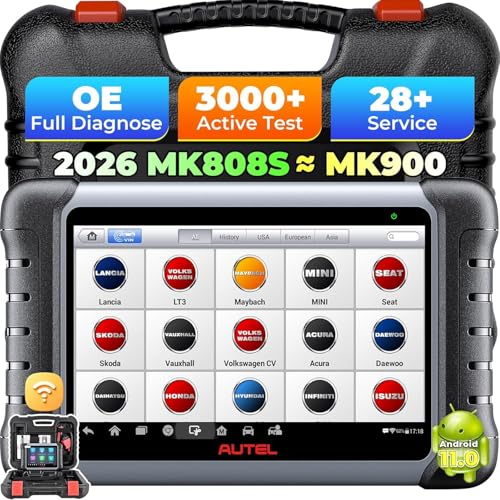
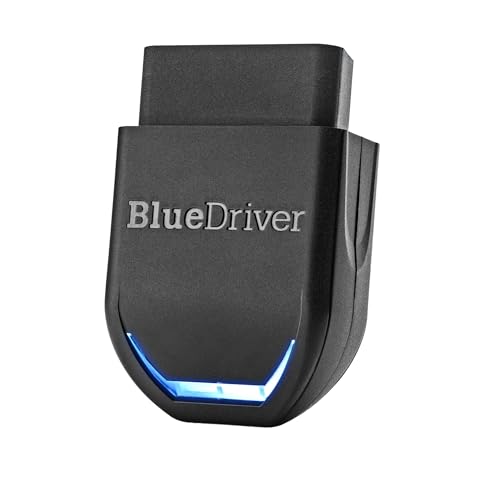
You need a scan tool or code reader to pull DTCs. Options range from Bluetooth OBD2 adapters paired with a smartphone app to dedicated handheld readers to professional shop-grade scanners. All of them follow the same basic connection process.
- Locate the DLC: The 16-pin OBD2 port is almost always under the dashboard on the driver’s side, often near the steering column or fuse box. On some trucks it may be behind a small cover.
- Plug in with ignition off: Connect the scan tool or adapter to the DLC before turning the key. This protects both the tool and the vehicle’s ECU from voltage spikes.
- Turn ignition to ON (not Start): Many basic code readers only need key-on, engine-off. This powers the ECU and allows communication without running the engine.
- Select Read Codes or Retrieve DTCs: On a handheld reader, navigate to the Read Codes menu. On a Bluetooth app, tap the scan or read function. The tool requests stored codes from the ECU via one of the OBD2 protocols (ISO 9141-2, KWP2000, CAN bus, etc.).
- Record every code: Write down all codes shown, including any Pending codes. Pending codes are faults detected once but not yet confirmed across multiple drive cycles; they don’t always trigger the check-engine light immediately.
- Clear codes only after noting them: Clearing codes erases freeze-frame data, which records sensor values at the exact moment the fault occurred. That freeze-frame can be critical for diagnosis, so document it before clearing.
Some advanced scan tools also read Live Data (real-time sensor streams) and perform Mode 6 monitoring, which shows the raw test results the ECU uses to set pending codes. This is beyond the scope of basic reading but is available on mid-range and professional tools.
How to Decode an OBD2 Code: Every Character Explained
Every DTC is exactly five characters long: one letter followed by four digits. Each position carries specific meaning defined by SAE J2012, the standard that governs DTC formatting.
- Position 1, the letter: Tells you which system the fault belongs to. P = Powertrain (engine, transmission, emissions). B = Body (airbags, climate, windows). C = Chassis (ABS, traction control, steering). U = Network and communication faults between modules.
- Position 2, the first digit (0, 1, 2, or 3): This is the most misunderstood character. 0 means the code is generic and standardized across all OBD2 vehicles (SAE-defined). 1 means the code is manufacturer-specific. 2 is SAE-reserved for expansion (rare in practice). 3 is also largely manufacturer-reserved depending on the system.
- Position 3, the second digit: Identifies the subsystem within the main category. For powertrain codes: 1 = Fuel and Air Metering. 2 = Fuel and Air Metering (injector circuit). 3 = Ignition System or Misfire. 4 = Auxiliary Emission Controls. 5 = Vehicle Speed Controls and Idle Control. 6 = Computer Output Systems. 7 and 8 = Transmission.
- Positions 4 and 5, the last two digits: Together with position 3, these form a three-digit number identifying the specific fault within that subsystem. For example, in P0301, the 301 means cylinder 1 misfire detected.
Putting it together: P0301 breaks down as P (powertrain), 0 (generic/SAE), 3 (ignition/misfire subsystem), 01 (cylinder 1 misfire). That structure is the same regardless of whether you’re looking at a Ford F-150 or a Honda Civic.
P0 vs P1: Generic SAE Codes vs Manufacturer-Specific Codes
The single most practically important distinction in OBD2 diagnostics is whether a code is a P0 (generic) or a P1 (manufacturer-specific). They look similar but behave very differently during diagnosis.
P0 codes (generic): These are defined by SAE J2012 and mean exactly the same thing on every OBD2-compliant vehicle. P0420, for example, always means Catalyst System Efficiency Below Threshold, Bank 1. Every scan tool can read it, and every repair manual entry for that code applies. When you search a P0 code online, the diagnostic steps are largely universal.
P1 codes (manufacturer-specific): These are defined by the individual automaker and aren’t standardized. P1300 on a Toyota means Igniter Circuit Malfunction. P1300 on a BMW means something entirely different. P1300 on a Ford may not even exist. Without knowing the vehicle make, a P1 code is meaningless. You must look up the code in that specific manufacturer’s service manual or a reputable manufacturer-specific database.
A few important points about P1 codes:
- Not all scan tools display P1 code definitions. Basic code readers often show the code number but display no description for P1 codes because they aren’t in the generic SAE library. You need a manufacturer-enhanced scan tool or a subscription database to get the description.
- P1 codes cover things the manufacturer chose to monitor beyond the federal minimum. This often includes enhanced transmission diagnostics, variable valve timing faults, brand-specific fuel system tests, and secondary air injection details that go beyond what the EPA required.
- A P1 code can sometimes accompany a P0 code for the same underlying fault. The P0 code meets federal reporting requirements; the P1 code gives the technician more granular information about the same event.
- P2 codes are a newer expansion. The SAE reserved P2 for additional generic codes as the standard grew. P2 codes work like P0 codes, fully standardized across all manufacturers, and began appearing as vehicles added more complex drivetrains, hybrid systems, and direct injection.
- P3 codes can be either generic or manufacturer-specific depending on the digit that follows, similar to the P2 range.
The bottom line: if your code starts with P0 or P2, you can diagnose it from any universal reference. If it starts with P1, you must identify your make and model first before the number means anything.
Common P0 Codes and What They Actually Mean
Knowing the structure helps, but seeing common examples makes the system concrete. The following are among the most frequently encountered P0 codes in US vehicles.
- P0171 / P0174: System Too Lean, Bank 1 / Bank 2. The engine is getting too much air or too little fuel relative to the target air-fuel ratio. Common causes include a vacuum leak, a dirty or failing mass airflow sensor, a weak fuel pump, or clogged injectors.
- P0300 through P0308: Random or Cylinder-Specific Misfire Detected. P0300 is a random/multiple misfire. P0301 through P0308 point to individual cylinders (1 through 8). Causes range from worn spark plugs and bad ignition coils to low compression or a fuel delivery fault.
- P0420: Catalyst System Efficiency Below Threshold, Bank 1. The downstream oxygen sensor reading suggests the catalytic converter isn’t converting exhaust gases efficiently. It doesn’t always mean the cat is dead; a faulty oxygen sensor can trigger this code as well.
- P0442 / P0455: Evaporative Emission System Leak Detected, Small / Large Leak. The EVAP system, which captures fuel vapors, isn’t holding pressure. Often caused by a loose or damaged gas cap, a cracked hose, or a faulty purge valve. P0442 is a small leak; P0455 is a large leak or gross leak.
- P0700: Transmission Control System Malfunction. This is a gateway code indicating the transmission control module (TCM) has set a fault. It typically accompanies one or more transmission-specific codes (P07xx range) that give the actual detail.
Freeze Frame Data and What to Do With It
Every time the ECU sets a DTC, it simultaneously captures a snapshot of key sensor values at the moment the fault was detected. This snapshot is called freeze frame data, and it’s stored alongside the code. Most scan tools with a Read Codes function also offer a Freeze Frame or View Freeze Frame option.
Freeze frame typically includes:
- Engine RPM at the time of the fault
- Vehicle speed
- Engine load percentage
- Coolant temperature
- Short-term and long-term fuel trim values
- Throttle position
- Intake manifold absolute pressure or mass airflow reading
This data matters because many faults are intermittent. A code may set once under specific conditions, then not return for days. Freeze frame tells you whether the fault happened at idle or highway speed, cold or warm, under light or heavy load. That context narrows the diagnosis significantly. A lean code (P0171) that occurred at idle with high short-term fuel trim points in a different direction than the same code that set at wide-open throttle.
When you clear codes, the freeze frame is erased. Always record or photograph freeze frame data before you clear, especially if the vehicle passed an OBD2 readiness monitor check recently and you need to re-run drive cycles for a state inspection.
OBD2 Readiness Monitors and State Emissions Testing
Beyond storing codes when something fails, the OBD2 system runs continuous and non-continuous self-tests called readiness monitors. These confirm that individual emissions-related systems have been evaluated during normal driving and are functioning within spec. Examples include the catalyst monitor, the oxygen sensor monitor, the EVAP system monitor, the EGR monitor, and the misfire monitor.
State emissions inspections in most US states query these readiness monitors directly, not just whether a code is present. A vehicle can fail an OBD2 inspection if too many monitors show as Not Ready, even with no active codes. This is why clearing codes shortly before a test creates a problem: the monitors reset and need a complete drive cycle, sometimes multiple specific drive cycles, to run and mark themselves complete.
The number of monitors allowed to be Not Ready varies by state and model year. In most states following EPA OBD2 inspection guidelines, 1996-2000 model year vehicles can have up to 2 incomplete monitors and still pass. 2001 and newer vehicles are allowed only 1 incomplete monitor. Some states allow zero. Check your specific state DMV or EPA inspection rules, as requirements differ.
If you clear codes before a test, drive the vehicle through a complete, varied drive cycle, including cold start, city driving with stops, and highway cruising, before going to the inspection station. Many manufacturers publish their specific drive cycle sequence for resetting all monitors, and these are available through the NHTSA safety information system and the EPA’s OBD program resources.
Frequently Asked Questions
Can I drive my car with an OBD2 code stored?
It depends entirely on which code is stored and whether the check-engine light is solid or flashing. A solid check-engine light means a fault has been confirmed but the ECU considers it stable. Many solid-light codes, such as a loose gas cap or a minor EVAP leak, are safe to drive on for a short period while you arrange a diagnosis. A flashing or blinking check-engine light is a different situation entirely. A flashing light indicates an active misfire severe enough to damage the catalytic converter. In that case, you should reduce speed, avoid hard acceleration, and have the vehicle diagnosed as soon as possible. Continuing to drive hard with a flashing light can turn a spark plug replacement into a several-hundred-dollar catalytic converter job.
Will clearing OBD2 codes make my check-engine light go away for good?
Only if the underlying fault is resolved first. Clearing codes with a scan tool erases the stored DTCs and turns off the check-engine light, but if the condition that triggered the code is still present, the ECU will detect the fault again on the next drive cycle and the light will return. In some cases it comes back within minutes. Clearing codes is a useful diagnostic step, as it lets you confirm whether a fault is persistent or intermittent, but it isn’t a repair. It also resets readiness monitors, which can cause a vehicle to fail a state emissions inspection if driven to the station immediately after clearing.
What is the difference between a stored code and a pending code?
A stored code, also called a confirmed or active code, has been detected by the ECU across the required number of consecutive drive cycles to be considered a confirmed fault. This triggers the check-engine light. A pending code is a fault that the ECU detected once but hasn’t yet confirmed across the required drive cycles. The check-engine light doesn’t illuminate for a pending code alone. Pending codes are important because they give you an early warning of a developing problem. If you scan your vehicle and find a pending code, investigate it before it becomes a confirmed code and a failed inspection.
Do I need a professional scan tool or will a basic code reader work?
For simply reading and clearing generic P0 codes, an inexpensive code reader or a Bluetooth OBD2 adapter with a free app is sufficient. These tools communicate over the standard OBD2 modes and can retrieve stored codes, pending codes, and basic freeze frame data on any compliant vehicle. Where basic tools fall short is with manufacturer-specific (P1) codes, live data streaming, bidirectional controls (commanding a component to actuate for testing), module-specific diagnostics, and advanced functions like ABS or transmission coding. For routine fault reading and pre-purchase checks, a basic reader handles the job. For deeper diagnosis, especially on complex modern vehicles with multiple control modules, a professional or enthusiast-grade scanner provides significantly more capability.
What does it mean if my scanner shows no codes but the check-engine light is on?
This can happen for several reasons. The most common is a communication issue between the scan tool and the vehicle’s ECU, often caused by a damaged OBD2 port, a blown fuse feeding the DLC (typically a 10A or 15A fuse in the under-dash fuse box), or a tool that doesn’t support the vehicle’s communication protocol. Some older vehicles between 1994 and 1995 used early OBD2 ports but weren’t fully compliant, and some scan tools won’t communicate with them. It’s also possible the check-engine light is illuminated by a module the basic tool doesn’t poll, such as the ABS or airbag module on a vehicle where those modules share the check-engine lamp. A professional scan tool that reads all modules simultaneously will identify which module set the light.
The Bottom Line
OBD2 is a federally standardized system designed to make vehicle diagnostics accessible and consistent, and once you understand how the five-character code is structured and what the difference between a P0 and a P1 code means in practice, reading trouble codes becomes a straightforward process rather than a mystery. Retrieve the code, record the freeze frame, look up the code against the correct reference for your make, and diagnose the root cause before clearing anything.
Related Guides
- 7 Best OBD Code Readers for Cars in 2026 (Real-World Evaluated)
- Best OBD2 Scanners for Android (Researched and Compared)
- 7 Best OBD2 Scanners for Honda in 2026 (Bidirectional and Live Data Evaluated)
- 7 Best OBD2 Scanners for Volkswagen (Researched and Compared)
- 7 Best OBD Car Scanners (Researched and Compared)
- What Is a Bidirectional Scan Tool