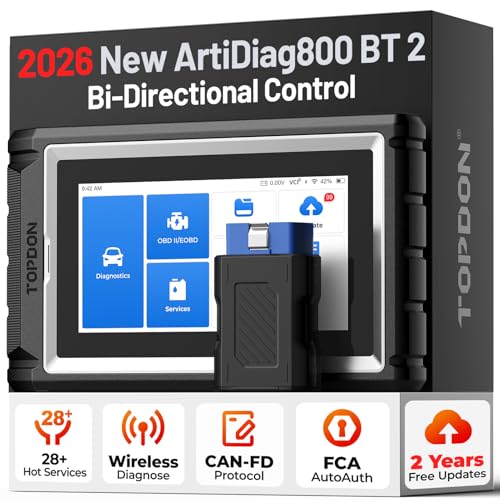
In the complex world of modern automotive diagnostics, a simple OBD-II code reader often falls short. Vehicles today are essentially computers on wheels, requiring sophisticated tools to truly understand their intricate systems. This is where a bidirectional scan tool becomes indispensable. Far more advanced than its unidirectional counterparts, this device doesn’t just read data; it actively communicates with and controls various vehicle components, offering unparalleled diagnostic capabilities.
For professional technicians and advanced DIY enthusiasts in the United States, understanding and utilizing a bidirectional scan tool is no longer a luxury but a necessity for accurate troubleshooting, efficient repairs, and proper vehicle maintenance.
Carly Universal OBD2 Adapter for BMW
Understanding the Basics: Unidirectional vs. Bidirectional
To grasp the significance of a bidirectional scan tool, it’s crucial to first differentiate it from a standard, unidirectional OBD-II scanner. A basic OBD-II scanner, while useful for retrieving Diagnostic Trouble Codes (DTCs) and viewing live data streams (like engine RPM or coolant temperature), operates primarily in one direction: it requests information from the vehicle’s Engine Control Unit (ECU) and other modules, and the vehicle responds. This is akin to asking a question and receiving an answer.
A bidirectional scan tool, by contrast, establishes a two-way communication link. It can’t only receive data but also send commands to the vehicle’s modules, actively controlling specific components and initiating diagnostic routines. This ‘command and control’ capability is what truly sets it apart, transforming it from a mere reader into a powerful diagnostic and repair instrument.
How Bidirectional Scan Tools Operate
The operational backbone of a bidirectional scan tool lies in its ability to interact directly with the vehicle’s various Electronic Control Units (ECUs) and modules. Modern vehicles are equipped with numerous ECUs managing everything from the engine and transmission to anti-lock brakes (ABS), airbags, and climate control. These ECUs communicate over internal networks, most commonly the Controller Area Network (CAN bus), a standard defined by the Society of Automotive Engineers (SAE).
- Communication Protocols: Bidirectional tools support plenty of diagnostic communication protocols beyond the basic OBD-II (SAE J1979 standard for diagnostic test modes), including manufacturer-specific protocols that allow deeper access to proprietary systems.
- Module Interaction: When a command is sent, the tool communicates with the relevant ECU, instructing it to perform a specific action or test. For example, it can command an ABS module to cycle its pump or an engine module to activate a specific solenoid.
- Data Exchange: This continuous, two-way data exchange allows the technician to observe the real-time effects of their commands, providing immediate feedback on component functionality and system integrity.
Core Capabilities and Advanced Functions
The true power of a bidirectional scan tool is revealed in its advanced functions, which extend far beyond simple code reading:
- Active Tests (Actuation Tests): These allow the technician to command specific components to turn on or off, such as fuel injectors, solenoids, relays, cooling fans, or ABS pumps. This helps pinpoint faulty components without extensive disassembly.
- Special Functions: This category includes a variety of advanced operations:
- Component Calibration: Calibrating sensors or actuators after replacement (e.g., steering angle sensors, throttle bodies).
- Module Coding and Programming: Updating or configuring ECUs with new software or settings, often required after replacing a module. This can involve flashing firmware or setting specific parameters.
- Adaptation Resets: Clearing learned values in ECUs (e.g., transmission shift points, fuel trim values) to allow the system to relearn optimal settings.
- Injector Coding: Programming new fuel injector identification codes into the engine control unit after replacement.
- Electronic Parking Brake (EPB) Service: Retracting and engaging EPB calipers for brake pad replacement.
- System Scans: The ability to scan all vehicle modules for codes and data, providing a comprehensive overview of the vehicle’s health.
- Key Programming: For some vehicles, these tools can assist in programming new keys or immobilizer systems.
The Indispensable Role in Modern Vehicle Diagnostics
Modern vehicles, with their intricate electronic systems and tight integration, demand the diagnostic precision offered by bidirectional scan tools. Without the ability to command components, technicians are often left guessing or resorting to time-consuming, trial-and-error methods. This not only increases repair times but also the risk of misdiagnosis.
- Accurate Troubleshooting: Bidirectional control enables precise isolation of faults, differentiating between a faulty sensor and a malfunctioning actuator, or a wiring issue versus a control module problem.
- Efficient Repairs: By quickly identifying the root cause, repair times are significantly reduced, leading to greater shop efficiency and customer satisfaction.
- Post-Repair Verification: After a component is replaced, a bidirectional tool can activate it to confirm proper installation and functionality, ensuring the repair was successful. This is crucial for maintaining vehicle safety and performance standards, which are often subject to regulations from agencies like the National Highway Traffic Safety Administration (NHTSA).
- Addressing Complex Systems: Features like advanced driver-assistance systems (ADAS), hybrid powertrains, and complex emissions controls (monitored under the guidance of the Environmental Protection Agency, EPA) often require bidirectional communication for proper diagnosis and calibration.
Who Benefits Most from a Bidirectional Scan Tool?
While a basic code reader might suffice for simple check engine light issues, certain individuals and professions will find a bidirectional scan tool to be an invaluable investment:
- Professional Automotive Technicians: For dealership technicians, independent repair shop owners, and mobile mechanics, these tools are foundational. They’re essential for performing advanced diagnostics, service resets, and module programming required for virtually all modern vehicle repairs.
- Advanced DIY Mechanics: Enthusiasts who perform significant repairs and maintenance on their own vehicles, particularly newer models, will find the capabilities of a bidirectional tool crucial for tasks like bleeding ABS brakes, calibrating sensors, or performing DPF regenerations on diesel vehicles.
- Specialized Repair Shops: Transmission shops, ABS specialists, and automotive electricians rely heavily on these tools to interact with the specific systems they service, ensuring proper function and calibration.
- Vehicle Inspectors and Rebuilders: For those involved in assessing vehicle condition or rebuilding salvage titles, the ability to perform comprehensive system checks and clear advanced fault codes is critical.
Key Considerations for Selecting a Bidirectional Tool
Choosing the right bidirectional scan tool involves more than just looking at the price tag. Several factors should guide your decision to ensure the tool meets your specific needs:
- Vehicle Coverage: Ensure the tool supports the makes, models, and years of vehicles you intend to work on. Some tools excel with domestic brands, while others specialize in European or Asian imports.
- Software Updates: Automotive technology evolves rapidly. Regular software updates are crucial for maintaining vehicle coverage, adding new functions, and fixing bugs. Consider the cost and frequency of these updates.
- User Interface and Ease of Use: A clear, intuitive interface can significantly improve diagnostic efficiency. Look for tools with logical menu structures and easy-to-read displays.
- Functionality and Features: Compare the specific active tests, special functions, and programming capabilities offered. Does it include features essential for your work, such as DPF regeneration, injector coding, or key programming?
- Technical Support and Warranty: Reliable technical support can be invaluable when encountering complex diagnostic scenarios or tool issues. A good warranty provides reassurance.
- Hardware Durability: For professional use, a rugged, shop-proof design is important to withstand the demands of a workshop environment.
Frequently Asked Questions
Is a bidirectional scan tool the same as an OBD-II scanner?
No, they’re distinct. While a bidirectional scan tool can perform all the functions of a basic OBD-II scanner (reading codes, viewing live data), it also possesses the crucial ability to send commands to the vehicle’s ECUs and actuate components, enabling active testing and special functions that a standard OBD-II scanner can’t.
Can a DIY mechanic use a bidirectional scan tool?
Yes, an advanced DIY mechanic can certainly use a bidirectional scan tool. However, it requires a solid understanding of automotive systems and diagnostic procedures. Misuse of some bidirectional functions, like module coding or adaptations, could potentially cause issues if not performed correctly. For those with sufficient technical knowledge, it’s an incredibly powerful tool.
What are "active tests" on a bidirectional scan tool?
Active tests, also known as actuation tests, are diagnostic procedures where the scan tool sends a command to a specific vehicle component (e.g., a fuel pump, cooling fan, or solenoid) to activate or deactivate it. This allows the technician to observe if the component responds correctly, helping to quickly identify whether a part is faulty or if the issue lies within the control module or wiring.
Do all vehicles require a bidirectional scan tool for advanced diagnostics?
Most modern vehicles (roughly from the early 2000s onward, and especially those with complex electronic systems) benefit significantly from, and often require, a bidirectional scan tool for advanced diagnostics and repairs. While older vehicles might be diagnosable with simpler tools, the intricate integration of systems in contemporary cars makes bidirectional communication essential for accurate troubleshooting and component calibration.
How often should I update my bidirectional scan tool software?
Regular software updates are critical for a bidirectional scan tool. Vehicle manufacturers constantly release new models, update existing software, and introduce new diagnostic protocols. Updating your tool’s software ensures continued compatibility with the latest vehicles, access to new diagnostic functions, and bug fixes. The frequency depends on the manufacturer, but quarterly or bi-annual updates are common and highly recommended for professionals.
The Bottom Line
The bidirectional scan tool stands as a sign of the evolving complexity of automotive technology. It transcends the limitations of traditional diagnostic tools, offering a vital bridge for professionals and serious enthusiasts to communicate effectively with the sophisticated electronic brains of modern vehicles. Investing in and understanding this technology isn’t just about keeping pace with the industry; it’s about ensuring accurate diagnostics, efficient repairs, and ultimately, the safe and reliable operation of every vehicle on the road. For anyone serious about automotive repair in the United States, a bidirectional scan tool is an indispensable part of their diagnostic arsenal.