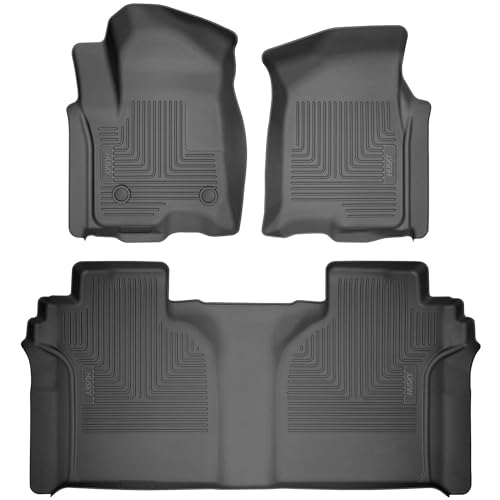
Floor mat fitment is not one-size-fits-all, and using the wrong mats can be a safety hazard. The key is to match your vehicle’s specific make, model, and year, or measure your footwell dimensions precisely. This guide cuts through the marketing to tell you what actually fits and what to avoid.
Measure Your Footwell: The Only Reliable Method
Forget generic labels. The most accurate way to ensure fitment is to measure your driver’s side footwell. Grab a tape measure and note the length from the firewall to the seat track, and the width at the widest point. Also check for anchor points (hooks or posts) that your mats must align with. Most vehicles have two retention points, but some have four. Measure the distance between them. If you buy mats without these measurements, you risk mats that slide under the pedals.
OEM vs. Custom vs. Universal: The Honest Breakdown
OEM (Original Equipment Manufacturer) mats are designed specifically for your car’s floor pan. They fit perfectly, have correct anchor placements, and are made from materials that match the interior. The downside: they cost more (typically $100-$200 for a set) and offer less variety in material or style. Custom-fit aftermarket mats from brands like WeatherTech or Husky Liners are molded using laser scanning of the vehicle’s floor. They often provide better coverage than OEM, especially for slush or mud, and cost $150-$250. Universal mats are cheap ($20-$50) but rarely fit well. They are cut to a generic shape and usually lack proper retention. We recommend avoiding universals unless you are willing to trim them yourself and add aftermarket anchors. Even then, they may not stay put.
Anchor Compatibility: The Overlooked Safety Feature
Your car likely has floor mat retention posts or hooks. Not all aftermarket mats include compatible grommets or holes. Check if the mat has reinforced holes that line up with your anchors. If the mat lacks these, it can slide forward and jam the accelerator pedal. This is a known cause of unintended acceleration. Always test that the mat locks into place. For cars with carpeted floors, some mats use a non-slip backing, but this is less reliable than mechanical anchors. For a deeper dive into floor mat safety and options, see our floor mats category.
Material and Thickness: Will It Fit Under the Pedals?
Thick rubber mats (like heavy-duty truck mats) can interfere with pedal travel if your footwell is shallow. Measure the vertical clearance from the floor to the bottom of the pedals at full depression. Subtract your mat thickness (usually 0.25 to 0.5 inches for rubber, 0.1 to 0.2 inches for carpet). If the mat reduces clearance below 1 inch, it’s too thick. Also, consider that carpet mats compress over time, while rubber does not. For maximum protection against spills and dirt, look for mats with raised edges (up to 1.5 inches) but ensure they don’t block the dead pedal or footrest area.
Frequently Asked Questions
Can I cut universal floor mats to fit my car?
Yes, but it’s risky. Universal mats are often too wide or long, and trimming can leave frayed edges or expose the backing. If you cut, use a sharp utility knife and a straightedge. Trace the outline of your old mat or a paper template. After cutting, check that the mat doesn’t interfere with pedals and that all retention points align. We still recommend custom-fit mats for safety.
Do all cars have floor mat anchors?
No. Most cars built after 2000 have at least two retention posts on the driver’s side, but some economy models or older vehicles may lack them. Check your owner’s manual or look under the driver’s floor mat. If you have no anchors, choose a mat with a heavy-duty non-slip backing (like rubber nibs) and consider adding aftermarket hook-and-loop fasteners. Never use a mat without some form of retention.
What is the best floor mat material for all seasons?
Thermoplastic rubber (like TPE) or heavy-duty rubber is best for all seasons. These materials are waterproof, easy to clean, and resistant to extreme temperatures. Carpet mats absorb moisture and stain easily. For winter slush and mud, a deep-treaded rubber mat with raised edges is ideal. For summer dust, a low-profile rubber mat works fine. Avoid foam-backed mats, as they degrade quickly.
The Bottom Line
Floor mat fitment comes down to precise measurement and proper retention. Measure your footwell, verify anchor compatibility, and choose a material that suits your climate. OEM or custom-fit aftermarket mats are the safest bet. Universal mats are a compromise that can become dangerous if not secured. Invest in mats that stay put, and you’ll protect your car’s carpet without risking pedal interference. For more on car accessories, check out our guide on best OBD2 scanners to complement your maintenance routine.