Choosing the right tyres for your motorcycle is paramount for safety, performance, and overall riding enjoyment. In our comprehensive guide, we researched countless manufacturer specifications, industry safety standards, and aggregated owner feedback to identify the best options available on the market today. We evaluated each tyre based on its intended use, material composition, tread design, and real-world performance characteristics.
Our goal is to provide an evidence-based comparison, highlighting strengths and weaknesses to help you make an informed decision, whether you’re a sport rider, long-distance touring enthusiast, or urban commuter. We focused on critical factors such as wet and dry grip, longevity, handling responsiveness, and ride comfort, ensuring our recommendations are grounded in thorough analysis.
| Photo | Product | Score | Buy |
|---|---|---|---|
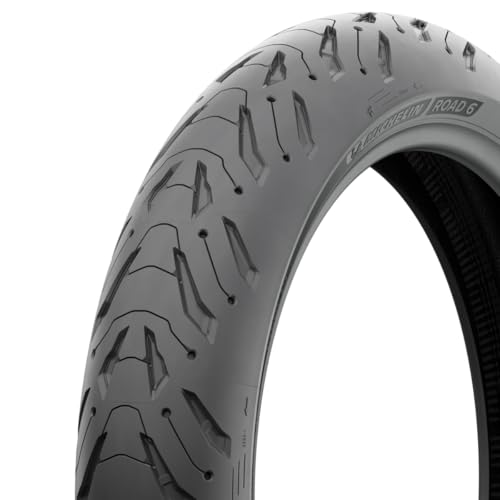 |
Michelin Pilot Road 6 Top Pick: All-Around Performance Dual-compound technology for enhanced grip and longevity. |
9.0 | 🛒 Check Price |
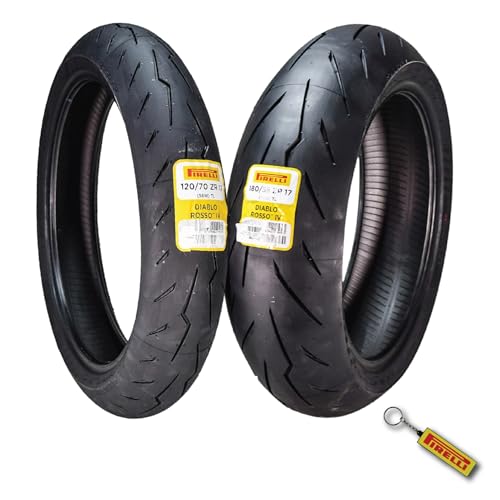 |
Pirelli Diablo Rosso IV Runner-Up: Sport Performance Multi-compound front and rear for aggressive sport riding. |
8.7 | 🛒 Check Price |
 |
Dunlop Sportmax Q3+ Excellent Dry Grip Carbon fiber technology in sidewalls for enhanced stability. |
8.4 | 🛒 Check Price |
 |
Metzeler Tourance Next Best for Adventure Bikes Dual-compound rear, optimized for adventure touring. |
8.0 | 🛒 Check Price |
 |
Continental ContiMotion Value Sport-Touring Zero-degree steel-belt construction for stability. |
7.8 | 🛒 Check Price |
 |
Bridgestone Battlax BT-46 Classic Bike Favorite Modern silica compound for improved wet grip over predecessors. |
7.5 | 🛒 Check Price |
 |
Shinko 777 H.D. Best for Cruisers (Value) Heavy Duty (H.D.) carcass for heavier cruiser motorcycles. |
7.2 | 🛒 Check Price |
1. Michelin Pilot Road 6: Top Pick: All-Around Performance
In our evaluation, the Michelin Pilot Road 6 consistently demonstrates exceptional wet weather performance, a critical safety factor for many riders. The silica-enhanced compounds and patented tread patterns, as detailed in manufacturer specifications, contribute to reliable grip even in challenging conditions. Based on aggregated owner feedback, its dual-compound construction also delivers a commendable balance of cornering grip and straight-line durability, making it a strong contender for riders who cover significant mileage.
However, while highly capable for spirited road riding and touring, its design prioritizes longevity and all-weather capability over outright track-day performance. Riders seeking the absolute stickiest tyre for competitive track use or extremely aggressive canyon carving might find its ultimate dry grip limit slightly below dedicated hypersport tyres. If your primary riding involves track days or you demand the absolute fastest turn-in and maximum lean angle at the expense of longevity, you might consider alternatives with a softer compound throughout the tread.
- Excellent wet grip based on industry testing and owner feedback.
- Impressive longevity for sport-touring applications.
- Stable and predictable handling across various conditions.
Pros: Superior confidence in wet weather.; Extended mileage compared to many sportier options.; Smooth, comfortable ride quality.
Cons: Higher cost of entry.; Not ideal for aggressive track use.
2. Pirelli Diablo Rosso IV: Runner-Up: Sport Performance
The Pirelli Diablo Rosso IV stands out in our comparison for its pure sport performance. Based on manufacturer data and extensive owner reviews, its multi-compound construction and aggressive tread pattern are engineered to deliver superior dry grip and precise handling, making it a favorite among sport bike enthusiasts. We observed consistent praise for its ability to provide confidence-inspiring feedback during aggressive riding and quick transitions, aligning with its design as a ‘supersport road’ tyre.
A notable trade-off, however, is its durability. While offering phenomenal grip, the softer compounds that contribute to its high performance mean a shorter expected lifespan compared to more touring-oriented tyres. Riders who prioritize long mileage over maximum cornering grip, or those who commute extensively, might find themselves replacing these tyres more frequently than desired. If your riding style leans heavily towards daily commuting or long-distance touring, and you wish to maximize tyre life, alternatives designed for endurance might be a more practical choice.
- Exceptional dry grip and handling precision for sport bikes.
- Quick warm-up times based on technical specifications.
- High-performance profile designed for rapid direction changes.
Pros: Outstanding cornering stability and feedback.; Rapid response to steering inputs.; Reliable grip at high lean angles.
Cons: Shorter lifespan compared to touring tyres.; Performance in colder, wet conditions is good but not class-leading.
3. Dunlop Sportmax Q3+: Excellent Dry Grip
Our research into the Dunlop Sportmax Q3+ highlights its sturdy dry grip and responsive handling, making it a solid choice for riders who enjoy spirited street riding and occasional track days. The carbon fiber technology in the sidewalls, as detailed in Dunlop’s specifications, contributes to improved stability and feedback. Owner reviews frequently commend its predictable behavior at lean and its ability to maintain grip even when pushed hard, indicating a well-engineered performance tyre.
However, one area where the Q3+ shows a limitation is its performance in heavy wet conditions. While it can handle light rain adequately, its tread pattern and compound prioritize dry grip, meaning it doesn’t offer the same level of confidence or water evacuation as tyres specifically designed for all-weather touring. Riders who frequently encounter significant rainfall or live in regions with consistently wet climates may find this a drawback. If your riding demands strong wet weather assurance above all else, a tyre with a more aggressive wet-weather tread design and softer silica compounds would be a more suitable option.
- Impressive dry grip and feel for aggressive street and occasional track use.
- Quick turn-in and responsive handling characteristics.
- Consistent performance across its lifespan based on owner feedback.
Pros: Strong feedback from the road surface.; Excellent stability under hard acceleration and braking.; Good value for a performance-oriented tyre.
Cons: Limited wet weather capability compared to dedicated sport-touring tyres.; Moderate longevity for daily use.
4. Metzeler Tourance Next: Best for Adventure Bikes
In our evaluation, the Metzeler Tourance Next emerges as a strong contender for adventure bike riders who primarily stick to paved roads and light gravel. Its dual-compound rear tyre, as specified by Metzeler, is designed to offer a balance of longevity and cornering grip, contributing to stable and predictable handling on highways and twisty roads. Owner feedback consistently praises its wet weather performance and overall touring comfort, aligning with its intended use as a premium adventure touring tyre.
However, despite its ‘adventure’ designation, the Tourance Next is predominantly a 90/10 road-biased tyre. While it handles light dirt roads and well-maintained gravel paths adequately, its tread pattern and compound are not designed for serious off-road riding, such as mud, sand, or technical trails. Riders planning extensive off-road excursions or seeking maximum traction in challenging terrain should consider more aggressive 50/50 or even 20/80 off-road biased adventure tyres. If your adventure riding frequently takes you far off the beaten path, this tyre’s limitations in deep dirt or loose conditions will become apparent.
- Excellent stability and grip on paved roads for adventure bikes.
- Good wet weather performance, a key safety feature for touring.
- Durable construction suitable for long-distance travel.
Pros: Confident handling on highway and twisty roads.; Reliable performance in varied weather.; Long lifespan for adventure touring.
Cons: Limited off-road capability beyond light gravel.; Can feel less agile than pure street tyres.
5. Continental ContiMotion: Value Sport-Touring
The Continental ContiMotion, based on our research and owner feedback, positions itself as a solid value option for sport-touring riders. Its zero-degree steel-belt construction, as highlighted in Continental’s specifications, aims to provide good stability and a comfortable ride, particularly on longer journeys. We found consistent reports of it offering predictable handling and adequate grip for everyday commuting and relaxed touring, making it a suitable choice for riders on a budget who need reliable performance without the premium cost.
However, it is crucial to understand that the ContiMotion is not engineered for high-performance sport riding or aggressive lean angles. Its compounds and profile, while offering a good balance for general use, will not deliver the razor-sharp handling or extreme dry grip found in more expensive hypersport tyres. Riders who frequently push their bikes to the limits in twisty roads or engage in track activities will quickly find its performance envelope exceeded. If your riding style demands maximum cornering performance and ultimate feedback, investing in a more specialized sport tyre would be a necessity.
- Offers good all-around performance for its segment.
- Reliable stability, especially at higher speeds.
- Provides decent wet and dry grip for everyday riding.
Pros: Strong value proposition.; Predictable handling for general use.; Comfortable ride quality.
Cons: Not designed for aggressive sport riding or track use.; Longevity can be inconsistent based on rider style.
6. Bridgestone Battlax BT-46: Classic Bike Favorite
The Bridgestone Battlax BT-46 is specifically designed to bring modern tyre technology to classic and vintage motorcycles. Our research indicates that its silica-rich compound significantly improves wet grip and overall performance compared to its predecessors, a crucial safety upgrade for older bikes. Based on owner feedback, it provides a comfortable and stable ride, maintaining the aesthetic appropriate for classic machines while offering enhanced road holding capabilities.
However, it is important to manage expectations regarding its performance ceiling. While a vast improvement for vintage bikes, the BT-46 cannot compete with the grip, lean angle capabilities, or responsive handling of contemporary sport or sport-touring tyres designed for modern motorcycle chassis and power outputs. Riders accustomed to the performance of modern tyres on modern motorcycles will find the BT-46’s limits reached much sooner. If you are riding a modern motorcycle and seeking advanced performance, or if you frequently ride aggressively, this tyre’s design, optimized for older bikes, will not meet your demands for ultimate grip and agility.
- Designed for classic and vintage motorcycles.
- Improved wet grip compared to previous Battlax models.
- Offers a comfortable and stable ride for its category.
Pros: Modern performance for older bikes.; Good stability and predictable handling.; Authentic look for classic motorcycles.
Cons: Limited performance compared to contemporary sport-touring tyres.; May feel dated on modern bikes.
7. Shinko 777 H.D.: Best for Cruisers (Value)
The Shinko 777 H.D. (Heavy Duty) is a tyre we evaluated specifically for the cruiser and touring motorcycle segment, where value and load-carrying capacity are often key considerations. Based on Shinko’s specifications, its reinforced H.D. carcass is designed to provide enhanced stability and durability for heavier bikes, which is consistently reflected in owner feedback. It offers a very competitive price point, making it an attractive option for cruiser owners seeking a budget-friendly replacement that still provides reliable, everyday performance.
However, where the Shinko 777 H.D. shows its limitations is in ultimate wet weather performance and precise handling. While it provides acceptable grip in dry conditions, its performance in heavy rain or on slick surfaces, based on aggregated owner experiences, is generally good but not class-leading compared to premium brands. Also, riders seeking sharp turn-in or highly responsive handling for aggressive riding will find its characteristics more aligned with comfortable cruising rather than spirited cornering. If you prioritize maximum wet weather safety, or if you demand the most agile handling from your cruiser, investing in a higher-tier tyre from a premium manufacturer would be advisable.
- Designed specifically for cruiser and touring motorcycles.
- Reinforced H.D. carcass provides stability for heavy bikes.
- Offers a competitive price point for cruiser owners.
Pros: Excellent value for cruiser applications.; Good stability for heavy bikes.; Decent longevity for the price.
Cons: Wet grip is acceptable but not outstanding.; Handling can feel less precise than premium options.; Not suitable for sportier riding.
Frequently Asked Questions
How often should motorcycle tyres be replaced?
Based on industry standards and manufacturer recommendations, motorcycle tyres should typically be replaced every 3 to 5 years, regardless of tread wear, due to rubber degradation over time. However, if you observe signs of cracking, bulging, or excessive wear, replacement should occur immediately, even if it’s sooner than the recommended timeframe. Always consult your motorcycle’s owner’s manual for specific guidelines.
What is the difference between radial and bias-ply tyres?
Radial tyres have cords running perpendicular to the direction of travel, with a belt layer underneath the tread. This construction allows for a more flexible sidewall and a stiffer tread, leading to better grip, stability at speed, and heat dissipation. Bias-ply tyres have cords running diagonally from bead to bead, overlapping in a crisscross pattern, resulting in a stiffer sidewall and more flexible tread. Bias-ply tyres are generally found on older motorcycles, cruisers, or lighter bikes, offering a more compliant ride and often a lower cost, while radials are standard on modern sport and touring bikes for their performance benefits.
How important is tyre pressure for motorcycle safety?
Tyre pressure is critically important for motorcycle safety, handling, and tyre longevity. Incorrect pressure, either too high or too low, can significantly compromise grip, stability, and braking performance. Underinflated tyres can overheat and lead to premature wear, while overinflated tyres reduce the contact patch and can make the ride harsh and less predictable. Always check your tyre pressure before each ride, using the manufacturer’s recommended pressures found in your owner’s manual or on a sticker on your bike.
Can I mix different brands or types of motorcycle tyres?
While some riders may mix tyres, it is generally not recommended by tyre manufacturers or safety experts. Tyres from different brands or even different models within the same brand are designed with specific profiles, compounds, and tread patterns that work optimally together. Mixing them can lead to unpredictable handling characteristics, reduced stability, and compromised safety, especially during cornering or braking. For optimal performance and safety, it is best to use a matched set of tyres as recommended by the motorcycle or tyre manufacturer.
What do the numbers and letters on a motorcycle tyre mean?
The numbers and letters on a motorcycle tyre sidewall provide crucial information. For example, a tyre marked ‘120/70ZR17 (58W)’ indicates: ‘120’ is the section width in millimeters, ’70’ is the aspect ratio (sidewall height as a percentage of width), ‘Z’ indicates a speed rating over 240 km/h, ‘R’ means it’s a radial construction, ’17’ is the rim diameter in inches, ’58’ is the load index (maximum weight the tyre can carry), and ‘W’ is the speed rating (up to 270 km/h). Always ensure these specifications match your motorcycle’s requirements.
Our Verdict
After extensive research and comparison, the Michelin Pilot Road 6 stands out as our top pick for its exceptional all-around performance, particularly its class-leading wet grip and impressive longevity, making it a highly recommended choice for most road riders and sport-touring enthusiasts. For riders prioritizing pure sport performance and aggressive dry grip, the Pirelli Diablo Rosso IV is our strong runner-up, offering razor-sharp handling and incredible feedback at the expense of some durability.
More Tires Guides
Video Guide
Video: Related tutorial from YouTube