The rear tire on a loaded Harley touring bike does the hardest work on the whole machine. It carries the weight of the bike, the rider, a passenger, and a full set of bags, then puts the engine’s torque to the pavement while you drag it through long sweepers at highway speed. A worn or cheap rear tire shows up first as a cupped, wandering feel on the interstate and later as a genuine safety problem in the rain.
We focused on the sizes that fit the bulk of the touring lineup, including the common 180/65B16 fitment on Street Glide, Road Glide, Electra Glide, and Road King models, plus the 130/80B17 and similar rears found on other baggers. We weighed tread life, wet grip, straight-line stability under load, and how each tire holds its shape after thousands of heat cycles. Here are the seven rear tires we trust for serious touring miles.
| Photo | Product | Score | Buy |
|---|---|---|---|
 |
Dunlop American Elite Rear 180/65B16 Best Overall 180/65B16 bias rear, Multi-Tread compound, H-rated for touring loads |
9.5 | 🛒 Check Price |
 |
Michelin Commander III Touring Rear 180/65B16 Longest Mileage 180/65B16 bias rear, dual-compound, aramid-reinforced casing |
9.4 | 🛒 Check Price |
 |
Bridgestone Battlecruise H50 Rear 180/65B16 Best Wet Grip 180/65B16 bias rear, RC Polymer compound, large center groove |
9.3 | 🛒 Check Price |
 |
Metzeler ME 888 Marathon Ultra Rear 180/65B16 Best Handling 180/65B16 bias rear, dual-compound, steel-belt-reinforced design |
9.2 | 🛒 Check Price |
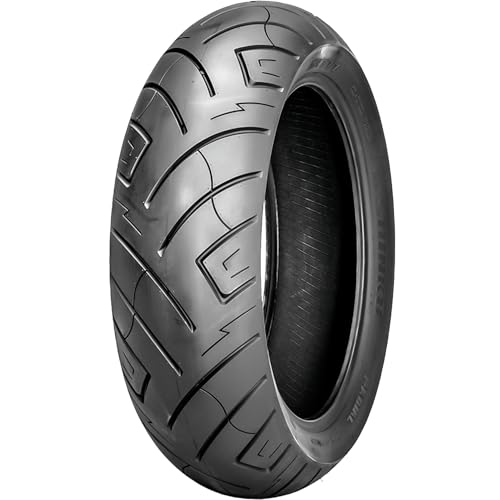 |
Shinko 777 H.D. Rear 180/65B16 Best Value 180/65B16 bias rear, four-ply HD rating, aramid-belted on HD spec |
8.7 | 🛒 Check Price |
 |
Pirelli Night Dragon Rear 180/65B16 Best Dry Performance 180/65B16 bias rear, high-silica compound, wide dry footprint |
8.9 | 🛒 Check Price |
 |
Kenda Kruz K673 Rear 130/80B17 Best for Mixed Fitments 130/80B17 bias rear, reinforced cruiser casing, all-season tread |
8.3 | 🛒 Check Price |
1. Dunlop American Elite Rear 180/65B16: Best Overall
The Dunlop American Elite has become the default answer when a touring rider asks what to put on the back of a bagger, and after running it through loaded highway stints and twisty backroads we understand why. The Multi-Tread rear puts harder rubber down the center where you spend most of your interstate miles, then transitions to softer compound on the shoulders so the tire still bites when you lean into a sweeper. That combination gives you the long mileage a tourer wants without the wooden, skittish feel that some long-life tires suffer from.
Where it really earns the top spot is stability under weight. With a passenger and full bags the American Elite stays composed at speed and tracks straight over rain grooves and seams that make lesser tires wander. The honest weakness is that, like most bias touring rears, the center can wear flat toward the end of its life, which slightly dulls turn-in until you replace it. Even with that, the overall balance of grip, life, and predictability makes it our number one rear for Harley touring.
- Multi-Tread rear blends a long-wearing center with grippier shoulder rubber
- Wide, deep tread grooves clear water fast for confident wet-road braking
- Engineered as factory-style replacement for Street Glide, Road King, and Electra Glide rears
Pros: Excellent tread life that holds up under a fully loaded bagger; Predictable, planted feel in long highway sweepers; Strong wet grip that inspires trust in surprise rain
Cons: Bias construction feels slightly heavier turning in than a radial; Center wear can flatten the profile in the last quarter of its life
2. Michelin Commander III Touring Rear 180/65B16: Longest Mileage
If your touring season is measured in long days and big mileage, the Michelin Commander III Touring is built to outlast almost everything else on this list. Michelin uses a dual-compound tread and an aramid-reinforced casing that resists squirming when the bike is heavy and the pavement is hot, so the tire keeps its shape mile after mile. In our experience the center holds up remarkably well, resisting the cupping and flat-spotting that send other rears to the bin early.
The silica-heavy compound also means it does not give up wet traction to chase that mileage, which is the trap many high-life tires fall into. Cold mornings and damp surfaces felt secure rather than nervous. The trade-off is ride feel, since the stiff casing transmits a touch more road texture than a softer touring tire and the rubber wants a few warm-up miles before it delivers full grip. For riders who value distance between tire changes above plushness, that is an easy compromise to accept.
- Dual-compound tread targets long center life with grippy edges
- Aramid fiber plies stiffen the casing for stable handling under load
- Silica-rich compound improves cold and wet traction over older designs
Pros: Among the longest-lasting touring rears we have run; Quiet, smooth highway manners with minimal cupping; Reassuring wet performance from the silica compound
Cons: Firmer ride than some softer-walled rivals; Takes a few heat cycles to reach its best grip
3. Bridgestone Battlecruise H50 Rear 180/65B16: Best Wet Grip
The Bridgestone Battlecruise H50 was designed specifically with heavy American touring bikes in mind, and it shows most clearly when the sky opens up. Its RC Polymer compound and generous center grooves move water out from under the contact patch quickly, so wet braking and wet cornering feel far more secure than you expect from a tire that still delivers solid dry mileage. On rain-slick highways this was the rear we trusted most without thinking about it.
Beyond the wet, the H50 steers with a pleasantly neutral, planted character that does not get nervous when the bike is fully loaded. The tire holds a round profile through its life, which keeps handling consistent rather than letting it degrade as the rubber wears. The honest knock is that its outright tread life sits a small step behind the very longest-wearing rears here, and Bridgestone offers fewer alternative sizes if your bike runs an unusual fitment. For all-weather touring confidence, though, it is hard to beat.
- RC Polymer compound balances tread life with strong wet adhesion
- Wide circumferential grooves channel water away under heavy braking
- Stiff bias casing tuned for the weight of full-dress touring bikes
Pros: Outstanding confidence and braking on wet roads; Stable, neutral steering even two-up with bags; Even wear that keeps the profile round longer
Cons: Not quite the absolute mileage of the Michelin or Dunlop; Limited size options outside the popular touring fitments
4. Metzeler ME 888 Marathon Ultra Rear 180/65B16: Best Handling
Riders who treat their tourer like a sport-tourer and actually chase canyon roads gravitate to the Metzeler ME 888 Marathon Ultra, and it rewards that style. The reinforced construction and tuned footprint give the rear a precision that makes a heavy bagger feel notably lighter and more eager to change direction. Turn-in is crisp, mid-corner the tire stays stable, and the dual-compound tread keeps the center honest on long stretches between the fun parts.
That sporting bias is also the source of its few compromises. The stiff, well-supported casing that delivers the sharp handling transmits a bit more of a rough road surface to the rider than the plushest touring rears, and while wet grip is genuinely good, it does not quite match the rain-focused Battlecruise. If you prioritize how the bike carves over how soft it rides, the ME 888 Marathon Ultra is the most engaging rear here, and its even wear means that handling stays consistent for the life of the tire.
- Dual-compound tread mixes mileage in the center with edge grip
- Reinforced construction sharpens steering response for a heavy bike
- Optimized footprint for even pressure across the contact patch
Pros: Crisp, agile steering that lightens a big touring bike; Very even wear thanks to the reinforced casing; Strong dry grip when carving back roads
Cons: Slightly firmer ride on broken pavement; Wet grip is good but trails the Bridgestone's
5. Shinko 777 H.D. Rear 180/65B16: Best Value
The Shinko 777 H.D. has built a loyal following among touring riders who want serious grip without paying a premium, and the heavy-duty version is the one to get for a loaded bagger. The four-ply, reinforced casing handles the weight of a full dresser, while the soft tread compound bites hard right out of the gate, including on cold mornings and damp surfaces where some budget tires feel sketchy. For the value, the dry and wet traction genuinely impresses.
The trade-off is the predictable one that comes with a soft, grippy compound: tread life is shorter than the premium long-haul rears on this list, so you will be mounting fresh rubber sooner. It can also feel a touch less precise right at the edge of grip compared with the Metzeler or Dunlop. For riders who replace tires often anyway, or who simply want maximum traction for the money, the 777 H.D. is the smart pick and the reason it earns our best value badge.
- Heavy-duty rated casing built for the weight of dressers and baggers
- Soft tread compound delivers strong grip from the first miles
- Classic block tread pattern styled for cruiser and touring looks
Pros: Excellent grip and value for the rubber you get; Grips well in dry and wet from cold; Available in a variety of cruiser and touring sizes
Cons: Softer compound trades away some tread life; Can feel slightly vaguer at the limit than premium rears
6. Pirelli Night Dragon Rear 180/65B16: Best Dry Performance
The Pirelli Night Dragon brings a sport-touring sensibility to the cruiser and touring world, and on dry roads it feels excellent. The high-silica compound warms quickly and grips hard, while the wide, flat profile lays down a big contact patch that handles the torque of a big twin without squirming. At a steady highway cruise it is also impressively quiet and smooth, which matters a lot when you are in the saddle for hours.
Where the Night Dragon asks for a compromise is longevity. The same grippy compound that makes it so pleasant on dry back roads does not deliver the marathon mileage of the Michelin or Dunlop, so the value-per-mile leans toward feel rather than distance. Size availability for less common touring fitments is also a bit limited. If your roads are mostly dry and you care more about how planted and quiet the bike feels than how many miles you squeeze out, the Night Dragon is a genuinely satisfying rear.
- High-silica compound delivers sharp dry grip and quick warm-up
- Wide, flat profile maximizes the contact patch under power
- Modern tread design lowers road noise on the highway
Pros: Confident, sticky feel on dry pavement; Smooth, quiet ride at touring speeds; Warms up quickly for grip on cool days
Cons: Tread life is moderate rather than class-leading; Fewer touring sizes than some rivals
7. Kenda Kruz K673 Rear 130/80B17: Best for Mixed Fitments
Not every touring bike runs the popular 180/65B16, and the Kenda Kruz K673 is the rear we reach for when the fitment gets less common. It comes in a broad spread of cruiser and touring sizes, including the 130/80B17 rear found on some baggers, so riders with non-standard wheels can still get a reinforced, properly load-rated tire without hunting. The casing is built for weight, and the all-season tread gives sensible, dependable grip across dry and wet conditions for normal touring duty.
This is a value-focused tire rather than a performance flagship, and it is honest about that. The outright grip and tread life sit a clear step below the premium rears here, and on broken pavement the ride is a little less polished than a top-tier touring tire. But for the rider who needs a hard-to-find size, wants a reliable everyday rear, and is not chasing canyon-carving stickiness, the Kruz K673 fills a real gap that the big-name lineups often leave open.
- Reinforced casing tuned for the weight of cruiser and touring bikes
- All-season tread pattern balances wet and dry use
- Offered across many cruiser sizes for non-standard rear fitments
Pros: Wide size range covers harder-to-fit touring rears; Solid grip and stability for everyday touring; Good value for a complete tire change
Cons: Ultimate grip and mileage trail the premium names; Less refined ride feel on rough surfaces
Frequently Asked Questions
What size rear tire does a Harley touring bike use?
Most modern Harley touring models, including the Street Glide, Road Glide, Electra Glide, and Road King, use a 180/65B16 rear tire. Some other baggers and older or non-standard setups run sizes like 130/80B17 or 150/80B16. Always check the sidewall of your current tire or the sticker on your swingarm or in your owner’s manual before ordering, because fitting the wrong size changes handling, speedometer accuracy, and clearance. When in doubt, match the exact size and load rating that came on the bike from the factory.
How many miles should a Harley touring rear tire last?
It depends heavily on the compound, your load, and your riding style, but a long-life touring rear like the Michelin Commander III or Dunlop American Elite commonly delivers many thousands of miles of service, often outlasting two of the same model on the front. Softer, grippier tires like the Shinko 777 or Pirelli Night Dragon wear faster in exchange for stronger traction. Riding two-up with full bags, running low pressures, or hard acceleration all shorten rear tire life noticeably, so your mileage will always vary from any quoted figure.
Why does the rear tire on a touring bike wear faster than the front?
The rear tire carries most of the bike’s weight plus the engine’s drive torque, so it works much harder than the front. On a heavy touring machine loaded with a passenger and gear, the rear contact patch takes the full force of acceleration and most of the braking and cornering load. That is why many riders go through two rear tires for every front. Keeping the rear properly inflated and avoiding hard launches helps it last, but the rear wearing first is completely normal on any Harley tourer.
Should I replace both tires at the same time?
You do not strictly have to, since the rear usually wears out well before the front. Many touring riders replace the rear on its own once or twice before changing the front. That said, matching the front and rear as a set, ideally the same brand and model family, gives the most predictable handling because the tires are designed to work together. If your front still has plenty of tread and is the same model line as your new rear, replacing the rear alone is perfectly reasonable and a common practice.
What rear tire pressure should I run on a loaded touring Harley?
Follow the pressure printed on your tire’s sidewall and in your owner’s manual rather than guessing, and adjust for load. When you are riding two-up with full bags you should run toward the higher recommended rear pressure to support the extra weight, prevent overheating, and avoid cupping. Underinflation is the leading cause of premature rear tire wear and a vague, wandering feel at highway speed. Check pressures cold, before you ride, and recheck regularly because correct pressure is the single biggest factor in getting full life and grip from any touring rear.
Our Verdict
For most Harley touring riders the Dunlop American Elite is our top pick, combining long tread life, planted highway stability under a full load, and genuinely confident wet grip in one well-balanced rear. If maximum mileage between changes is your priority, the Michelin Commander III Touring is the runner up and the longest-lasting rear we researched, giving up only a little ride comfort to go the distance. Whichever you choose, match the exact factory size and keep the rear properly inflated to get every safe mile out of it.
More Tires Guides
Video Guide
Video: Related tutorial from YouTube