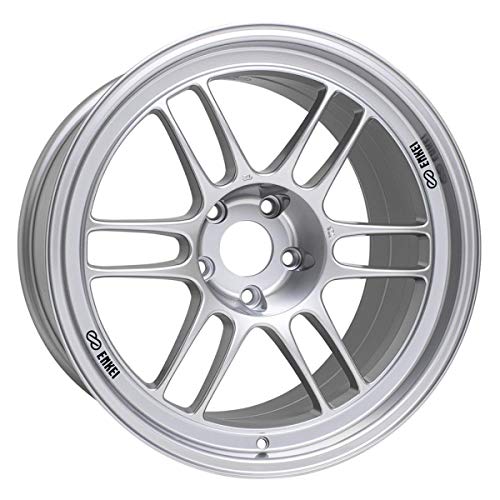
Aluminum wheels look incredible when they’re clean, but they oxidize, haze over, and pick up baked-on brake dust faster than almost any other part of your car. A good aluminum wheel polish does the heavy lifting your soap and water never will, cutting through the dull gray film and bringing back that deep, mirror-like finish. The wrong product just smears around, while the right one transforms a tired wheel in minutes.
We worked through real-world polishing sessions on bare polished alloys, machined faces, and clear-coated rims to see which formulas actually cut oxidation, how much elbow grease each one demanded, and how long the shine held up against road grime. Below are the seven aluminum wheel polishes we trust most, ranked best first, with honest notes on where each one shines and where it falls short.
| Photo | Product | Score | Buy |
|---|---|---|---|
 |
Mothers Mag & Aluminum Polish Best Overall Paste polish, 10 oz tub, for bare and machined aluminum |
9.5 |
ⓘ We may earn a commission from qualifying purchases made through links on this page, at no extra cost to you.
|
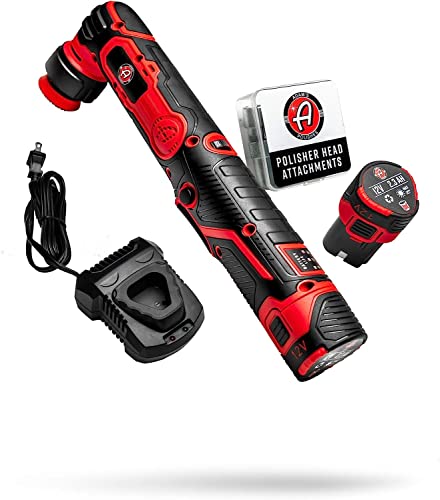 |
Adam's Polishes Metal Polish Best Liquid Formula Liquid metal polish, 12 oz bottle, two-stage cut and finish |
9.2 | 🛒 Check Price |
 |
Flitz Metal Polish Paste Most Multi-purpose Concentrated paste, 5.29 oz tube, multi-metal formula |
9.0 | 🛒 Check Price |
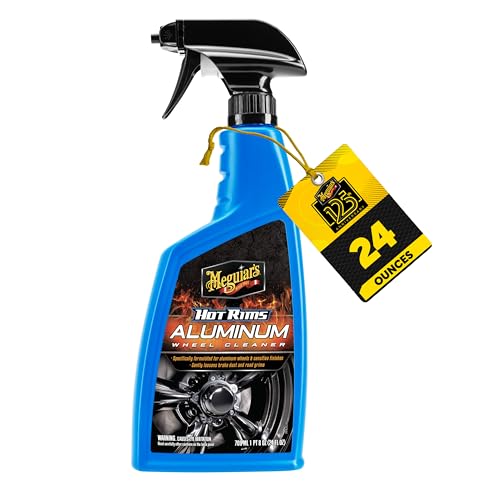 |
Meguiar's Hot Rims Aluminum Wheel Cleaner Best for Brake Dust Spray cleaner and brightener, 24 oz, for bare and coated aluminum |
8.8 | 🛒 Check Price |
 |
Eagle One Nanoskin Aluminum Wheel Polish Best Wheel-Specific Pick Liquid polish, 8 oz bottle, formulated specifically for alloy wheels |
8.6 | 🛒 Check Price |
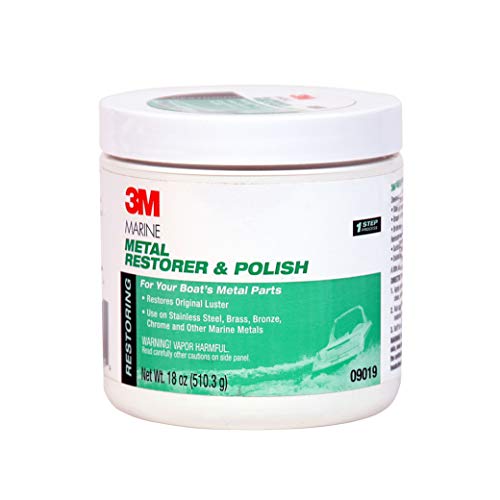 |
3M Aluminum and Metal Polish Best Heavy-Duty Cut Liquid polish, 8.5 oz bottle, aggressive cut for neglected metal |
8.4 | 🛒 Check Price |
 |
Chemical Guys Heavy Metal Polish Best for Mirror Finish Liquid polish, 16 oz bottle, for aluminum, chrome, and stainless |
8.1 | 🛒 Check Price |
1. Mothers Mag & Aluminum Polish: Best Overall
Mothers Mag & Aluminum Polish is the benchmark almost every other paste gets compared to, and after using it we understand why. On bare polished and machined aluminum it cuts through gray oxidation quickly, leaving a genuinely reflective surface that looks wet. The paste is thick enough to stay put on a vertical wheel face, so you aren’t constantly chasing drips, and a thumbnail-sized scoop covers a surprising amount of area.
The honest weakness is that this is strictly a bare-metal product. If your wheels have a factory clear coat, the polish has nothing to bite into and you’ll just be wiping it around. It also throws off a fair amount of black residue as it lifts oxidation, so plan on several clean microfiber towels per wheel. Used on the right surface, though, nothing in this guide delivers a more dependable shine for the work involved.
- Cuts heavy oxidation and restores mirror shine on bare alloy
- Thick paste clings to vertical wheel faces without running
- Works on mag, aluminum, brass, and other bare metals
Pros: Removes serious oxidation with modest effort; A little product goes a long way; Trusted, widely available formula
Cons: Not for clear-coated or painted wheels; Leaves black residue that needs buffing off
2. Adam's Polishes Metal Polish: Best Liquid Formula
Adam’s Polishes Metal Polish is the liquid we reach for when a wheel is mostly clean but has lost its pop, or when we want to refine a surface after a heavier cutting paste. It spreads thin and even, wipes off without much drama, and leaves polished aluminum looking bright and slick. Because it’s a liquid, it’s also far friendlier with a dual-action polisher and a small metal pad if you want to speed up a full set of wheels.
Where it shows its limits is on badly neglected, chalky alloy. The cut is on the gentler side, so deep oxidation will need a coarser product first before this one earns its keep as a finisher. Think of it less as a one-and-done miracle and more as a refined, easy-to-control polish that makes already-decent wheels look showroom fresh.
- Liquid formula spreads easily by hand or machine
- Removes light oxidation and water spotting from polished alloy
- Doubles as a finishing polish after a heavier cut
Pros: Very easy to apply and wipe off; Great as a final finishing step; Low residue compared to thick pastes
Cons: Struggles with severe, deep oxidation; Bottle empties faster than a paste
3. Flitz Metal Polish Paste: Most Flexible
Flitz earns its following by being the polish that does a bit of everything. The same concentrated paste that brightens your aluminum wheels also works on the chrome exhaust tips, stainless trim, and brass fittings around the shop, which makes it a genuinely useful tube to keep on the shelf. On polished alloy it brings up a clean, even shine and leaves behind a light protective film that helps fend off the next round of oxidation.
The tube delivery is the main gripe. It’s easy to squeeze out more than you need, and on deeply oxidized wheels you’ll work a little harder than you’d with a dedicated heavy cutter like Mothers. For maintenance polishing and all-around metal duty, though, it’s hard to beat the flexibility this one offers.
- Polishes aluminum, chrome, stainless, and brass with one tube
- Concentrated paste needs only a small dab per panel
- Leaves a thin protective layer that slows re-oxidation
Pros: Handles many metals beyond wheels; Tiny amount covers a lot; Mild protective finish helps shine last
Cons: Tube format is fiddly to dispense; Needs firm buffing on heavy oxidation
4. Meguiar's Hot Rims Aluminum Wheel Cleaner: Best for Brake Dust
Before any polish can do its job, the wheel has to be clean, and Meguiar’s Hot Rims is our pick for stripping the baked-on brake dust that ruins aluminum. You spray it on, watch the color change as it dissolves iron and grime, agitate with a brush, and rinse. On heavily fouled wheels it does in one pass what repeated scrubbing with regular soap simply can’t, and it’s rated safe across bare, coated, and clear-coated finishes.
The thing to understand is that this is a cleaner and brightener rather than a polish in the cutting sense. It won’t remove deep oxidation or leave a hand-rubbed mirror finish on its own. We treat it as the essential first step that lets a true paste or liquid polish work properly afterward. The formula is also potent, so gloves and good ventilation are worth using.
- Spray-on, rinse-off formula lifts baked-on brake dust
- Color-changes to show it’s working on the grime
- Safe on bare, coated, and clear-coated aluminum wheels
Pros: Easy spray and rinse application; Tackles heavy brake dust fast; Safe across most wheel finishes
Cons: This is a cleaner and brightener, not a true cutting polish; Strong formula, wear gloves
5. Eagle One Nanoskin Aluminum Wheel Polish: Best Wheel-Specific Pick
Eagle One has built its reputation around wheels, and this aluminum polish reflects that focus. The pourable liquid is easy to dose onto an applicator and work into the tight spokes and lug pockets where pastes tend to cake up. On typical daily-driver alloys it freshens the finish nicely and lays down a light barrier that helps the next wash go easier and slows the return of dullness.
It sits in the middle of the pack on raw cutting power. Mild to moderate oxidation is no problem, but a truly chalky, long-neglected wheel will still benefit from a heavier paste first. Apply it sparingly too, because the thinner liquid can pool in crevices and take extra effort to chase out. As a wheel-specific maintenance polish, it’s a sensible, easy-to-use choice.
- Tuned specifically for aluminum and alloy wheel faces
- Restores shine while leaving a light protective barrier
- Pourable liquid is easy to control on intricate spokes
Pros: Designed around wheels, not general metal; Easy to reach into spoke detail; Adds a touch of protection
Cons: Moderate cut only on average oxidation; Can pool in tight crevices if overapplied
6. 3M Aluminum and Metal Polish: Best Heavy-Duty Cut
When a wheel is past the point where a gentle polish will do, 3M Aluminum and Metal Polish steps in with real cutting muscle. On heavily weathered, chalky bare aluminum it removes oxidation faster than most of the softer formulas here, and paired with a dual-action polisher and a metal pad it can resurrect a wheel set that looked beyond saving. The brightness it brings up on cleaned-back metal is genuinely impressive.
That aggressiveness is also the catch. It cuts so well that you often want to follow up with a finer finishing polish like the Adam’s liquid to refine out any fine haze and reach a true mirror. By hand it’s workable but slower, so this one really rewards having a machine on the job. For restoration work rather than light upkeep, it’s the strongest cutter in our lineup.
- Strong cutting action for badly oxidized aluminum
- Liquid pairs well with a machine polisher for big jobs
- Restores brightness to dull, weathered bare metal
Pros: Serious cutting power on neglected wheels; Works fast with a machine and pad; Bright, even finish once buffed
Cons: Aggressive enough to need careful finishing; Best results really need a polisher
7. Chemical Guys Heavy Metal Polish: Best for Mirror Finish
Chemical Guys Heavy Metal Polish is the one we reach for when the goal is that deep, liquid-mirror look on already-clean polished aluminum. Worked patiently by hand or buffed with a soft pad, it builds a glossy, reflective finish with real depth, and the same bottle handles chrome and stainless if you want a matching shine across the car. The larger size is welcome if you’re polishing a full set of wheels regularly.
It isn’t the strongest cutter in the group, so it rewards prep. On a wheel that’s still oxidized or grimy it’ll underwhelm, but follow a cleaner and a cutting polish with this as the final stage and the result can be stunning. The mirror finish also takes a few passes and a bit of patience to coax out, so it suits enthusiasts who enjoy the process more than anyone wanting a quick wipe-and-go.
- Builds a high-gloss, mirror-bright finish on polished alloy
- Works on aluminum, chrome, and stainless surfaces
- Larger bottle suits full wheel sets and frequent use
Pros: Excellent gloss and depth when finished; Generous bottle size; Adaptable across bright metals
Cons: Needs a clean, decent surface to show its best; Takes patience and several passes for the mirror look
Frequently Asked Questions
What is the difference between an aluminum wheel cleaner and a polish?
They do two different jobs and you usually want both. A cleaner, like a spray-on brake dust remover, strips dirt, iron particles, and grime off the surface so the metal is bare and ready. A polish then uses very fine abrasives to cut through oxidation and the dull microscopic layer on the metal itself, bringing back shine. Cleaning first and polishing second gives the best result, because polishing over trapped grit just grinds dirt into the finish.
Can I use these polishes on clear-coated or painted aluminum wheels?
Most metal cutting polishes, including pastes like Mothers and Flitz, are made for bare, polished, or machined aluminum and shouldn’t be used on clear-coated or painted wheels, because there’s no exposed metal for them to work on and aggressive products can dull the coating. If your wheels have a factory clear coat, stick to a wheel cleaner and a coating-safe sealant or wax instead. When in doubt, check the wheel finish and read the product label, since a few formulas are specifically rated as safe on coated surfaces.
How do I know if my wheels are bare aluminum or clear-coated?
A simple test is to rub a small hidden area with a polish-dampened cloth. If the cloth picks up black or gray residue, you’re working on bare aluminum and oxidation is transferring to the towel. If the cloth stays clean and the surface feels glassy and uniform, the wheel almost certainly has a clear coat protecting it. Bare polished alloys also tend to dull and gray over time, while clear-coated wheels usually peel or cloud rather than oxidizing evenly.
Do I need a machine polisher or can I do this by hand?
For light to moderate oxidation and routine upkeep, hand polishing with a microfiber or foam applicator works perfectly well, and most pastes and liquids here are designed for it. A machine polisher with a small metal or foam pad mainly saves time and effort on heavily oxidized wheels or full sets, and it helps aggressive cutters like the 3M formula work faster and more evenly. If you only have one or two tired wheels, hand work is fine. For a serious restoration across four rims, a machine is a big help.
How often should I polish my aluminum wheels to keep them shining?
Once you have restored the shine, a light maintenance polish every two to three months is usually enough for a daily driver, with more frequent attention if you live somewhere with salt, heavy rain, or harsh sun. Keeping the wheels washed regularly and applying a sealant or a polish that leaves a protective film, like Flitz or Eagle One, slows the return of oxidation and makes each polishing session quicker. Letting them go too long means starting over with heavy cutting, so light and regular beats rare and intensive.
Our Verdict
For most people, the Mothers Mag & Aluminum Polish is the top pick. It delivers the most reliable mirror shine on bare and machined alloy for the effort involved, a little goes a long way, and it’s proven across countless wheels. If you want an easier liquid that wipes off cleanly and shines as a final step, the Adam’s Polishes Metal Polish is our runner up, especially paired with a heavier cutter for badly oxidized rims. Match the polish to your wheel finish, clean before you cut, and any of these seven will bring your aluminum back to life.