Steel rims take a beating. Road salt, brake dust, curb rash, and constant heat cycling strip a factory finish fast, leaving rust streaks and flaking paint that make an otherwise solid wheel look tired. The right paint does more than restore color. It seals the bare steel, resists the chips that start corrosion, and shrugs off the wheel cleaners you spray on every weekend.
We refinished a set of crusty 16-inch steelies and a pair of trailer wheels to see which products actually hold up. We judged adhesion to bare and primed steel, gloss and color depth, brake-dust resistance, dry time, and how forgiving each can was for a first-timer. Below are the seven paints that earned a spot, ranked best first, with an honest look at where each one falls short.
| Photo | Product | Score | Buy |
|---|---|---|---|
 |
Rust-Oleum Automotive Enamel Spray (Gloss Black) Best Overall Oil-based enamel, gloss black, recoat in 1 hour or after 48 hours |
9.5 |
ⓘ We may earn a commission from qualifying purchases made through links on this page, at no extra cost to you.
|
 |
VHT Wheel Paint (Gloss Black) Best for Brake Heat Wheel-specific urethane, heat and brake-dust resistant, gloss black |
9.3 | 🛒 Check Price |
 |
Dupli-Color Wheel Coating (Gloss Black) Best Easy Application Acrylic wheel coating, EZ Touch 360 nozzle, dries to touch in 30 minutes |
9.1 | 🛒 Check Price |
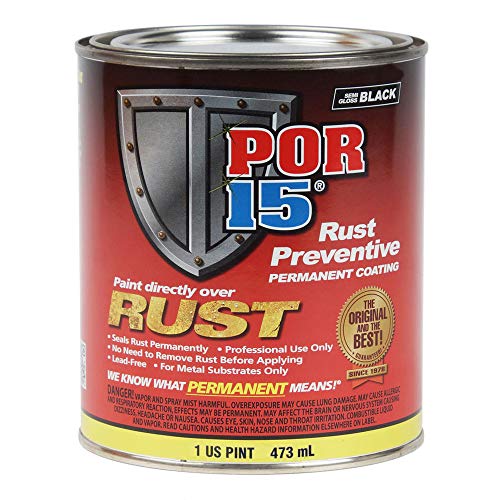 |
POR-15 Rust Preventive Coating (Black) Best Rust Sealer Brush-on moisture-cured coating, seals rust, rock-hard non-porous film |
8.9 | 🛒 Check Price |
 |
Plasti Dip Performix Spray (Matte Black) Best Removable Finish Peelable rubberized coating, matte finish, air-dries in about 30 minutes |
8.6 | 🛒 Check Price |
 |
Rust-Oleum Rust Reformer Spray (Flat Black) Best Rust Primer Rust-converting primer, bonds to rust, flat black, paintable in 24 hours |
8.3 | 🛒 Check Price |
 |
Krylon Fusion All-In-One Spray (Gloss Black) Best No-Prime Convenience Paint and primer in one, bonds without sanding, dries in about 25 minutes |
8.1 | 🛒 Check Price |
1. Rust-Oleum Automotive Enamel Spray (Gloss Black): Best Overall
Rust-Oleum Automotive Enamel is the paint we reach for first on steel rims, and it earned the top spot by being the most forgiving and the most durable can in the test. The oil-based enamel lays down a thick, self-leveling film that fills minor texture from sanding and dries to a deep gloss that reads close to a factory finish. On bare steel that we scuffed and wiped with prep solvent, adhesion was excellent, and after weeks of daily driving the painted faces still wiped clean of brake dust without the dullness that cheaper enamels show.
The honest weakness is patience. This is a slow-curing enamel, and while it feels dry to the touch quickly, it stays soft underneath for days. Mount a tire too early and you’ll press fingerprints into the lug seats. The recoat rule is also unforgiving: spray a second coat inside the first hour or wait the full 48, because hitting the in-between window can lift or wrinkle the first coat. Plan your timing and this is the best all-around steel rim paint you can buy in a can.
- Rust-preventive oil-based enamel formulated for automotive surfaces
- Any-angle spray tip so you can hit the barrel and lug area
- Resists chipping, fading, and most caustic wheel cleaners
Pros: Tough enamel film that holds gloss after months of brake dust; Sticks well to clean bare steel and over primer; Wide availability in matching primer and clear topcoat
Cons: Long full cure time, so wheels need to sit before mounting; Recoat window matters, miss it and the next coat can wrinkle
2. VHT Wheel Paint (Gloss Black): Best for Brake Heat
VHT Wheel Paint is purpose-built for exactly this job, and it shows. Where general enamels are formulated for broad use, VHT tunes its film to survive the specific abuse a wheel takes: heat radiating off the brake rotor, the grit and salt thrown up off the road, and the aggressive cleaners owners blast on the spokes. In our test it laid down a clean, even gloss with very little orange peel, and the cured surface laughed off the acid-based wheel cleaner that left a haze on a couple of the cheaper finishes.
The compromise is selection and prep. The wheel-specific line keeps colors fairly limited, so if you want anything exotic you’re out of luck. And while VHT markets the paint as self-priming, our most durable panels were the ones we shot over a proper wheel primer first, which adds a step and dry time. For anyone running real braking heat, towing, or driving through winter salt, this is the finish we trust most, and it’s a very close second to our overall pick.
- Engineered specifically for wheels, not general-purpose spray paint
- Withstands brake heat, road salt, and harsh wheel cleaner chemicals
- Self-priming on properly prepped steel for a faster job
Pros: Holds up to the heat soak that warps lesser finishes; Excellent resistance to acidic and alkaline wheel cleaners; Smooth, even gloss with minimal orange peel
Cons: Color range is narrower than general enamel lines; Best results still want a dedicated wheel primer underneath
3. Dupli-Color Wheel Coating (Gloss Black): Best Easy Application
Dupli-Color Wheel Coating is the can we hand to anyone painting rims for the first time. The EZ Touch 360 nozzle has a wide, controllable fan and a comfortable trigger that you can run at any angle, including upside down to reach the inner barrel, and it puts far fewer runs on the wheel than a standard button tip. The acrylic formula is built for wheel duty with solid heat and chemical resistance, and it handles fast, so you can build a clean set of coats in an afternoon instead of waiting around between passes.
The tradeoff for that easy, fast-drying behavior is film thickness. Each coat goes on thinner than a heavy enamel, so you’ll need three light coats rather than two to get full, even depth, and a rushed two-coat job can look slightly translucent over dark primer. It’s also less able to hide sins underneath: if you leave any flash rust, this coating will telegraph it. Prep the steel properly and apply patient coats, and the finish is genuinely excellent for the effort.
- EZ Touch 360 fan-spray nozzle for even coverage at any angle
- Acrylic formula tuned for high heat and chemical resistance
- Dries to the touch fast so coats stack quickly
Pros: Comfortable nozzle that reduces runs for beginners; Quick handling time speeds up a full set; Crisp gloss that matches well to factory black wheels
Cons: Film is thinner than enamel, so it needs more coats for depth; Less forgiving over rust that wasn’t fully removed
4. POR-15 Rust Preventive Coating (Black): Best Rust Sealer
POR-15 isn’t a glamour finish, it’s a rust sealer, and on pitted, rusty steel rims nothing else in this guide protects like it. The coating is moisture-cured, meaning it actually uses humidity to harden into a dense, non-porous shell that locks existing surface rust away from oxygen and water. Brushed onto a wheel that has seen a decade of winters, it self-levels into a tough black film that, once cured, is genuinely rock-hard and shrugs off chips that would mark a standard enamel. As a foundation under a colored topcoat, it’s the most bulletproof base you can put on a steel wheel.
You have to respect its quirks. POR-15 isn’t UV stable on its own, so left bare in the sun it eventually chalks and dulls, which means you really want a compatible topcoat or wheel paint over it for a finished look. It’s also famously unforgiving to handle: it bonds to skin and tools as eagerly as it bonds to steel, the cure depends on getting the prep and humidity right, and a spill is nearly impossible to remove. Use it as the sealing step in a system rather than a one-and-done color coat.
- Moisture-cured film that actually bonds to and seals rusted steel
- Dries to a rock-hard, non-porous, chip-resistant surface
- Brush or roll application for thick, even coverage on barrels
Pros: Best-in-class at stopping existing rust from spreading; Extremely hard, durable film once fully cured; Ideal base under a color topcoat on crusty wheels
Cons: Needs a UV topcoat or it chalks in sunlight over time; Unforgiving to work with and very hard to remove if spilled
5. Plasti Dip Performix Spray (Matte Black): Best Removable Finish
Plasti Dip is the pick for anyone who wants a fresh look without the commitment of permanent paint. It sprays on as a flexible rubberized coating that builds up in several quick coats and air-dries fast, and because the cured film is rubber rather than a hard shell, it absorbs curb scuffs and light impacts that would chip enamel. The real party trick is that it peels off in sheets when you’re done with it, so you can run matte black for a season, peel it, and go back to bare steel or a new color with no sanding and no solvent.
Treat it as a finish with a shelf life, not a forever coat. On a wheel, the bead area and the lug seats see the most abuse, and that’s exactly where Plasti Dip starts to lift first, especially if a tire shop mounts a hot tire against fresh coating or you hit it with harsh acid cleaner. It also won’t seal rust the way a true coating does. For a low-risk, reversible refresh on steelies you might restyle again, though, nothing else here gives you this kind of freedom.
- Flexible rubber coating that resists chipping and curb scuffs
- Peels off cleanly if you want to revert or change color
- No primer needed and forgiving over imperfect surfaces
Pros: Fully reversible, so you can experiment without commitment; Rubber film flexes instead of chipping on curb contact; Very easy to apply with little prep
Cons: Not as permanent as enamel and wears at the bead and lugs; Hot tire mounting and aggressive cleaners can lift edges
6. Rust-Oleum Rust Reformer Spray (Flat Black): Best Rust Primer
Rust Reformer earns its place as the prep step that makes everything else last. Sprayed onto rusty steel, it reacts with the oxidation and converts it into a stable, flat black surface that paint can actually grip, which means you don’t have to grind every rim back to shining bare metal before you refinish. On our worst trailer wheel it knocked down hours of wire-wheel work and gave the topcoat a sound, bonded base instead of loose rust that would have undermined any color we sprayed over it.
The thing to understand is that this is explicitly a primer, not the look you finish with. The converted surface is a flat, matte black that’s meant to be topcoated, and left bare it offers limited long-term gloss or protection. It also isn’t magic on heavy scale: flaking, thick rust still needs a wire brush first so the reformer can reach sound metal underneath. Used correctly as the first coat under a wheel enamel or coating, it dramatically improves how long the whole job survives.
- Chemically converts existing rust into a paintable flat black surface
- Bonds directly to rusted steel with no sanding to bare metal
- Creates a sound base for any wheel topcoat
Pros: Saves enormous prep time on rusty steelies; Gives topcoats a stable surface to grip; Stops light surface rust from bleeding back through
Cons: It’s a primer step, not a finished color coat; Heavy rust and scale still must be wire-brushed off first
7. Krylon Fusion All-In-One Spray (Gloss Black): Best No-Prime Convenience
Krylon Fusion All-In-One is the convenience choice for clean steel rims that just need a refresh. The paint-and-primer formula is designed to bond to bare metal without a separate primer coat and without sanding, so on a sound, degreased wheel you can go straight to color and save real time. It dries fast, comes in a variety of colors and sheens, and is about as easy to source as spray paint gets, which makes it a sensible option for a quick cosmetic turnaround or a wheel that isn’t facing brutal conditions.
Where it gives ground is durability under true wheel stress. Fusion is a general-purpose coating, not a wheel-tuned one, so it doesn’t match the brake-heat tolerance or the chemical resistance of VHT or the Rust-Oleum automotive enamel when you start hitting it with hot rotors and acid cleaners. It’s also not a rust sealer, so on pitted or previously corroded steel it won’t hold up the way a dedicated system does. For clean rims and easy duty it’s genuinely good and convenient, just not the one I would pick for a salt-belt winter beater.
- Built-in primer bonds to bare steel without a separate prime coat
- Adheres without sanding on clean, sound metal
- Fast dry time and wide color and sheen selection
Pros: Single product handles prime and color to save steps; Quick to handle and easy to find anywhere; Broad color and finish range beyond plain black
Cons: Less heat and brake-dust resistant than wheel-specific paints; Not formulated as a rust sealer for pitted steel
Frequently Asked Questions
Do I need primer before painting steel rims?
In most cases, yes. Primer gives the color coat something to bite into and seals the bare steel against moisture, which is the number one reason refinished rims fail. If your wheels are clean and sound, a paint-and-primer product like Krylon Fusion can skip the separate step, and dedicated wheel paints like VHT are partly self-priming. But on any rim that has seen rust, a rust-converting primer such as Rust-Oleum Rust Reformer or a sealing coat of POR-15 dramatically improves how long the finish lasts. Skipping primer on rusty steel almost always leads to bubbling and peeling within a season.
How do I prep steel rims so the paint actually sticks?
Prep is most of the job. Start by removing the tire or masking it carefully, then strip loose rust, old flaking paint, and brake dust with a wire wheel or sandpaper down to sound metal. Scuff the whole surface so the paint has tooth, then wash and wipe with a wax-and-grease remover or prep solvent so no oils remain. Let it dry completely before you spray. Any rust, oil, or shine left behind is where the new finish will eventually lift, so patience here matters far more than which can you buy.
How many coats of paint do steel rims need?
Plan on two to three light coats of color rather than one heavy pass. Thin coats flash off evenly and resist runs, while one thick coat sags and stays soft underneath. Thicker enamels like the Rust-Oleum automotive line often look full in two coats, while faster, thinner acrylic coatings such as Dupli-Color usually want three for even depth. If you’re using a separate primer or a clear topcoat, let each stage flash for the time on the can. A typical durable job is primer, two to three color coats, and an optional clear.
Will the paint survive brake heat and wheel cleaners?
It depends heavily on the product. General-purpose sprays can soften under repeated brake heat soak and haze when hit with acidic wheel cleaner. Wheel-specific paints such as VHT Wheel Paint and the Rust-Oleum and Dupli-Color wheel lines are formulated to tolerate that heat and resist both acid and alkaline cleaners once fully cured. The key word is cured: even a tough paint is vulnerable for the first several days while it hardens, so keep aggressive cleaners off fresh paint and let the finish reach full cure before you start your normal wash routine.
How long should painted rims cure before I drive on them?
Touch-dry isn’t the same as cured. Most of these paints feel dry in under an hour but stay soft underneath for days, especially the oil-based enamels that cure slowly. As a rule, wait at least 24 hours before handling the wheels and ideally several days before mounting tires or driving in harsh conditions, since pressing a hot tire bead against soft paint will mar it. If you used POR-15 or a heat-resistant wheel coating, follow the can closely, as cure times vary with temperature and humidity and rushing the process is the most common way people ruin an otherwise good job.
Our Verdict
For most people refinishing steel rims, the Rust-Oleum Automotive Enamel Spray is the best overall choice: it’s forgiving to apply, lays down a deep factory-grade gloss, and holds up to brake dust and wheel cleaners as long as you respect its cure time. Our runner up is VHT Wheel Paint, the pick we trust most for real braking heat, towing, and salt-belt winters thanks to its wheel-specific heat and chemical resistance. If your rims are rusty rather than just faded, build your finish on a sealing base of POR-15 or Rust Reformer first, then topcoat with one of these, and the whole job will outlast a quick single-can refresh by years.


