Sport touring tires have to do two jobs that usually pull in opposite directions. They need to grip hard enough to feel planted when you carve a back road, and they need to last long enough that you aren’t shopping for rubber every other weekend. We rode through hot dry tarmac, cold morning commutes, and a fair amount of rain to find the tires that actually balance those demands instead of leaning all the way toward one side.
Below are seven sport touring tires that real riders trust on machines like the Yamaha Tracer, BMW R1250RS, Kawasaki Ninja 1000, and the Honda VFR. We focused on wet grip, warm-up behavior, stability when loaded with luggage and a passenger, and how the rear wears across a long mileage cycle. Every pick here’s a tire we would happily mount on our own bike for a season of mixed riding.
| Photo | Product | Score | Buy |
|---|---|---|---|
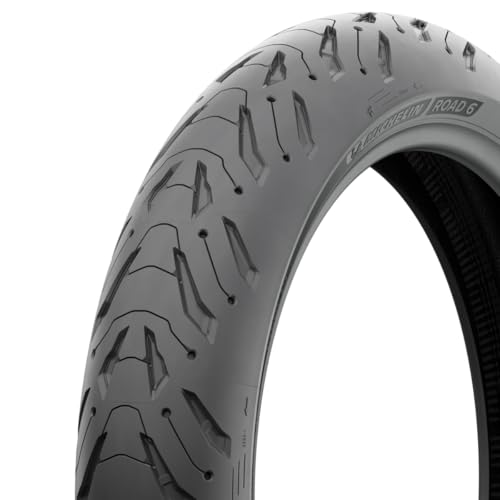 |
Michelin Road 6 Best Overall Silica compound, dual rear compound, available in GT load rating |
9.5 |
ⓘ We may earn a commission from qualifying purchases made through links on this page, at no extra cost to you.
|
 |
Bridgestone Battlax Sport Touring T32 Best Wet Grip Pulse groove tech, GT version for heavyweight tourers |
9.3 | 🛒 Check Price |
 |
Pirelli Angel GT II Best for Heavy Tourers Reinforced carcass, dual compound rear, high mileage focus |
9.2 | 🛒 Check Price |
 |
Continental ContiRoadAttack 4 Best Sporty Feel MultiGrip continuous compound technology, sport-leaning profile |
9.0 | 🛒 Check Price |
 |
Dunlop Roadsmart IV Best All-Round Value Dual compound rear, intuitive response across temperatures |
8.8 | 🛒 Check Price |
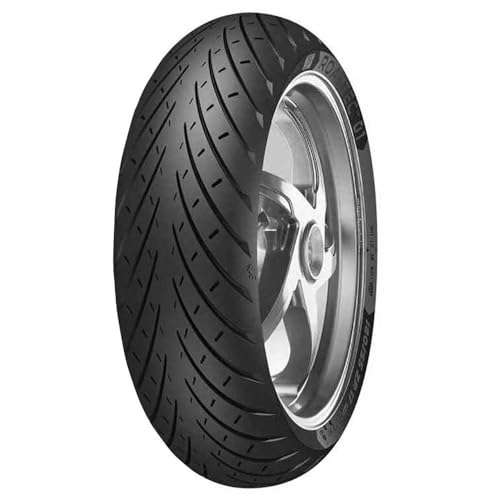 |
Metzeler Roadtec 01 SE Best Cold and Wet Stability SE compound tuned for stability, strong cold weather grip |
8.6 | 🛒 Check Price |
 |
Avon Spirit ST Best Quick Steering Dual compound rear, profile tuned for fast steering response |
8.4 | 🛒 Check Price |
1. Michelin Road 6: Best Overall
The Michelin Road 6 is the tire we kept comparing everything else against. Its standout trait is wet performance, where the new silica compound and water channeling give you a genuine sense that the front is biting even on a soaked, greasy roundabout. It warms up fast too, which matters more than most riders admit, because the first ten minutes of a cold commute are when many crashes happen. On dry roads it turns in cleanly and stays composed when you load it with panniers and a passenger.
The honest weakness is that you pay for this performance, and a full set represents a real investment compared to budget rivals. The center wear is good but not class leading, so a rider who racks up huge straight-line motorway miles may find a harder touring tire lasts longer. For most people who mix spirited canyon runs with daily riding and the occasional downpour, though, the Road 6 is the most complete sport touring tire on the market.
- Improved wet braking over the previous Road 5 generation
- Dual compound rear for grip on the edges and mileage in the center
- GT version stiffens the carcass for heavier sport tourers and two-up loads
Pros: Exceptional wet weather confidence; Quick warm-up so it feels safe on cold mornings; Holds its grip well even as the tire wears down
Cons: Among the pricier options when you total a full set
2. Bridgestone Battlax Sport Touring T32: Best Wet Grip
Bridgestone built the T32 to chase Michelin on wet roads, and it gets remarkably close. The pulse groove pattern moves water out of the way effectively, and the result is a tire that feels trustworthy when the heavens open mid-ride. On dry tarmac it’s arguably even more communicative than the Road 6 at the front, giving you a clear, linear sense of available grip as you tip into a corner. The GT version is the one to fit if you ride a heavy adventure-sport machine loaded with kit.
Where it gives ground is rear longevity. Ride it hard and the rear compound trades some mileage for that grip, so it isn’t the pick if maximum tire life is your top priority. The ride is also a hair firmer than the plush Michelin, which some riders love for feedback and others find slightly busy on coarse surfaces. For a rider who values wet confidence and front-end feel above all, the T32 is a brilliant choice.
- Pulse groove design improves water evacuation and edge rigidity
- Strong dry grip that holds up to aggressive lean angles
- GT variant adds stability for big-bore sport touring machines
Pros: Outstanding wet road traction; Very stable and neutral when leaned over; Confident feedback through the front contact patch
Cons: Rear can wear a touch faster under hard riding; Slightly firmer ride than some rivals
3. Pirelli Angel GT II: Best for Heavy Tourers
The Angel GT II is the tire I would reach for if my bike is a heavyweight, like a fully loaded BMW R1250RT or a Kawasaki Versys 1000 with the whole family aboard. Pirelli reinforced the carcass specifically for that mission, and the payoff is rock-solid stability when you’re cruising at speed with weight over the rear. The dual compound rear stretches the mileage out nicely, so you aren’t punished for putting on the long days these tires are built for.
The trade-off is agility. Compared with the sharper Michelin and Bridgestone, the Angel GT II asks for a bit more input to change direction and feels more deliberate when you’re flicking through a series of tight corners. It’s never vague, just calmer. If you prioritize touring stability and load capacity over flickability, this tire rewards you with composure that more nervous rubber can’t match.
- Reinforced structure designed for heavy, powerful sport tourers
- Dual compound rear balances edge grip with center durability
- Profile tuned for stability when fully loaded two-up
Pros: Excellent stability under heavy loads and luggage; Long wearing rear for big mileage riders; Planted and reassuring at sustained motorway speeds
Cons: Turn-in is a little slower and more deliberate; Not the most playful tire on a tight twisty road
4. Continental ContiRoadAttack 4: Best Sporty Feel
If your idea of touring leans heavily toward the sport side, the ContiRoadAttack 4 is the most fun tire in this group. Continental uses a single continuous compound that gradually changes hardness from center to edge, which dodges the slight transition feeling you get on some dual compound tires. The sporty profile makes the bike feel light and willing, so a sport tourer like a Suzuki GSX-S1000GT carves corners with real enthusiasm and warms up quickly enough to inspire confidence early in a ride.
The cost of that sporting bias is touring mileage. This tire doesn’t last as long as the Angel GT II or a dedicated high-mileage option, so riders who measure success in odometer numbers will feel shortchanged. Wet grip is perfectly safe but a notch behind the Michelin and Bridgestone leaders. Choose it because you want a livelier, more engaging ride and you accept changing tires a bit sooner.
- MultiGrip tech varies hardness across one continuous compound
- Sharp, sporty profile that loves quick direction changes
- Fast warm-up for confident first miles
Pros: Agile, eager handling that feels almost like a sport tire; Quick to reach working temperature; Strong dry grip for spirited riding
Cons: Mileage trails the more touring-focused options; Wet performance is good but not class leading
5. Dunlop Roadsmart IV: Best All-Round Value
The Roadsmart IV is the tire I recommend to riders who don’t want to overthink the decision. Dunlop went for balance rather than a headline-grabbing strength, and the result is a tire that does everything competently. It handles predictably, holds a line without drama, stays consistent whether the road is cold and damp or warm and dry, and the dual compound rear gives respectable mileage. For a rider who tours, commutes, and occasionally enjoys a twisty road, it covers all those bases comfortably.
The flip side of being well rounded is that it doesn’t win any single test outright. Push really hard on the edge and the sportier tires here offer more ultimate grip, and the dedicated wet specialists feel a touch more locked down in heavy rain. None of that undermines the Roadsmart IV as a smart, sensible choice, especially when you weigh what it delivers against the overall package. It’s the safe, satisfying pick.
- Dual compound rear blends grip and wear life
- Consistent feel across a wide temperature range
- Predictable, easy handling for everyday touring
Pros: Well-rounded performance with no glaring weakness; Friendly, predictable handling that builds confidence; Strong value for the overall package
Cons: Doesn’t lead any single category; Edge grip falls short of the sportiest rivals
6. Metzeler Roadtec 01 SE: Best Cold and Wet Stability
The Roadtec 01 SE earns its place for riders who face genuinely mixed and miserable weather. The SE compound was tuned for stability on bigger, heavier machines, and it delivers a planted, trustworthy feel exactly when you need it most, on a cold damp morning or a rainy mountain pass. Steering is neutral and the tire stays composed when the bike is loaded, which makes it a quietly excellent companion for all-season touring in northern climates.
It does show its design priorities when the sun comes out and the road dries up. On a hard, dry sporting ride it lacks the eager sparkle of the ContiRoadAttack 4 or the precise edge of the Battlax T32, feeling capable rather than thrilling. Some newer competitors have also moved ahead on raw mileage figures. If your riding is dominated by cold and wet conditions, though, the dependability of this Metzeler is worth more than a few extra dry-road thrills.
- SE compound prioritizes stability for larger machines
- Reliable grip at lower temperatures and in the wet
- Neutral steering that stays composed under load
Pros: Dependable grip when it’s cold or wet; Stable and unflappable on heavy bikes; Predictable behavior that builds trust quickly
Cons: Less exciting on a hard, dry sport ride; Newer rivals have edged ahead on outright mileage
7. Avon Spirit ST: Best Quick Steering
Avon has a long reputation for tires that steer quickly, and the Spirit ST carries that trait into the sport touring class. The profile makes the bike feel light on its feet, so a sport tourer that normally feels lazy in transitions suddenly wants to dance through a series of bends. The compound has a pleasingly sticky character on a warm dry road, and for the money it punches above its weight as an engaging, fun tire that still handles the touring duties without complaint.
The honest limitation is rear wear. Ride enthusiastically, which this tire actively encourages, and the rear won’t match the high-mileage touring specialists for longevity. Availability can also be patchier than the big four brands depending on your region and bike size. If you can find your fitment and you value a light, quick, grin-inducing steering feel over maximum mileage, the Spirit ST is an underrated and rewarding choice.
- Profile designed for light, quick steering input
- Dual compound rear for a mix of grip and life
- Sticky feel that suits spirited road riding
Pros: Very light and quick to turn in; Grippy and engaging on a fun road; Good value within the sport touring segment
Cons: Rear mileage is modest under enthusiastic use; Less widely stocked than the major brands
Frequently Asked Questions
How long do sport touring motorcycle tires last?
Sport touring tires are built for longevity, so most riders see somewhere between 6,000 and 12,000 miles from a rear and noticeably more from a front, though your exact mileage depends heavily on riding style, bike weight, road surface, and how aggressively you use the throttle. A rider who cruises motorway miles two-up will get far more life than someone hammering the same tire through canyon corners every weekend. Dual compound tires like the Angel GT II and Roadsmart IV stretch rear mileage by using a harder center, while sportier options like the ContiRoadAttack 4 trade some of that life for grip. Always replace a tire before it reaches the wear bars, and inspect for uneven wear, cracking, or squaring off, since a worn profile hurts handling long before the tread fully disappears.
What is the difference between sport touring tires and sport tires?
Sport tires are optimized for maximum dry grip and fast warm-up at the expense of tread life and sometimes wet performance, which suits track days and aggressive short rides. Sport touring tires keep a generous amount of that cornering grip but add wet weather capability, faster cold warm-up for real-world commuting, and far longer mileage through harder center compounds and reinforced carcasses. The result is a tire that feels confident when you push it on a back road yet still gets you across the country comfortably and safely in changeable weather. If you mostly tour, commute, and occasionally enjoy a twisty road, a sport touring tire is the right tool. If you live for track sessions and accept frequent tire changes, a pure sport tire makes more sense.
Are sport touring tires good in the rain?
Wet grip is one of the areas where sport touring tires shine, and it’s a major reason to choose them over pure sport rubber. Tires like the Michelin Road 6 and Bridgestone Battlax T32 use silica-rich compounds and clever groove patterns that evacuate water and keep the contact patch biting on a soaked road. They also warm up quickly, which matters because cold, wet starts are when grip is most fragile. Still, no tire is magic in the rain, so you still need to ease off your inputs, brake earlier and smoother, and respect painted lines, manhole covers, and diesel spills. With a quality sport touring tire underneath you, riding confidently through a downpour becomes genuinely manageable rather than terrifying.
Can I mix different tire brands on the front and rear?
It’s generally not recommended to mix brands or even different models from the same brand on the front and rear, because manufacturers design tire pairs to work together with matched profiles, compounds, and handling characteristics. A mismatched set can produce odd steering behavior, an inconsistent feel as you transition from upright to leaned over, and unpredictable grip levels that undermine your confidence. Many tire makers and bike manufacturers explicitly advise against mixing for exactly these reasons. The safe approach is to fit a matched front and rear set of the same model. If you must replace only one tire, try to keep it the same brand and model as the other, and replace both as a pair when you can.
How do I know which tire size to buy for my motorcycle?
The correct tire sizes are printed in your owner’s manual and usually on a sticker on the swingarm or chain guard, and they’re also molded into the sidewall of your current tires. A typical sport touring size reads something like 120/70ZR17 on the front and 180/55ZR17 on the rear, where the numbers describe width, aspect ratio, construction, and rim diameter. Always match the size your manufacturer specifies, and pay attention to the load and speed ratings, since heavy sport tourers and two-up riders may need a GT or reinforced version like the Michelin Road 6 GT or the Pirelli Angel GT II. If you’re ever unsure, check the fitment against your exact model and year before ordering, because a size that looks close can still handle and fit incorrectly.
Our Verdict
For the best blend of wet weather confidence, quick warm-up, and all-round grip, the Michelin Road 6 is our top pick and the tire most sport touring riders should fit without a second thought. The Bridgestone Battlax T32 is a very close runner up, edging ahead slightly on front-end feel and pure wet traction, so choose it if rain riding and cornering feedback top your list. If you ride a heavy machine loaded with luggage, the Pirelli Angel GT II is the stability champion worth a serious look. Whichever you pick from this list, match the front and rear as a set and choose the GT or reinforced version if your bike runs heavy.
More Tires Guides
Video Guide
Video: Related tutorial from YouTube