A rusty or leaking motorcycle fuel tank is one of those problems that gets worse every time you ride. Flakes of rust clog petcocks and carburetor jets, pinholes weep fuel onto a hot engine, and ethanol pump gas keeps the corrosion alive. A proper tank sealer fixes all of that by coating the inside with a fuel-resistant film that locks down rust and bridges small leaks, so you can keep an original tank on the bike instead of hunting for a clean replacement.
We looked at the sealers riders actually reach for on vintage Hondas, Triumphs, Harleys, and modern steel tanks. The picks below cover full three-part kits, single-bottle coatings, and the prep products that make any sealer last. We judged each on cure hardness, ethanol resistance, how forgiving the application is, and whether the finished coating stays put after a season of real fuel. No product here is perfect, so we called out the real weak spot of each one.
| Photo | Product | Score | Buy |
|---|---|---|---|
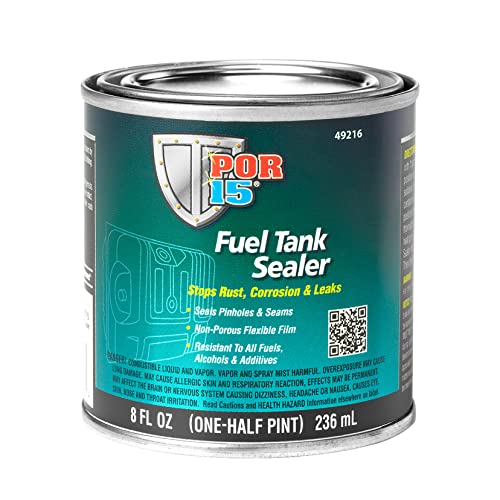 |
POR-15 Fuel Tank Sealer Best Overall Single-part silver-gray coating, 1 US pint, non-porous cured film |
9.5 | 🛒 Check Price |
 |
KBS Coatings Gold Standard Tank Sealer Best Full Kit Three-step Auto Fuel Tank Sealer Kit: cleaner, prep, and gold sealer |
9.3 | 🛒 Check Price |
 |
Caswell Epoxy Gas Tank Sealer Toughest Coating Two-part epoxy sealer, mixed by weight, thick fuel-proof film |
9.1 | 🛒 Check Price |
 |
Red-Kote Fuel Tank Liner Best Single Bottle Single-part red phenolic liner, one quart, brush or slosh apply |
8.9 | 🛒 Check Price |
 |
Kreem Fuel Tank Liner Best for Vintage Tanks Three-part liner system: cleaner, prep, and cream-colored sealer |
8.6 | 🛒 Check Price |
 |
Hirsch Automotive Gas Tank Sealer Best for Restorers Single-part sealer, available in pint and quart, smooth flowing film |
8.4 | 🛒 Check Price |
 |
Evapo-Rust Original Rust Remover Best Prep Step Water-based, non-toxic rust remover, one gallon, soak and pour |
8.2 | 🛒 Check Price |
1. POR-15 Fuel Tank Sealer: Best Overall
POR-15 has become the default answer when a rider asks how to seal a motorcycle tank, and the reputation is earned. The cured coating is genuinely tough, going hard enough to shrug off the constant slosh of ethanol-blended pump gas that destroys weaker sealers. In our use it bridged small pinholes along a bottom seam and left a smooth silver-gray skin with no soft spots after a full cure. For most steel motorcycle tanks, one pint is plenty to roll the inside fully and pour off the excess.
The honest weakness is that POR-15 is only as good as your prep. It wants a clean, dry, lightly etched interior, so you really do need to degrease, de-rust, and use the metal prep step first. Skip that and the coating can lift in sheets later, which is the worst possible failure inside a fuel tank. Storage is the other gripe. Once the can is cracked, the remaining sealer skins over and is tough to keep usable, so plan to do the whole tank in one session.
- Bonds directly to clean bare and lightly etched steel inside the tank
- Cured film resists ethanol gas, diesel, and most pump fuels
- One pint coats a typical motorcycle tank with a thin even layer
Pros: Extremely hard, durable cure that handles ethanol fuel well; Trusted name with a long track record on bike and car tanks; Bridges small pinholes and seals weeping seams reliably
Cons: Demands thorough degreasing and rust prep or it will not bond; Once the can is opened the leftover product is hard to store
2. KBS Coatings Gold Standard Tank Sealer: Best Full Kit
KBS sells the Gold Standard as a complete kit, and that is exactly why it lands so high. You get the Klean degreaser, the RustBlast metal prep, and the gold sealer in one box, so there is no guessing about which products are compatible. The gold tint is more useful than it sounds, because it makes thin or missed areas obvious as you slosh and rotate the tank, which is hard to judge with a clear or silver coating. The final film is hard, glossy, and stands up well to ethanol pump gas.
The catch is time. Doing all three stages properly, with the flush and dry periods between them, eats a full day, and rushing the prep or sealer cure is the main way people get a poor result. The kit also assumes a fairly clean tank to start. If yours is packed with heavy scale, you may still want an extra round of de-rusting before the RustBlast step. Do the work patiently and the KBS coating is a very bulletproof sealing jobs you can do at home.
- Complete kit includes Klean, RustBlast prep, and the gold sealer
- Gold-tinted coating makes it easy to see full interior coverage
- Formulated to resist ethanol fuels and modern fuel additives
Pros: Everything for clean, prep, and seal comes in one box; Tinted sealer shows missed spots so coverage is even; Strong ethanol resistance for daily-rider tanks
Cons: Three-stage process takes patience and a full day of drying time
3. Caswell Epoxy Gas Tank Sealer: Toughest Coating
Caswell is the sealer racers and restorers reach for when they want maximum chemical resistance. Because it is a genuine two-part epoxy, the cured lining is thicker and tougher than most single-part coatings, and it laughs off the harsh fuels that eat lesser products, including ethanol, race gas, and methanol blends. It is also one of the few sealers people trust on fiberglass and certain plastic tanks, which is a real advantage for cafe racers and older European bikes.
That epoxy strength comes with stricter handling. You have to mix the two parts by the correct ratio, and getting that wrong means a film that never fully cures or one that is brittle. The thicker product also needs steady, patient rotation so it coats evenly instead of pooling at the bottom, and pot life is limited once mixed. For a careful builder this is a near-permanent fix. For someone who wants to splash a sealer in and move on, the precision required can be a stumbling block.
- Two-part epoxy formula builds a thick, fuel-impervious lining
- Holds up to ethanol, race gas, and methanol blends
- Popular for fiberglass and plastic tanks as well as steel
Pros: Outstanding chemical resistance, including aggressive race fuels; Thick epoxy lining is great for bridging slightly larger flaws; Works on fiberglass and some plastic tanks where others fail
Cons: Must be mixed accurately by ratio, leaving no room for error; Thicker epoxy needs careful rotation to avoid puddling
4. Red-Kote Fuel Tank Liner: Best Single Bottle
Red-Kote has been lining fuel tanks since long before ethanol was a worry, and it remains a great choice when you want a no-fuss, single-bottle solution. There is nothing to mix. You simply pour it in, slosh and rotate to coat every surface, then pour out the excess. The signature bright red color is genuinely helpful, because it stands out against bare metal and makes it obvious when you have full coverage and where you have not. On clean vintage motorcycle tanks it leaves a smooth, fuel-tight liner.
Its limits show up on badly corroded tanks. Red-Kote seals and protects well, but it is not the heavy-duty rust bridger that a thick two-part epoxy is, so you want to remove as much scale as possible before lining. The solvent odor is also strong, so this is strictly a job for an open garage or outdoors with a fan running. Treat it as a finishing liner over properly prepped metal rather than a miracle cure for a rotted tank, and it performs beautifully.
- Bright red phenolic coating shows coverage clearly inside the tank
- Single-bottle product with no mixing required before use
- Long-standing favorite for vintage and agricultural fuel tanks
Pros: Easy one-part application with no ratio to measure; Red color makes full interior coverage easy to confirm; Proven for decades on older carbureted fuel tanks
Cons: Less aggressive on heavy rust than two-part epoxy systems; Needs good ventilation, the solvent smell is strong
5. Kreem Fuel Tank Liner: Best for Vintage Tanks
Kreem is the sealer many of us grew up seeing on the workbench, and it still has a place for classic motorcycle and moped tanks. The three-part kit walks you through cleaning, prepping, and sealing, and the cream-colored coating lays down thin and smooth. On a small vintage tank that has been properly cleaned and bone-dried, Kreem produces a tidy liner and is widely stocked, so it is easy to find when you are mid-project.
You have to respect its weaknesses, though, because they are well documented. Kreem is more sensitive than newer formulas to two things, leftover moisture and long-term ethanol exposure. If any water remains in the tank, the coating can fail to adhere, and tanks run on modern ethanol pump gas for years sometimes see the liner soften or peel. For a show bike, a tank that runs ethanol-free fuel, or a careful restorer who dries the tank thoroughly, it works. For a hard daily rider on pump gas, the tougher epoxy and POR-15 options are a safer bet.
- Classic three-step kit aimed at small motorcycle and moped tanks
- Cream-colored sealer coats the interior in a smooth thin film
- Long history on older Japanese and European bike tanks
Pros: Familiar, widely available kit for classic bike restorers; Complete clean, prep, and seal steps included; Good results on properly dried, ethanol-free setups
Cons: Can soften or lift if exposed to long-term ethanol fuel; Very sensitive to moisture left in the tank before sealing
6. Hirsch Automotive Gas Tank Sealer: Best for Restorers
Hirsch is a name you hear from old-school restoration shops, and its tank sealer reflects that audience. It is a single-part product that flows and self-levels nicely, which means it coats the inside of awkward, baffled, or odd-shaped tanks more evenly than thicker sealers that tend to pool. Application is simple, with no ratios to measure, and the resulting film is smooth and consistent. For someone restoring a classic bike who wants a clean, professional-looking liner, it is a solid choice.
The honesty here is that Hirsch is still a coating, not a substitute for prep. You must remove rust and degrease thoroughly, because the self-leveling film will faithfully follow any grease or scale you leave behind and bond poorly there. It is also less widely stocked than POR-15 or KBS, so you may have to seek it out rather than grab it locally. Within those limits, restorers consistently get a tidy, durable result, which is why it keeps a loyal following.
- Flows out to a thin, even film that does not build up too thick
- Single-part product that pours and slosh-coats easily
- Trusted among classic car and motorcycle restoration shops
Pros: Self-leveling film coats tricky baffled tanks evenly; No mixing needed, straightforward slosh application; Good reputation in the vintage restoration community
Cons: Still requires careful rust removal and prep beforehand; Less commonly stocked than the biggest sealer brands
7. Evapo-Rust Original Rust Remover: Best Prep Step
Evapo-Rust is not a sealer, and we include it on purpose, because the single biggest reason tank sealers fail is poor rust removal first. This water-based remover dissolves interior rust with no acid, no scrubbing, and no choking fumes. You pour it into the tank, let it soak, then drain and rinse, and the rust simply lets go. It is non-toxic and safe to use in a closed garage, and you can pour the used solution back into the jug and reuse it until it is spent, which makes one gallon stretch across several projects.
Treat it strictly as the prep stage. Once Evapo-Rust strips a tank back to clean bare steel, that surface will flash-rust quickly if you leave it wet or exposed to humid air, so you need to dry it fast and move straight into your metal prep and sealer. Used that way it is a great partner to any of the coatings above, and it is the step that turns a marginal sealing job into one that actually lasts. As a standalone fix it does nothing, because the tank still needs lining afterward.
- Dissolves rust without acid, scrubbing, or harsh fumes
- Pour in, let the tank soak, then drain and rinse
- Safe on bare steel and reusable for multiple cleanups
Pros: Removes interior rust without aggressive acids or scrubbing; Non-toxic and low-odor, safe to use in a home garage; Reusable until exhausted, so one gallon goes a long way
Cons: It is a rust remover, not a sealer, so a coating is still needed; Bare steel can flash-rust fast if not dried and sealed quickly
Frequently Asked Questions
Do I really need to remove all the rust before sealing a motorcycle tank?
Yes, and this is the step most people get wrong. Tank sealers are designed to bond to clean, lightly etched metal, not to loose rust or scale. If you coat over flaking rust, the sealer sticks to the rust instead of the steel, and later it can peel away in sheets that clog your petcock and carburetor. That is far worse than the original leak. Use a rust remover like Evapo-Rust or the prep stage in a full kit, get the interior back to sound bare metal, dry it completely, then seal. Good prep is the difference between a coating that lasts years and one that fails in a season.
Which tank sealer is best for ethanol pump gas?
If your bike runs everyday ethanol-blended fuel, choose a coating built to resist it. POR-15 Fuel Tank Sealer, KBS Gold Standard, and Caswell two-part epoxy all hold up very well to ethanol over the long term, which is why they top this list. Older formulas like Kreem can soften or peel when soaked in ethanol for years, so they are better suited to show bikes or tanks that run ethanol-free fuel. When in doubt, the epoxy and POR-15 style coatings are the safest pick for a daily rider on modern pump gas.
Can I use these sealers on a plastic or fiberglass motorcycle tank?
Most tank sealers are formulated for steel tanks, so do not assume one will work on plastic or fiberglass. The standout exception is Caswell Epoxy, which is widely used to line fiberglass and certain plastic tanks, a common need on cafe racers and some older European bikes whose tanks weep fuel through the resin. Always confirm material compatibility on the specific product before you start, because the wrong coating on plastic can fail to bond or even react with the tank. When the tank is steel, any sealer on this list is a candidate.
How long does a tank sealer need to cure before I add fuel?
Cure time varies by product and by temperature, but the rule is to wait longer than you think. Single-part coatings like POR-15 and Red-Kote generally want several days of cure in a warm, well-ventilated space before fuel goes back in, and two-part epoxies like Caswell also need a full cure to reach maximum chemical resistance. Adding gas to a half-cured liner is a classic way to ruin the job, because the fuel attacks the soft film. Always follow the specific instructions on your product, keep the tank warm rather than cold, and give it extra time in humid weather.
Will a tank sealer fix a tank with pinhole leaks or rust holes?
Small pinholes and weeping seams are exactly what these sealers handle well, and POR-15 and the thicker two-part epoxies are particularly good at bridging those tiny flaws once the surface is properly prepped. What a sealer cannot do is rebuild a tank that is rotted through with large holes or paper-thin metal. In that case you need to braze, solder, or weld the hole first, or have a pro repair it, and then seal the interior as a final protective liner. Think of sealer as protection and pinhole insurance, not as structural metal repair.
Our Verdict
For most riders, POR-15 Fuel Tank Sealer is the top pick, thanks to its rock-hard cure, excellent ethanol resistance, and long proven track record on motorcycle and car tanks, provided you do the prep work it demands. Our runner up is the KBS Coatings Gold Standard Kit, which earns its spot by including cleaner, prep, and a tinted sealer in one box, taking the guesswork out of compatibility and coverage. Whichever you choose, remember that every great sealing job starts with thorough rust removal, so a product like Evapo-Rust at the prep stage is the quiet hero that makes the coating last.
More Engine Parts Guides
Video Guide
Video: Related tutorial from YouTube