A blown or weeping head gasket on a diesel is no small problem. Higher compression ratios, hotter combustion, and the constant heat cycling of a hard-working oil burner put far more stress on the gasket than a typical gas engine ever sees. When you start losing coolant, see white smoke at the tailpipe, find bubbles in the overflow, or watch the temperature gauge climb, a chemical sealer can buy you real time and, in many cases, fix the leak outright without pulling the head.
We looked at the head gasket and block sealers that are genuinely formulated to survive diesel combustion pressure, not just the light-duty stop-leak bottles meant for small gas engines. The list below ranks seven products that real owners trust on trucks, tractors, vans, and heavy equipment. We weighed how well each handles diesel heat, whether it can stay in the cooling system long term, how easy the flush procedure is, and how honest each brand is about what it can and can’t repair.
| Photo | Product | Score | Buy |
|---|---|---|---|
 |
Steel Seal Head Gasket Sealer Best Overall Liquid sealer, treats up to a large diesel cooling system, designed for permanent repair |
9.5 |
ⓘ We may earn a commission from qualifying purchases made through links on this page, at no extra cost to you.
|
 |
BlueDevil Head Gasket Sealer Runner-Up Sodium silicate sealer, no flush required, safe for diesel and gas cooling systems |
9.3 | 🛒 Check Price |
 |
K-Seal HD Heavy Duty Coolant Leak Repair Best for Heavy Duty Heavy-duty formula, no draining needed, treats large commercial cooling systems |
9.1 | 🛒 Check Price |
 |
Bar's Leaks HG-1 Head Gasket Fix Best Value Head gasket repair formula with conditioners, single-bottle treatment for cars and light trucks |
8.9 | 🛒 Check Price |
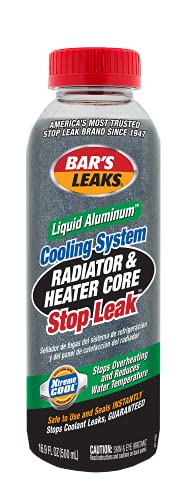 |
Bar's Leaks 1186 Block Seal Liquid Aluminum Most All-around Liquid aluminum and sodium silicate blend for head gaskets, blocks, and radiators |
8.6 | 🛒 Check Price |
 |
Permatex 24125 Head Gasket and Block Repair Strongest Bond Sodium silicate repair sealant for head gaskets and cracked blocks, cures to a hard seal |
8.4 | 🛒 Check Price |
 |
ATP AT-205 Re-Seal Leak Stopper Best for Seals and Seeps Rejuvenates rubber seals and gaskets, non-clogging, safe for oil and coolant systems |
8.1 | 🛒 Check Price |
1. Steel Seal Head Gasket Sealer: Best Overall
Steel Seal earns the top spot because it was built around exactly the failure diesels suffer most, a combustion leak that pushes hot gas into the coolant. Rather than relying on particles that simply lodge in a gap, it uses a heat-cured chemical bond that sets where combustion heat reaches it. That’s the right idea for a diesel, where pressure across the gasket is brutal and a loose particle plug tends to blow straight back out. Owners of pickups, vans, and farm equipment report it sealing coolant-into-cylinder leaks that lighter products couldn’t touch.
The honest weakness is the procedure. To get the best result you drain the old coolant, run the product with water through a specific warm-idle cycle, then let it cure before refilling. Skip steps or rush it and results drop sharply. It also can’t perform miracles on a head that’s badly warped or a crack wide enough to see, since at that point the metal itself needs attention. Follow the directions carefully, though, and on a moderate diesel leak this is the most reliable bottle on the shelf.
- Cures under combustion heat to bond inside the leak path
- Stays in the system as a long-term fix rather than a temporary patch
- Works on cracked heads, blocks, and blown head gaskets
Pros: Engineered specifically for the heat and pressure a diesel produces; Long history of success on trucks and larger engines; Brand offers real customer support and a clear procedure
Cons: The full flush and idle procedure takes patience and a few hours; Won’t save a severely warped head that needs machining
2. BlueDevil Head Gasket Sealer: Runner-Up
BlueDevil is the sealer we recommend to anyone who wants serious holding power without a complicated flush routine. It uses a particle-free chemistry that flows with the coolant and then cures at the leak under heat, so it can reach a head gasket breach, a heater core, or a cracked block. Because there’s nothing solid in the bottle to settle out, it doesn’t gum up the radiator or heater core, which is a common fear with cheaper stop-leak products. On diesel pickups and work vans it has a strong reputation for sealing the slow coolant losses that show up as a creeping temperature gauge.
The catch is that BlueDevil works best in a reasonably clean system. If your coolant is full of rust and sludge, the sealer can bind to the debris instead of the leak, so a basic flush beforehand still pays off even though the label says you can skip it. Sizing also matters. A big diesel cooling system may need a second bottle to circulate enough product, and trying to stretch one bottle too far is a frequent reason people think it failed. Match the dose to your coolant capacity and it performs.
- No engine flush needed before use on most systems
- Won’t clog the heater core, radiator, or water pump
- Compatible with all antifreeze types and diesel engines
Pros: Very simple install for a sealer of this strength; Trusted on large trucks and heavy-duty engines; Leaves no particles that can block small passages
Cons: Needs a clean cooling system to cure properly; One bottle may not be enough for a very large engine
3. K-Seal HD Heavy Duty Coolant Leak Repair: Best for Heavy Duty
K-Seal HD is the heavy-duty cousin of the familiar K-Seal bottle, and the HD version is the one diesel owners want. It’s formulated and sized for the larger coolant volumes found in trucks, tractors, and commercial equipment, and it stays compatible with whatever coolant is already in the system. The appeal is speed. You shake the bottle, pour it into a warm engine, and let it circulate. There’s no draining, no special idle cycle, and no mess, which makes it a sensible thing to keep in the toolbox for a leak that appears in the field far from a workshop.
Its limit is the nature of the leak. K-Seal HD shines on hairline cracks and small to moderate gasket weeps, the kind that lose coolant slowly. Ask it to bridge a wide gap or a fully failed gasket and it can struggle, because the particle-and-fiber blend it relies on needs a narrow path to grab onto. On the very largest diesels you may also need to scale the dose up. Used within those limits it’s among the most convenient and dependable repairs you can pour from a bottle.
- Heavy-duty version made for trucks, tractors, and big diesels
- Just shake and pour with no flush or draining required
- Seals head gaskets, blocks, radiators, and heater cores
Pros: Fastest and simplest application on the list; Sized and formulated for large commercial cooling systems; Works alongside existing coolant without a full change
Cons: Best on small to moderate leaks rather than a wide breach; Heavier dosing needed on the biggest engines
4. Bar's Leaks HG-1 Head Gasket Fix: Best Value
Bar’s Leaks HG-1 is the dedicated head gasket product from one of the oldest names in cooling system repair, and it offers a lot of sealing capability for the value. Unlike the brand’s general-purpose stop-leak tablets, HG-1 is tuned for the specific job of closing a head gasket breach, and it adds conditioners that look after the water pump seal and other rubber components while it works. For a light-duty diesel such as a smaller van or SUV losing a little coolant, it’s an easy single-bottle treatment that doesn’t demand a full flush.
Where it falls short is sheer scale. HG-1 is built around the cooling capacity of cars and light trucks, so on a full-size diesel pickup or anything heavier you’re stretching it past its comfort zone and may want a heavy-duty option instead. It also rewards a proper warm-up and circulation procedure, and people who pour it into a cold engine and drive off tend to be the ones left disappointed. Treat it as the right tool for smaller diesels and it delivers honest, repeatable results.
- Targets head gasket, freeze plug, and heater core leaks
- Includes conditioners that help protect the water pump seal
- One-bottle treatment for most cooling systems
Pros: Strong sealing performance for the value it delivers; Long-established brand with wide availability; Conditioners reduce the risk of seal damage during use
Cons: Aimed more at light-duty diesels than large trucks; Requires a careful warm-up procedure for best results
5. Bar's Leaks 1186 Block Seal Liquid Aluminum: Most Multi-purpose
Bar’s Leaks 1186 Block Seal with Liquid Aluminum takes a different approach by carrying real aluminum particles in a sodium silicate base. When that mix reaches the heat of a leak it cures into a hard, metallic plug that bonds to the surrounding metal, which is why the brand markets it as a permanent repair rather than a temporary one. That makes it the most flexible bottle here. If you’re losing coolant but can’t tell whether it’s the head gasket, a hairline crack in the block, or the radiator, this product is formulated to handle all of them.
The trade-off for that strength is process. To cure correctly it wants a clean system and the full flush, fill, and warm-run cycle the directions describe, and skipping that step is the main reason a treatment fails to hold. It’s also a fairly aggressive sealer, so for a tiny seep it can be more than the job needs. But when a diesel has a genuine coolant leak of uncertain origin and you want one bottle that can attack any of the likely culprits, 1186 is a smart, capable pick.
- Liquid aluminum bonds permanently inside the leak
- Seals head gaskets, cracked blocks, and radiator cores
- Pour-and-go with no engine teardown
Pros: Permanent metallic bond once cured; Handles plenty of coolant leak locations; Good choice when you’re unsure where the leak is
Cons: Needs the recommended flush and run cycle to cure fully; Can be too aggressive for very minor seeps
6. Permatex 24125 Head Gasket and Block Repair: Strongest Bond
Permatex 24125 is for the owner who wants the hardest, most permanent seal a bottle can provide and is willing to do the work to get it. Its sodium silicate formula cures into a glass-hard bond inside the gasket or crack, and once set it stands up to the sustained heat a diesel throws at it. When the procedure is followed correctly this is a very durable chemical repairs you can make without splitting the engine, and it’s a genuine fix on a real head gasket failure, not just a band-aid for a slow weep.
That durability comes with the strictest procedure on this list. You generally need to remove the thermostat, drain and flush the system, run the product through a defined heat cycle, then drain it again before refilling with coolant. Every one of those steps matters, and the people who report poor results almost always skipped one. If you’re comfortable spending the time and following directions to the letter, Permatex rewards you with a seal that can outlast the rest. If you want something you can pour and forget, look higher up the list.
- Forms a permanent seal in head gaskets and engine blocks
- Sodium silicate chemistry cures hard under combustion heat
- Withstands the high temperatures of a working diesel
Pros: Creates one of the hardest, most durable seals available; Backed by a well-known engine chemical brand; Holds up to sustained diesel operating temperatures
Cons: Strict thermostat-removal and flush procedure required; Less forgiving of mistakes than the no-flush sealers
7. ATP AT-205 Re-Seal Leak Stopper: Best for Seals and Seeps
ATP AT-205 Re-Seal earns a place because it solves a slightly different problem, the slow seep that comes from old, hardened rubber rather than a cracked surface. Instead of plugging a gap with particles, it reconditions and swells the rubber seals and gaskets themselves so they grip again. On a high-mileage diesel that’s sweating oil or coolant from tired seals, weeping front and rear main areas, or a gasket that has simply gone hard with age, AT-205 is often the right answer where a particle sealer would do nothing. It’s also non-clogging and safe across oil and coolant systems, so it won’t create new problems while it fixes the old one.
Its honest limit is that it isn’t a head gasket sealer in the combustion sense. If hot gas is pushing into your coolant or you have a properly blown gasket, AT-205 isn’t built to bridge that breach and you should reach for one of the dedicated sealers above. It also works over time, swelling seals across days of driving rather than sealing on the spot. Used for what it’s, a seal rejuvenator for seeps and tired gaskets, it’s among the most useful bottles a diesel owner can keep on the shelf.
- Restores and swells worn rubber seals and gaskets
- Non-clogging formula that won’t harm the cooling system
- Works in oil, coolant, and other automotive fluids
Pros: Excellent on weeping seals and minor gasket seeps; Won’t clog or thicken in the system; Adaptable across multiple fluid systems on a diesel
Cons: Not designed to bridge a fully blown head gasket; Works gradually rather than sealing instantly
Frequently Asked Questions
Does head gasket sealer really work on a diesel engine?
Yes, with realistic expectations. A quality sealer that’s formulated for diesel heat and pressure, such as Steel Seal or BlueDevil, can genuinely fix a hairline or moderate head gasket leak by curing inside the breach. It works best when the leak is caught early and you follow the flush and warm-up procedure on the bottle. What a sealer can’t do is repair a head that’s badly warped, a crack wide enough to see, or a gasket that has completely let go. For those cases the only real fix is mechanical repair. Used on the right kind of leak, though, a good diesel sealer can save a major job.
Why do diesel engines need a heavy-duty sealer instead of a regular one?
Diesels run much higher compression and combustion pressure than gas engines, and they cycle through a lot of heat under load. That pressure tends to blow weak particle-based stop-leak plugs right back out of the gasket. Heavy-duty and head-gasket-specific formulas use chemistry that cures and bonds under heat, so the seal can hold against diesel combustion pressure. Many diesels also have far larger cooling systems, so the dose needs to be sized accordingly. A light-duty bottle meant for a small car simply won’t have the holding power or the volume to seal a working diesel reliably.
Do I have to flush the cooling system before adding sealer?
It depends on the product, but a flush almost always improves the result. Some sealers like BlueDevil and K-Seal HD advertise no-flush use, and on a clean system that’s true. However, if your coolant is rusty or full of sludge, the sealer can bind to that debris instead of the leak, so a basic flush still helps it work. Other products, particularly the sodium silicate types like Permatex and Bar’s Leaks 1186, require a proper drain, flush, and sometimes thermostat removal to cure correctly. Always read the directions for your specific bottle, because skipping a required step is the number one reason a sealer fails to hold.
Will head gasket sealer clog my radiator or heater core?
A good modern sealer shouldn’t, as long as you use the right product and the correct dose. Particle-free chemistries like BlueDevil are specifically designed to flow through and cure only at the leak, leaving the radiator, heater core, and water pump clear. Products that carry fibers or particles, including some general stop-leak tablets, carry more risk of blocking small passages if you overdose them or pour them into a dirty, neglected system. Stick to a sealer made for head gaskets, match the dose to your coolant capacity, and start with a reasonably clean system, and clogging is rarely an issue.
How long will a head gasket sealer last on a diesel?
That varies with the product and the severity of the leak. The chemical-bond and sodium silicate sealers such as Steel Seal, Permatex, and Bar’s Leaks 1186 are designed as permanent repairs and can last the life of the engine on a small or moderate leak that was sealed properly. Lighter particle-based products may hold for a long time on a tiny weep but should be viewed as a strong temporary fix on a larger one. The single biggest factor is how well you followed the procedure and how bad the leak was to begin with. A clean install on an early-stage leak gives the most durable result.
Our Verdict
For most diesel owners facing a coolant leak or an early head gasket failure, the Steel Seal Head Gasket Sealer is our top pick. It’s engineered for the heat and pressure a diesel produces, it stays in the system as a long-term repair rather than a quick patch, and the brand backs it with real support. If you want a strong runner up, the BlueDevil Head Gasket Sealer is the one to grab. It needs no complicated flush on a clean system, it won’t clog the heater core or radiator, and it has a long track record on trucks and larger engines. Whichever you choose, remember that a sealer works best on a hairline or moderate leak caught early. A badly warped head or a fully cracked block still belongs in a shop.


