Brake dust isn’t just dirt sitting on the surface of your wheels. As pads wear, tiny iron particles get blasted off and embed themselves into the clear coat and barrel of your wheels, where they corrode and turn into those stubborn orange and brown specks that no amount of regular soap will shift. An iron remover (also called a fallout remover) uses a chemical reaction to dissolve those embedded particles, bleeding purple as it works so you can actually see the contamination lifting away.
We put the most popular iron removers through their paces on heavily contaminated alloy and painted wheels, judging how fast they bleed, how well they dissolve baked-on deposits, how harsh the smell is, and whether they stay safe on clear coat, polished lips, and brake calipers. Here are the seven we trust most, ranked best first.
| Photo | Product | Score | Buy |
|---|---|---|---|
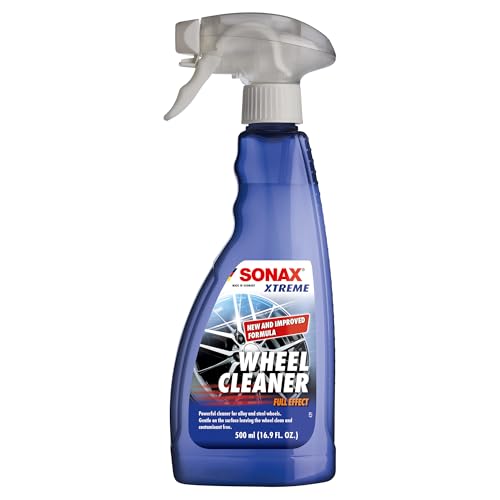 |
Sonax Wheel Cleaner Full Effect Best Overall Acid-free pH-balanced gel, color-changing iron indicator, 16.9 fl oz spray |
9.5 |
ⓘ We may earn a commission from qualifying purchases made through links on this page, at no extra cost to you.
|
 |
CarPro IronX Iron Remover Detailer's Choice pH-neutral, acid-free, color-shift iron indicator, 500 ml bottle |
9.4 | 🛒 Check Price |
 |
Adam's Polishes Iron Remover Best Bleeding Action pH-balanced, color-changing formula, sprayer included, 16 oz |
9.2 | 🛒 Check Price |
 |
Gtechniq W6 Iron and General Fallout Remover Best for Coated Wheels pH-neutral, coating-safe, color-change indicator, 500 ml |
9.0 | 🛒 Check Price |
 |
Chemical Guys DeCon Pro Iron Remover Best Versatility Color-changing iron remover and wheel cleaner, 16 oz spray |
8.7 | 🛒 Check Price |
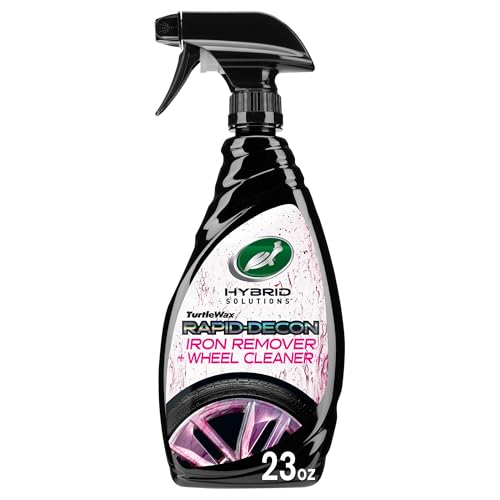 |
Mothers Wheel and Tire Iron Remover Best Everyday Pick Color-changing fallout remover for wheels and tires, 24 oz spray |
8.4 | 🛒 Check Price |
 |
Bilt Hamber Auto Wheel Iron Remover Strongest on Neglected Wheels Acid-free pH-neutral color-change formula, 1 liter bottle |
8.0 | 🛒 Check Price |
1. Sonax Wheel Cleaner Full Effect: Best Overall
Sonax Full Effect has earned its reputation among detailers for a reason. The gel-like consistency is the standout feature here. Where thinner sprays sheet straight off a vertical wheel, this one grabs hold and stays put long enough to actually do its job, which matters most on the inner barrel where the worst contamination hides. Within a minute of spraying you watch it run blood red, and on a wheel that hasn’t been decontaminated in a while it turns alarmingly dark. That visual feedback is genuinely useful because it tells you exactly where the iron is concentrated.
The one real weakness is the smell. Like almost every effective iron remover it carries that rotten-egg sulfur note, and Sonax is among the stronger offenders, so you want this outdoors or in a well-ventilated bay rather than a closed garage. It also works best as a periodic decontamination step rather than a weekly wash product, both for cost reasons and because the chemistry is aggressive enough that you don’t need it every single time. Agitate with a soft brush, rinse thoroughly, and the results are hard to beat.
- Clings to vertical wheel faces so the gel dwells instead of running off
- Bleeds deep red and purple to show iron and brake dust dissolving
- Safe on alloy, chrome, painted, and clear-coated wheels
Pros: Outstanding cling and dwell time on contaminated barrels; Strong bleeding reaction even on lightly contaminated wheels; Acid-free formula is safe across virtually every wheel finish
Cons: Strong sulfur-style odor that lingers in enclosed spaces
2. CarPro IronX Iron Remover: Detailer's Choice
CarPro IronX is the product that arguably created this whole category, and it remains a benchmark that newer competitors are measured against. The chemistry is pH-neutral and acid-free, which is exactly what you want if your wheels are ceramic coated or your car has a fresh sealant, because it dissolves iron without attacking the protection you have already applied. On heavily contaminated wheels it bleeds a deep purple that’s satisfying to watch, and crucially it’s just as happy decontaminating paint as it’s cleaning alloys, so a single bottle covers your whole car.
Its honest weakness is viscosity. IronX is more of a liquid than a clinging gel, so on a vertical wheel face a good portion of it sheets off before it can fully react, meaning you often need a second application on the dirtiest barrels. The smell is also classic fallout-remover potent. None of that changes the fact that it works, and it works reliably, which is why so many professionals keep a bottle on the shelf. For decontaminating both wheels and bodywork in one product, it’s hard to argue against.
- Original color-changing fallout remover that defined the category
- PH-neutral chemistry is gentle on wax, sealant, and ceramic coatings
- Works on both wheels and painted bodywork for full decontamination
Pros: Trusted, proven formula used by professional detailers worldwide; Safe to use over existing waxes and coatings without stripping them; Doubles as a paintwork decontamination product, not just wheels
Cons: Thinner than a true gel, so it runs off vertical surfaces faster; Pungent odor is unavoidable with this level of effectiveness
3. Adam's Polishes Iron Remover: Best Bleeding Action
Adam’s Iron Remover leans hard into the visual side of fallout removal, and the bleeding reaction it produces is among the most dramatic of anything we researched. Spray it onto a contaminated wheel and within seconds it begins shifting purple, then deepens as the particles dissolve. For newcomers that feedback is reassuring, because it makes it obvious that the product is doing real work rather than just sitting there. The formula is pH-balanced and safe across paint, glass, and wheels, so it slots neatly into a full decontamination wash alongside a clay bar.
The flip side of that satisfying reaction is that people tend to over-apply, drawn in by wanting to see more purple, which means a bottle disappears faster than it strictly needs to. Used with discipline it lasts perfectly well. The clinging mist holds better than a pure liquid but still doesn’t match the dwell of the thickest gels. None of this is a dealbreaker. If you want a fallout remover that clearly shows you it’s working while staying gentle on every finish, Adam’s is an easy recommendation.
- Dramatic purple bleeding makes contamination easy to spot
- Safe on paint, wheels, glass, and most exterior surfaces
- Sprays as a clinging mist that holds on vertical panels
Pros: Very strong, fast color-change reaction even on mild contamination; All-around across wheels and full-body paint decontamination; Backed by a brand known for responsive customer support
Cons: Can be used up quickly because you tend to over-apply for the visual
4. Gtechniq W6 Iron and General Fallout Remover: Best for Coated Wheels
Gtechniq built its reputation on ceramic coatings, so it’s no surprise that the W6 fallout remover is formulated first and foremost to be safe on protected surfaces. If you have spent the effort coating your wheels, the last thing you want is an aggressive cleaner stripping that work away, and W6 is one of the safest choices for exactly that scenario. It’s pH-neutral, it dissolves embedded iron through the familiar color-change reaction, and notably it does so with a far less offensive smell than most rivals, which makes it more pleasant to live with.
The trade-off for that gentleness is a more restrained bleeding reaction. You won’t get the alarming dark purple curtain that the most aggressive products produce, and on very heavily contaminated wheels you may want to extend the dwell time or apply twice. For maintenance decontamination on coated or well-kept wheels, though, that measured approach is exactly right. This is the remover to reach for when preserving your coating matters more than chasing the most theatrical color change.
- Engineered to be safe over ceramic and sealant-coated wheels
- Color-change reaction confirms iron is being dissolved
- Low-odor relative to many competing fallout removers
Pros: Genuinely gentle on ceramic coatings and existing protection; Noticeably less harsh smell than most iron removers; Trusted name in the coating and protection world
Cons: Bleeding reaction is more subtle than the most dramatic rivals; Best results need a slightly longer dwell time
5. Chemical Guys DeCon Pro Iron Remover: Best Versatility
Chemical Guys DeCon Pro tries to do two jobs at once, acting as both a fallout remover and a general wheel cleaner, and for a lot of owners that combination is exactly what they need. Rather than buying a separate cleaner and a separate iron remover, you spray DeCon Pro on, let it react and turn purple as it lifts iron, then agitate and rinse to handle the loose grime in the same pass. It’s safe across paint, glass, rubber, and plastic, and Chemical Guys distribution means you can find it almost anywhere, which counts for something when you run out mid-wash.
Because it’s balanced toward versatility, the pure iron-dissolving punch is a notch below the dedicated decontamination products higher on this list. On wheels with severe, long-neglected fallout you’ll likely want a second application or a follow-up with a stronger remover. For routine maintenance and moderately dirty wheels, though, the all-in-one approach is convenient and effective, and it earns its place as the most flexible pick of the group.
- Dual-purpose as both an iron remover and a wheel cleaner
- Color-shift formula visually tracks dissolving brake dust
- Safe on paint, wheels, glass, plastic, and rubber
Pros: Works as a one-step wheel cleaner and decontaminant; Widely available and easy to find in stores and online; Effective on a broad range of exterior surfaces
Cons: Less concentrated bleeding than dedicated decontamination sprays; Heavy contamination may still need a second pass
6. Mothers Wheel and Tire Iron Remover: Best Everyday Pick
Mothers has been a household detailing name for decades, and its wheel and tire iron remover is the no-fuss, easy-to-find option for owners who just want clean wheels without overthinking the chemistry. The generous bottle size is a real practical advantage. If you’re the type who cleans wheels every couple of weeks, you appreciate not running dry, and the wide availability means a replacement is never far away. Spray it on, watch the familiar purple bleed appear, agitate, and rinse.
The honest limitation is that the formula is on the thinner, milder side. It sheets off vertical wheel faces faster than a clinging gel, and on wheels with thick baked-on brake dust you’ll need to commit to proper brush agitation rather than relying on the chemical reaction alone to do all the work. That’s a reasonable compromise for an approachable, widely stocked product. As a dependable everyday remover for owners who keep on top of their wheels, Mothers does the job without drama.
- Generous bottle size built for regular wheel maintenance
- Color-change indicator shows iron dissolving as you watch
- Formulated specifically for wheels, tires, and barrels
Pros: Easy to find on shelves and a familiar, trusted brand; Large bottle suits owners who clean wheels often; Straightforward to use with no special technique needed
Cons: Thinner spray runs off vertical faces faster than gels; Reaction is milder, so caked-on dust needs agitation
7. Bilt Hamber Auto Wheel Iron Remover: Strongest on Neglected Wheels
Bilt Hamber Auto Wheel has a cult following among enthusiasts who deal with the worst-case wheels, the ones that haven’t seen proper decontamination in years and are crusted with corroded brake dust. This is where it shines. The reaction is genuinely strong, turning deep purple fast and dissolving deposits that milder products struggle with, yet it remains acid-free and pH-neutral so it doesn’t damage alloy, paint, or polished lips in the process. The full liter bottle is sized for serious work, enough to drench an entire neglected set including the inner barrels.
That strength is also the reason it isn’t the right pick for everyone. On clean, well-maintained wheels it’s simply more product than you need, and like all potent iron removers the odor demands real ventilation, so this is an outdoor job. Used for its intended purpose, restoring badly contaminated wheels back to a clean foundation before sealing or coating, it’s among the most capable removers you can buy. Match the tool to the task and it rewards you.
- Powerful reaction tackles severely neglected, contaminated wheels
- Acid-free and safe on all common wheel finishes
- Large one-liter bottle for tackling whole sets and barrels
Pros: Exceptionally strong on heavy, long-ignored contamination; Big bottle handles a full set of badly fouled wheels; Acid-free chemistry stays safe despite its strength
Cons: Strong reaction and odor make ventilation essential; Overkill for lightly soiled, well-maintained wheels
Frequently Asked Questions
What does an iron remover actually do for my wheels?
An iron remover, sometimes called a fallout remover, uses a chemical reaction to dissolve the tiny iron particles that brake pads embed into your wheel surface as they wear. Regular soap only cleans the surface, but these iron specks bond into the clear coat and barrel where they corrode into orange and brown spots. The remover reacts with that iron, breaks the bond, and rinses it away. Most products turn purple or red as they work, giving you a clear visual signal that contamination is lifting. This is a decontamination step, not a replacement for your normal wash.
Why do iron removers turn purple when sprayed on wheels?
The color change is the chemistry doing its job. Iron removers contain compounds that react specifically with iron particles, and the byproduct of that reaction is a purple or deep red dye. The more iron is present, the darker and more intense the bleed becomes, so a heavily contaminated wheel will look alarmingly dark while a clean one barely changes color at all. It’s a genuinely useful feature rather than a gimmick, because it shows you exactly where the worst contamination is concentrated, usually the inner barrel, and confirms the product is reacting rather than just sitting there.
Are iron removers safe to use on coated or painted wheels?
Most quality iron removers today are acid-free and pH-neutral, which makes them safe on clear-coated, painted, polished, chrome, and ceramic-coated wheels. Still, you should always check the label, because the pH-neutral formulas are the ones that won’t strip an existing wax, sealant, or ceramic coating. If your wheels are coated, products specifically marketed as coating-safe are the safest bet. Avoid any acid-based wheel cleaner on polished lips or bare metal. As with any new product, test on a small hidden area first, don’t let it dry on the surface, and rinse thoroughly.
How often should I use an iron remover on my wheels?
Iron removal is a periodic decontamination step rather than something you do every wash. For most drivers, treating the wheels every two to three months keeps embedded fallout under control, though heavy brake-dust vehicles or daily drivers may benefit from doing it monthly. The chemistry is aggressive enough that you don’t need it weekly, and overusing it offers no real benefit. A good rhythm is to iron-decontaminate your wheels whenever you decontaminate your paint or before applying a fresh coating or sealant, so the surface is genuinely clean before protection goes on.
Why do iron removers smell so bad, and can I avoid it?
That rotten-egg, sulfur-like smell is a natural byproduct of the thiol compounds that make iron removers work. Unfortunately the effectiveness and the odor are linked, so the strongest-bleeding products tend to be the most pungent. You can’t fully eliminate it, but you can manage it by always using these products outdoors or in a well-ventilated bay rather than a closed garage. Some newer formulas, particularly coating-focused ones, are noticeably lower-odor, so if smell is a real concern for you, look toward those gentler options even if their bleeding reaction is a little less dramatic.
Our Verdict
For most owners, Sonax Wheel Cleaner Full Effect is our top pick because its clinging gel actually stays on vertical wheel faces long enough to dissolve embedded iron properly, and its strong, visible bleeding reaction gives you real confidence the contamination is gone. If you want a do-it-all product that decontaminates both wheels and bodywork, CarPro IronX is the runner up, a proven, pH-neutral classic that professionals have trusted for years. Whichever you choose, treat iron removal as a periodic deep-clean step, work outdoors for ventilation, and your wheels will stay clean and corrosion-free far longer.


