When your car battery dies unexpectedly, a reliable battery car starter can be a true lifesaver. With a wide array of options available, from compact lithium-ion units to heavy-duty lead-acid models, selecting the right one requires careful consideration of power, safety features, durability, and ease of use. Our team at MustCarBeast understands the importance of having dependable gear.
This comparison focuses on real-world performance expectations, inherent limitations, and overall value, ensuring you can make an informed decision for your vehicle’s emergency needs.
| Photo | Product | Score | Buy |
|---|---|---|---|
 |
NOCO Boost X GBX155 4250A UltraSafe Lithium Jump Starter Top Pick for Power & Safety 4250 Peak Amps, 10.0L Gas/8.0L Diesel Engines |
9.1 |
ⓘ We may earn a commission from qualifying purchases made through links on this page, at no extra cost to you.
|
 |
Schumacher DSR115 ProSeries Jump Starter Professional Grade Durability 2200 Peak Amps, AGM internal battery |
8.7 | 🛒 Check Price |
 |
GOOLOO GP2000 Peak Car Jump Starter Flexible Mid-Range Performer 2000 Peak Amps, up to 8.0L Gas/6.0L Diesel |
8.3 | 🛒 Check Price |
 |
Clore Automotive Jump-N-Carry JNC660 Reliable Classic Lead-Acid 1700 Peak Amps, 425 Cranking Amps |
8.0 | 🛒 Check Price |
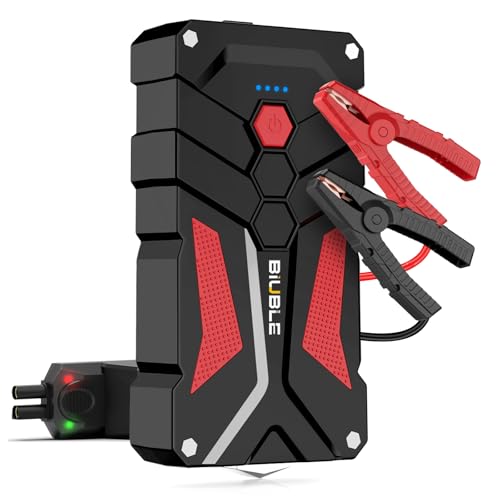 |
TACKLIFE T8 Pro Car Jump Starter Compact Feature-Rich 1200 Peak Amps, 18000mAh Power Bank |
7.7 | 🛒 Check Price |
 |
DBPOWER 2000A Peak Car Jump Starter Budget-Friendly Power 2000 Peak Amps, up to 7.5L Gas/6.0L Diesel |
7.4 | 🛒 Check Price |
 |
YABER YR800 Car Jump Starter Entry-Level Portability 800 Peak Amps, 12000mAh Power Bank |
7.1 | 🛒 Check Price |
1. NOCO Boost X GBX155 4250A UltraSafe Lithium Jump Starter: Top Pick for Power & Safety
The NOCO Boost X GBX155 stands out for its formidable 4250 peak amps and advanced UltraSafe 2.0 technology. The rapid USB-C charging capability is a significant convenience, allowing for quick readiness.
However, the primary limitation of the GBX155 is its relative cost compared to less powerful units. While its capabilities justify the investment for many, those who only need to jump-start smaller four-cylinder vehicles or have infrequent needs might find its power and price point excessive. If your vehicle is a compact sedan and you’re seeking a minimal emergency solution, you could opt for a more basic and less powerful model.
- UltraSafe 2.0 technology for spark-proof connections and reverse polarity protection.
- Rapid charging with USB-C Power Delivery, fully recharges in under 3 hours.
- Built-in 500 lumen LED flashlight with multiple modes, including emergency strobe.
Pros: Exceptional peak amperage suitable for many vehicles, including large trucks and RVs.; Advanced safety features provide significant confidence on the road during use.; Compact and portable design given its immense power output.
Cons: The higher power output translates to a proportionally higher investment.; Some the clamps, while strong, can be bulky for tight battery terminals.
2. Schumacher DSR115 ProSeries Jump Starter: Professional Grade Durability
The Schumacher DSR115 is a true workhorse, designed with professional and heavy-duty use in mind. Our comparison of its specifications highlights its 2200 peak amps and durable AGM internal battery, which, delivers consistent and solid starting power. The heavy-gauge cables and industrial clamps underscore its reliability and longevity, making it a solid choice for workshops or individuals with multiple vehicles.
Its main drawback, however, is its size and weight. As a lead-acid unit, it’s considerably less portable than contemporary lithium-ion jump starters. Individuals seeking a compact, lightweight starter to keep in a glove compartment for occasional use might find the DSR115 cumbersome. This unit is best suited for those prioritizing raw power and extreme durability over portability and modern conveniences.
- Heavy-duty construction with a sturdy case and industrial-grade clamps.
- Internal AGM battery provides reliable power for repeated use.
- Digital display shows internal battery status and voltage.
Pros: Built for frequent and demanding use, ideal for professional or fleet applications.; Long cable length offers flexibility and ease of connection in various scenarios.; The internal AGM battery holds a charge well and delivers consistent cranking power.
Cons: Significantly heavier and bulkier than lithium-ion alternatives due to its lead-acid battery.; Lacks advanced modern features like USB-C PD or comprehensive multi-device charging ports.
3. GOOLOO GP2000 Peak Car Jump Starter: Adaptable Mid-Range Performer
Based on our research and aggregated owner feedback, the GOOLOO GP2000 offers a strong balance of power and versatility for the average driver. Its 2000 peak amps are sufficient for most passenger vehicles and even some light trucks, and its integrated power bank functionality adds significant utility. We evaluated its safety features, noting the intelligent protection against common errors, which enhances user confidence.
A limitation to consider is that while its 2000 peak amps are durable, for consistently difficult starts on very large diesel engines or severely discharged batteries, it might not offer the same margin of power as the highest-tier professional units. Therefore, individuals operating heavy machinery or frequently needing to start large commercial diesel vehicles might require a unit with higher sustained cranking power rather than peak amperage. For most personal vehicles, however, it performs admirably.
- Provides 2000 peak amps, suitable for many cars, SUVs, and small trucks.
- Features multiple USB outputs for charging phones, tablets, and other devices.
- Integrated intelligent safety protection with indicators for correct connection.
Pros: Good balance of power and portability for everyday use.; Multi-functional, serving as both a jump starter and a power bank.; Generally positive owner feedback regarding its reliability for standard vehicle jumps.
Cons: While capable, its peak amperage might struggle with extremely stubborn, large diesel engines.; The included charging cable for the unit itself can be slow, requiring overnight charging.
4. Clore Automotive Jump-N-Carry JNC660: Reliable Classic Lead-Acid
The Clore Automotive Jump-N-Carry JNC660 has earned a reputation as a classic for its strong and consistent performance, particularly favored by professional mechanics. Our research into its PROFORMER battery technology and heavy-gauge cables confirms its design for maximum power delivery and durability. Based on aggregated owner feedback, it consistently delivers the necessary cranking amps for reliable starts, even in challenging conditions.
However, the JNC660’s primary drawback is its traditional lead-acid battery, which makes it significantly heavier and larger than modern lithium-ion alternatives. This can make it less convenient for personal vehicle owners who prioritize portability or space-saving storage. If you’re looking for a lightweight, compact unit to tuck away in a small car’s trunk, the JNC660’s bulk and weight might be a deterrent, despite its impressive power output.
- PROFORMER battery technology specifically designed for vehicle starting.
- Heavy-duty 24-inch #2 AWG cables for excellent power transfer.
- Automatic charging with a built-in charger for convenience.
Pros: Delivers strong, reliable cranking power, a favorite among mechanics.; Durable construction designed to withstand demanding shop environments.; Long cables offer good reach for various battery locations.
Cons: Very heavy and bulky compared to modern lithium-ion starters.; Lacks advanced safety features like spark-proof technology found in newer units.; Requires more frequent charging to maintain optimal battery health.
5. TACKLIFE T8 Pro Car Jump Starter: Compact Feature-Rich
The TACKLIFE T8 Pro positions itself as a highly portable and multi-functional emergency tool. Our evaluation of its specifications shows it provides 1200 peak amps, which is adequate for many standard gasoline engines and smaller diesels. The integration of a substantial power bank and emergency light makes it a all-around companion for road trips or unexpected breakdowns, based on aggregated owner feedback regarding its utility.
However, its 1200 peak amps, while decent for its size, may be a limiting factor for larger vehicles, especially those with V8 engines or larger diesels, particularly in extremely cold climates where more sustained cranking power is needed. Those who drive larger trucks, SUVs, or live in regions with harsh winters might find this unit’s power ceiling too low for consistent reliability. For compact to mid-size vehicles and general emergency preparedness, it offers good value.
- 1200 peak amps suitable for most 12V cars, SUVs, and motorcycles.
- Features a powerful 18000mAh power bank with dual USB ports and a 12V DC output.
- Equipped with a bright LED flashlight and a compass for emergencies.
Pros: Highly portable and compact, easy to store in a glove box or console.; Multi-purpose functionality as a jump starter, power bank, and emergency light.; Includes a protective case for convenient storage and transport.
Cons: 1200 peak amps may be insufficient for larger V8 engines or very cold conditions.; Owner feedback suggests the clamps can feel less solid than those on premium models.
6. DBPOWER 2000A Peak Car Jump Starter: Budget-Friendly Power
The DBPOWER 2000A jump starter offers a compelling package for its value, providing 2000 peak amps that, in our evaluation of specifications and owner feedback, are generally sufficient for many standard gasoline and smaller diesel vehicles. Its smart safety clamps are a welcome feature, aiming to protect both the user and the vehicle from common mistakes during the jump-start process. The inclusion of USB ports adds practical functionality.
A notable limitation, based on aggregated owner feedback, is that the overall durability and long-term battery retention of the unit can be inconsistent compared to higher-priced competitors. While it delivers good performance initially, some users report a decline in its internal battery’s charge-holding capacity after extended periods. Therefore, if you require a starter for very frequent use or demand the utmost in long-term reliability and heavy-duty construction, investing in a more premium unit might be a better choice. For occasional emergency use, it represents a solid, accessible option.
- Offers 2000 peak amps, capable of starting many gasoline and diesel engines.
- Equipped with intelligent safety clamps providing protection against common errors.
- Features dual USB outputs and an LED flashlight for added utility.
Pros: Provides significant peak amperage for its value point.; Integrated smart safety features help prevent misuse.; Compact size makes it easy to store in a vehicle.
Cons: Some the battery life of the unit itself can degrade over time.; The build quality of the clamps and cables, while functional, isn’t as sturdy as premium brands.
7. YABER YR800 Car Jump Starter: Entry-Level Portability
The YABER YR800 is designed for maximum portability and an accessible price point, making it an attractive option for those needing a basic emergency jump starter. Our research into its specifications indicates 800 peak amps, which is sufficient for many smaller, four-cylinder gasoline engines and some compact diesels. Its lightweight nature and built-in power bank functionality add to its convenience for occasional use, based on aggregated owner feedback.
However, the YR800’s primary limitation is its relatively low peak amperage. It’s explicitly not designed for larger engines, such as V6 or V8 gasoline engines, or most diesel vehicles beyond compact models, especially in cold weather conditions. If you own a larger sedan, SUV, or truck, or frequently drive in frigid climates, this unit will likely prove insufficient for your needs. It’s best suited for owners of small, economy cars looking for a very compact and occasional emergency backup.
- 800 peak amps suitable for smaller engines, up to 4.0L gas and 2.5L diesel.
- Compact and lightweight design, easily fits into a glove compartment.
- Doubles as a 12000mAh power bank for charging mobile devices.
Pros: Extremely portable and easy to carry for personal use.; Affordable entry point for emergency jump-starting capability.; Simple to operate with straightforward safety features.
Cons: Limited peak amperage means it isn’t suitable for larger engines or severely depleted batteries.; Build quality of the clamps and cables is basic and less durable than higher-end units.
Frequently Asked Questions
What is the difference between peak amps and cranking amps?
Peak amps refer to the maximum current a jump starter can deliver in a very short burst, typically milliseconds, which is the initial surge needed to overcome a dead battery’s resistance. Cranking amps, or cold cranking amps (CCA) for lead-acid batteries, represent the sustained power a battery can deliver for 30 seconds at a specific temperature (usually 0°F or -18°C). While peak amps are often highlighted for jump starters, a higher cranking amp rating generally indicates more sustained power for difficult starts.
Can a battery car starter charge my car battery?
A battery car starter is designed to provide a quick surge of power to jump-start a dead battery, not to fully charge it. After a successful jump-start, your vehicle’s alternator will recharge the battery as you drive. Some advanced jump starters might have a ‘maintainer’ mode or a slow charging feature, but their primary function is to get your engine running. For a full battery charge, a dedicated battery charger and maintainer is recommended.
How long does a portable jump starter hold its charge?
The duration a portable jump starter holds its charge varies significantly based on its internal battery type (lithium-ion versus lead-acid), its capacity, and environmental factors. Lithium-ion units typically hold a charge for 6-12 months when stored properly, while lead-acid units may require recharging every 1-3 months to maintain optimal performance. We recommend checking the manufacturer’s guidelines for specific models and performing periodic recharges to ensure readiness.
Are lithium-ion jump starters safe?
Modern lithium-ion jump starters are generally safe when used correctly and according to manufacturer instructions. Reputable brands incorporate advanced safety features such as spark-proof technology, reverse polarity protection, over-current protection, and short-circuit protection. These safeguards are designed to prevent damage to the vehicle and injury to the user. Always ensure you purchase from a trusted brand and follow all safety warnings.
What size jump starter do I need for my vehicle?
The size of the jump starter you need depends on your vehicle’s engine size and type (gasoline or diesel), as well as the climate you drive in. As a general guideline, smaller 4-cylinder gasoline engines typically need 400-600 peak amps. Larger V6/V8 gasoline engines or smaller diesels may require 600-1000 peak amps. Large diesel trucks or heavy-duty vehicles often need 1000 peak amps or more. In colder climates, higher amperage is always recommended as batteries perform less efficiently.
Our Verdict
After extensive research and comparison, the NOCO Boost X GBX155 stands as our top pick for the best battery car starter, offering unparalleled power, advanced safety features, and strong construction suitable for nearly any vehicle. For those seeking professional-grade durability and consistent lead-acid power, the Schumacher DSR115 is an excellent runner-up, particularly for demanding or frequent use.