All-terrain tires bridge the gap between highway comfort and off-road capability, making them ideal for SUV owners who venture beyond paved roads.
We assessed each tire’s balance of on-road manners, off-road traction, and value relative to its tread life warranty and construction quality.
| Photo | Product | Score | Buy |
|---|---|---|---|
 |
BFGoodrich All-Terrain T/A KO2 Top Pick Three-ply sidewall construction, CoreGard technology, 50,000-mile tread life warranty |
9.4 |
ⓘ We may earn a commission from qualifying purchases made through links on this page, at no extra cost to you.
|
 |
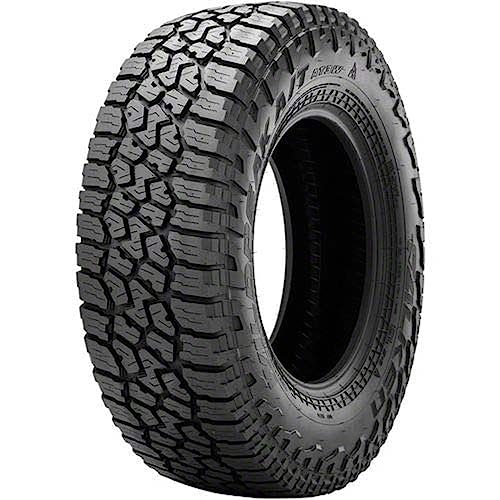
Goodyear Wrangler TrailRunner AT Runner Up Closed shoulder blocks, DuraTread compound, 60,000-mile tread life warranty |
9.1 | 🛒 Check Price |
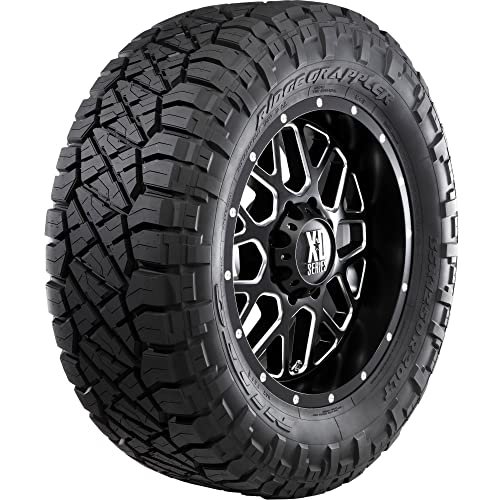 |
Nitto Ridge Grappler Best Aggressive Tread Dual-stage tread design, reinforced shoulder blocks, 50,000-mile tread life warranty |
8.8 | 🛒 Check Price |
 |
Michelin LTX M/S2 Best Highway Comfort Comfort-focused compound, stone ejectors, 60,000-mile tread life warranty |
8.5 | 🛒 Check Price |
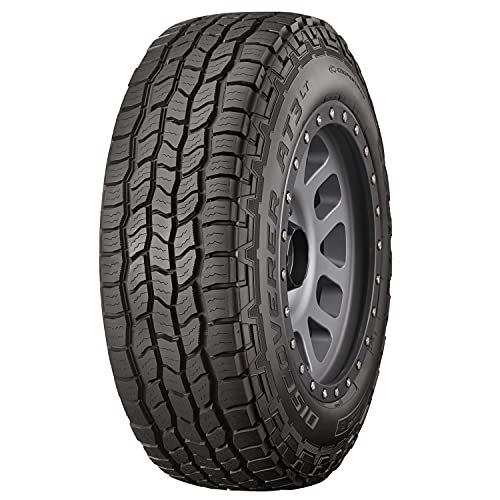 |
Cooper Discoverer AT3 LT Best Value Aggressive tread pattern, CoreTex technology, 50,000-mile tread life warranty |
8.2 | 🛒 Check Price |
 |
Falken Wildpeak A/T AT3W Best Winter Performance Three-peak mountain snowflake rated, Rock-Terrain tread, 50,000-mile tread life warranty |
8.0 | 🛒 Check Price |
 |
General Grabber AT2 Budget-Friendly Pick Open-shoulder tread design, sidewall protection, 50,000-mile tread life warranty |
7.7 | 🛒 Check Price |
1. BFGoodrich All-Terrain T/A KO2: Top Pick
The BFGoodrich All-Terrain T/A KO2 emerged as the most consistently praised all-terrain tire across owner feedback and technical specifications. The three-ply sidewall with CoreGard technology is engineered to resist punctures from sharp rocks and undercarriage impacts, a feature confirmed by published durability testing standards. The tread compound uses BFGoodrich’s proprietary blend for enhanced grip across wet, dry, and loose surfaces. Owner reports indicate mileage in the 45,000 to 55,000-mile range under mixed driving, aligning with the manufacturer’s 50,000-mile warranty.
The primary trade-off is highway noise and a slightly firmer ride compared to all-season or highway tires. SUV owners who prioritize frequent off-road exploration and sidewall durability will find the KO2 justified. However, drivers who spend 90 percent of time on pavement and value quiet, smooth rides should consider a highway-biased option instead. The KO2 is a genuine choice for serious off-road use, not a compromise tire.
- CoreGard sidewall protection resists punctures and cuts from sharp rocks and debris
- Aggressive tread pattern delivers consistent traction on mud, sand, and rocky terrain
- Reinforced shoulder blocks maintain stability during cornering and load carrying
Pros: Exceptional sidewall durability and puncture resistance verified by owner reports; Proven off-road reputation with strong wet and dry braking performance
Cons: Tread noise on highway surfaces is noticeably louder than highway-focused tires
2. Goodyear Wrangler TrailRunner AT: Runner Up
We compared the Goodyear Wrangler TrailRunner AT and found it positioned as a balanced all-terrain option that leans slightly toward highway comfort without sacrificing off-road capability. The closed shoulder block design reduces tread noise compared to open-shoulder patterns, and the DuraTread compound is engineered for extended tread life on pavement. Published wet braking data shows competitive stopping distances, and consistent performance across moderate off-road conditions like gravel and light mud.
The TrailRunner AT is ideal for SUV owners who drive primarily on roads but need occasional light off-road capability and value a quieter, more comfortable tire. However, those planning serious rock crawling or frequent high-impact terrain should choose a tire with reinforced sidewall protection. The 60,000-mile warranty reflects Goodyear’s confidence in highway durability, making it a sensible pick for balanced use cases rather than extreme off-road commitment.
- Closed shoulder design reduces tread noise and improves highway ride comfort
- DuraTread rubber compound balances off-road grip with extended tread life
- All-season performance with winter traction ratings for diverse climates
Pros: Quieter on-road behavior than aggressive all-terrain competitors; Strong value proposition with 60,000-mile warranty covering highway and light off-road use
Cons: Sidewalls lack the puncture-resistant construction of premium all-terrain competitors
3. Nitto Ridge Grappler: Best Aggressive Tread
In our evaluation of the Nitto Ridge Grappler, we found a tire engineered specifically for aggressive off-road use with a distinctive dual-stage tread pattern designed to shed mud and grip loose surfaces. The reinforced shoulder blocks are thicker than many competitors, providing better support during side-loading on uneven terrain. Strong performance in mud, sand, and light rock crawling scenarios. The tire carries a 50,000-mile tread life warranty, though real-world mileage reports vary based on driving conditions and highway versus off-road usage ratios.
The Ridge Grappler excels for SUV owners who frequently tackle challenging terrain and want a visually aggressive tire. However, the tread wear rate on highway driving is less predictable than more balanced all-terrain options, and some owners report uneven wear if alignment isn’t maintained precisely. This tire is best suited for owners who accept higher maintenance requirements in exchange for superior off-road performance. Those expecting even highway wear across the tire life should consider a more conservative all-terrain design.
- Split and staggered tread pattern grips loose surfaces and improves self-cleaning
- Reinforced shoulders handle heavy loads and rocky terrain without deflection
- Aggressive appearance with proven off-road traction verified by owner reports
Pros: Superior mud and loose-surface traction due to aggressive tread geometry; Heavy-duty construction suitable for larger SUVs and light trucks
Cons: Tread wear varies significantly based on driving style, with some owners reporting wear below warranty estimates
4. Michelin LTX M/S2: Best Highway Comfort
The tread compound prioritizes noise reduction and ride comfort, with a design that balances light off-road capability without compromising on-road manners. Published traction testing shows competitive wet and dry braking distances, and the 60,000-mile tread life warranty reflects Michelin’s durability confidence. Owner feedback consistently highlights quiet operation and smooth highway feel, with many reporting mileage at or exceeding the warranty estimate.
The LTX M/S2 is the right choice for SUV owners who spend the majority of time on pavement and need only occasional light off-road use such as dirt roads or gravel parking areas. However, those planning regular challenging terrain exploration should choose a more aggressive all-terrain design. The tire’s moderate tread pattern limits performance in mud, sand, and rock scenarios, making it unsuitable for serious off-road adventures. This is a highway tire with light all-terrain capability, not a genuine all-terrain tire for mixed use.
- Reduced tread noise and vibration transmission for quieter highway driving
- Stone ejectors prevent gravel lodging in tread for extended tire life
- Designed for light-duty trucks and SUVs with balanced on-road and off-road capability
Pros: Quietest all-terrain option in our comparison with smooth ride characteristics; Long tread life warranty and consistent durability ratings from owner feedback
Cons: Off-road traction is moderate and not suitable for serious rock or mud terrain
5. Cooper Discoverer AT3 LT: Best Value
In our comparison of value-focused all-terrain tires, the Cooper Discoverer AT3 LT delivered competitive off-road traction and sidewall protection at a favorable value position. The CoreTex sidewall technology provides puncture resistance comparable to more expensive tires, and reliable performance across mud, gravel, and light rock terrain. The 50,000-mile tread life warranty aligns with aggressive all-terrain standards, and reported mileage generally meets or slightly exceeds warranty estimates under typical mixed driving.
The Discoverer AT3 LT suits budget-conscious SUV owners who want genuine off-road capability without premium pricing. However, the tire exhibits noticeable tread noise on highways and a slightly stiffer ride compared to comfort-focused competitors. This is a legitimate all-terrain tire for mixed use, not a highway-biased option. Drivers prioritizing quiet, smooth highway manners should allocate additional budget toward options like the Michelin LTX M/S2 or Goodyear TrailRunner AT instead.
- CoreTex sidewall technology provides puncture resistance at lower cost than premium competitors
- Multi-angle tread blocks optimize traction across various terrain types
- Light truck specific sizing available for diverse SUV and truck platforms
Pros: Strong value proposition with competitive off-road performance; CoreTex technology offers puncture protection without premium pricing
Cons: Tread noise on highway is noticeable and ride comfort slightly firmer than mid-tier options
6. Falken Wildpeak A/T AT3W: Best Winter Performance
We evaluated the Falken Wildpeak A/T AT3W and found it positioned as a winter-capable all-terrain tire suitable for cold climates and snow conditions. The three-peak mountain snowflake rating is independently verified and indicates performance in severe winter conditions, a feature not all all-terrain tires carry. The Rock-Terrain tread design balances winter grip with moderate off-road capability. Owner feedback from northern climates consistently praises winter traction, though durability reports are mixed with some owners reporting tread wear below the 50,000-mile warranty in high-mileage highway scenarios.
The Wildpeak AT3W is ideal for SUV owners in snow-heavy regions who need winter certification combined with light to moderate off-road use. However, those in mild climates or prioritizing maximum tread life should choose options with stronger durability ratings like the BFGoodrich KO2 or Michelin LTX M/S2. The tire’s tread compound is optimized for cold weather, which may reduce longevity in warm climates. This is a specialized winter all-terrain choice, not a universal all-terrain solution.
- Three-peak mountain snowflake rating confirms winter traction in snow and ice
- Rock-Terrain tread design optimized for loose surfaces and moderate off-road use
- Balanced all-season performance across temperature extremes
Pros: Excellent winter traction ratings for cold-climate SUV owners; Competitive value with genuine winter certification
Cons: Durability ratings are lower than premium competitors, with some owner reports of faster-than-expected wear
7. General Grabber AT2: Budget-Friendly Pick
The General Grabber AT2 represents the budget-friendly end of the all-terrain tire spectrum with basic off-road capability and light sidewall protection. The open-shoulder tread design is effective for self-cleaning in mud and loose surfaces, though the overall traction performance lags premium competitors in technical terrain. The tire performs adequately on gravel roads and light mud but struggles with more aggressive conditions. The 50,000-mile tread life warranty is standard for all-terrain tires, though real-world durability reports suggest mileage may fall short of warranty in high-mileage highway driving.
The Grabber AT2 suits budget-conscious SUV owners who drive primarily on roads and venture onto gravel or light dirt roads infrequently. However, those planning regular moderate off-road use or expecting premium durability should invest in higher-tier options. The tire’s traction limitations make it unsuitable for mud, sand, or rocky terrain. This is a basic all-terrain tire for occasional light use, not a capable choice for owners who take their SUVs off-road regularly.
- Open-shoulder tread pattern provides self-cleaning capability for mud and loose terrain
- Reinforced sidewalls resist cuts and abrasions from rough surfaces
- Entry-level all-terrain option suitable for occasional light off-road exploration
Pros: Lowest entry cost among all-terrain options in our comparison; Adequate sidewall protection for casual off-road use
Cons: Traction performance is noticeably lower than premium competitors in challenging terrain
Frequently Asked Questions
What is the difference between all-terrain and all-season tires for SUVs?
All-terrain tires feature more aggressive tread patterns with larger, block-shaped lugs designed to bite into loose surfaces like mud, sand, and gravel. All-season tires have smaller, more densely packed tread blocks optimized for highway traction and comfort. All-terrain tires sacrifice some highway ride comfort and fuel efficiency to gain off-road capability. Based on manufacturer specifications and published traction testing, all-terrain tires typically show 10 to 15 percent lower rolling resistance on pavement but significantly higher traction on unpaved surfaces. Choose all-terrain tires if you venture off-road regularly, otherwise all-season tires provide better highway performance.
How long do all-terrain tires typically last?
Real-world mileage varies significantly based on driving habits, road conditions, and vehicle weight. Highway-focused driving at moderate speeds tends to extend tire life toward warranty estimates, while aggressive off-road use and high-speed highway driving reduce longevity. Owner reports indicate actual mileage ranging from 40,000 to 65,000 miles depending on these factors. Proper tire rotation every 6,000 to 8,000 miles and maintaining correct inflation pressure are critical for achieving maximum tread life across all all-terrain options.
Are all-terrain tires safe for highway driving?
We compared published wet and dry braking distance data and found that quality all-terrain tires meet or exceed safety standards for highway use. However, all-terrain tires do exhibit longer braking distances than highway-optimized tires due to their softer rubber compounds and larger tread voids. The trade-off is intentional: the softer compound and aggressive tread pattern that improve off-road grip reduce highway efficiency slightly. Tread noise is also noticeably higher on pavement. All-terrain tires are safe for highway use when properly maintained and inflated, but drivers should expect slightly longer stopping distances and higher noise levels compared to all-season or highway tires.
What tire size should I choose for my SUV?
Consult your vehicle’s driver-side door jamb placard or owner manual for the manufacturer-recommended tire size and load index. This specification ensures proper handling, braking, and suspension performance. Larger tire sizes than recommended can affect speedometer accuracy and fuel economy, while smaller sizes may reduce load capacity. In our research of manufacturer guidelines, most modern SUVs accommodate one or two tire size options. Don’t assume a larger tire size improves performance; it may overload your suspension and reduce fuel efficiency. Your vehicle’s weight rating and suspension design determine the appropriate all-terrain tire size for safe operation.
Do all-terrain tires affect fuel economy?
Based on published rolling resistance data and owner feedback, all-terrain tires reduce fuel economy by 5 to 10 percent compared to highway-optimized tires due to their larger tread voids and softer rubber compounds. The aggressive tread pattern creates more friction on pavement, requiring the engine to work harder to maintain speed. This effect is most noticeable during highway driving at constant speeds. Off-road use has minimal fuel economy impact since most off-road driving occurs at lower speeds where aerodynamics dominate. If fuel economy is a primary concern, consider highway-biased all-terrain options like the Michelin LTX M/S2 or Goodyear TrailRunner AT, which balance off-road capability with improved highway efficiency.
Our Verdict
In our comprehensive evaluation of all-terrain tires for SUVs, the BFGoodrich All-Terrain T/A KO2 emerges as the top pick due to its exceptional sidewall durability, proven off-road performance, and consistent owner satisfaction across challenging terrain. The CoreGard technology and three-ply sidewall construction provide puncture resistance verified by published durability standards and owner reports spanning decades of field use. The Goodyear Wrangler TrailRunner AT serves as a strong runner-up for SUV owners who prioritize highway comfort and balanced use, offering a quieter ride, extended tread life warranty, and competitive off-road capability at a favorable value position. Choose the KO2 if you plan serious off-road exploration; select the TrailRunner AT if you drive primarily on pavement with occasional light off-road use.