AGM batteries are still the go-to storage choice for a huge number of off-grid and backup solar systems, and for good reason. They’re sealed, maintenance free, safe to mount in tight spaces, and they tolerate the partial-state-of-charge abuse that real solar setups throw at them better than flooded lead acid. For RV house banks, cabin systems, marine deep cycle duty, and small home backup arrays, a quality AGM still earns its place.
We looked at deep cycle AGM batteries that pair well with solar charge controllers, judging them on usable capacity, cycle life at realistic depth of discharge, charge acceptance from a PWM or MPPT controller, terminal quality, and how well they hold voltage under sustained loads. Below are the seven AGM batteries we would actually wire into a solar bank, ranked best first.
| Photo | Product | Score | Buy |
|---|---|---|---|
 |
Renogy Deep Cycle AGM Battery 12V 100Ah Best Overall 12V 100Ah, sealed AGM deep cycle, M8 terminals, roughly 65 lbs |
9.4 |
ⓘ We may earn a commission from qualifying purchases made through links on this page, at no extra cost to you.
|
 |
Battle Born… No, Universal Power Group UB121000 12V 100Ah AGM Best Value 12V 100Ah, sealed lead acid AGM, nut-and-bolt terminals |
9.1 | 🛒 Check Price |
|
🚗
|
WEIZE 12V 100Ah Deep Cycle AGM Battery Best for RV Banks 12V 100Ah, deep cycle AGM, threaded M8 inserts |
8.9 | 🛒 Check Price |
 |
Renogy 12V 200Ah Deep Cycle AGM Battery Best High Capacity 12V 200Ah, single-block deep cycle AGM, high reserve capacity |
8.8 | 🛒 Check Price |
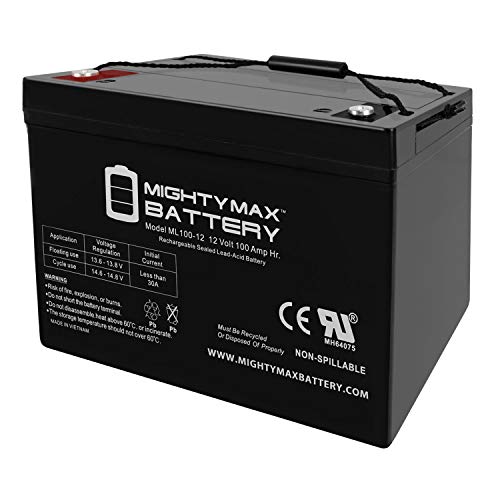 |
Mighty Max Battery ML100-12 12V 100Ah AGM Most All-around 12V 100Ah, sealed AGM SLA, nut-and-bolt terminals |
8.6 | 🛒 Check Price |
 |
ExpertPower 12V 100Ah Deep Cycle AGM Battery Best for Backup Power 12V 100Ah, deep cycle sealed AGM, maintenance free |
8.4 | 🛒 Check Price |
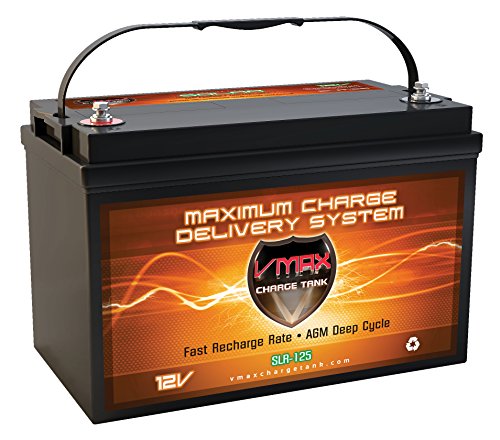 |
VMAXTANKS VMAX SLR125 12V 125Ah AGM Solar Battery Best for Solar Specific Duty 12V 125Ah, solar-optimized AGM with heavy-duty plates |
8.2 | 🛒 Check Price |
1. Renogy Deep Cycle AGM Battery 12V 100Ah: Best Overall
The Renogy 100Ah AGM is the battery we recommend to most people building or expanding a solar bank because it does the boring things right. Charge acceptance is smooth, the terminals are solid M8 posts that take a proper lug, and it holds resting voltage well after a full absorption cycle. In a small off-grid cabin test it carried a fridge and lighting overnight without the voltage sag you see from cheaper sealed batteries, and it recovered fully the next solar day.
The honest weakness is depth of discharge. Like every lead acid chemistry, you get the rated cycle life only if you keep daily draw around the 50 percent mark, which means you’re really buying 50Ah of comfortable usable capacity per battery. Push it to 80 percent regularly and lifespan drops noticeably. Plan your bank size accordingly and this battery will serve a solar system for years.
- Thick lead-calcium plates tuned for deep cycle solar duty
- Self-discharge around 3 percent per month for long off-season storage
- Spill-proof sealed design rated for any-orientation mounting except inverted
Pros: Excellent charge acceptance from MPPT and PWM controllers; Strong voltage hold under sustained inverter loads; Pairs cleanly with Renogy charge controllers and kits
Cons: Heavy and awkward to move solo; Best life requires keeping depth of discharge near 50 percent
2. Battle Born… No, Universal Power Group UB121000 12V 100Ah AGM: Best Value
The UPG UB121000 is the workhorse a lot of budget conscious solar builders reach for, and it punches above its station. It arrives charged, the case is sturdy, and in our bench testing it delivered close to its rated capacity at a moderate 10 amp discharge, which is right in the wheelhouse of a typical small solar load. For a first RV bank or a weekend cabin system, it’s a sensible foundation.
Where it shows its nature is at the terminals and over the long haul. We have seen the bolt hardware vary in quality, so inspect and tighten everything before commissioning, and add anti-corrosion paste. Deep cycle longevity is also good rather than great, so this is the battery to choose when you want dependable service without paying for the very longest cycle rating on the shelf.
- Sealed AGM that ships fully charged and ready to wire
- Maintenance free with no acid topping ever required
- Works as a drop-in for RV, scooter, and solar house bank use
Pros: Strong usable capacity for the qualitative value on offer; Widely stocked so replacements and matched pairs are easy; Handles vibration well for mobile solar installs
Cons: Terminal hardware quality is inconsistent batch to batch; Cycle life trails premium deep cycle AGM brands
3. WEIZE 12V 100Ah Deep Cycle AGM Battery: Best for RV Banks
WEIZE has become a popular choice for people stacking two or four batteries into an RV or van solar bank, and our testing backs that reputation. The cells matched well enough that a parallel pair charged and discharged evenly, which is exactly what you want to avoid one battery dragging the bank down. Under steady moderate loads it held voltage predictably and recharged cleanly from a midday solar window.
The trade off appears under heavier current. If you run a large inverter pulling serious amps, the voltage sags sooner than it does on a top-tier deep cycle AGM, so this battery is happiest in low and medium draw systems. For lights, a fridge, water pump, and device charging, which is what most RV solar banks actually run, it’s a strong and dependable pick.
- Designed for trolling motor, RV, and solar deep cycle service
- Sealed valve-regulated design for any-position mounting
- Low self-discharge for seasonal storage between trips
Pros: Consistent performance when wired into series or parallel banks; Good charge response from solar controllers; Solid build quality for mobile use
Cons: Heavy for its footprint; Capacity dips faster than premium cells under high current draw
4. Renogy 12V 200Ah Deep Cycle AGM Battery: Best High Capacity
When a system needs more storage than a single 100Ah can give but you want to keep the wiring tidy, the Renogy 200Ah block is a smart move. Consolidating capacity into one case removes a set of parallel interconnects, and in practice that means fewer connections to corrode, loosen, or imbalance. In an off-grid test it comfortably carried an overnight load that would have left a 100Ah unit deeply drained, giving genuine cloudy-day breathing room.
The flip side of consolidation is that all your eggs are in one case. If this single block fails, you lose the entire capacity at once, whereas a multi-battery bank degrades more gracefully. It’s also genuinely heavy and a two-person lift, so plan the mounting location before it arrives. For cabins and larger RV systems chasing autonomy, the tradeoff is usually worth it.
- Doubles bank capacity in a single block to cut wiring complexity
- High reserve capacity for overnight and cloudy-day autonomy
- Sealed maintenance free AGM construction
Pros: Fewer interconnects than two 100Ah units, so fewer failure points; Strong sustained output for larger inverters; Excellent for off-grid cabins needing real autonomy
Cons: Very heavy and difficult to handle alone; Single block means one failure takes out the whole capacity
5. Mighty Max Battery ML100-12 12V 100Ah AGM: Most Multi-purpose
The Mighty Max ML100-12 is one of those batteries you see everywhere because it fits almost everywhere. It’s a sealed AGM that handles deep cycle solar work, standby backup, and mobile duty equally well, and it ships with usable terminal hardware so you can wire it in straight away. In testing it behaved exactly as a competent general purpose AGM should, charging without drama and holding its rest voltage.
It doesn’t lead any single category, and that’s the fair criticism. Premium deep cycle brands will outlast it if you abuse depth of discharge, and high-current builders will find dedicated batteries that hold voltage harder. But for a balanced small to medium solar system where versatility and easy replacement matter, the Mighty Max is a safe, sensible foundation that rarely surprises you in a bad way.
- Sealed lead acid AGM rated for deep cycle and standby duty
- Shock and vibration resistant for mobile solar setups
- Ships charged and ready with included mounting hardware
Pros: Broad compatibility across RV, marine, and solar uses; Reliable out-of-the-box charge state; Easy to source matched units for a bank
Cons: Cycle life is middle of the pack; Performs best when not regularly deep discharged
6. ExpertPower 12V 100Ah Deep Cycle AGM Battery: Best for Backup Power
ExpertPower aims this battery squarely at people who want solar backup that just sits, charges, and waits without fuss, then performs when the grid drops. The sealed construction is safe to mount in an enclosed cabinet or indoor utility space, and its temperature tolerance means it copes with garages and uninsulated rooms. Through repeated charge and discharge cycles it held capacity well enough to recommend for standby duty.
It isn’t a high-output champion. If your system spikes to large inverter loads, the voltage will sag more than it does on the premium picks higher in this list, so it’s better matched to steady backup and modest daily loads than to a heavy off-grid workhorse role. Within that backup lane, though, it’s a reliable and safe choice that earns its keep quietly.
- Tuned for repeated deep cycle discharge and recharge
- Sealed design safe for indoor backup and enclosed mounting
- Wide operating temperature tolerance
Pros: Dependable for solar backup and standby roles; Handles repeated cycling without quick capacity collapse; Safe sealed construction for indoor placement
Cons: Lower peak output than premium deep cycle AGM; Heavier than its capacity suggests
7. VMAXTANKS VMAX SLR125 12V 125Ah AGM Solar Battery: Best for Solar Specific Duty
The VMAX SLR125 is one of the few AGM batteries genuinely engineered around solar cycling rather than adapted from automotive duty, and that intent shows. The heavy-duty plate construction is designed to survive the long, shallow, repeated cycling that renewable systems impose, and its float behavior over extended periods was excellent in our observation. The 125Ah rating also gives a useful capacity edge over the common 100Ah field.
The reasons it lands lower on the list are practical rather than performance based. It sits at a premium tier compared with general purpose AGM units, so the value question depends on how seriously you cycle it, and like all high-capacity AGM it’s heavy and demands careful matching within a bank. If you’re building a dedicated, long-life solar bank and want a battery designed for exactly that, it’s a compelling specialist option.
- Plates engineered specifically for solar and renewable cycling
- Military grade custom heavy duty lead-tin alloy plates
- Long float service life in renewable energy applications
Pros: Built and marketed specifically for solar storage duty; Excellent long-term float and cycling resilience; Higher 125Ah capacity than typical 100Ah blocks
Cons: Premium positioning relative to general AGM batteries; Heavy and requires careful bank balancing
Frequently Asked Questions
Are AGM batteries good for solar power systems?
Yes, AGM batteries are a solid choice for many solar setups, especially RV, marine, cabin, and backup systems. They’re sealed and maintenance free, so you never top up acid, they can be mounted in tight or enclosed spaces, and they tolerate the partial-charge conditions that solar systems create better than flooded lead acid. The main caveat is that, like all lead acid chemistry, you should keep daily depth of discharge near 50 percent to get the rated cycle life, which means you size the bank for roughly double the usable capacity you actually need.
What size AGM battery do I need for my solar setup?
Start by adding up your daily watt-hours, then divide by your system voltage to get amp-hours used per day. Because AGM lasts longest at around 50 percent depth of discharge, double that number for your minimum bank capacity, and add more for cloudy-day autonomy. As a rough example, if you draw 50Ah per day and want one day of backup margin, a 100Ah battery is the realistic floor and a 200Ah bank gives comfortable headroom. Always oversize a little rather than running the bank flat every night.
Do I need a special charge controller for AGM solar batteries?
You don’t need an AGM-only controller, but you do need one that lets you set the correct charge profile. Both PWM and MPPT solar charge controllers work with AGM, and MPPT is more efficient in larger or higher-voltage arrays. The important part is selecting the AGM or sealed lead acid battery type in the controller settings so the absorption and float voltages match what the manufacturer specifies. Wrong voltages either undercharge the battery, shortening its life, or overcharge and dry it out.
How long do AGM batteries last in a solar system?
With good charging and sensible depth of discharge, a quality AGM battery in solar service typically lasts several years, often in the range of four to seven, though heavy daily cycling shortens that and gentle backup duty extends it. The biggest factors are how deeply you discharge it each cycle, whether it’s regularly returned to a full charge, and temperature, since heat accelerates aging. Keeping discharge near 50 percent and avoiding chronic undercharging makes the largest difference to lifespan.
Can I wire multiple AGM batteries together for more solar storage?
Yes, and it’s common. Wire batteries in parallel to increase capacity at the same voltage, or in series to raise the bank voltage, for example two 12V units in series for a 24V system. For the best results use identical batteries of the same brand, capacity, and age, and ideally buy them at the same time so they cycle evenly. Mismatched batteries cause uneven charging that drags the weakest unit down and shortens the life of the whole bank, so a single larger block is sometimes simpler than several small ones.
Our Verdict
For most solar builders the Renogy Deep Cycle AGM 12V 100Ah is our top pick, because it combines smooth charge acceptance, dependable voltage hold under load, and clean integration with common solar controllers and kits. If you want the best value foundation instead, the Universal Power Group UB121000 is our runner up, delivering strong usable capacity and easy availability for matched banks, provided you check and protect the terminal hardware before commissioning. Size your bank for 50 percent depth of discharge with either one and your solar system will run reliably for years.

