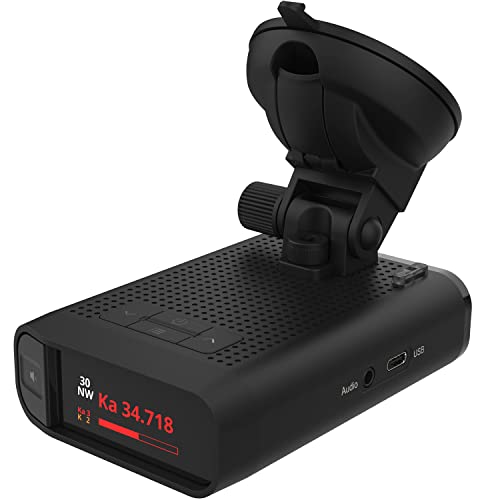
For private passenger vehicles, radar detectors are legal in every US state except Virginia, and they’re also banned in Washington D.C. And on all military bases regardless of state. Commercial drivers face a stricter picture: federal rules prohibit detectors in commercial vehicles over 10,000 pounds in interstate commerce, everywhere. That’s the short version. The details below cover the commercial rules, the mounting laws that can get a legal detector ticketed anyway, and the important difference between detectors and jammers. Laws change, so treat this as a researched overview current as of mid-2026 and confirm your own state’s code before relying on it.
Radar Detector Laws by State
The state-by-state table is mercifully short, because 49 states agree. In a private car or light truck, a radar detector is legal to buy, own, and use in every state except Virginia, where using one is a traffic infraction and police can confiscate the device. Washington D.C. has the same prohibition. Military installations ban detector use on base under federal regulation no matter which state the base sits in. Everywhere else, from California to New York, a detector on your windshield is lawful in a passenger vehicle. There’s no state where merely owning a detector is a crime; even Virginia targets use in the vehicle, not possession in your luggage.
Permitted Use of Radar Detectors
In the 49 legal states, permitted use still comes with two practical conditions. First, mounting: several states, including California and Minnesota, restrict what may be attached to the windshield, so a suction-cup detector in those states belongs low on the glass or on a dash mount rather than mid-windshield. Second, the detector must only listen. Devices that transmit to defeat police equipment are a different legal category entirely, covered below. A detector that quietly receives radar signals and beeps at you is, legally speaking, no different from a car radio in most of the country.
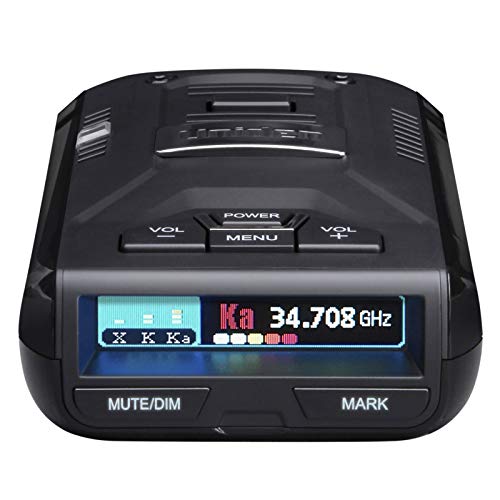
Uniden R3 Extreme Long Range Radar Detector
A receive-only detector with GPS lockouts for false alerts, among the most recommended units in its price bracket. Legal in passenger cars everywhere except Virginia and D.C.
Federal Regulations
Two federal rules shape everything above. The Federal Motor Carrier Safety Administration bans radar detectors in commercial motor vehicles over 10,000 pounds operating in interstate commerce, which is why no long-haul truck runs one legally in any state. And the FCC regulates the radio side: detectors are passive receivers and are fine, but radar jammers, which transmit interference, are illegal under federal law nationwide, full stop. Laser jammers occupy a gray middle ground because they emit light rather than radio waves; federal law doesn’t ban them, but a growing list of states does, including California, Colorado, Illinois, Minnesota, South Carolina, Tennessee, Texas, Utah, and Virginia. Our radar vs lidar explainer covers why lidar is the harder problem for any detector.
State Exceptions
Beyond Virginia and D.C., the exceptions mostly concern bigger vehicles. New York prohibits detectors in commercial vehicles over 18,000 pounds, and Illinois and New Jersey have similar commercial-vehicle rules, so a heavy work truck can be covered by state law even on an intrastate run the federal rule doesn’t touch. Some states also carve out exemptions the other way: law enforcement and certain emergency vehicles may lawfully carry equipment that would be restricted for civilians. If you drive anything with commercial plates or a GVWR above 10,000 pounds, assume detectors are off the table until your state’s code says otherwise.
Consequences of Using Radar Detectors
In Virginia, expect a fine in the low hundreds plus confiscation of the detector; the offense doesn’t carry license points, but the device rarely comes back. In D.C. The penalty structure is similar. Commercial drivers risk far more: a detector found in a CMV during a DOT inspection means a violation on the carrier’s safety record, potential fines for both driver and company, and trouble that outlasts the ticket. One more consequence worth naming: a detector visible on the glass in a no-mount state can draw a windshield-obstruction citation even where the detector itself is perfectly legal.
Conclusion and Recommendations
If you drive a passenger vehicle anywhere but Virginia or D.C., you can run a detector legally; mount it low, keep it receive-only, and you’re inside the law. If you cross into Virginia regularly, take it off the glass and stow it, since possession isn’t the offense, use is. Commercial drivers should simply not carry one. And skip jammers entirely: radar jammers are a federal offense, and laser jammers are banned in enough states that they’re a liability for anyone who crosses borders. For choosing the hardware itself, our best detectors for the money roundup separates genuine long-range performers from gas-station toys.
Frequently Asked Questions
Are radar detectors legal in all states?
No. They’re legal in private vehicles in every state except Virginia, and they’re also prohibited in Washington D.C. And on military bases. The other 49 states allow them in passenger cars.
Can commercial vehicles use radar detectors?
Generally no. Federal law bans them in commercial vehicles over 10,000 pounds in interstate commerce, and states like New York add their own commercial bans above 18,000 pounds. Assume no if the vehicle has commercial plates.
Do radar detectors interfere with other devices?
A detector is a passive receiver and doesn’t transmit, though older or poorly shielded units can leak faint local oscillator noise, which is how detector-detectors find them. Jammers, which actively transmit, are the devices that cause real interference and are illegal under FCC rules.
Can drivers of emergency vehicles use radar detectors?
In several states, law enforcement and emergency vehicles are exempt from equipment restrictions that apply to civilians, so yes, depending on the state and the agency’s own policy.
What are the consequences of using a radar detector in a state where it’s prohibited?
Expect a fine, commonly in the $50 to $250 range for a first offense in Virginia, plus confiscation of the device. Commercial drivers face federal violations that hit the carrier’s safety record, which costs far more than the fine.
The Bottom Line
Radar detectors are legal for private drivers in 49 states; Virginia, D.C., and military bases are the exceptions, and heavy commercial vehicles are covered by a nationwide federal ban. Detectors listen and are broadly lawful; jammers transmit and aren’t. Check your state’s current code before a road trip, mount the unit where it doesn’t obstruct the windshield, and if you want the one that earns its spot on the glass, start with our best radar detectors guide.
More Radar Detectors Guides
- Best Undetectable Radar Detectors (Researched and Compared)
- 7 Best Radar Detectors for Your Car in 2026 (Range and Accuracy Evaluated)
- Radar vs Lidar: What Detectors Can and Can’t Do
- Best Portable Radar Detectors (Researched and Compared)
- Best Radar Detectors for the Money (Researched and Compared)
- Are Radar Detectors Legal in Your State