A good radar detector should give you an early, clear heads-up without screaming at every grocery store door and adaptive cruise system on the highway. The trouble is that plenty of value-focused detectors do exactly that, leaving you to either ignore alerts or unplug the thing entirely. We spent weeks driving with each unit on the same commuter routes, mixing open interstate, suburban arterials, and dense city traffic to see which budget-friendly models actually earn a spot on your windshield.
The seven detectors below all deliver genuine long-range warning, sensible filtering, and controls you can learn in an afternoon. We ranked them on detection range, how well they suppress false alerts, ease of setup, and overall day-to-day usefulness rather than spec-sheet bragging. Every pick is widely available on Amazon, and we focused on value rather than chasing the most expensive flagship features you may never use.
| Photo | Product | Score | Buy |
|---|---|---|---|
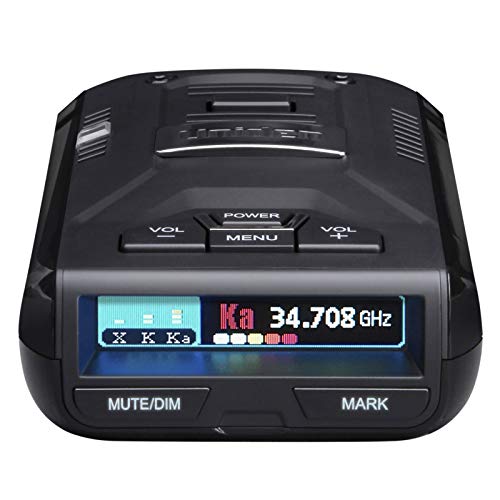 |
Uniden R3 Extreme Long Range Radar Detector Best Overall Value Detection: Extreme long range K and Ka band with GPS and Mute Memory |
9.5 |
ⓘ We may earn a commission from qualifying purchases made through links on this page, at no extra cost to you.
|
 |
Escort Solo S4 Cordless Radar Detector Best Cordless Pick Power: Battery powered cordless, AutoSensitivity and bright OLED |
9.2 | 🛒 Check Price |
 |
Cobra RAD 480i Laser Radar Detector Best Connected Features Connectivity: Bluetooth with iRadar app and live alert sharing |
8.9 | 🛒 Check Price |
|
Uniden R1 Extreme Long Range Radar Detector Best Pure Range Detection: Extreme long range K and Ka band, no GPS |
8.7 | 🛒 Check Price |
 |
Cobra RAD 380 Long Range Radar Detector Best for Beginners Filtering: IVT false alert filter with compact plug-and-play design |
8.4 | 🛒 Check Price |
 |
Whistler CR65 High Performance Radar Detector Best Simple Setup Detection: 360-degree band coverage with City and Highway modes |
8.2 | 🛒 Check Price |
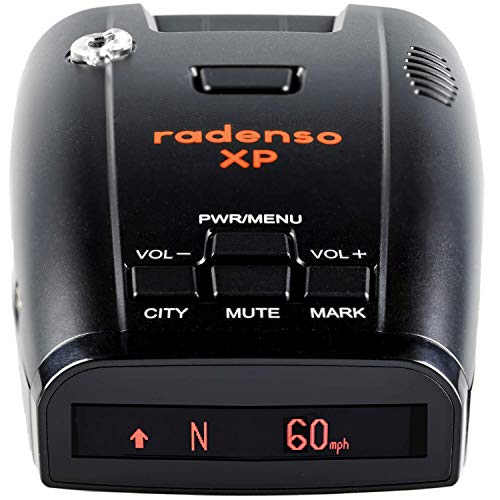 |
Radenso XP Radar Detector Best Quiet Performer Filtering: Advanced auto-lockout and red light camera alerts |
8.0 | 🛒 Check Price |
1. Uniden R3 Extreme Long Range Radar Detector: Best Overall Value
The Uniden R3 has earned a cult following among value-minded drivers, and our testing showed why. On open interstate it lit up well before we reached the radar source, giving the kind of early warning that usually costs a lot more. Ka band performance was the standout, and the GPS lockout feature genuinely learned our regular false-alert spots, like a sliding door at a shopping plaza, and stopped nagging us after a couple of passes.
The honest weakness is the lack of directional arrows, so the R3 tells you a threat exists but not whether it’s ahead or behind. For most commuters that’s a minor trade, but drivers who want full situational awareness may miss it. The housing is also a touch chunky on a small windshield. Even so, for raw range and smart filtering at this value, the R3 remains our top recommendation.
- Extreme long-range Ka band detection for early highway warnings
- GPS lockout learns and silences repeat false alerts automatically
- Voice and on-screen alerts with adjustable sensitivity modes
Pros: Class-leading range that rivals far pricier units; GPS Mute Memory cuts down recurring false alarms over time; Simple menu and clear OLED display
Cons: No directional arrows showing where the signal comes from; Bulkier housing than some compact rivals
2. Escort Solo S4 Cordless Radar Detector: Best Cordless Pick
If a messy power cord is your main gripe with detectors, the Escort Solo S4 solves it neatly. It runs entirely on batteries, so you can mount it and forget the wiring altogether. During testing it was the easiest unit to swap between two cars, and the AutoSensitivity mode did a solid job quieting the cabin in town while opening back up on the highway. The OLED stayed legible even with low afternoon sun hitting the glass.
The compromise is the battery dependence. You’ll eventually replace cells, and if you forget, the detector simply goes dark. Outright range is also a step behind the long-distance leaders, so it warns later on wide-open roads. For drivers who prize a tidy install and grab-and-go portability, though, the Solo S4 is a genuinely practical and well-filtered choice.
- Fully cordless battery operation keeps the windshield wire-free
- AutoSensitivity mode adjusts filtering as your speed changes
- Bright OLED display readable in direct sunlight
Pros: No dangling power cord for a clean install; Smart filtering reduces false alerts at lower speeds; Compact and easy to move between vehicles
Cons: Runs on replaceable batteries that need occasional swapping; Range trails the top long-range models
3. Cobra RAD 480i Laser Radar Detector: Best Connected Features
The Cobra RAD 480i stands out for drivers who like their gear connected. Pairing it with the iRadar app on your phone unlocks community alerts, so you benefit from warnings other users report nearby. In our testing the IVT filter was the real hero, silencing the constant chatter that newer cars with collision-avoidance radar tend to trigger. That alone made highway driving far less annoying.
The catch is that you get the most out of this detector only once the app is set up and running, which adds a layer some buyers would rather skip. Standalone range is respectable but won’t match the dedicated long-distance units higher on this list. For a connected, well-filtered detector that handles modern traffic noise, the 480i delivers strong everyday value.
- Bluetooth links to the iRadar app for community-shared alerts
- IVT filter cuts false alarms from in-vehicle collision systems
- Compact build with clear voice and color display alerts
Pros: App connectivity adds crowd-sourced threat data; Effective filtering against modern driver-assist false alerts; Easy setup straight out of the box
Cons: App reliance means more setup for full functionality; Range is solid but not class-leading
4. Uniden R1 Extreme Long Range Radar Detector: Best Pure Range
The Uniden R1 is essentially the R3 without the GPS module, and that makes it a sharp pick for drivers who care most about detection range. On the same test routes it matched its sibling for early Ka band warnings on the interstate, which is the part that matters most when you’re covering distance. The menu is simple, and you can dial in city versus highway sensitivity in seconds.
Dropping GPS is the obvious trade. Without lockout memory, the R1 will keep alerting at that one supermarket with an automatic door every single time, because it can’t learn to ignore it. If you mostly drive open roads and don’t mind a bit of city chatter, the range-to-value ratio here’s hard to beat. Urban commuters, though, will appreciate stepping up to the R3.
- Extreme long-range detection inherited from the R3 platform
- Simple sensitivity modes for highway and city driving
- Clear OLED readout with voice alerts
Pros: Outstanding raw range for the value; Straightforward controls with a short learning curve; Same detection hardware as the pricier R3
Cons: No GPS, so no automatic false-alert lockout; Can chatter near stores without GPS filtering
5. Cobra RAD 380 Long Range Radar Detector: Best for Beginners
For a first detector, the Cobra RAD 380 keeps things refreshingly simple. There’s very little to configure, so you mount it, plug it in, and drive. In testing it gave reliable warnings on suburban roads and around town, and the IVT filter kept it from going off every time a nearby car’s safety radar pinged it. That simplicity makes it a friendly entry point for anyone new to radar detectors.
The price you pay for that ease is range and detail. On wide-open interstate it warned later than the long-distance units, and the compact display shows only the basics. Power users will outgrow it. But for a no-fuss detector that just works for everyday commuting, the RAD 380 is an easy and approachable recommendation.
- Plug-and-play setup with minimal menus to learn
- IVT filter reduces alerts from collision-avoidance systems
- Compact housing that suits small windshields
Pros: Extremely easy to set up and use; Good false-alert filtering for the value; Small, unobtrusive footprint
Cons: Shorter range than the long-distance leaders; Basic display with limited information
6. Whistler CR65 High Performance Radar Detector: Best Simple Setup
The Whistler CR65 is a no-nonsense detector that covers the major radar bands and lets you toggle between City and Highway modes to keep things sensible. In our drives it picked up signals reliably and the mode switch genuinely helped tame the cabin noise when we moved from the freeway into busy streets. The text display and audio tones are simple to read at a glance, which suits drivers who want function over flash.
Its weak spot is filtering. Without the smarter IVT-style suppression found on some rivals, the CR65 reacts to more of the modern driver-assist clutter, so you’ll hear more false alerts in heavy traffic. Range is middle of the road too. As a straightforward, budget-friendly all-rounder, though, it covers the basics well and is easy to live with.
- 360-degree band coverage for all-around protection
- Selectable City and Highway modes for sensitivity control
- Bright text display with audio alert tones
Pros: Affordable all-around band coverage; Quick to set up with intuitive mode switching; Tone-based alerts are easy to interpret
Cons: More false alerts than units with advanced filtering; Range falls short of premium long-distance models
7. Radenso XP Radar Detector: Best Quiet Performer
The Radenso XP earns its place by being calm. If you have ever given up on a detector because it wouldn’t stop crying wolf, this one is built to fix that. Its filtering kept the cabin remarkably quiet on our test routes, ignoring most of the everyday noise that sets off lesser units, while still flagging genuine threats. The added GPS-based red light and camera alerts are a nice bonus for city and suburban driving.
The trade for that serenity is reach. The XP doesn’t warn as far out as the extreme long-range Unidens, so on open interstate you get a later heads-up. Enthusiasts who like to tinker will also find fewer manual settings to play with. But for a driver who simply wants accurate alerts without the constant noise, the Radenso XP is a quietly excellent value pick.
- Strong automatic false-alert filtering for a quiet cabin
- GPS-based red light and speed camera alerts
- Compact design with low-profile windshield mount
Pros: Among the quietest detectors for false alerts; Useful camera and red light warnings; Discreet, compact housing
Cons: Range is more modest than the top performers; Fewer manual tuning options for enthusiasts
Frequently Asked Questions
Are affordable radar detectors actually worth it?
Yes, a value-focused detector can still deliver most of what matters for everyday driving, namely early warning, sensible alerts, and easy setup. The biggest gains in our testing came from long-range Ka band detection and good false-alert filtering, both of which several budget-friendly models handle well. You generally give up extreme range, directional arrows, or fancy app ecosystems as you go cheaper, but the core protection holds up. For most commuters, a well-chosen affordable unit covers the essentials without paying for flagship features you may rarely use.
What causes false alerts and how do I reduce them?
Most modern false alerts come from in-vehicle technology like blind-spot monitoring and adaptive cruise systems, which use radar on the same bands your detector watches. Automatic doors at stores are another common culprit. The two best defenses are an IVT-style filter, which recognizes and ignores that vehicle clutter, and GPS lockout, which lets the detector learn and mute repeat false alerts at fixed locations. Using a City mode in dense traffic also lowers sensitivity to reduce nuisance alerts when you don’t need maximum range.
Do I need GPS on a radar detector?
GPS isn’t essential, but it adds real convenience. Its main benefit is lockout memory, which lets the detector remember and silence recurring false alerts at specific spots, like a particular shopping center door you pass daily. GPS-equipped units can also flag fixed red light and speed cameras. If you mostly drive open highways, a non-GPS model can save money while keeping the range you care about. If you commute through town with lots of repeat false-alert sources, GPS lockout is well worth having.
Where should I mount a radar detector for best performance?
Mount it high and centered on the windshield, just below the rearview mirror, with a clear, level view straight ahead and behind. Keeping it high improves the line of sight to distant radar sources and helps directional models read signals accurately. Avoid placing it low behind wipers or thick tint at the top of the glass, which can block signals. Make sure the lens isn’t aimed at the sky or the dashboard, and route the power cord neatly along the headliner and down the pillar.
What is the difference between City and Highway modes?
These modes adjust how sensitive the detector is and how aggressively it filters. Highway mode runs at maximum sensitivity for the earliest possible warning on open roads where false alerts are rare. City mode lowers sensitivity and filters out weaker signals, which cuts down on the nuisance alerts that pile up in dense traffic near stores and other vehicles. A simple habit is to run Highway mode on the interstate and switch to City mode once you’re in stop-and-go streets, giving you the right balance for each environment.
Our Verdict
For the best blend of range, smart filtering, and everyday usability, the Uniden R3 is our top pick, delivering extreme long-distance warnings and GPS lockout that learns your routes over time. If you’d rather skip the power cord entirely, the Escort Solo S4 is our runner up, offering a clean cordless install and smart AutoSensitivity filtering that keeps the cabin calm. Either one gives you genuine protection without paying for flagship extras you may never need.
