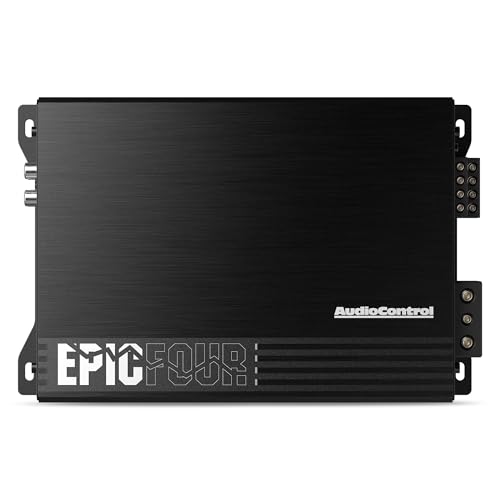
If you want to add an amp or a subwoofer to your car but your factory stereo doesn’t have any RCA outputs on the back, you’re not stuck. A line output converter, usually called an LOC, is the small part that bridges that gap. It takes the signal your factory radio already sends to the speakers and turns it into a clean signal an aftermarket amplifier can actually use. Here’s what an LOC does, how it works, and what to know before you wire one in.
What Is a Line Output Converter?
A line output converter is a small electronic device that converts a speaker-level signal into a line-level (RCA) signal. Aftermarket amplifiers are built to accept line-level input through RCA jacks, but most factory head units never send that kind of signal. Instead, they send a stronger, already amplified signal straight to your door speakers. An LOC sits in the middle and translates one into the other, so your amp gets exactly the type of input it expects.
In plain terms, it’s the translator between a stock radio and an aftermarket amp. Without it, the two are basically speaking different electrical languages.
Why Factory Stereos Don’t Have RCA Outputs
Factory radios are designed to be a complete, closed system. The head unit already has a small built-in amplifier, and it feeds power directly to the speakers through the wiring harness. Since the automaker never planned for you to add extra gear, there’s no reason to include preamp RCA outputs on the back.
That becomes a problem the moment you want more bass or a louder system, because:
- Factory speaker wires carry an amplified, higher-voltage signal, not the low-voltage line signal an amp is built to read.
- There are no RCA jacks to plug your amp into in the first place.
- Newer vehicles often add EQ shaping or a hidden factory amp, which makes a simple wire tap trickier.
An LOC solves the first two issues cleanly, and the right type can handle the third.
How an LOC Works
An LOC connects to your factory speaker wires, reads the amplified signal on them, and steps it down to a low-voltage line-level output. Most units use either a transformer or a small internal circuit to do this without adding noise. From there, you run standard RCA cables from the LOC to your amplifier, just like you would from an aftermarket head unit.
Many converters also include a remote turn-on output. This is a big deal, because your factory radio has no dedicated remote wire to switch the amp on and off. A good LOC senses when audio starts flowing and automatically sends a signal to power up the amp, then shuts it down when the car is off. That saves you from splicing into an accessory wire and worrying about battery drain.
How to Wire an LOC
The exact steps depend on your car and where you tap the signal, but the general process is consistent. Owner feedback and install guides tend to follow the same path:
- Find a signal source. You can tap the wires behind the head unit or, on some builds, splice into a full-range speaker output such as a rear door.
- Connect the speaker-level inputs. Match the LOC’s input wires to the correct positive and negative speaker wires for left and right.
- Set the ground. Some active converters need power and ground of their own, so give them a clean chassis ground.
- Run the RCA cables. Route them from the LOC to your amp, keeping them away from power wires to avoid engine noise.
- Wire the remote turn-on. Use the LOC’s auto turn-on lead if it has one, or run a manual remote wire if it doesn’t.
- Set the output level. Adjust the gain knob on the LOC so the signal is strong but not distorted before you fine-tune the amp.
If you’re not comfortable working behind the dash, this is a job many owners hand to a local installer, since a bad tap can introduce noise that’s frustrating to chase later.
Choosing the Right Line Output Converter
Not every LOC is the same, and picking the right style matters for sound quality and for how modern your vehicle is. When researching options, a few features come up again and again:
- Channel count. A two-channel LOC is fine for a single sub and mono amp. A four-channel unit suits a full multi-speaker upgrade.
- Passive vs active. Passive converters are simple and don’t need power, while active converters use their own power feed for a cleaner, stronger signal.
- Auto turn-on. Signal-sensing remote output makes the install far easier on a factory system.
- Ground-loop protection. Some models add filtering or isolation to cut down on the whine that factory taps can cause.
If your car has a factory amp or advanced EQ, look specifically for a converter that’s designed to handle those systems, since a basic model may pass along a colored or weak signal.
Frequently asked questions
Do I really need an LOC to add an amp to a factory stereo?
If your factory head unit has no RCA preamp outputs, then yes, in most cases you’ll need an LOC or another signal adapter to feed an aftermarket amp. Some amps accept speaker-level input directly, which can skip a separate converter, but a dedicated LOC usually gives you cleaner control over the signal and an easy auto turn-on.
Will a line output converter hurt my sound quality?
A quality LOC that’s installed and gained correctly shouldn’t noticeably degrade your audio. Problems like hiss or engine whine almost always trace back to a poor ground, RCA cables run next to power wires, or a gain set too high. Take your time with the install and those issues are avoidable.
Can one LOC power a whole system?
An LOC doesn’t power anything on its own. It only converts and passes along the signal. Your amplifier still does the actual work of driving the subs or speakers. The LOC’s job is simply to give that amp the correct type of input to work with.