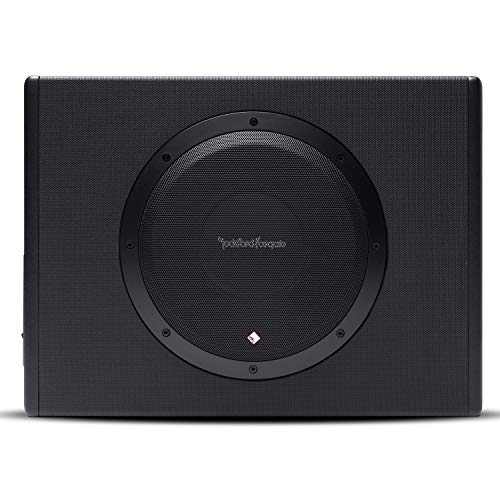
Subwoofer placement issues in car audio are caused by physical constraints of the vehicle, acoustic interference from the cabin, and improper alignment with the rest of the system. The main culprits are trunk resonance, phase cancellation, and cabin gain peaks that create uneven bass response. To solve these problems, you need to understand how your car’s interior affects sound waves and adjust placement accordingly.
1. Trunk Resonance and Standing Waves
In sedans, the trunk acts as a sealed chamber that can amplify certain frequencies (typically 40-60 Hz) while canceling others. This occurs when the subwoofer’s output reflects off the trunk lid and rear seats, creating standing waves. The result is boomy, one-note bass that lacks clarity. To reduce this, try facing the subwoofer toward the rear of the car (firing backward) or toward the front seats (firing forward). Experiment with distances from the trunk lid: moving the subwoofer 6-12 inches away can shift resonance peaks. Sealed enclosures generally produce tighter bass than ported boxes in trunks, as ports can exacerbate resonance.
2. Phase Cancellation Between Subwoofer and Speakers
When the subwoofer and main speakers are out of phase, their sound waves partially cancel each other, especially around the crossover frequency (typically 80-100 Hz). This causes a noticeable dip in mid-bass output, making the system sound thin or disconnected. To check phase, play a 60-80 Hz test tone and listen for a null when you reverse the subwoofer’s polarity (using a phase switch or swapping speaker wires). If the bass gets louder, you were out of phase. Also consider physical placement: if your subwoofer is in the trunk and front speakers are in the doors, the distance difference can cause time-alignment issues. Modern DSPs can delay the subwoofer signal to compensate, but without one, placing the subwoofer as close to the front speakers as possible helps.
3. Cabin Gain and Frequency Response Irregularities
Every car has a cabin gain curve that boosts low frequencies (typically 20-40 Hz) while attenuating higher bass frequencies. This happens because the small interior acts as a pressure chamber. The result is that a subwoofer measured flat in open air will sound boomy and muddy in the car. To mitigate this, use a subwoofer with a lower Qts (0.5-0.6) for tighter control, or employ an equalizer to cut the boosted frequencies. Placement near the rear of the cabin (like in a hatchback) can produce more even response than trunk placement. For SUVs and hatchbacks, firing the subwoofer upward or to the side can reduce standing waves. Always listen to test tracks with varied bass content (e.g., 30-100 Hz sweeps) to identify problem frequencies.
4. Physical Constraints: Enclosure Type and Vehicle Shape
Your car’s shape dictates where a subwoofer can fit, and the enclosure type (sealed, ported, or bandpass) interacts with that space. Sealed enclosures work well in tight trunks because they don’t require large port volumes, but they need more power for deep bass. Ported enclosures can produce louder, deeper bass but are sensitive to placement: ports need at least 6 inches of clearance from walls to avoid chuffing and tuning shifts. Bandpass enclosures are even more placement-sensitive and often cause peaky response. In small cars like coupes, a down-firing subwoofer can couple with the floor for better low-end, but it may cause rattling. Always secure the enclosure to prevent movement, as a sliding box alters the acoustic load.
Frequently Asked Questions
Does subwoofer placement affect sound quality in a hatchback?
Yes, hatchbacks have a shared cargo area that acts like a large sealed box. Firing the subwoofer toward the rear hatch often causes excessive bass at 50-70 Hz. Instead, try firing it upward or toward the side to distribute pressure more evenly. A sealed enclosure is recommended for tighter bass.
Should I face my subwoofer toward the rear or front in a sedan?
There is no universal answer. Facing the rear can increase low-end output but may sound boomy. Facing the front (toward the back seats) often produces tighter bass but may reduce overall volume. Test both orientations with a 50 Hz tone and choose the one that sounds less muddy.
Can a subwoofer be placed under a seat effectively?
Underseat subwoofers are limited by size and enclosure volume, so they cannot produce deep bass below 40 Hz effectively. They work best in small cars for adding mid-bass (60-100 Hz) but will not provide the impact of a larger subwoofer. Ensure the subwoofer is not blocked by seat frames and has adequate ventilation.
The Bottom Line
Subwoofer placement issues boil down to your car’s acoustics and physical layout. Start by identifying the problem: boomy bass often means trunk resonance, while a mid-bass dip points to phase cancellation. Experiment with orientation, distance from walls, and enclosure type. For most sedans, a sealed enclosure firing toward the rear with the subwoofer positioned in the center of the trunk yields the most balanced response. If you can, use a DSP to fine-tune time alignment and EQ. For more tips on selecting the right subwoofer and enclosure, check out our guide on car audio systems. And remember, proper installation and testing are key: use a multimeter to verify impedance and a test tone CD to evaluate response.