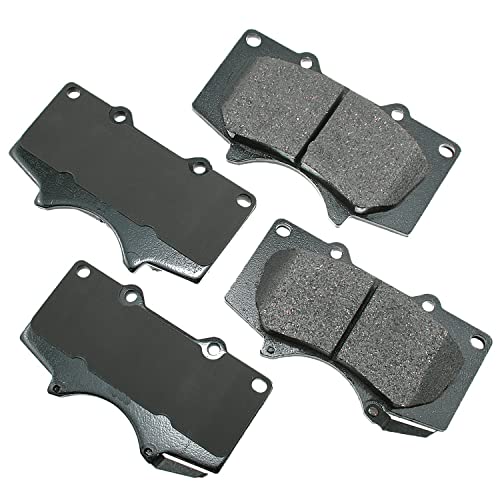
Fixing brake fade typically costs between $100 and $1,500, but the exact price depends on the root cause and your vehicle. Brake fade happens when braking performance drops due to overheating, worn components, or contaminated fluid. The good news is that most cases are fixable without replacing the entire system.
Common Causes and Their Repair Costs
Brake fade usually stems from one of three issues: overheated pads and rotors, degraded brake fluid, or worn-out hardware. Each has a different price tag. For overheated pads and rotors, resurfacing rotors costs $100 to $200 per axle, while replacing them runs $250 to $500 per axle. Brake pad replacement alone is $150 to $300 per axle for standard pads, but high-performance or ceramic pads can cost $300 to $600. If the fluid is the problem, a brake fluid flush costs $80 to $150. In severe cases where calipers or lines are damaged, expect $300 to $800 for caliper replacement and $150 to $400 for brake line repairs. Labor rates vary from $75 to $150 per hour, and most jobs take 1 to 3 hours.
When You Can Fix It Cheaply vs. When It Gets Expensive
If you catch brake fade early, you might only need a fluid flush and pad replacement for under $300. However, ignoring fade can lead to warped rotors, seized calipers, or brake line failure, pushing costs above $1,000. For example, a full brake job including rotors, pads, and fluid on a typical sedan runs $300 to $800. On a heavy SUV or truck, expect $500 to $1,200. Performance vehicles with larger brakes can cost $800 to $1,500. The most expensive scenario is when fade causes a crash, leading to body and suspension damage. Always address fade immediately to avoid compounding costs.
DIY vs. Professional Repair: Cost and Risk
Doing it yourself can save 50% or more on labor. A basic brake pad and rotor swap costs $150 to $400 in parts, plus $50 for tools. A fluid flush is another $20 for fluid and a $10 hose. However, DIY requires mechanical skill and proper tools. Mistakes like stripping bolts, installing pads backward, or leaving air in the lines can cause brake failure. If you’re not confident, professional repair is safer. Many shops offer free brake inspections, so you can get a diagnosis before committing to work. For complex issues like ABS module failure (which can mimic fade), professional diagnosis is essential.
How to Prevent Brake Fade and Save Money
Prevention is cheaper than repair. Avoid overheating by not riding the brakes downhill; use engine braking instead. Replace brake fluid every 2 years or 30,000 miles because old fluid absorbs moisture and boils at lower temperatures. Upgrade to high-temperature brake fluid or ceramic pads if you frequently drive in mountains or tow heavy loads. Inspect pads and rotors annually; replace pads before they reach 3mm thickness. These steps cost little but can prevent fade entirely. For more tips, check out our brake maintenance guide.
Frequently Asked Questions
Can I drive with brake fade?
No. Driving with brake fade is dangerous because your stopping distance increases dramatically. If you notice a soft pedal, burning smell, or reduced braking, pull over and let the brakes cool. Then drive cautiously to a shop. Continued driving can cause total brake failure.
Is brake fade covered by warranty?
Brake fade caused by normal wear is not covered under most warranties. However, if fade results from a defective part like a stuck caliper or faulty master cylinder, the repair may be covered under your vehicle’s bumper-to-bumper warranty. Check your warranty terms.
How do I know if I need new pads or just fluid?
If the brake pedal feels spongy or sinks to the floor, it’s likely air or moisture in the fluid. If you hear squealing or grinding, pads are worn. A visual inspection: pads below 3mm need replacement. If the pedal is firm but braking power is low, suspect glazed pads or overheated rotors.
The Bottom Line
Brake fade repair costs vary widely from $100 to $1,500, but the average fix runs $300 to $600. The cheapest solution is a fluid flush and pad replacement if caught early. The most expensive involves replacing rotors, calipers, or lines. Don’t delay repair; brake fade compromises safety and can lead to costlier damage. Regular maintenance and early diagnosis keep costs down. For more on brake care, see our brake resources.