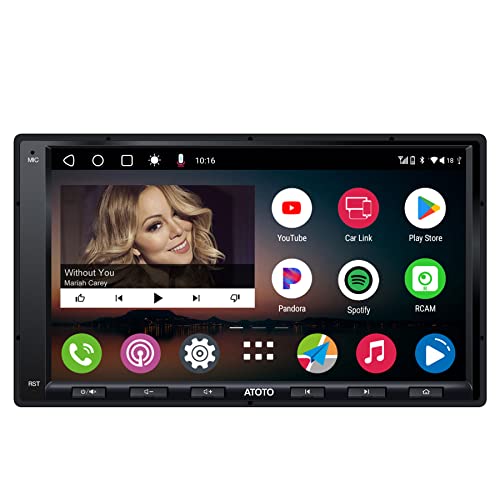
Few things are as annoying as a Bluetooth audio delay in your car. You tap play and the sound arrives a beat late, a video looks out of sync, or a navigation prompt lands after the turn. This lag is rarely a single fault. It usually comes from how Bluetooth handles audio, the codec your phone and head unit agree on, and the buffering each device adds along the way.
The good news is that most delay can be reduced or removed once you understand the cause. In this guide we break down why the lag appears, walk through a clear set of fixes, and explain when the head unit itself is the bottleneck. If your factory radio is the weak link, upgrading the wireless link with one of the best Bluetooth car adapters is often the simplest path to tighter, cleaner sound.
Why Bluetooth audio lags in a car
Bluetooth audio delay, often called latency, is the gap between the moment your phone sends sound and the moment you hear it through the speakers. Several factors stack up to create that gap.
The first is codec processing. Bluetooth compresses audio before it travels and decompresses it on the other end. Basic codecs like SBC add noticeable delay, while more efficient options keep it lower. Both devices have to support the same codec, so the connection falls back to the slowest one they share.
The second factor is buffering. To avoid dropouts, devices hold a small reserve of audio before playing it. A larger buffer means smoother sound but more delay. Cheap or older head units tend to buffer heavily.
Interference is the third cause. Bluetooth shares the crowded 2.4 GHz band with Wi-Fi and many other gadgets. In a car packed with electronics, signal congestion forces retransmissions that add lag. Finally, old hardware simply can’t process audio quickly. Aging chips, outdated firmware, and legacy Bluetooth versions all widen the gap.
Step-by-step fixes for Bluetooth audio delay
Work through these steps in order. Many drivers solve the problem after the first two or three.
- Update your phone and head unit. Install the latest phone software and check the head unit maker for firmware updates. Updates often improve Bluetooth stability and codec support.
- Re-pair the devices. Delete the existing pairing on both the phone and the head unit, then connect again from scratch. A fresh pairing clears corrupted settings that cause lag.
- Reduce interference. Turn off other Bluetooth gadgets in the car, keep the phone in clear line of sight rather than buried in a pocket or console, and move it away from USB chargers that can radiate noise.
- Use a low-latency codec, or a wired or adapter connection. If both devices support a faster codec, enable it. When wireless lag won’t budge, a wired connection or a dedicated adapter gives the most consistent timing.
- Restart both devices. Power-cycle the phone and the head unit. A simple restart clears temporary glitches in the Bluetooth stack and frequently restores normal timing.
Hardware that helps, and products to consider
When software fixes only get you partway, hardware makes the difference. The single most effective upgrade is a quality Bluetooth car adapter. These small devices plug into the auxiliary input or USB port and take over the wireless link from your aging head unit, often with newer Bluetooth versions and better codec support that cut delay sharply.
Look for an adapter that supports a recent Bluetooth standard and a low-latency codec, offers a stable connection, and matches the inputs your car actually has. An aux-based adapter behaves much like a wired link once paired, which keeps timing tight for both music and calls. A well-chosen adapter is usually cheaper and faster to fit than replacing the entire stereo, and it sidesteps the slow processing inside a factory unit.
Mistakes to avoid
A few common missteps make delay worse or waste your time. Watch out for these.
- Blaming the phone first when the head unit is usually the slower device in the chain.
- Stacking several Bluetooth accessories, such as a smartwatch and earbuds, that all compete for the same band.
- Skipping firmware updates because the system seems to work, which leaves known latency bugs in place.
- Buying the cheapest adapter you can find with no mention of its Bluetooth version or codec support.
- Leaving the phone deep in a bag or under a metal trim where the signal struggles to reach the receiver.
When the head unit is the limit
Sometimes you do everything right and the lag still lingers. That’s a strong sign the head unit itself is the ceiling. Older factory radios use early Bluetooth chips with slow processing and heavy buffering that no setting can overcome.
At that point you have two practical choices. The first is to bypass the built-in Bluetooth with an external adapter that handles the wireless link itself, which is the lower-cost route. The second is to replace the head unit with a modern aftermarket model that supports current Bluetooth versions and low-latency codecs out of the box. If you mainly want synced video and snappy navigation prompts, the adapter route usually delivers the best value for the effort.
Frequently Asked Questions
Why does my car Bluetooth audio play a few seconds behind?
The delay comes from codec processing and buffering on both the phone and the head unit, made worse by interference on the 2.4 GHz band. Older head units add the most lag because their chips process audio slowly.
Does a Bluetooth adapter really reduce audio delay?
Yes. A quality adapter often uses a newer Bluetooth version and a low-latency codec, and it takes over the wireless link from an aging head unit. That usually tightens timing for both music and calls.
Is a wired connection always better than Bluetooth for latency?
A wired aux or USB connection removes wireless processing and gives the most consistent timing, so it generally beats Bluetooth for delay. A good adapter on an aux input behaves much like a wired link once it’s paired.
The Bottom Line
Bluetooth audio delay in a car comes from a mix of codec processing, buffering, interference, and aging hardware, but it’s usually fixable. Start with free steps like updating software, re-pairing, reducing interference, and restarting both devices, then move to a low-latency codec or a wired link if lag remains. When the factory head unit is simply too slow, the cleanest fix is to upgrade the wireless link with one of the best Bluetooth car adapters, which delivers tighter, better-synced sound without replacing the whole stereo.