A worn set of shocks turns a capable truck into a bouncy, nose-diving handful, and it gets worse the moment you add a trailer, a bed full of gear, or a washboard dirt road. Good shock absorbers keep the tires planted, calm the body motion after bumps, and stop that floaty feeling on the highway. The catch is that “truck shocks” cover everything from a smooth daily-driver replacement to a stiff off-road monotube built for jumps and dunes, so the right pick depends entirely on how you actually use the truck.
We pulled the most trusted names in truck suspension and evaluated them on ride quality, towing and hauling control, off-road durability, fitment range, and how easy they’re to bolt on at home. Below are the seven shock absorbers that earned their spot, ranked best first, with an honest look at where each one shines and where it falls short.
| Photo | Product | Score | Buy |
|---|---|---|---|
 |
Bilstein 5100 Series Shock Absorber Best Overall 46mm monotube, gas-pressurized, digressive valving, yellow zinc body |
9.5 |
ⓘ We may earn a commission from qualifying purchases made through links on this page, at no extra cost to you.
|
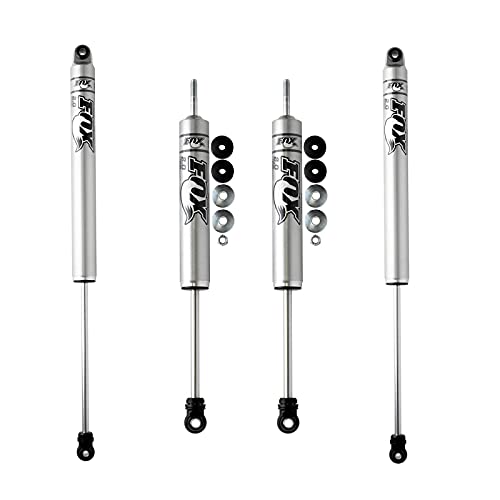 |
Fox 2.0 Performance Series Smooth Body IFP Shock Best for Off-Road 2.0-inch monotube, internal floating piston, race-bred valving |
9.3 | 🛒 Check Price |
 |
Rancho RS9000XL Adjustable Shock Absorber Most Adjustable 9-position manual tuning, twin-tube, on-vehicle adjuster |
9.1 | 🛒 Check Price |
 |
Bilstein 4600 Series Shock Absorber Best for Daily Driving 46mm monotube, stock-height fit, gas-pressurized |
8.9 | 🛒 Check Price |
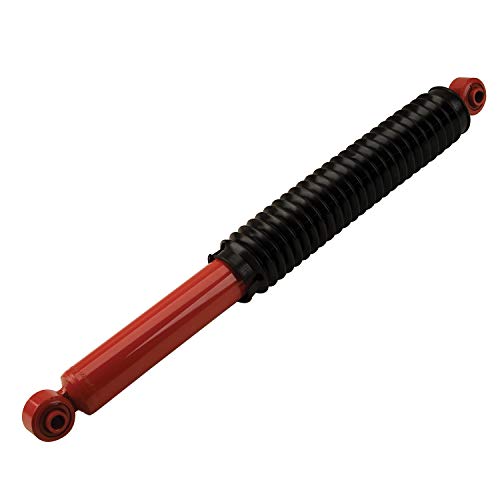 |
KYB MonoMax Gas Shock Absorber Best for Heavy Loads High-pressure monotube, oversized 45mm piston, valve-coded for trucks |
8.7 | 🛒 Check Price |
 |
Rancho RS5000X Gas Shock Absorber Best Value Twin-tube, large-bore piston, gas-charged, application-tuned |
8.4 | 🛒 Check Price |
 |
Monroe Gas-Magnum Shock Absorber Best Direct Replacement Heavy-duty twin-tube, 1-3/8-inch bore, nitrogen gas-charged |
8.1 | 🛒 Check Price |
1. Bilstein 5100 Series Shock Absorber: Best Overall
The Bilstein 5100 is the shock most truck owners should buy first, and for good reason. The 46mm monotube design moves more oil and dissipates heat far better than a thin twin-tube unit, so it stays consistent whether you’re creeping over rocks, dragging a trailer up a grade, or running a graded dirt road at speed. The digostive valving gives it a firm, planted feel that kills the wallow and nose-dive of tired stock shocks while still soaking up sharp impacts, which is a hard balance to strike in one shock.
The honest weakness is ride character. On glass-smooth highway, the 5100 transmits a touch more road texture than a plush OE-style shock, and drivers coming off a worn factory setup sometimes call it firm at first. It isn’t harsh, but it isn’t a couch either. On the adjustable-height front applications you also need to reset spring preload or have a shop do it, which adds a step. For a do-it-all truck shock that feels great loaded and lasts, it’s the one to beat.
- Large 46mm monotube piston for fade-free damping under load and heat
- Digressive valving balances firm body control with a compliant ride
- Some applications offer ride-height adjustment for a mild front lift
Pros: Excellent control when towing, hauling, or running mild off-road; Holds up to repeated washboard and trail abuse without fading; Direct bolt-on fit with no special tools on most trucks
Cons: Slightly firmer than a soft factory shock on smooth pavement; Adjustable-height versions require spring reset on some setups
2. Fox 2.0 Performance Series Smooth Body IFP Shock: Best for Off-Road
If your truck spends real time off the pavement, the Fox 2.0 Performance Series is the shock that lets you keep your foot in it. The 2.0-inch monotube body and internal floating piston separate the oil from the nitrogen charge, which is exactly what stops the fade and cavitation you feel from cheaper shocks after a few minutes of hard trail running. Fox tunes the valving per application using lessons from its desert race program, so the shock controls high-speed hits and big compression events with a confidence that street-focused shocks simply can’t match.
The trade-off is that this is a performance shock first. On a truck that mostly sees grocery runs and highway miles, the firmer tune can feel like more than you need, and you’re paying for capability you may rarely use. There’s also limited on-the-fly adjustability in the base smooth-body version, so dialing in a different feel means stepping up to a reservoir or adjustable model. For owners who actually wheel, jump, or run dirt at speed, that firmness is the whole point.
- 2.0-inch monotube body with internal floating piston for fade resistance
- Application-tuned valving developed from desert race programs
- Anodized aluminum or zinc body shrugs off trail debris and heat
Pros: Outstanding high-speed control on whoops, jumps, and rough trails; Stays composed when factory and street shocks overheat and fade; Premium build quality that looks and feels race-grade
Cons: Firmer than needed for a purely on-road commuter truck; Limited adjustability unless you step up to the reservoir versions
3. Rancho RS9000XL Adjustable Shock Absorber: Most Adjustable
The Rancho RS9000XL is the answer for the truck that has to do everything. Its nine-position adjuster lets you run a soft, comfortable setting when the bed is empty and crank it firmer when you hook up a trailer or air down for a trail, all without buying a second set of shocks. On most applications you can reach the adjuster without pulling the shock, and the optional in-cab kit means you can change the whole truck’s damping from the driver’s seat, which is genuinely useful when conditions change mid-trip.
The compromise lives in the twin-tube architecture. Even at the firmest setting, it doesn’t resist heat fade as well as a big monotube like the Bilstein or Fox when you really hammer it on rough terrain for long stretches. It’s also worth being honest that nine settings means some experimentation before you land on the ones you actually like for each scenario. For versatility and the ability to tune ride feel on demand, though, nothing else here comes close.
- Nine manual damping settings from soft daily to firm towing or trail
- Adjuster knob is reachable without removing the shock on most fits
- Optional in-cab adjustment kit lets you change settings from the seat
Pros: Dial in a soft ride empty and a firm ride when loaded; One shock covers commuting, towing, and weekend off-road use; Wide fitment range across popular trucks and SUVs
Cons: Twin-tube design fades sooner than a monotube under hard abuse; Finding your favorite setting takes some trial and error
4. Bilstein 4600 Series Shock Absorber: Best for Daily Driving
The Bilstein 4600 is the 5100’s stock-height sibling and the smart choice for owners who love the Bilstein monotube feel but have no interest in lifting the truck. You get the same fade-resistant 46mm monotube and gas charge, tuned to bolt straight into a factory-height truck. The result is a noticeably more planted highway ride, far less nose-dive under braking, and much better composure when you load the bed compared to the tired twin-tubes most trucks leave the factory with.
The limitation is simply scope. Unlike the 5100, the 4600 has no ride-height adjustment, so if you later decide you want even a modest leveling lift up front, you’re buying different shocks. And like all Bilsteins, it reads firmer than a soft, comfort-first OE replacement, which a few drivers notice at first. If you want long-lasting monotube control at stock height and nothing more, this is exactly the right tool.
- 46mm monotube performance in a strictly stock-height application
- Gas charge resists fade and aeration on long hauls
- Self-adjusting valving reacts to road input and load changes
Pros: Big upgrade in highway composure over worn factory shocks; Monotube durability without changing ride height; Clean direct-fit installation with no extra parts
Cons: No ride-height adjustment if you ever want a mild front lift; Firmer initial feel than the softest OE replacement shocks
5. KYB MonoMax Gas Shock Absorber: Best for Heavy Loads
The KYB MonoMax is built for trucks that work. KYB designed it with an oversized monotube piston and a high gas pressure specifically to handle the weight and body motion of full-size trucks and SUVs, so it really comes alive when there’s a load on board. Hook up a heavy trailer or fill the bed and you feel the difference immediately: less squat, less sway, and far better recovery after bumps than a worn factory shock or a light twin-tube can offer.
That heavy-duty focus is also its weakness. When the truck is empty, the firm tuning can feel stiff over small road imperfections, and it’s happiest with at least some weight aboard. The application coverage is also narrower than the big sellers like Bilstein and Rancho, so you should confirm fitment for your exact truck before buying. For owners who tow and haul as a way of life, the MonoMax delivers control where it counts.
- Oversized monotube piston built specifically for full-size trucks and SUVs
- High gas pressure controls heavy loads and reduces body roll
- Heavier control valving aimed at hauling and towing duty
Pros: Strong control with a loaded bed or a heavy trailer; Monotube durability at a sensible value; Big reduction in sway and wallow on full-size rigs
Cons: Firm tuning can feel stiff when the truck is empty; Fewer application fitments than Bilstein or Rancho
6. Rancho RS5000X Gas Shock Absorber: Best Value
The Rancho RS5000X is the dependable, no-drama upgrade for owners who want a better ride without overthinking it. The large-bore twin-tube design and gas charge are tuned per application to deliver a comfortable yet controlled feel that works for daily driving, light hauling, and the occasional dirt road. It rides a little softer and more forgiving than the firm monotubes on this list, which a lot of drivers actually prefer for a truck that mostly lives on pavement, and the fitment coverage is enormous.
Where it gives ground is at the extremes. As a twin-tube, it can’t match a Bilstein, Fox, or KYB monotube for fade resistance when you push hard off-road for long stretches, and it doesn’t control a really heavy load as tightly as the dedicated towing shocks. Treat it as a balanced, easy-living replacement rather than a performance or heavy-duty piece, and it offers excellent value for what most trucks need day to day.
- Large-bore twin-tube design tuned for everyday truck use
- Gas charge keeps damping consistent and reduces foaming
- Application-specific valving for a balanced ride on and off pavement
Pros: Solid all-around upgrade with a comfortable, controlled ride; Very broad fitment across trucks, Jeeps, and SUVs; Easy bolt-on replacement for a worn factory set
Cons: Twin-tube build fades under sustained hard off-road abuse; Less load control than the dedicated heavy-duty picks
7. Monroe Gas-Magnum Shock Absorber: Best Direct Replacement
The Monroe Gas-Magnum is the practical, easy-to-find pick when your factory shocks are simply worn out and you want to restore proper ride control. The heavy-duty twin-tube uses a large 1-3/8-inch bore and a nitrogen gas charge to cut down on foaming and fade, and the all-welded steel body is built for the heavier duty cycle of trucks and vans. Because Monroe coverage is so broad and parts are stocked almost everywhere, it’s one of the simplest sets to source and bolt on in an afternoon.
Be clear-eyed about what it’s, though. The Gas-Magnum is built to bring a tired truck back to a solid baseline rather than to transform its handling, and it doesn’t deliver the firm, planted body control of a monotube like the Bilstein, Fox, or KYB. If you tow heavy, wheel aggressively, or want a sharper feel, you’ll want to step up. As a dependable, widely available restoration of factory ride quality, it does the job honestly.
- Large 1-3/8-inch bore for added durability on trucks and vans
- Nitrogen gas charge reduces aeration and fade on long drives
- All-welded steel construction aimed at heavy-duty service
Pros: Wide availability and very broad vehicle coverage; Noticeable improvement over fully worn factory shocks; Straightforward direct-fit replacement
Cons: Not as composed or firm as the monotube performance shocks; Best suited to restoring ride rather than upgrading it
Frequently Asked Questions
How do I know when my truck's shock absorbers need replacing?
Watch for excessive bouncing after bumps, nose-diving when you brake, the rear squatting hard when you load the bed, and a floaty or wandering feel on the highway. Cupped or uneven tire wear and visible oil leaking down the shock body are also clear signs. Many trucks need new shocks somewhere around 50,000 to 100,000 miles, but heavy towing, hauling, and off-road use shorten that significantly. If a quick push down on a corner of the truck makes it bounce more than once or twice before settling, the shocks are worn.
What is the difference between monotube and twin-tube truck shocks?
A monotube shock uses a single large bore with the oil and gas separated by a floating piston, which moves more fluid, sheds heat better, and resists fade under hard or sustained abuse. That makes monotubes like the Bilstein, Fox, and KYB picks ideal for towing, hauling, and off-road work. A twin-tube shock has an inner and outer chamber, often rides a little softer for everyday driving, and usually fits a wider range of vehicles, but it can fade sooner when pushed hard. Choose monotube for performance and heat resistance, twin-tube for comfort and broad value.
Do I need to replace all four shock absorbers at the same time?
It’s strongly recommended to replace shocks in axle pairs at minimum, and ideally all four together. Shocks wear gradually, so a fresh shock paired with a worn one on the same axle creates uneven damping and unpredictable handling. Replacing all four at once keeps the ride balanced front to rear, ensures consistent control when loaded, and saves you from doing the job twice. If budget forces a split, do both fronts or both rears together, never just a single corner.
Will new shocks help my truck tow and haul better?
Yes, the right shocks make a real difference under load. Heavy-duty and monotube shocks like the KYB MonoMax or Bilstein 5100 control body squat, reduce trailer-induced sway, and stop the bouncing and wallowing that worn shocks allow when you add weight. Keep in mind that shocks control motion but don’t carry load by themselves, so for serious or frequent heavy towing you may also want load-leveling components or air helper springs. Adjustable shocks like the Rancho RS9000XL are handy here because you can firm them up when loaded and soften them when empty.
Can I install truck shock absorbers myself?
For most trucks, yes. Replacing shocks is one of the more approachable suspension jobs and usually requires only basic hand tools, a jack, and jack stands. The shock typically mounts with a bolt or stud at the top and bottom, so the job is mainly about safely supporting the truck, removing the old shock, and bolting in the new one. The common headaches are rusted hardware that may need penetrating oil or heat, and front struts on some trucks that involve spring compression and are better left to a shop. Always work on a securely supported vehicle and torque the fasteners to specification.
Our Verdict
For most truck owners, the Bilstein 5100 Series is our top pick. Its big 46mm monotube delivers fade-free control whether you’re towing, hauling, or running mild trails, it lasts, and some applications even offer a mild front lift, making it the most complete all-around truck shock here. If you spend serious time off the pavement, the Fox 2.0 Performance Series is the runner up, trading a little street comfort for genuinely race-bred composure on rough, fast terrain. Choose the 5100 for do-it-all daily strength and the Fox 2.0 when the trail is the priority.
