A rusty truck frame is more than an eyesore. Left alone, surface rust eats into the boxed sections and crossmembers that hold your suspension and body together, and once those structural members get thin, you’re looking at a failed inspection or a frame swap. The good news is that catching it early with the right rust remover can stop the spread, restore solid steel, and buy your truck many more years on the road.
We sorted through the formulas that actually matter for frame work, the deep-penetrating soaks, the cling gels for vertical rails, and the rust converters that lock down what you can’t scrub away. Below are the seven products we trust most for truck frames, ranked best first, with honest notes on where each one shines and where it falls short.
| Photo | Product | Score | Buy |
|---|---|---|---|
 |
Evapo-Rust Original Super Safe Rust Remover Best Overall Non-toxic water-based soak, reusable, biodegradable, no acids or fumes |
9.5 |
ⓘ We may earn a commission from qualifying purchases made through links on this page, at no extra cost to you.
|
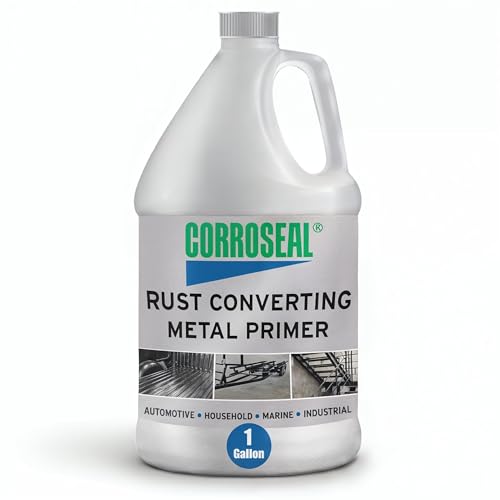 |
Corroseal Water-Based Rust Converter Primer Best Rust Converter Water-based converter and metal primer in one, brush or spray, single coat |
9.3 | 🛒 Check Price |
 |
POR-15 Rust Remover Strongest Stripper Acid-based immersion remover, part of the POR-15 three-step frame system |
9.1 | 🛒 Check Price |
 |
WD-40 Specialist Rust Remover Soak Best for Removable Parts Non-toxic, biodegradable immersion soak, reusable, gallon size |
8.9 | 🛒 Check Price |
 |
Permatex Rust Treatment Best Easy Converter Brush-on rust converter, dries to a black paintable primer coat |
8.6 | 🛒 Check Price |
 |
Loctite Naval Jelly Rust Dissolver Best Cling Gel Thick phosphoric acid gel, clings to vertical surfaces, brush-on |
8.3 | 🛒 Check Price |
 |
CRC Rust Remover Best Quick Spray Fast-acting liquid rust remover, spray or wipe, dissolves light surface rust |
8.1 | 🛒 Check Price |
1. Evapo-Rust Original Super Safe Rust Remover: Best Overall
Evapo-Rust earns the top spot because it removes rust the smart way. Instead of acid that attacks everything, it uses a chelating agent that bonds only to iron oxide and lifts it away, leaving solid steel, paint, and rubber bushings untouched. For removable frame hardware, brackets, shackle plates, skid bars, and crossmember bolts, you drop the part in, walk away, and pull out clean metal hours later with no scrubbing and no pitting. It’s the formula we reach for first when results matter more than speed.
The honest weakness is that it’s a soak product at heart. A truck frame is bolted to a truck, so you can’t dunk it. On vertical, attached rails you have to soak rags or build a poultice and keep it wet, which is fiddly and uses a lot of product. For full frame-on-the-truck jobs a cling gel or converter is more practical, but for any part you can remove and submerge, nothing else comes out this clean.
- Selective chelation removes rust without touching good steel, paint, or plastic
- Reusable until exhausted, so one container treats many removable frame parts
- No acid, no fumes, and safe to use indoors or in a closed garage
Pros: Cleanest results of anything we researched with zero base metal pitting; Genuinely non-toxic and skin safe, no respirator needed; Leaves a clean gray surface ready for primer
Cons: Works best by full immersion, which is awkward for an attached frame; Needs longer dwell time than acid products on heavy scale
2. Corroseal Water-Based Rust Converter Primer: Best Rust Converter
For frame work on the truck, a converter usually beats a remover, and Corroseal is the converter we trust most. You knock off the loose flakes with a wire wheel, brush or spray on this milky blue liquid, and the tannic acid chemistry turns the remaining rust into stable black magnetite while a latex primer bonds over the top. The result is a tough, paintable base that stops the rust cycle in pitted areas you could never get back to shiny bare steel. Truckers and marine crews have leaned on it for decades for exactly this reason.
Where it falls short is that Corroseal is a base, not a finish. The converted surface needs a quality topcoat or chassis paint to survive years of stone chips and salt spray, so plan on a second product over it. It also wants a reasonably clean, wire-brushed surface to react properly, so if you skip the prep and slather it over greasy scale, adhesion suffers. Do the prep and topcoat it, though, and few products protect a frame this well.
- Converts rust to stable magnetite and primes the surface in one step
- Water-based cleanup with soap and water, no harsh solvent smell
- Marine-grade formula proven on hulls, trailers, and frame rails
Pros: Converts and primes in a single application to save a step; Excellent for frame areas you can’t fully strip to bare metal; Holds up to road salt and moisture far better than untreated steel
Cons: Needs a topcoat for long-term durability, it isn’t a finish coat; Surface must be wire-brushed first for the chemistry to grip
3. POR-15 Rust Remover: Strongest Stripper
When the rust is thick and crusty, POR-15 Rust Remover brings the muscle. This is an acid-based immersion stripper built as the middle step of the POR-15 system, after their Cleaner Degreaser and before the legendary POR-15 coating that seals the metal for good. On badly scaled brackets and frame parts you can remove and soak, it chews through layers that would take Evapo-Rust far longer, and it leaves a slightly etched surface that the POR-15 topcoat keys into beautifully. For a full nut-and-bolt frame restoration, this whole system is hard to beat.
The trade-off is that it’s genuinely an acid product, so you treat it with respect. Nitrile gloves, eye protection, and ventilation aren’t optional, and if you leave bare steel soaking too long it’ll flash rust as soon as it dries, so you have to move straight to coating. Like the other soaks here, it’s happiest with a part submerged in a tub, which limits how useful it’s on a frame still hanging under the truck.
- Aggressive formula strips heavy rust and scale faster than mild soaks
- Designed to pair with POR-15 Cleaner and the famous POR-15 coating
- Etches the surface to give the topcoat a strong mechanical bite
Pros: Cuts through thick, layered rust that mild removers struggle with; Part of a complete, proven frame restoration system; Leaves an etched profile that POR-15 coating grips tightly
Cons: Acid-based, so gloves, eye protection, and ventilation are a must; Works best as a soak, harder to use on attached vertical rails
4. WD-40 Specialist Rust Remover Soak: Best for Removable Parts
WD-40 Specialist Rust Remover Soak is the easy answer for the basket of rusty hardware that comes off every frame job. Drop in seized bolts, U-bolt plates, brake line tabs, and bracket hardware, leave them overnight, and they come out clean enough to wire-brush and reuse. Like Evapo-Rust it’s non-toxic and biodegradable, so you can run it in the garage without a respirator, and the bath stays usable for several rounds of parts before it tires out. For restoring fasteners rather than buying new ones, it pays for itself fast.
It isn’t a frame-on-the-truck solution, though, and WD-40 doesn’t pretend otherwise. This is a bucket-soak product through and through, so it does nothing for the rails and crossmembers still bolted under your truck. On really heavy rust it’s also a slower worker than the acid strippers, often needing a full overnight bath where POR-15 would be done sooner. As a dedicated hardware-restoring bath, however, it’s reliable and friendly to use.
- Lifts rust from bolts, brackets, and hardware with no scrubbing
- Non-toxic and biodegradable, safe on bare hands per the label
- Reusable formula treats multiple batches of frame fasteners
Pros: Restores threaded hardware and small frame parts to clean metal; Trusted WD-40 name with wide availability and easy reordering; No fumes, acids, or aggressive solvents
Cons: Strictly an immersion product, useless on attached frame rails; Heavy rust needs a long overnight soak
5. Permatex Rust Treatment: Best Easy Converter
Permatex Rust Treatment is the no-fuss converter for spot repairs along a frame. It comes in a brush-cap bottle, so you can dab it straight into the pitted seams, weld flanges, and bracket corners where rust likes to start, with no masking or spray overspray to worry about. The tannic chemistry turns the rust black and stable and dries to a primer-ready film you can paint over with chassis black or undercoating. For knocking out a handful of rust spots before they grow, it’s about as simple as frame rust treatment gets.
The catch is scale. The brush bottle is perfect for targeted touch-ups but tedious if you try to cover an entire frame, where a sprayable converter or a larger can would serve you better. And like every converter here, it’s a base layer rather than a finish, so the converted surface still wants a real topcoat to hold up to years of salt and stone chips. Used as intended for localized rust, though, it’s convenient and effective.
- Chemically converts rust into a stable, paintable black surface
- Brush-on bottle reaches frame nooks a spray can would miss
- Dries to a primer-ready coat for chassis paint or undercoating
Pros: Simple brush-on application with no special equipment; Great for spot-treating rust patches along the frame; Leaves a black primer surface ready to topcoat
Cons: Bottle size suits spot repairs more than a whole frame; Still needs a protective topcoat over the converted layer
6. Loctite Naval Jelly Rust Dissolver: Best Cling Gel
Naval Jelly solves the one problem the soaks can’t, namely vertical metal. Because it’s a thick phosphoric acid gel, you brush it onto the side of a frame rail or the bottom of a crossmember and it clings there and keeps working instead of dripping straight onto the floor. That makes it one of the few true rust removers, not just converters, that you can actually use on a frame still bolted under the truck. Give it the dwell time on the label, scrub, and rinse, and it dissolves surface rust and leaves a mild phosphate layer behind.
It’s still an acid, so the usual rules apply, gloves, goggles, and no skin contact, and you must rinse it off thoroughly when the time is up. The bigger gotcha is flash rust, because once you rinse it the bare steel needs to be dried and primed quickly or fresh rust blooms within hours. It also takes some elbow grease on heavy buildup. But for clinging to the awkward vertical and overhead spots of a frame, it does a job the bucket soaks simply can’t.
- Gel consistency clings to vertical frame rails instead of running off
- Phosphoric acid dissolves rust and leaves a phosphate layer
- Brush it on, wait, then rinse to reveal treated steel
Pros: Stays put on vertical and overhead frame surfaces; Useful on the frame while it’s still on the truck; Long-trusted formula for dissolving stubborn rust
Cons: Phosphoric acid demands gloves, goggles, and care; Must be rinsed off and can flash rust if left bare
7. CRC Rust Remover: Best Quick Spray
CRC Rust Remover is the grab-and-go option for light, fresh rust before it gets serious. When you spot a hazy orange film starting on a frame section, a bare bolt head, or a fresh scratch in the chassis paint, you spray or wipe it on, let it work, and clean off the loosened oxide without dragging out tubs or wire wheels. It’s fast and convenient, and CRC is a brand that lives on most parts-store shelves, so reordering is never a hassle. As a maintenance tool to stay ahead of rust, it has a real place in the kit.
Its limits show up the moment the rust gets thick. This is a light-duty remover, so on heavy scale, deep pitting, or crusty old frame rust it simply doesn’t have the bite of an acid stripper or the staying power of a converter. Being a thin liquid, it also runs right off vertical rails, so a cling gel is the better pick there. Keep it for catching rust early and quick touch-ups, and let the heavier products handle the structural restoration.
- Fast-acting on light surface rust and oxidation
- Easy spray or wipe application for quick frame touch-ups
- Widely stocked CRC quality for convenient reordering
Pros: Quick results on light, fresh surface rust; Simple to apply with no mixing or soaking; Trusted CRC brand and easy to source
Cons: Best on light rust, struggles with heavy scale and pitting; Thin liquid runs off vertical frame surfaces
Frequently Asked Questions
Should I use a rust remover or a rust converter on my truck frame?
It depends on access. A true rust remover like Evapo-Rust or POR-15 Rust Remover strips rust back to clean steel, but most work by immersion, so they’re ideal for parts you can unbolt and soak such as brackets, shackles, and hardware. A converter like Corroseal or Permatex is better for the frame while it’s still on the truck, because you brush or spray it over pitted, hard-to-reach rust and it chemically locks the rust into a stable, paintable surface. Most thorough frame jobs use both: removers for the parts that come off, and a converter plus topcoat for the rails that stay on.
Can I treat the frame without taking it off the truck?
Yes, and most people do. Start by knocking off loose flakes with a wire wheel or brush, then use a cling gel like Naval Jelly on the vertical surfaces to dissolve what you can, or go straight to a brush-on converter like Corroseal or Permatex on the pitted areas. The soak-style removers aren’t practical on an attached frame because you can’t submerge it, so save those for hardware you remove. Finish any on-truck treatment with a chassis topcoat or undercoating to protect the work.
Do I need to topcoat after using a rust remover or converter?
Almost always, yes. Bare steel that has just been stripped by an acid remover will flash rust within hours if you leave it exposed, so you should prime or coat it promptly. Converters leave a stable black surface, but that surface is designed as a base for paint, not as a finished, weatherproof layer. For a truck frame that faces road salt, water, and stone chips, plan to follow up with a quality chassis paint, a product like POR-15, or an undercoating so all your prep work actually lasts.
Are these rust removers safe to use in my garage?
It varies by formula. The non-toxic soaks, Evapo-Rust and WD-40 Specialist Rust Remover Soak, are biodegradable, fume-free, and safe to use indoors without a respirator, which is one reason they’re so popular. The acid-based products, POR-15 Rust Remover and Naval Jelly, plus the converters, require gloves, eye protection, and good ventilation, and you should keep them off your skin and rinse thoroughly. Always read the label, work in a ventilated space, and protect any surfaces you don’t want treated.
How long does rust remover take to work on a frame?
It ranges from minutes to overnight depending on the product and how bad the rust is. Quick sprays like CRC act on light surface rust in a few minutes. Cling gels such as Naval Jelly usually want fifteen minutes to an hour of dwell time before you rinse. Immersion soaks like Evapo-Rust and the WD-40 soak can need several hours to an overnight bath for heavy rust, while converters typically take fifteen to thirty minutes to react and then several hours to cure before topcoating. Heavier rust always takes longer, so check the label and reapply if needed.
Our Verdict
For the cleanest, safest results on every part you can unbolt and soak, Evapo-Rust Original is our top pick, it removes rust without harming good steel and it does it with no acid and no fumes. For the frame that stays on the truck, our runner up is Corroseal Water-Based Rust Converter, which converts and primes stubborn, pitted rust in one step and stands up to salt far better than untreated metal. Pair the two, remover for the hardware and converter plus a chassis topcoat for the rails, and you have everything you need to stop frame rot and add years to your truck.