If you have ever crawled under a pickup and seen the orange flaking that creeps along the frame rails, crossmembers, and leaf spring perches, you already know that grinding every inch back to bare steel isn’t realistic. A rust converter is the practical answer. It chemically reacts with iron oxide and turns the loose red rust into a stable black polymer-bonded layer that you can paint over, which is exactly what a truck frame needs when you can’t media-blast it.
We tried these converters on real frame rust, not lab coupons. We looked at how well each one wets into pitting, how tough the cured film is, whether it can be top coated, and how it holds up to road salt, gravel, and water. Below are the seven we trust most for truck frames, ranked best first, with honest weaknesses for each so you can match the right product to your truck and your climate.
| Photo | Product | Score | Buy |
|---|---|---|---|
 |
Corroseal Water-Based Rust Converter Primer Best Overall Water-based tannic acid converter and metal primer, brush, roll, or spray, one quart and one gallon sizes |
9.5 |
ⓘ We may earn a commission from qualifying purchases made through links on this page, at no extra cost to you.
|
 |
Permatex Rust Treatment 81849 Best Brush-On Value Brush-top bottle, dries to a black paintable polymer coating, roughly 10.75 ounce size |
9.2 | 🛒 Check Price |
 |
Rust-Oleum Rust Reformer Spray Best Spray Coverage Aerosol spray, flat black finish, bonds to rust and dries to paintable primer, 10.25 ounce can |
9.0 | 🛒 Check Price |
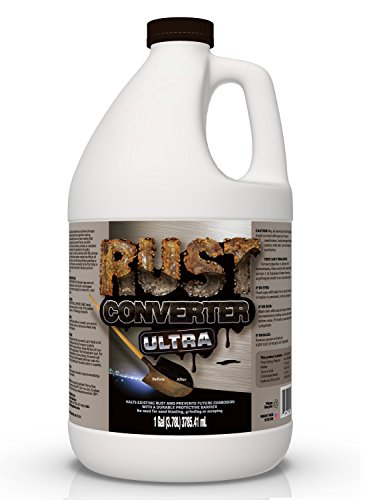 |
FDC Rust Converter Ultra Best for Big Frame Jobs Professional-grade water-based converter, brush, roll, or spray, available in gallon size |
8.9 | 🛒 Check Price |
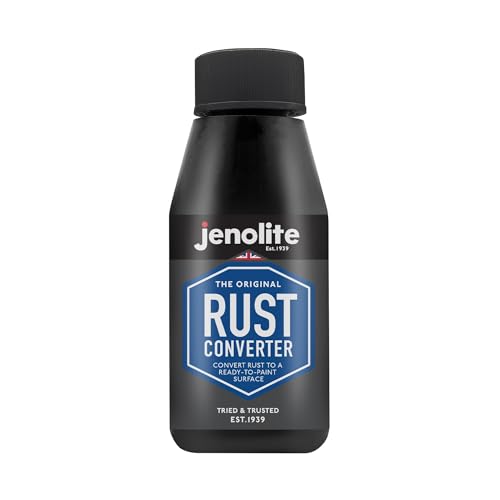 |
Jenolite Rust Converter Best One-Coat Sealer Brush-on liquid converter, dries to a hard sealing black film, available in bottle sizes for repairs |
8.7 | 🛒 Check Price |
 |
POR-15 Metal Prep and Rust Converter Best Prep Step Water-based etch and converter, preps and neutralizes rust to ready steel for coating, quart and gallon sizes |
8.5 | 🛒 Check Price |
 |
Evapo-Rust The Original Super Safe Rust Remover Best for Removable Parts Non-toxic biodegradable soak-style rust remover, reusable, one gallon and larger sizes |
8.0 | 🛒 Check Price |
1. Corroseal Water-Based Rust Converter Primer: Best Overall
Corroseal earns the top spot because it does the two jobs a truck frame actually needs in one pass. The tannic acid reacts with the rust and turns it into a stable black layer, while the same coat lays down a primer that paint, bedliner, or undercoating will grip. On heavily pitted frame rails we found it wicked into the low spots better than most, and after curing it left a hard surface that didn’t powder when scuffed. For a part you can’t easily blast clean, that combination is exactly right.
The marine heritage shows up in salt resistance, which matters if your truck sees winter roads. The honest weakness is prep sensitivity. It needs solid, well-bonded rust to bite into, so you still have to wire-brush off the loose flakes and degrease oily areas, and skipping that leads to a coating that peels with the rust underneath. The wet color is also a milky blue that hides thin spots, so good lighting and a second coat are worth the effort.
- Converts rust and primes in a single step so you can top coat without a separate primer
- Water-based formula cleans up with soap and water and has low odor for under-truck work
- Marine-grade pedigree designed to survive constant moisture and salt exposure
Pros: Genuinely one-step, which saves real time on a full frame; Tough cured film that takes paint and undercoating well; Cleans up without harsh solvents
Cons: Needs the surface free of loose flaking and grease first; Milky blue color while wet can make full coverage hard to judge
2. Permatex Rust Treatment 81849: Best Brush-On Value
Permatex Rust Treatment is the one we reach for when the rust is localized rather than a whole-frame project. The brush-in-cap design means you can dab it straight onto a rusty crossmember bolt, a leaf spring hanger, or a weld seam without dragging out rollers and trays. It reacts with the rust and dries to a firm black film that accepts paint, so you can blend the repair into the rest of the frame afterward.
Performance on real frame rust was consistently good, with a tough surface once cured. The clear limitation is volume. The bottle is sized for repairs and detailing, not for coating both full rails plus the crossmembers, so a badly rusted frame will burn through several bottles. The brush cap is also better suited to spot work than to laying an even film across a long flat surface, where a separate brush or roller does a cleaner job.
- Built-in brush cap makes spot treating frame welds and crevices easy
- Dries to a hard black ready-to-paint surface in a single application
- Works on rust you can’t fully remove, ideal for tight frame areas
Pros: Convenient brush applicator with no extra tools; Reliable black paintable finish; Great for targeted frame repairs and small jobs
Cons: Bottle size is small for an entire frame; Brush cap is best for spots, not large flat rails
3. Rust-Oleum Rust Reformer Spray: Best Spray Coverage
When the challenge is access rather than a single rusty spot, Rust-Oleum Rust Reformer shines. The aerosol lets you fog product into boxed frame sections, behind brake lines, and around suspension brackets where a brush simply can’t reach. It bonds to the existing rust and flashes over to a flat black, paintable primer, and that flat black happens to look like a healthy factory frame the moment it dries, which is a nice bonus on a visible chassis.
The trade-off is inherent to spraying upside down under a truck. Overspray drifts onto brake components, fuel lines, and your driveway, so thorough masking is non-negotiable, and the thin aerosol film means deep pits want two or three passes to fill and seal properly. Treat it as a coverage tool for awkward geometry rather than a heavy-build coating, and pair it with a thicker undercoat afterward for the best frame protection.
- Aerosol delivery reaches behind brackets and inside boxed frame sections
- Flat black finish blends with a factory frame look right away
- Dries to the touch fast so you can keep moving along the rails
Pros: Spray reaches tight and hidden frame areas; Fast drying speeds up a long job; Even flat black appearance
Cons: Overspray needs careful masking under the truck; Thin aerosol coats mean multiple passes for deep pitting
4. FDC Rust Converter Ultra: Best for Big Frame Jobs
FDC Rust Converter Ultra is built for the person staring at a fully rusted frame and an undercarriage that needs all of it treated. Sold by the gallon, it gives you enough material to brush or roll both rails, every crossmember, and the spring perches without rationing. On thick, heavy rust it reacted aggressively and laid down a substantial black layer that served as a solid primer base, which is what you want under bedliner or chassis paint.
Because it’s a high-build product, the directions push two coats for maximum life, so plan the time and material for a second pass over the worst areas. It’s also temperature sensitive like most water-based converters, meaning a cold garage will leave it gummy and slow to cure. Treat the frame on a warmer day or heat the space, and give it the full cure window before you top coat, and the durability pays off across a long project.
- Gallon size covers a full frame and undercarriage economically
- High-build formula tackles heavy industrial and chassis rust
- Dries to a tough black primer base ready for top coat
Pros: Large volume suits whole-frame restoration; Strong reaction on heavy, thick rust; Flexible application by brush, roll, or spray
Cons: Two coats are recommended for best durability; Needs warmer temperatures to cure correctly
5. Jenolite Rust Converter: Best One-Coat Sealer
Jenolite has been treating rusty steel for decades, and that experience shows in how cleanly it seals in a single coat. Brushed onto moderately rusty frame sections it reacted, darkened, and dried to a hard film that genuinely felt like a barrier rather than a thin stain. For owners doing maintenance on a frame that’s surface rusted but not yet falling apart, one careful coat often gets the job done and leaves a paintable surface behind.
Its sweet spot is moderate rust, and that’s also its limit. On deep, flaking scale it struggles to penetrate all the way, so the very worst sections still want mechanical cleaning first or a heavier high-build converter. The bottle sizing also leans toward repair work, so a complete frame will mean buying several, but for spot maintenance and keeping a decent frame decent, the one-coat convenience is hard to beat.
- Single-coat formula seals rust and prevents new rust forming
- Dries to a hard protective black surface that takes paint
- Long-trusted name with a track record on vehicle steel
Pros: Effective in a single application on moderate rust; Hard sealing finish resists fresh corrosion; Simple brush-on use
Cons: Better on moderate rust than on deep heavy scale; Smaller bottles mean stocking up for a full frame
6. POR-15 Metal Prep and Rust Converter: Best Prep Step
POR-15 Metal Prep sits in this list because the POR-15 system has a serious reputation for frame and chassis longevity, and this is the step that makes it work. It etches and neutralizes the rust while leaving a zinc-phosphate coating that the famous POR-15 sealer or your chosen top coat bonds to far better than bare or merely converted steel. If you want the most durable layered frame job possible, starting with a dedicated metal prep is the right move.
The honest caveat is that this is a preparation product, not a finish on its own. Left uncoated, the prepped surface will start to rust again, so you must follow it with a sealing top coat within the recommended window. That makes it a multi-step commitment rather than a quick fix, but for a frame restoration where you intend to apply a proper sealer anyway, this prep step is what separates a coating that lasts years from one that lifts in a season.
- Etches and neutralizes rust to create the ideal bonding surface
- Designed to pair with a sealing top coat for layered protection
- Leaves a zinc-phosphate coating that boosts paint adhesion
Pros: Creates an excellent surface for the top coat to grip; Neutralizes rust thoroughly when used as directed; Part of a proven multi-step frame system
Cons: Really a prep step, not a standalone finish; Surface must stay protected and not be left bare
7. Evapo-Rust The Original Super Safe Rust Remover: Best for Removable Parts
Evapo-Rust is the odd one out here on purpose. It isn’t a converter that you paint onto a hanging frame, it’s a soak that chemically strips rust right down to clean bare metal with no acid, no scrubbing, and no fumes. For a truck frame job that’s invaluable on all the removable pieces, the U-bolts, shackle plates, brackets, and hardware that you take off, drop in a tub overnight, and pull out looking new. Because it’s reusable, one batch handles a whole pile of parts.
Its limitation is obvious and worth stating plainly. You can’t soak a frame that’s still bolted under a truck, so this is a complement to a brush-on or spray converter, not a replacement. Use it on everything you can remove, then convert and seal the parts you can’t. Treated as the parts-cleaning half of a complete frame plan, it does its single job beautifully, which is why it still earns a place on this list.
- Soaks rust completely off bolts, brackets, and removable hardware
- Non-toxic, non-corrosive, and biodegradable for safe handling
- Reusable solution stretches across multiple parts
Pros: Removes rust to bare metal with no scrubbing; Safe, low-odor, and skin-friendly to work with; Reusable, which adds real value over a project
Cons: Soak method doesn’t suit a frame still on the truck; Best for small parts, not the rails themselves
Frequently Asked Questions
Do I need to remove all the rust before using a rust converter on my truck frame?
You don’t need to grind back to bare metal, which is the whole point of a converter, but you do need to remove anything loose. Knock off flaking scale and powdery rust with a wire brush or wire wheel, and wipe away grease, oil, and road grime so the chemistry can reach solid rust. Converters react with stable, well-bonded rust and turn it into a paintable black layer, but if you coat over loose flakes the new film will simply peel off with the rust underneath. Good prep is the single biggest factor in whether the repair lasts.
Can I paint or apply undercoating over a rust converter?
Yes, and on a truck frame you generally should. Most of the converters here dry to a paintable primer-like surface specifically so you can seal them with chassis paint, bedliner, or undercoating for long-term protection. Always let the converter fully cure first, which can take from a few hours to overnight depending on the product, temperature, and humidity. Check the label for the recommended top-coat window, because some products bond best when you coat within a certain time, and a sealing top coat is what shields the converted layer from gravel, water, and salt over the years.
How long does a rust converter last on a truck frame?
On its own a converted layer can hold for a year or more, but on a frame exposed to road salt, water spray, and gravel it lasts far longer when you seal it with a proper top coat. Think of the converter as the foundation that stops the existing rust and gives paint something to grip, and the top coat as the armor that takes the abuse. A converted and sealed frame, done with good prep, commonly holds up for several years, while a bare converted layer left exposed will eventually wear and let moisture back in.
What temperature and conditions do I need to apply a frame rust converter?
Most water-based converters want application in mild, dry conditions, typically well above freezing and out of direct rain. Cold temperatures leave the coating gummy and slow or prevent proper curing, while high humidity extends dry times. Work on a dry day or in a heated garage, make sure the frame surface itself is dry, and avoid treating a frame that’s still wet from washing. Always give the product its full cure window before driving in wet weather or applying a top coat, since rushing the cure is a common reason a frame coating fails early.
Is a brush-on or a spray rust converter better for a truck frame?
Both have a place and many people use them together. Brush-on and roll-on converters give you a thicker, higher-build film that fills pitting and works well on the flat outer faces of the frame rails and crossmembers. Spray or aerosol converters are better for reaching inside boxed frame sections, behind brackets, and around brake and fuel lines where a brush can’t fit. For a thorough frame job, brush the accessible surfaces for a heavy protective layer and spray the hidden cavities for coverage, then seal everything with a top coat.
Our Verdict
For most truck owners, Corroseal Water-Based Rust Converter Primer is the best overall pick because it converts rust and primes in one step, cleans up easily, and brings marine-grade salt resistance that a frame genuinely needs. If you want a convenient brush-on for targeted repairs on welds, hangers, and crossmembers, the Permatex Rust Treatment 81849 is our runner up and the easiest way to spot-treat a frame without extra tools. Whichever you choose, prep well, let it cure fully, and seal it with a top coat, and your frame will fight rust for years.


