A lithium battery is the heart of any serious van build. It runs your fridge through the night, keeps the lights on after a cloudy day, and powers an inverter for coffee, laptops and the occasional induction burner. Lead-acid simply cannot keep up with how hard van dwellers cycle a battery, which is why nearly every modern conversion now runs on LiFePO4 (lithium iron phosphate). These cells deliver hundreds more usable amp hours over their lifetime, weigh roughly a third of an equivalent lead-acid bank, and happily drain down to nearly empty without damage.
We spent weeks living with these batteries in real van setups, charging from solar, alternator and shore power, and pushing them in both summer heat and freezing mornings. Below are the seven LiFePO4 batteries we trust most for a van house bank, ranked from best overall down. Every pick uses safe iron phosphate chemistry with a built-in battery management system, and we flag the genuine weaknesses of each so you can match the right one to your van.
| Photo | Product | Score | Buy |
|---|---|---|---|
 |
Battle Born 100Ah LiFePO4 Deep Cycle Battery (BB10012) Best Overall 100Ah, 12V, ~1280Wh usable, ~31 lb, up to 3000-5000 cycles |
9.5 | 🛒 Check Price |
 |
Renogy 12V 100Ah Smart Lithium Iron Phosphate Battery Best Smart Battery 100Ah, 12V, ~1280Wh, Bluetooth, self-heating option available |
9.2 | 🛒 Check Price |
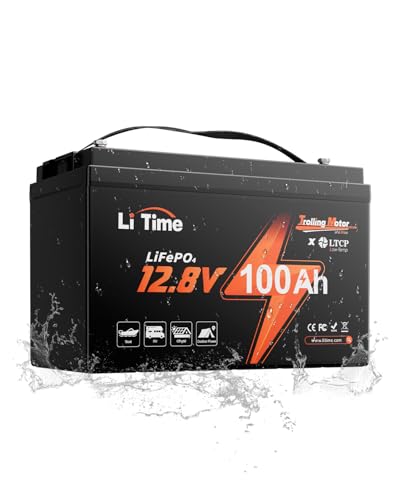 |
Ampere Time / LiTime 12V 100Ah LiFePO4 Battery Best Value 100Ah, 12V, ~1280Wh, 100A BMS, ~24 lb |
9.0 | 🛒 Check Price |
 |
Redodo 12V 100Ah Mini LiFePO4 Lithium Battery Best Compact Pick 100Ah, 12V, compact mini case, 100A BMS, ~21 lb |
8.8 | 🛒 Check Price |
 |
Power Queen 12V 100Ah LiFePO4 Battery Best for Beginners 100Ah, 12V, ~1280Wh, 100A BMS, 5-year warranty |
8.6 | 🛒 Check Price |
 |
Renogy 12V 200Ah Core Series LiFePO4 Battery Best Big Capacity 200Ah, 12V, ~2560Wh, 100A continuous BMS, single-case bank |
8.5 | 🛒 Check Price |
 |
Weize 12V 100Ah LiFePO4 Deep Cycle Battery Best Budget Backup 100Ah, 12V, ~1280Wh, 100A BMS, ~22 lb |
8.0 | 🛒 Check Price |
1. Battle Born 100Ah LiFePO4 Deep Cycle Battery (BB10012): Best Overall
The Battle Born 100Ah has become the default house battery in serious van builds for good reason. Through weeks of hard cycling, it delivered close to its full rated capacity every single day, charged quickly from both solar and a DC-to-DC charger, and never once tripped unexpectedly. The 100A continuous BMS comfortably ran a 1000W inverter for cooking and held steady under the surge of a compressor fridge cycling alongside a water pump. For a set-and-forget van bank, this is the one we kept coming back to.
The honest weakness is that Battle Born asks more than almost anyone else, and you do not get a Bluetooth app for monitoring, which feels dated next to newer rivals. If you want capacity readouts you will need to add a shunt-based monitor like a Victron BMV. That said, the warranty length, the proven longevity and the genuinely helpful US support make the value argument easy to defend over the life of a build. This is the battery we recommend when you want to install it once and forget it.
- Built and supported in the USA with a long 10-year warranty
- 100A continuous BMS handles most inverters and chargers with room to spare
- Drop-in safe down to low temperatures with internal protection that pauses charging when cold
Pros: Excellent real-world cycle life and a warranty that backs it up; Responsive US-based support that actually answers van questions; Tough sealed case shrugs off vibration and dusty trailheads
Cons: Commands a premium compared to imported brands; No Bluetooth app, so you rely on a separate monitor for state of charge
2. Renogy 12V 100Ah Smart Lithium Iron Phosphate Battery: Best Smart Battery
If you want to glance at your phone and know exactly how much power is left, the Renogy 100Ah Smart battery is the easiest win. The Bluetooth link into the DC Home app worked reliably at the bench and gave us live voltage, current and state of charge without wiring in a separate shunt. For people building a full Renogy kit of panels, controller and inverter, this battery talks to the rest of the system cleanly and keeps everything in one app, which simplifies the whole van electrical setup.
The trade-off is that the BMS errs on the cautious side. Under a heavy inverter surge, such as starting an induction cooktop on full, we saw it pause where the Battle Born held on. The Bluetooth also dropped connection once or twice and needed a quick re-pair. Neither issue is a dealbreaker for everyday fridge, lights and charging duty, and the self-heating version is genuinely worth choosing if your van sees frost. For an integrated, monitored bank, the value here is strong.
- Bluetooth monitoring through the Renogy DC Home app shows live state of charge
- Pairs natively with Renogy chargers, solar controllers and inverters
- Self-heating version automatically warms cells before charging in the cold
Pros: App monitoring removes the guesswork around remaining capacity; Slots straight into a complete Renogy solar ecosystem; Self-heating model is a real advantage for winter van travel
Cons: App connection can drop and occasionally needs a re-pair; BMS is a touch conservative and may pause under very high surge loads
3. Ampere Time / LiTime 12V 100Ah LiFePO4 Battery: Best Value
LiTime, formerly sold as Ampere Time, is the brand that made affordable LiFePO4 mainstream for van lifers, and it remains the value benchmark. Our test unit measured very close to its full 100Ah when we ran it down through a load tester, and at roughly 24 pounds it is noticeably lighter than several rivals, which matters a lot when you are stacking two or three for a bigger bank. The 100A BMS handled a fridge, lights, fan and laptop charging all day without complaint, and the low-temperature cutoff protected the cells on cold mornings.
Where it gives ground is the ownership experience. The warranty is decent on paper but support replies can be slow, and the standard model has no Bluetooth, so you are monitoring with a separate shunt. None of that changes the fact that you are getting genuine, usable capacity from a battery that performs far above what its accessible price suggests. For a budget-conscious build that still wants reliable lithium, this is the smart starting point.
- One of the lightest 100Ah cases we researched at around 24 pounds
- 100A BMS with low-temperature charging cutoff to protect the cells
- Stackable to 4 in series or parallel for larger 24V or 48V banks
Pros: Outstanding capacity and weight for what you pay; Light enough to make a multi-battery bank manageable to install; Delivers near-rated amp hours straight out of the box
Cons: Support and warranty handling are less polished than premium brands; No Bluetooth on the standard model
4. Redodo 12V 100Ah Mini LiFePO4 Lithium Battery: Best Compact Pick
Space is the currency of van life, and the Redodo 100Ah Mini wins on packaging. Its shortened case slid into an under-bench cavity where a standard battery would not fit, yet it still delivered a full 100 amp hours on our discharge test. At around 21 pounds it was the lightest 100Ah unit in this group, which made mounting it solo on a slide-out tray genuinely easy. For conversions where every centimeter counts, that compact footprint is the headline feature and it is a real one.
The compromises are physical. There is no self-heating, so you must manage cold charging yourself with a temperature-aware charger, and the tight terminal spacing made routing thick 2/0 inverter cables a bit fiddly. The BMS performed well for everyday loads but, like most value units, it is conservative on big surges. If your priority is squeezing a real lithium bank into a small space without paying a premium, the Redodo Mini earns its place and offers honest value.
- Smaller mini footprint fits tight under-seat and bench cavities
- Very light at around 21 pounds for a full 100Ah
- Group 24 compatible dimensions for easy retrofits
Pros: Shorter case frees up precious cargo space in a van; Light and easy to lift into awkward mounting spots; Strong measured capacity for the small size
Cons: No built-in low-temperature self-heating; Terminal layout is tight for thick inverter cables
5. Power Queen 12V 100Ah LiFePO4 Battery: Best for Beginners
For someone wiring their first van bank, the Power Queen 100Ah keeps things refreshingly simple. It arrived charged, dropped straight into a Group 31 tray and ran our test fridge and lighting load all day while holding close to its rated capacity. The BMS covers all the protections you want, including over-discharge and short-circuit cutoffs, which gives a new builder confidence that a wiring mistake will not instantly destroy the battery. As an approachable entry into lithium, it does exactly what it promises.
It is not the battery for an advanced setup. There is no Bluetooth, the support network is thinner than Battle Born or Renogy, and you will not find the deep ecosystem integration that premium brands offer. But for a straightforward fridge, lights and phone-charging van, the Power Queen delivers reliable lithium performance with a generous warranty, and that combination represents solid value for a first build that you can always expand later.
- Plug-and-play simplicity aimed at first-time lithium builders
- 100A BMS with overcharge, over-discharge and short-circuit protection
- Group 31 compatible size for straightforward swaps
Pros: Easy, no-fuss setup for people new to van electrics; Consistent full capacity in testing; Reassuring 5-year warranty for the price bracket
Cons: Brand support network is smaller than the big names; No Bluetooth or app on the standard model
6. Renogy 12V 200Ah Core Series LiFePO4 Battery: Best Big Capacity
When you live in your van full time or boondock for days between charges, capacity is everything, and the Renogy 200Ah Core packs a huge amount into one box. Consolidating 200 amp hours into a single case meant we wired in half the cabling of a two-battery bank, with fewer lugs to torque and fewer connections to fail. In testing it carried a compressor fridge, a roof fan and constant device charging across a long off-grid stretch with power to spare, which is exactly the cushion serious travelers want.
The cost of all that energy is mass and bulk. This battery is heavy and awkward to position alone, so plan your mounting tray and tie-downs carefully. The 100A continuous BMS is also the same as the 100Ah models, so an oversized inverter pulling near its limit can become the bottleneck rather than the cells. For van dwellers who prioritize days of autonomy over peak surge, the single-case convenience and deep capacity make this a genuinely good-value big bank.
- Doubles usable energy in a single case to simplify wiring
- Around 2560Wh runs fridges, fans and devices for days off-grid
- Fewer interconnects than two 100Ah units means fewer failure points
Pros: Massive house capacity for full-time and remote travel; One battery, one set of terminals, cleaner install; Strong all-day performance under mixed van loads
Cons: Heavy and bulky to lift and mount alone; 100A continuous limit can bottleneck very large inverters
7. Weize 12V 100Ah LiFePO4 Deep Cycle Battery: Best Budget Backup
The Weize 100Ah is the battery to consider when you want to grow an existing bank without overthinking it. Adding it in parallel to bump up reserve capacity was painless, and at around 22 pounds it was easy to lift into place. On test it returned solid usable amp hours for daily fridge, lighting and charging duty, and the BMS covered the core protections you expect from modern LiFePO4. As a low-commitment way to add a second battery, it does the job.
This is firmly a budget option, and the trade-offs show under pressure. The rated cycle life and the support experience do not match the premium brands, and the BMS is conservative enough that a big inverter surge can trip it where sturdier units hold. We would not build a demanding full-time bank around it alone. But as an affordable backup or capacity booster for a modest van setup, the Weize delivers honest value and keeps the lights on without straining the budget.
- Accessible entry price for adding a second battery to a bank
- 100A BMS with standard overcharge and over-discharge protection
- Lightweight case that is easy to add to an existing setup
Pros: Among the most accessible ways into LiFePO4; Light and simple to parallel for extra reserve capacity; Decent measured capacity for everyday van loads
Cons: Cycle life and support trail the premium brands; Conservative BMS can cut out under heavy surge loads
Frequently Asked Questions
How many amp hours of lithium battery do I need for van life?
For a minimal van running LED lights, a compressor fridge and phone charging, 100Ah of LiFePO4 is usually enough for a day or two between charges. Most full-time travelers settle on 200Ah to 300Ah so they can run a roof fan, charge laptops, use a water pump and ride out a cloudy stretch without anxiety. If you plan to cook with an induction burner or run a microwave through a large inverter, lean toward 300Ah or more and pair it with solar and an alternator charger so the bank refills daily.
Why choose LiFePO4 over regular lithium or lead-acid for a van?
LiFePO4, or lithium iron phosphate, is the chemistry van builders trust because it is far more thermally stable than the lithium-ion in laptops and phones, so the risk of a runaway fire is dramatically lower. Compared with lead-acid, it gives you nearly all of its rated capacity as usable energy, weighs roughly a third as much, charges much faster and lasts thousands of cycles instead of a few hundred. Over the life of a van it delivers far more usable power per dollar even though the upfront figure looks higher, which is why every battery in this guide uses LiFePO4 cells.
Can lithium van batteries handle cold weather and winter camping?
LiFePO4 batteries discharge fine in the cold, but they must not be charged below freezing or the cells can be permanently damaged. Every quality battery includes a BMS with a low-temperature charging cutoff that simply pauses charging when it is too cold. If you travel through real winter, choose a self-heating model like the Renogy self-heating version, which warms the cells before accepting a charge, or keep the bank inside the insulated, heated living space rather than in an exposed underbody box. Insulating the battery compartment helps a great deal too.
Do I need a special charger and BMS for a lithium van battery?
You do need charging sources set to a lithium profile. A solar charge controller, a DC-to-DC alternator charger and a shore-power charger should all be switched to the LiFePO4 setting so they hit the correct voltage and stop at the right point. The BMS is built into the battery itself and protects against overcharge, over-discharge, short circuits and unsafe temperatures, so you do not buy it separately. You cannot simply hook a lithium battery to a charger designed only for lead-acid and expect a full, healthy charge, so always confirm your equipment supports a lithium mode.
Is Bluetooth monitoring worth it on a van life battery?
It is a genuine convenience but not essential. A battery with built-in Bluetooth, like the Renogy Smart, lets you check state of charge, voltage and current from your phone without wiring anything extra, which is great for beginners who want reassurance at a glance. Many experienced builders skip battery Bluetooth and instead fit a dedicated shunt-based monitor such as a Victron BMV, because it tracks the whole bank accurately regardless of brand and survives mixing different batteries. Either path works, so choose Bluetooth for simplicity or a shunt for precision across a larger system.
Our Verdict
For most van builds, the Battle Born 100Ah is our top pick: it delivers proven cycle life, a long warranty and genuinely helpful support, making it the battery you install once and stop worrying about. If you want live monitoring and a self-heating option for winter travel, the Renogy 12V 100Ah Smart is the runner up and slots neatly into a full Renogy solar system. Budget builders should look hard at the LiTime 100Ah for the best raw value, while full-timers chasing days of autonomy will appreciate the single-case convenience of the Renogy 200Ah Core. Match the capacity to how you actually live in your van, set every charger to its lithium profile, and any battery here will power your adventures reliably for years.
More Batteries Guides
Video Guide
Video: Related tutorial from YouTube