Pairing solar panels with the right battery is what actually keeps your RV running off-grid, and lead-acid simply cannot keep up. Lithium iron phosphate (LiFePO4) batteries charge faster from solar, deliver nearly all of their rated capacity, and survive thousands of deep cycles instead of a few hundred. For boondockers and full-timers, that difference decides whether your fridge stays cold overnight or you are chasing shore power by noon.
We focused on what matters for a solar setup: usable amp hours, how cleanly the battery accepts charge from an MPPT controller, the quality of the built-in battery management system (BMS), and whether the pack can be wired in series or parallel to grow with your needs. Below are seven LiFePO4 batteries that genuinely earn a place in an RV solar bank, ranked best first.
| Photo | Product | Score | Buy |
|---|---|---|---|
 |
Battle Born LiFePO4 100Ah 12V Best Overall 12V 100Ah LiFePO4, 100A continuous BMS, 3000-5000 cycles, made in USA assembly |
9.5 | 🛒 Check Price |
 |
Renogy 12V 100Ah Smart Lithium Iron Phosphate Battery Best Solar Ecosystem 12V 100Ah LiFePO4, self-heating option, RS485 communication, up to 4 in series |
9.3 | 🛒 Check Price |
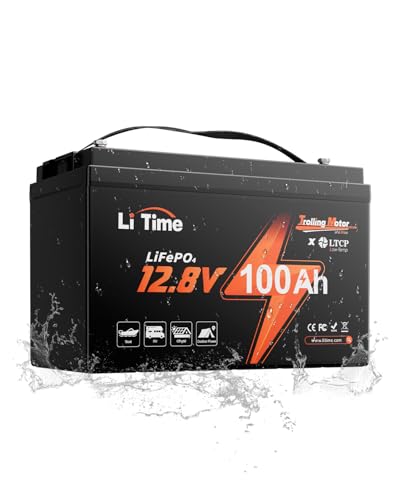 |
Ampere Time / LiTime 12V 100Ah LiFePO4 Battery Best Value 12V 100Ah LiFePO4, 100A BMS, low-temp cutoff, 4000+ cycles |
9.1 | 🛒 Check Price |
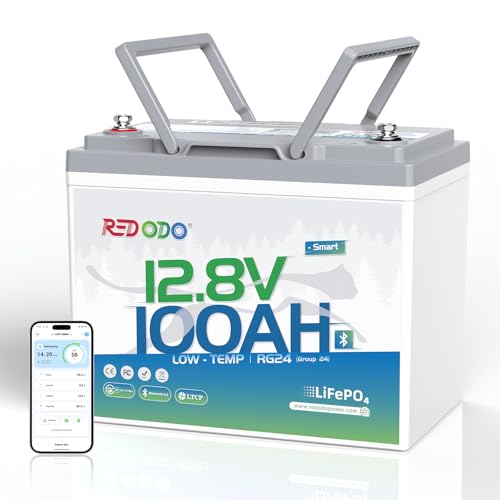 |
Redodo 12V 100Ah LiFePO4 Battery Best Compact Group 31 12V 100Ah LiFePO4, 100A BMS, mini group 31 size, 4000-15000 cycles |
8.9 | 🛒 Check Price |
 |
Power Queen 12V 100Ah LiFePO4 Battery Best Lightweight Drop-In 12V 100Ah LiFePO4, 100A BMS, roughly 20 pounds, 4000+ cycles |
8.7 | 🛒 Check Price |
 |
Weize 12V 100Ah LiFePO4 Battery Best Starter Battery 12V 100Ah LiFePO4, 100A BMS, group 31, 4000+ cycles |
8.4 | 🛒 Check Price |
 |
ECO-WORTHY 12V 100Ah LiFePO4 Battery Best for Bundled Solar Kits 12V 100Ah LiFePO4, 100A BMS, kit-compatible, 3000+ cycles |
8.2 | 🛒 Check Price |
1. Battle Born LiFePO4 100Ah 12V: Best Overall
Battle Born has become the default recommendation in RV solar circles for good reason. The 100Ah 12V drop-in delivers a consistent voltage curve, accepts solar charge readily, and its BMS quietly handles the protection logic that keeps the pack healthy through years of partial state-of-charge cycling. In a typical van or travel trailer, two of these wired in parallel give you a 200Ah bank that comfortably runs a 12V fridge, lights, water pump, and a modest inverter overnight on a single sunny day of charging.
The honest weakness is the 100A continuous discharge ceiling. If you plan to run a large 3000W inverter for an induction cooktop or air conditioner, a single battery will hit its BMS limit and you will need to parallel multiple units to spread the load. For solar-first off-grid use rather than high-surge appliances, that limit rarely bites, and the trade-off buys you a battery you can largely forget about.
- Internal BMS protects against over-charge, over-discharge, and short circuit
- Supports up to 4 in series for 48V banks and parallel for capacity
- Lightweight at roughly 31 pounds versus over 60 for equivalent lead-acid
Pros: Proven reliability and one of the longest cycle lives in the class; Excellent customer support and a long warranty period; Charges efficiently from MPPT solar controllers
Cons: Premium positioning means it is one of the higher value tiers; 100A continuous draw may bottleneck very large inverters under peak load
2. Renogy 12V 100Ah Smart Lithium Iron Phosphate Battery: Best Solar Ecosystem
If you are building a solar system from one brand, Renogy makes the most sense because the battery, charge controller, and inverter all speak to each other. The 100Ah smart battery reports state of charge, voltage, and individual cell data over Bluetooth, which takes a lot of the guesswork out of off-grid living. For anyone new to solar, seeing exactly how much you harvested versus consumed each day is genuinely useful for sizing the rest of the system.
The catch is that the smartest features assume you stay inside the Renogy family. Mix in a third-party controller and you lose some of the communication benefits, falling back to a perfectly good but ordinary LiFePO4 pack. We also found Bluetooth handshakes occasionally dropped through thick cabinetry, so plan your mounting location near where you will read the app.
- Bluetooth and DC Home app monitoring of state of charge and cell health
- Pairs natively with Renogy MPPT controllers and inverters
- Self-heating variant charges safely in sub-freezing conditions
Pros: Tight integration with a full solar component lineup; App monitoring shows real-time pack data; Series and parallel capable for scaling the bank
Cons: Communication features shine mostly within the Renogy ecosystem; Bluetooth range can be inconsistent inside a metal RV
3. Ampere Time / LiTime 12V 100Ah LiFePO4 Battery: Best Value
LiTime, formerly sold as Ampere Time, has earned a loyal following among budget-conscious RVers who still want real LiFePO4 performance. The 100Ah delivers its full rated capacity, handles a steady 100A draw, and accepts solar charge without fuss. For a first lithium upgrade or a second battery to expand an existing bank, it hits the sweet spot of capacity and dependability, and the group 31 size slots into most factory trays.
What you give up at this tier is monitoring. The standard battery has no Bluetooth, so you rely on your charge controller or a separate shunt to track state of charge. The low-temperature protection also works by cutting off charging below freezing rather than warming the cells, so cold-climate campers should either keep the bank in a heated bay or step up to a self-heating model.
- Grade A cells with a 100A continuous discharge rating
- Compact group 31 footprint fits common battery trays
- Low-temperature charging cutoff protects cells in winter
Pros: Strong capacity and cycle life for the value tier; Light and compact for easy single-person installation; Reliable everyday performer in solar banks
Cons: BMS lacks Bluetooth monitoring on the standard model; Low-temp cutoff stops charging rather than self-heating
4. Redodo 12V 100Ah LiFePO4 Battery: Best Compact Group 31
Redodo focuses on packing full 100Ah capacity into one of the smallest and lightest enclosures in this roundup, which matters a lot in a van conversion where every cubic inch counts. The BMS covers the essential protections, the pack charges cleanly from solar, and it parallels well when you want to double up. For tight installs and weight-sensitive builds, it is a genuinely smart choice that does not cut corners on usable energy.
The compromise shows up in support and cold-weather behavior. If something goes wrong, getting help can take longer than with a flagship brand, so keep your purchase records handy. Like most batteries at this level, it has no internal heater, meaning you should avoid charging it below freezing to protect the cells over the long run.
- Smaller and lighter than many 100Ah competitors
- 100A BMS with over-current and short-circuit protection
- Connects in series and parallel for larger systems
Pros: Very compact footprint frees up storage space; Solid capacity delivery for the size; Easy drop-in replacement for lead-acid
Cons: Customer support response can be slower than premium brands; No built-in heating for freezing conditions
5. Power Queen 12V 100Ah LiFePO4 Battery: Best Lightweight Drop-In
Power Queen leans hard into weight savings, and for anyone hauling batteries up into a trailer bay or onto a slide-out tray, that low mass is a real quality-of-life win. The 100Ah pack gives you the deep cycling and full discharge depth that make lithium worth the switch, and it accepts solar charge as readily as pricier rivals. As a simple, dependable building block for a 12V solar bank, it does the job without drama.
It is a no-frills battery, though. There is no Bluetooth monitoring, so you will lean on your charge controller or a shunt to know your state of charge. It also stops charging in freezing temperatures rather than heating itself, which is fine for three-season camping but worth planning around if you chase snow.
- One of the lightest 100Ah packs at around 20 pounds
- Built-in 100A BMS guards against common fault conditions
- Group 24 sizing fits a variety of RV trays
Pros: Exceptionally light for easy mounting and roof or bench installs; Good usable capacity from solar charging; Straightforward drop-in for lead-acid swaps
Cons: No app or Bluetooth state-of-charge reporting; Lacks low-temperature self-heating
6. Weize 12V 100Ah LiFePO4 Battery: Best Starter Battery
Weize is a familiar name to RVers who started with lead-acid, and its LiFePO4 line is a sensible way to make the jump without overcommitting. The 100Ah delivers the deep discharge depth and long cycle life that define lithium, and it charges fine from a basic solar setup. For a single-battery system powering lights, a fan, and small loads, it covers the essentials and leaves room to expand later.
The trade-off is refinement. The casing and terminals feel a bit more utilitarian than the top tier, and there is no smart monitoring to lean on. The standard low-temp cutoff also means you should not charge it below freezing, so it suits warm-weather travelers more than winter boondockers. As a starting point that you can later parallel with a better pack, it earns its spot.
- Affordable entry into lithium for first-time upgraders
- 100A BMS with standard over-charge and over-discharge protection
- Series and parallel capable up to common bank sizes
Pros: Approachable choice for a first lithium swap; Full 100Ah usable capacity; Compatible with standard MPPT solar charging
Cons: Build feel is more basic than premium competitors; No Bluetooth and no internal heater
7. ECO-WORTHY 12V 100Ah LiFePO4 Battery: Best for Bundled Solar Kits
ECO-WORTHY built its reputation on complete solar kits, so this battery makes the most sense when you want panels, a controller, and storage from one source with parts that are known to work together. The 100Ah pack handles deep cycling, delivers solid usable capacity, and parallels cleanly when you outgrow a single unit. For a beginner assembling a turnkey off-grid system, the all-in-one convenience is the real draw.
On its own, the battery is a touch behind the leaders, with a cycle-life rating that does not stretch as far as the premium packs. Bought standalone it is merely fine, but bought as part of a matched kit it becomes a tidy, cohesive way to get a working solar system up and running without sourcing every component separately.
- Designed to pair with ECO-WORTHY panel and controller kits
- 100A BMS with multi-fault protection
- Stackable in parallel for larger off-grid banks
Pros: Slots neatly into a full ECO-WORTHY solar bundle; Dependable everyday capacity; Easy to expand the bank over time
Cons: Cycle rating trails the top performers in this group; Best value comes when bought as part of a kit
Frequently Asked Questions
How many lithium batteries do I need for my RV solar system?
It depends on your daily energy use and how long you want to run without sun. A single 100Ah LiFePO4 battery gives roughly 1280 watt hours of usable energy, which covers lights, a 12V fridge, a water pump, and phone charging for most weekend trips. Full-timers running an inverter for laptops, a coffee maker, or longer fridge runtimes typically wire two or three 100Ah batteries in parallel for 200Ah to 300Ah. Add up the watt hours each device uses per day, then size your bank to at least one full day of that load, ideally two, so a cloudy day does not leave you stranded.
Why is LiFePO4 better than lead-acid for solar?
Lithium iron phosphate batteries let you safely use nearly all of their rated capacity, while lead-acid batteries should only be discharged to about 50 percent to avoid damage. That means a 100Ah lithium battery delivers roughly double the usable energy of a 100Ah lead-acid one. Lithium also charges much faster from solar, accepts charge efficiently even when partially full, weighs about half as much, and lasts thousands of cycles instead of a few hundred. For solar specifically, faster charge acceptance means you capture more of your panels’ output during limited sunny hours.
Can these batteries charge in cold weather?
LiFePO4 cells can be damaged if charged below freezing, around 32 degrees Fahrenheit, so most quality batteries include a low-temperature cutoff that stops charging to protect the cells. The cells can still discharge and power your loads in the cold, they just will not accept a charge. If you camp in freezing conditions, choose a self-heating model, such as the heated Renogy variant, which warms the cells before allowing solar charge. Otherwise, mount the bank inside a heated compartment so it stays above freezing.
Do I need a special charge controller for lithium RV batteries?
You need a charge controller with a lithium or LiFePO4 charging profile, which nearly every modern MPPT controller offers. The key is making sure the controller’s charge voltages match your battery’s specifications, usually around 14.2 to 14.6 volts for bulk and absorption, with no equalization stage, since lithium batteries must not be equalized like lead-acid. Most controllers let you select a preset lithium profile or set custom voltages. If you are upgrading from lead-acid, double check that your controller supports lithium settings before connecting the new bank.
Can I wire lithium RV batteries in series and parallel?
Yes, and the batteries listed here support both, though always confirm the manufacturer’s stated limits first. Wiring in parallel keeps the voltage at 12 volts while adding capacity, so two 100Ah batteries become a 200Ah bank, which is the most common RV solar setup. Wiring in series increases voltage, for example four 12V batteries in series create a 48V bank for larger systems. Avoid mixing brands, ages, or capacities in the same bank, since the BMS units may not balance well together and one weak battery can drag down the whole bank.
Our Verdict
For most RV solar builds, the Battle Born LiFePO4 100Ah is our top pick thanks to its long cycle life, dependable BMS, and clean solar charge acceptance, making it a battery you can install and largely forget. If you want tighter monitoring and plan to buy your panels and controller from one brand, the Renogy 12V 100Ah Smart Lithium is the runner up, adding Bluetooth insight and a self-heating option that earns its place in colder climates. Either way, sizing your bank to at least one full day of usage and matching it to a proper lithium charge profile will get you reliably off-grid.
More Batteries Guides
Video Guide
Video: Related tutorial from YouTube