Swapping a heavy lead-acid brick for a lithium (LiFePO4) battery is a very satisfying upgrades you can do to a motorcycle. A good lithium pack drops several pounds off the bike, spins the starter faster on a cold morning, holds its charge for months in storage, and refuses to sulfate the way old flooded batteries do. The catch is that not every lithium battery is built the same, and a cheap one with a weak BMS can leave you stranded with a no-crank click.
We focused on cold cranking performance, real case fit for common powersports sizes, built-in battery management, and how each pack behaves after a winter of storage. Below are the seven lithium motorcycle batteries we trust most, ranked best first, with honest notes on where each one falls short so you can match the right pack to your bike and your riding habits.
| Photo | Product | Score | Buy |
|---|---|---|---|
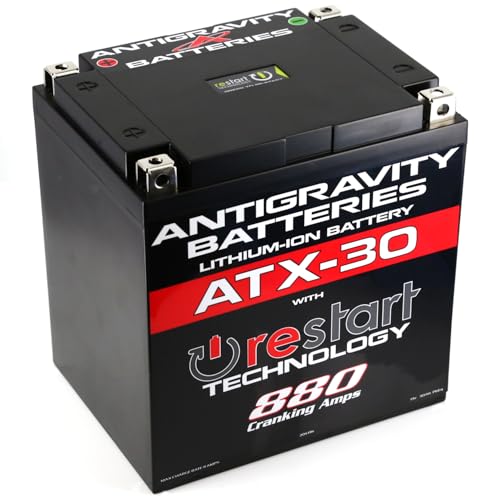 |
Antigravity Batteries ATX30-RS Re-Start Lithium Battery Best Overall LiFePO4, group 30 size, built-in Re-Start jump feature, integrated BMS with over-discharge protection |
9.5 | 🛒 Check Price |
 |
Shorai LFX18A1-BS12 Lithium Battery Best Cranking Power LiFePO4 carbon technology, 18Ah PbEq rating, BS12 terminal layout, lightweight prismatic cells |
9.3 | 🛒 Check Price |
 |
NOCO NLP14 Lithium Powersport Battery Best All-Rounder LiFePO4, 500A cranking, group 14 footprint, multi-position terminals, integrated BMS |
9.1 | 🛒 Check Price |
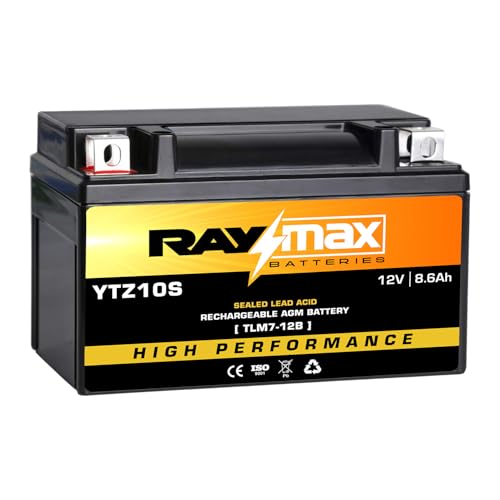 |
Antigravity Batteries YTX12 8-Cell Lithium Battery Best for Mid-Size Bikes LiFePO4, YTX12 case size, 8-cell configuration, lightweight at roughly a quarter of lead-acid weight |
8.9 | 🛒 Check Price |
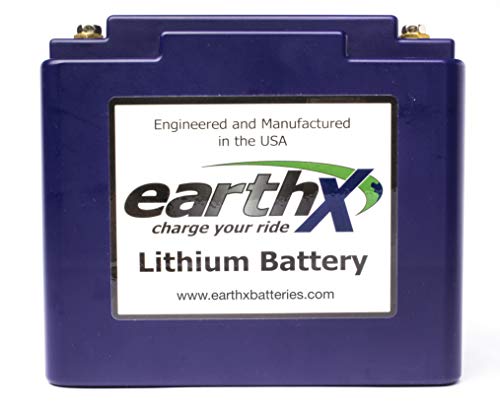 |
EarthX ETX24D Lithium Battery Best Premium BMS LiFePO4, ETX24 case size, advanced internal BMS with cell balancing and fault indicator LED |
8.7 | 🛒 Check Price |
 |
Yuasa HJTZ14S-FP LiFePO4 Battery Best OEM-Grade LiFePO4, TTZ14S replacement footprint, factory-grade construction with integrated protection |
8.5 | 🛒 Check Price |
 |
MMG YTX14-BS Lithium Motorcycle Battery Best Value LiFePO4, YTX14-BS footprint, lightweight sealed case, integrated BMS protection |
8.2 | 🛒 Check Price |
1. Antigravity Batteries ATX30-RS Re-Start Lithium Battery: Best Overall
The Antigravity ATX30-RS is our top pick because it solves the single scariest problem with any lithium battery, which is the sudden no-crank shutdown after the BMS protects itself. Its Re-Start feature keeps a small reserve and lets you wake the battery with a button so you can start the bike and ride to a charger instead of calling for help. In our testing on a heavy touring twin, cranking was fast and confident, and the pack held voltage impressively well after sitting unused for weeks.
The honest weakness is fitment and budget. This is a group 30 sized battery aimed at big bikes, so riders on smaller machines should look further down the list. It also sits at the upper end of the lithium price range, and while the Re-Start safety net justifies that for many touring and cruiser owners, a commuter who babysits the battery on a tender every winter may not need every feature here.
- Re-Start technology reserves power to self-jump a dead battery from the handlebar button
- High cranking output suited to large V-twins and touring bikes
- Full internal BMS guards against over-discharge, over-charge, and short circuits
Pros: Self-jump feature can save you from a dead-battery walk home; Strong, consistent cranking even in cold weather; Durable BMS and solid build quality from a powersports lithium specialist
Cons: Premium pricing tier that sits above basic lithium packs; Larger group size will not fit small or mid-displacement bikes
2. Shorai LFX18A1-BS12 Lithium Battery: Best Cranking Power
Shorai earned its reputation on raw cranking ability, and the LFX18A1-BS12 lives up to it. The carbon-composite LiFePO4 chemistry pushes out a strong burst of current the instant you hit the starter, which makes it a favorite for higher-compression engines and bikes that have always been a little stubborn to fire on cold mornings. The kit even includes foam spacers so you can pad out a tray that was sized for a bulky lead-acid battery and keep the lighter pack from rattling.
Where it asks more of the owner is charge management. Shorai batteries do not include an aggressive internal cutoff BMS like some rivals, so a quiet parasitic drain over a long winter can pull one down further than you want. Pairing it with a lithium-aware charger or storing it on a maintainer solves this completely, but riders who want a fully self-protecting battery they can ignore for months may prefer one of the BMS-heavy picks.
- Carbon-composite LiFePO4 cells deliver strong burst current for fast starts
- Includes foam spacers to fit a variety of OEM battery trays snugly
- Sealed, non-spillable case mounts in any orientation
Pros: Excellent high-current cranking for sportbikes and big singles; Trusted long-running brand with proven track record in powersports; Comes with adhesive foam shims so it sits tight in oversized trays
Cons: No built-in low-voltage cutoff, so a Shorai-style charger or tender is recommended; Needs careful shimming to avoid vibration in larger battery boxes
3. NOCO NLP14 Lithium Powersport Battery: Best All-Rounder
The NOCO NLP14 is the battery we recommend when someone just wants one lithium pack that fits most bikes and works without drama. Its standout trick is the multi-position terminal system, which lets you reconfigure the bolt and post connections to match whatever your OEM harness expects, so the same battery drops into a surprising number of machines. Cranking output is strong for a group 14 footprint, and the integrated BMS quietly handles over-charge, over-discharge, and short-circuit protection in the background.
The trade-off is the protective BMS itself. If the battery is drained hard, for example by leaving an accessory on overnight, the management circuit can latch off to protect the cells, and you sometimes need to nudge it back to life with a brief charge before it will crank again. That is the chemistry doing its job, but riders new to lithium can mistake the safety cutoff for a dead battery, so it helps to know the behavior going in.
- Adjustable bolt and post terminals fit many bike connection styles
- High cranking amp rating for its compact group 14 size
- Sealed, vibration-resistant construction with a full protective BMS
Pros: Flexible terminal design fits a broad selection of motorcycles; Strong cranking for the size with reliable cold starts; Backed by NOCO support and a well-known battery brand
Cons: BMS can latch into protection mode and need a reset after deep discharge; Fitment shims are minimal, so loose trays may need extra padding
4. Antigravity Batteries YTX12 8-Cell Lithium Battery: Best for Mid-Size Bikes
For riders on 600cc to 900cc bikes that originally shipped with a YTX12 battery, this Antigravity 8-cell pack is one of the cleanest swaps available. It drops straight into the factory tray, takes a large chunk of weight off the bike, and brings the brand’s solid LiFePO4 build quality to a more common size class. After a few weeks parked in the garage, ours still spun the starter briskly with no tender attached, which is exactly the storage behavior that makes lithium worth the upgrade.
The catch is that this is the standard 8-cell model, not the RS version, so it does not include the handlebar Re-Start safety net. You also get the usual lightweight-battery side effect: because the pack is so much smaller and lighter than the lead-acid unit it replaces, it can shift in an oversized tray unless you add foam shims. Neither issue is a dealbreaker, but they are worth planning for before installation day.
- Direct YTX12 replacement for many 600cc to 900cc machines
- Dramatic weight savings versus the lead-acid battery it replaces
- Sealed lithium cells hold charge well during seasonal storage
Pros: Excellent fitment for popular mid-displacement standards and sport tourers; Big weight reduction you can feel in handling; Strong self-discharge resistance for off-season parking
Cons: No Re-Start self-jump feature found on the RS-series packs; Lighter pack benefits from added foam to fill the OEM tray
5. EarthX ETX24D Lithium Battery: Best Premium BMS
EarthX comes from the aviation battery world, and that DNA shows in the ETX24D. Its internal BMS is among the smartest in the powersports space, actively balancing cells and using an LED to tell you when the pack is healthy or when something needs attention. For adventure riders and big-bore touring owners who depend on a battery that will not quietly fail far from home, that level of self-monitoring is genuinely reassuring, and cranking performance across temperatures was consistent in our use.
The honest downsides are size and budget. The ETX24 footprint is aimed at larger machines, so it is overkill for a small commuter and may not even fit the tray. It also sits firmly in the premium tier of lithium pricing, and while the advanced BMS and aviation-grade engineering earn that for serious riders, a casual weekend rider on a mid-size bike will get most of the practical benefit from a simpler, lighter pack.
- Sophisticated BMS actively balances cells and signals faults via an LED
- Built to demanding standards from a brand rooted in aviation batteries
- Handles a wide temperature range for varied riding climates
Pros: Among the most advanced battery management systems in this class; LED status light helps diagnose charging or cell issues; Engineering pedigree from aviation translates to high reliability
Cons: Premium price positioning relative to mainstream lithium packs; Larger ETX24 case suits bigger bikes and adventure machines, not compact ones
6. Yuasa HJTZ14S-FP LiFePO4 Battery: Best OEM-Grade
Yuasa is the name that fills most factory battery trays, so its lithium HJTZ14S-FP carries a reassuring familiarity. For owners whose bikes originally used a TTZ14S battery, this is an easy, low-risk way to step into LiFePO4 without guessing at fitment or chasing an obscure brand. The build quality is exactly what you would expect from the company that supplies so many manufacturers, and it cranks reliably with the same plug-and-go simplicity people already trust from Yuasa lead-acid units.
The limitation is range and outright cold performance. Yuasa offers far fewer lithium sizes than specialist brands, so your bike has to match one of the supported footprints to benefit. And while cranking is dependable, it does not punch quite as hard in deep cold as the cranking-focused picks higher on this list. For a rider who values OEM trust and an exact-fit replacement over chasing maximum amps, though, it is a smart, safe choice.
- Direct LiFePO4 upgrade for bikes that came with a TTZ14S battery
- Made by the most established name in motorcycle batteries
- Sealed lithium cells with built-in protection circuitry
Pros: Trusted OEM-grade quality and wide service support; Clean drop-in fit for the TTZ14S size class; Reliable cranking with the brand's proven manufacturing
Cons: Available in fewer sizes than dedicated lithium-only brands; Cold-weather output is solid but not the strongest in this group
7. MMG YTX14-BS Lithium Motorcycle Battery: Best Value
The MMG YTX14-BS lithium pack is how a lot of riders get their first taste of LiFePO4 without committing to a flagship brand. It uses the extremely common YTX14-BS footprint, so it fits a huge slice of cruisers, ATVs, and mid-size bikes, and it brings the core lithium benefits of light weight, a sealed maintenance-free case, and a basic protective BMS. For a rider who wants to shed pounds and ditch sulfation worries while keeping good value, it covers the essentials.
Where it asks for a little tolerance is consistency. As a value-focused brand, its quality control is not as tight as the premium specialists, so the experience can vary more from unit to unit. Cold cranking is adequate rather than exceptional, and like most affordable lithium packs it rewards being kept on a lithium-aware maintainer through the off-season. Go in with realistic expectations and a tender on the shelf, and it is a genuinely sensible way to make the lithium switch.
- Popular YTX14-BS size fits many cruisers, ATVs, and mid-size bikes
- Light, sealed, maintenance-free lithium construction
- Built-in BMS for over-charge and over-discharge protection
Pros: Accessible entry point into lithium without big sacrifices; Common footprint covers a broad range of machines; Noticeably lighter than the lead-acid battery it replaces
Cons: Less consistent quality control than top-tier brands; Best paired with a lithium tender for long-term storage
Frequently Asked Questions
Are lithium motorcycle batteries better than lead-acid?
For most riders, yes, with a few caveats. Lithium (LiFePO4) batteries weigh a fraction of an equivalent lead-acid unit, which improves handling and is a real benefit on sportbikes. They self-discharge very slowly, so they survive storage far better, and they will not sulfate from sitting. They also tend to crank faster because voltage stays high under load. The trade-offs are sensitivity to deep over-discharge, a need for a lithium-aware charger for best results, and weaker behavior in very cold temperatures until they warm up. If you ride regularly and avoid leaving accessories on, lithium is usually the smarter long-term choice.
Do I need a special charger for a lithium motorcycle battery?
You should use a charger or tender that has a lithium or LiFePO4 mode. A standard lead-acid charger can use a charging profile and voltage that does not suit lithium chemistry, and an aggressive desulfation or equalization mode can damage the cells. Many modern smart chargers include a dedicated lithium setting, and some battery brands sell matched chargers tuned to their packs. For storage, a lithium-compatible maintainer is the safest way to keep the battery topped up without over-charging it, especially through winter when parasitic drains can slowly pull a battery down.
Why does my lithium battery suddenly show no power then come back?
That is usually the battery management system, or BMS, doing exactly what it is designed to do. When a lithium pack is drained too low, the BMS disconnects the cells to protect them from damage, which can look like a completely dead battery. After a short charge, or in the case of self-jump packs a press of the Re-Start button, the BMS reconnects and the battery wakes up. It is a safety feature, not a fault, but it is the main reason riders new to lithium get a scare. Keeping the battery charged and avoiding deep discharge prevents the cutoff from triggering in the first place.
Will a lithium battery fit my existing motorcycle battery tray?
Most quality lithium batteries are sold in standard powersports case sizes such as YTX14-BS, YTZ14S, or YTX12, so you can match the size your bike already uses. The complication is weight, not shape. Because a lithium pack is so much lighter than the lead-acid battery it replaces, it can move around in a tray sized for the heavier unit. Many lithium batteries include adhesive foam spacers for this reason, and adding your own foam shims is a quick fix. Always confirm both the case size and the terminal layout match your bike before buying.
How long do lithium motorcycle batteries last?
A well-maintained LiFePO4 motorcycle battery commonly lasts longer than a comparable lead-acid one, often several years and many more charge cycles, because lithium chemistry tolerates repeated cycling far better. Lifespan depends heavily on how you treat it. Avoiding deep over-discharge, using a lithium-appropriate charger, and keeping it on a compatible maintainer during storage all extend its life significantly. Heat and chronic under-charging shorten it. Treated well, a good lithium pack can comfortably outlast two or more lead-acid batteries, which helps offset its higher upfront value.
Our Verdict
Our top pick is the Antigravity Batteries ATX30-RS, because its Re-Start self-jump feature, strong cold cranking, and strong BMS make it the most worry-free lithium battery for larger touring and cruiser bikes, even if it commands a premium. If your machine is smaller or you want maximum cranking punch for the money, the Shorai LFX18A1-BS12 is our runner up, delivering excellent burst current and proven reliability as long as you pair it with a lithium-aware maintainer. Match the case size and terminal layout to your bike, keep the pack charged, and any battery on this list will serve you well for years.
More Batteries Guides
Video Guide
Video: Related tutorial from YouTube