When you run a pickup, van, or full-size SUV through a real winter, the tires under it matter more than the badge on the tailgate. A light truck rated tire built for snow has to do three hard things at once: bite into deep, unplowed snow, hold the road on glazed ice, and still feel planted on cold, wet pavement when the white stuff melts. The wrong choice turns a capable 4×4 into a sled, so we focused on tires carrying the three-peak mountain snowflake (3PMSF) rating and a true LT or hardened load construction.
We weighed deep-snow pull, ice braking, sidewall toughness for off-pavement use, road manners, and how the tread holds up over multiple seasons. Some of these are dedicated studless winter tires you swap on in November, and others are aggressive all-terrains you can run year round in lighter snow country. We ranked the best first so you can match the tire to how hard your winters actually hit.
| Photo | Product | Score | Buy |
|---|---|---|---|
 |
Bridgestone Blizzak DM-V2 Best Overall Studless winter, 3PMSF rated, Multicell compound, sizes for trucks/SUVs |
9.5 |
ⓘ We may earn a commission from qualifying purchases made through links on this page, at no extra cost to you.
|
 |
Michelin LTX Winter Best for Highway Miles Studless LT winter, 3PMSF rated, high load capacity, long-wear winter compound |
9.3 | 🛒 Check Price |
|
🚗
|
Goodyear Ultra Grip Ice WRT Best Deep-Snow Pull Studless winter, 3PMSF rated, directional tread, LT and SUV sizes |
9.1 | 🛒 Check Price |
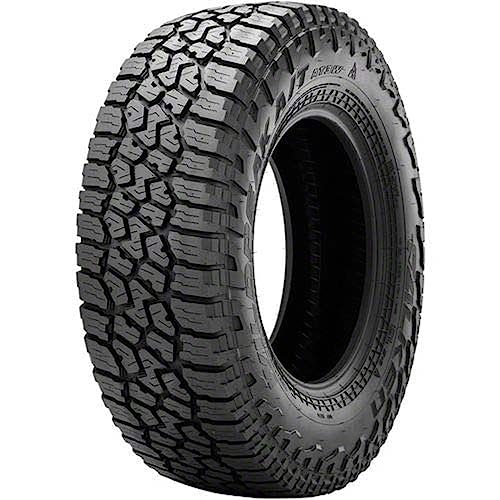 |
Falken Wildpeak A/T3W Best All-Terrain All-terrain, 3PMSF rated, year-round, aggressive tread with sidewall protection |
8.9 | 🛒 Check Price |
 |
BFGoodrich All-Terrain T/A KO2 Toughest Sidewall All-terrain, 3PMSF rated, CoreGard sidewall, LT construction |
8.7 | 🛒 Check Price |
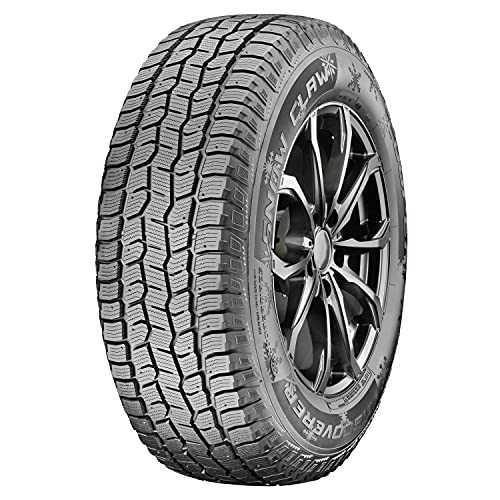 |
Cooper Discoverer Snow Claw Best Studdable Studdable winter, 3PMSF rated, LT and SUV sizes, snow groove tread |
8.5 | 🛒 Check Price |
 |
General Grabber Arctic LT Best Value Winter Studdable winter, 3PMSF rated, high sipe density, LT load range |
8.2 | 🛒 Check Price |
1. Bridgestone Blizzak DM-V2: Best Overall
The Blizzak DM-V2 is the tire we point most truck and SUV owners toward when ice is the real enemy. Bridgestone’s Multicell compound works like a sponge at the contact patch, pulling the thin water film off ice that normally turns rubber into a hockey puck. On packed snow and ice the difference in stopping distance is something you can feel through the brake pedal, and the directional tread evacuates deep snow quickly enough that you rarely feel the truck bog down or float.
The honest trade-off is that this is a true winter-only tire. The soft, siped compound that makes it so good on ice gets vague and wears noticeably faster on warm, dry pavement, so you really do need to pull it off come spring. If you want one tire to run all year, look elsewhere on this list. But as a dedicated cold-season setup for a half-ton or a heavy SUV, nothing here inspires more confidence on a glazed morning commute.
- Multicell rubber compound that bites water film on ice for shorter stops
- Aggressive directional tread that clears deep snow fast
- Sized specifically for pickups, vans, and full-size SUVs
Pros: Best-in-class ice braking for a studless truck tire; Strong deep-snow traction without studs; Predictable, confidence-building handling in slush
Cons: Dedicated winter tire, so you must swap it off in summer; Softer compound wears faster if run on warm dry roads
2. Michelin LTX Winter: Best for Highway Miles
If your winter involves long stretches of cold interstate rather than just unplowed back roads, the Michelin LTX Winter is the tire to beat. Michelin engineered it around the weight and torque of heavier trucks and vans, so the carcass doesn’t squirm under a loaded bed the way lighter winter tires can. The compound stays flexible deep into freezing temperatures, and the full-depth siping means it keeps finding biting edges even as the tread blocks wear down over the seasons.
Where it gives a little ground is on sheer glare ice, where the Blizzak’s specialized compound still edges it out. It’s also a firmer-riding tire when the truck is empty, which owners of light half-tons may notice on rough pavement. For high-mileage drivers and work trucks that need a winter tire to survive thousands of cold highway miles, though, the LTX Winter is a smarter long-haul value than a softer, faster-wearing rival.
- Built for the load and torque of heavier pickups and cargo vans
- Winter compound that stays pliable in deep cold for better grip
- Full-depth sipes that keep biting edges as the tire wears
Pros: Holds up to high-mileage winter highway driving; Strong load rating for work trucks and loaded vans; Quieter and more composed at speed than most winter tires
Cons: Not as razor-sharp on pure ice as the Blizzak; Heavier sizes can feel firm when unladen
3. Goodyear Ultra Grip Ice WRT: Best Deep-Snow Pull
For drivers who fight deep snow more than ice, the Goodyear Ultra Grip Ice WRT is a standout. Its aggressive directional V-pattern acts like a paddle, throwing snow and slush out from under the truck so the tire keeps finding fresh grip instead of packing up and spinning. On a snowed-in driveway or a forest service road after a storm, it pulls a heavy truck forward with real authority, and the dense sipe network keeps it composed on the packed snow that comes after.
The honest limitation is that it’s a deep-snow specialist first and an ice tire second. On polished ice it’s perfectly safe, but it doesn’t match the very best studless compounds for the shortest stopping distances. The directional tread also means you can only rotate it front to back on the same side, which slightly complicates maintenance. Pick it if your winters bury you in snow more often than they glaze you with ice.
- Directional V-tread that channels deep snow and slush away fast
- Dense siping for extra grip on packed snow surfaces
- Winter Reactive Technology compound tuned for cold traction
Pros: Excellent forward bite in deep, unplowed snow; Strong wet and slush performance; Widely available in common truck and SUV sizes
Cons: Ice grip is good but trails the class leaders; Directional tread can’t be cross-rotated
4. Falken Wildpeak A/T3W: Best All-Terrain
Plenty of truck owners don’t want to swap tires twice a year, and the Falken Wildpeak A/T3W is the all-terrain that makes living year-round genuinely viable in snow country. It carries the three-peak mountain snowflake rating, so it’s certified for severe snow service, yet the chunky tread, reinforced sidewalls, and heat diffuser tech mean it shrugs off gravel, trails, and curb scrapes the rest of the year. For an overlander or a daily-driven 4×4 in a mixed climate, it’s among the most well-rounded choices you can bolt on.
What it can’t do is rewrite physics. A year-round compound that survives summer heat will never grip glare ice like a soft, dedicated winter tire, so if your commute is regularly a sheet of black ice, a studless winter set is the safer call. The aggressive tread also brings a low hum on the highway that quiet-cabin buyers will notice. As a single set that does almost everything well, though, the A/T3W is hard to beat.
- Carries the 3PMSF snow rating in an all-terrain tread
- Heat diffuser and rugged sidewall for off-pavement abuse
- Year-round design so no seasonal tire swap is needed
Pros: True winter rating in a do-everything all-terrain; Tough construction handles trails, gravel, and snow; No need to store or swap a second set of tires
Cons: Can’t match a dedicated winter tire on glare ice; Aggressive tread adds some road noise
5. BFGoodrich All-Terrain T/A KO2: Toughest Sidewall
The BFGoodrich All-Terrain T/A KO2 earned its following the hard way, on jobsites, trails, and back roads where lesser tires get sliced open. The CoreGard sidewall is the headline: a thicker, tougher rubber wrap that resists the cuts and punctures that strand trucks far from pavement. That toughness pairs with a 3PMSF snow rating and an interlocking tread that claws through snow and mud, making it a favorite for work trucks and expedition rigs that see winter as just one more obstacle.
Living with the KO2 means accepting a firmer, louder ride than a softer all-terrain, and on pure ice it behaves like the rugged compromise it’s rather than a dedicated winter tire. If your priority is bulletproof durability and confident snow and mud traction in one long-lasting tire, the value is excellent over the tire’s long life. If you mostly battle ice on a daily commute, a studless winter set will stop you shorter.
- CoreGard tough sidewall rubber resists cuts and punctures
- Interlocking tread design for grip in mud and snow
- Three-peak mountain snowflake rated for severe snow service
Pros: Extremely durable construction for serious off-road use; Proven snow and mud traction reputation; Long tread life for an aggressive tire
Cons: Ride is firm and noisier than milder all-terrains; Ice grip is modest compared to studless winter tires
6. Cooper Discoverer Snow Claw: Best Studdable
When winters turn truly brutal, the Cooper Discoverer Snow Claw gives you a card the others don’t: you can stud it. The tread is designed to accept metal studs, which transforms ice and hardpack grip in the kind of conditions that defeat even good studless tires. Cooper’s snow groove design also packs snow into the tread so the tire grips snow on snow, the way a winter boot bites better when there’s already snow in the lugs. In LT sizes with serious load ratings, it’s a strong choice for heavier rigs facing real mountain or far-north winters.
The catch is that studs bring noise and legal limits. Many regions restrict when, or whether, studded tires are allowed, so you need to check local rules before committing. Even unstudded it’s a slightly less polished tire on bare, dry roads than the premium names above. But for drivers who need the absolute most aggressive ice and hardpack traction money can buy on a light truck, the ability to add studs makes it uniquely capable.
- Accepts metal studs for maximum ice and hardpack grip
- Snow groove technology packs snow for snow-on-snow traction
- Built in light truck sizes with strong load ratings
Pros: Studdable for the most extreme ice conditions; Strong deep-snow and hardpack performance; Strong LT construction for heavier trucks
Cons: Studded versions can be loud and are restricted in some regions; Less refined on dry pavement than premium winter tires
7. General Grabber Arctic LT: Best Value Winter
The General Grabber Arctic LT is the pick for drivers who want serious winter capability without reaching for the most premium name on the shelf. It packs a high-density sipe pattern that gives it a surprising number of biting edges on snow and ice, and like the Cooper it can be studded for drivers who face genuine hardpack and glaze. In LT load ranges it suits vans and full-size pickups that still need to haul through the cold, and the overall winter grip punches above what many buyers expect from it.
Where it shows its position is in the long run. Tread life doesn’t quite match the premium leaders, so heavy-mileage drivers may replace it a little sooner, and the ride is functional rather than refined when the truck is empty. For a buyer who wants legitimate 3PMSF winter traction and a studdable option with strong everyday value, though, the Grabber Arctic LT delivers most of what the expensive tires do for a lot less fuss.
- High-density siping for grip on snow and ice
- Studdable design for added hardpack and ice bite
- Light truck load range for vans and full-size pickups
Pros: Strong winter traction for an accessible tire; Studdable for tougher ice conditions; Solid load rating for work trucks and vans
Cons: Tread life trails the premium winter leaders; Road manners are merely adequate when unladen
Frequently Asked Questions
Do I really need light truck (LT) tires for snow, or will P-metric tires work?
It depends on how you use the truck. LT-rated tires have stiffer sidewalls and higher load ratings built for towing, hauling, and off-pavement abuse, which matters if you carry weight or drive rough winter roads. If you have a half-ton that mostly commutes and never sees a heavy load, a quality 3PMSF passenger-rated tire in the correct size can be plenty. But for work trucks, vans, loaded beds, or serious off-road winter use, the LT construction resists punctures and squirm that lighter tires can’t, so it’s the safer and more durable choice.
What does the three-peak mountain snowflake (3PMSF) rating actually mean?
The 3PMSF symbol on a sidewall means the tire passed a standardized test for acceleration traction in medium-packed snow, certifying it for severe snow service. It’s a meaningful step above the older M+S (mud and snow) marking, which is mostly based on tread geometry rather than evaluated performance. Every tire on this list carries the 3PMSF rating. Just remember the test measures snow traction, not ice, so a 3PMSF all-terrain still won’t stop on glare ice like a dedicated studless winter tire designed for it.
Should I choose a dedicated winter tire or an all-terrain with a snow rating?
If your winters are long, icy, and severe, a dedicated studless winter tire like the Blizzak DM-V2 or Michelin LTX Winter will outperform any all-terrain on ice and packed snow, and you swap it off in spring. If you live in a milder or mixed climate and don’t want to store and mount a second set twice a year, a 3PMSF all-terrain such as the Falken Wildpeak A/T3W gives you year-round capability with strong snow traction. Match the tire to your worst week of weather, not your average one.
Are studded tires worth it for a light truck?
Studs make a real difference on glare ice and hardpack, which is why studdable options like the Cooper Discoverer Snow Claw and General Grabber Arctic LT exist. If you regularly drive frozen mountain passes or far-north roads that stay iced for months, studs can be worth the trade-offs. Those trade-offs are noise, accelerated wear on bare pavement, and legal restrictions, since many regions limit studded tires to certain dates or ban them outright. Check your local laws first, and if your ice exposure is occasional, a good studless compound is usually the more practical pick.
Do I need to install winter tires on all four wheels?
Yes, always run a matched set of four. Mixing winter tires on one axle and all-season tires on the other creates a dangerous imbalance in grip, especially when braking or cornering on slick surfaces, and can make the truck spin or push unpredictably. This is true even for four-wheel-drive and all-wheel-drive trucks, where four-wheel drive helps you accelerate but does nothing extra to help you stop or turn. For consistent, predictable handling in snow and ice, four identical tires is the only safe configuration.
Our Verdict
For most light truck and SUV owners facing a real winter, the Bridgestone Blizzak DM-V2 is our top pick thanks to its class-leading ice braking and confident deep-snow traction, making it the safest swap-on set when ice is the daily threat. The Michelin LTX Winter is the runner up and the smarter choice for high-mileage drivers and loaded work trucks that need a winter tire to survive thousands of cold highway miles. If you’d rather run one set year round, the Falken Wildpeak A/T3W is the all-terrain to beat. Whichever you choose, mount a matched set of four and match the tire to the worst conditions you actually drive, not the average ones.


