Switching your RV from flooded lead acid to LiFePO4 is the single biggest upgrade you can make to your house bank. Lithium iron phosphate batteries weigh roughly a third of comparable lead acid, give you nearly the full rated capacity instead of half, and last for thousands of cycles instead of a few hundred. For boondockers running a fridge, lights, water pump, and the occasional inverter load, that difference decides whether you make it through a quiet weekend or a full week off grid.
We pulled the most popular 12V LiFePO4 batteries that RVers actually install, looked at real usable capacity, BMS protection, low temperature charging cutoffs, and how each one behaves under sustained inverter draw. Below are our seven top picks for an RV house bank, ranked best first, with an honest weakness called out on every single one.
| Photo | Product | Score | Buy |
|---|---|---|---|
 |
Battle Born 100Ah 12V LiFePO4 Deep Cycle Battery (BB10012) Best Overall 100Ah usable, 100A continuous BMS, internal heating optional, 3000 to 5000 cycles, made and supported in the USA |
9.5 | 🛒 Check Price |
 |
Renogy 12V 100Ah LiFePO4 Smart Lithium Iron Phosphate Battery Best for Solar Systems 100Ah, 100A BMS, Bluetooth and self heating model available, 4000+ cycles at 80 percent DoD, integrates with Renogy solar gear |
9.3 | 🛒 Check Price |
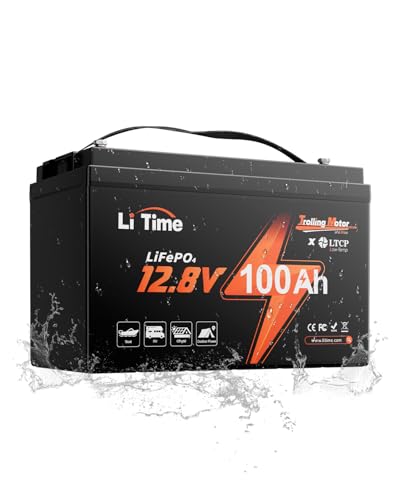 |
LiTime 12V 100Ah LiFePO4 Deep Cycle Battery Best Value 100Ah, 100A BMS, low temp charge cutoff, 4000 to 15000 cycles, Group 31 size, roughly 24 lbs |
9.1 | 🛒 Check Price |
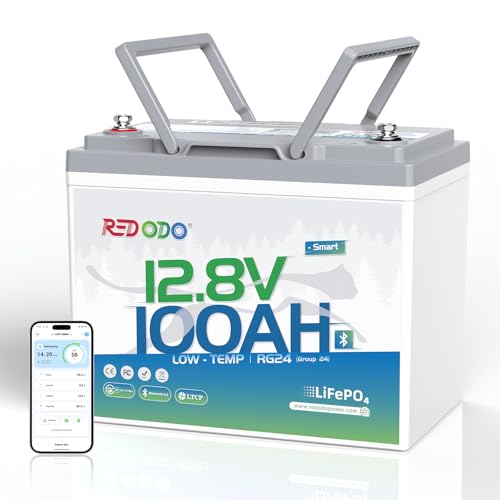 |
Redodo 12V 100Ah LiFePO4 Deep Cycle Battery Best Lightweight Drop In 100Ah, 100A BMS, ~19.8 lbs, low temp cutoff, 4000 to 15000 cycles, mini and standard sizes |
8.8 | 🛒 Check Price |
 |
Power Queen 12V 100Ah LiFePO4 Deep Cycle Battery Best for Small Banks 100Ah, 100A BMS, ~20.5 lbs, low temp cutoff, 4000 to 15000 cycles, Group 31 drop in |
8.6 | 🛒 Check Price |
 |
Weize 12V 100Ah LiFePO4 Deep Cycle Battery Best No Frills Pick 100Ah, 100A BMS, low temp cutoff, 4000+ cycles, Group 31, widely stocked |
8.4 | 🛒 Check Price |
 |
Ampere Time 12V 200Ah Plus LiFePO4 Deep Cycle Battery Best High Capacity 200Ah, 200A BMS, ~2560Wh, low temp cutoff, 4000+ cycles, one large case replaces two batteries |
8.2 | 🛒 Check Price |
1. Battle Born 100Ah 12V LiFePO4 Deep Cycle Battery (BB10012): Best Overall
The Battle Born 100Ah is the battery most veteran RVers point new owners toward, and after living with one in a four battery bank it is easy to see why. The 100A continuous BMS comfortably feeds a 2000W inverter for a microwave or coffee maker without nuisance shutdowns, and the cells deliver close to the full 100Ah right down to a low state of charge. Where this battery really separates itself is the support side. When you call with a question about charge profiles or paralleling, an actual technician in Nevada answers, which is worth a great deal when you are wiring a system you depend on to live.
The honest weakness is the cold weather story. The standard BB10012 has no internal heater, so charging below freezing can damage the cells, and you must either buy the heated variant or add insulation and a warming pad yourself. That is a real consideration for anyone winter camping or storing the rig in a cold climate. For three season and warm region full timers, though, this is the bank to build around, and the long lifespan makes the higher up front outlay easier to justify over the years you will own it.
- 100Ah of true usable capacity with a 100A continuous and 200A half second surge BMS
- Built in Reno with US based phone support and a long warranty
- Drop in Group 31 sizing fits most existing RV battery trays
Pros: Outstanding documentation and real human support for wiring and inverter questions; Proven long term reliability in full time RV banks; Handles sustained inverter loads without the BMS tripping early
Cons: Base model has no internal heater, so the cold weather version is a separate purchase; Carries a premium over import brands for similar headline specs
2. Renogy 12V 100Ah LiFePO4 Smart Lithium Iron Phosphate Battery: Best for Solar Systems
If your RV solar setup is already built on Renogy panels and charge controllers, their 100Ah LiFePO4 is the natural house battery because everything talks to the same DC Home app. We ran it alongside a Renogy MPPT controller and a 2000W inverter, and the integration is genuinely convenient. You see battery state of charge, controller output, and consumption on one screen, which makes diagnosing a low bank on a cloudy week much faster than guessing with a shunt and a voltmeter. The self heating model is the one to get if you camp anywhere near freezing, since it warms the cells before accepting a charge automatically.
The weakness here is the software. Bluetooth pairing is reliable most of the time, but it drops connection often enough to be annoying, and firmware updates have occasionally reset settings. The battery itself performs well regardless of whether the app is connected, so this is a convenience flaw rather than a safety one. For solar first builders who value monitoring and ecosystem fit, this is a strong runner up to the Battle Born, and the heated variant arguably makes it the smarter pick for genuine four season use.
- Pairs natively with Renogy charge controllers, inverters, and the DC Home app
- Self heating version charges safely in below freezing conditions
- Supports series and parallel expansion up to larger 24V and 48V banks
Pros: Smooth ecosystem if you already run Renogy solar panels and controllers; Bluetooth monitoring shows state of charge and cell health on your phone; Self heating option solves the cold charging problem in one box
Cons: App and Bluetooth connection can be finicky and occasionally drops; Best value only really lands if you stay inside the Renogy ecosystem
3. LiTime 12V 100Ah LiFePO4 Deep Cycle Battery: Best Value
LiTime, formerly sold as Ampere Time, is the brand that put affordable lithium house banks within reach of weekend RVers, and the current 100Ah is a refined version of that formula. It delivers a genuine 100Ah, runs a 100A BMS that handles a 1200W inverter on a single battery, and at roughly 24 pounds it is a true drop in for a lead acid Group 31 with room to spare in most trays. We built a 200Ah bank from a pair of these and ran a 12V fridge, lights, fans, and a Starlink dish for several days of boondocking without coming close to the BMS limits. For the value, the usable performance is hard to beat.
The catch is the cold weather behavior. Rather than heating the cells, the low temperature protection simply blocks charging once internal temps drop below freezing, which keeps the battery safe but leaves you unable to harvest solar on a frosty morning until things warm up. There is also no phone support, only email and chat, though responses have been prompt in our experience. For three season campers who want the most usable capacity without overspending, this is the obvious choice and the reason it earns our best value badge.
- 100A BMS supports up to a 1200W load on a single 12V battery
- Low temperature protection disconnects charging below freezing to protect cells
- Light Group 31 footprint at around 24 pounds for easy installation
Pros: Excellent capacity and BMS for the value among import brands; Light and compact, simple drop in replacement for a lead acid Group 31; Huge installed base means plenty of RV wiring tutorials reference it
Cons: Low temp protection cuts charging rather than heating the cells; Customer support is responsive but online only with no phone line
4. Redodo 12V 100Ah LiFePO4 Deep Cycle Battery: Best Lightweight Drop In
Redodo sits in the same import value tier as LiTime and is essentially a sister approach to the budget lithium category, but its standout trait is weight. At under 20 pounds for a full 100Ah, it is one of the lightest deep cycle batteries we handled, which matters when you are wrestling a battery into a cramped underbody tray or a tongue box on a travel trailer. The 100A BMS and real 100Ah capacity put its everyday performance right alongside the LiTime, and the availability of a compact mini version is genuinely useful for campervan and teardrop builds where space is the binding constraint rather than capacity.
The weaknesses are predictable for the category. The low temperature protection cuts charging below freezing rather than heating the cells, so winter solar harvesting is limited just like the LiTime. The bigger reservation is track record, since Redodo is a newer name and does not yet have the multi year field history that the premium brands carry. In our testing it performed without issues, but buyers who prioritize a long proven reputation may want to weigh that. For weight sensitive and tight space builds, it is an excellent and easy to install pick.
- One of the lightest 100Ah units at under 20 pounds
- 100A continuous BMS with over current, over charge, and short circuit protection
- Available in standard and compact mini form factors for tight bays
Pros: Very light for its capacity, easy to lift into an awkward battery bay; Compact mini option fits builds where a Group 31 will not; Strong everyday capacity for the value
Cons: Low temp protection stops charging instead of warming the cells; Brand is newer with a shorter track record than Battle Born or Renogy
5. Power Queen 12V 100Ah LiFePO4 Deep Cycle Battery: Best for Small Banks
Power Queen targets the RVer who just wants to swap one tired lead acid battery for one good lithium one without building a complex bank, and it does that job cleanly. The 100Ah cells and 100A BMS give a single battery enough muscle to run lights, a water pump, a vent fan, and a modest inverter through a long weekend, and the Group 31 size means it usually drops straight into the existing tray with the original hold down. We used one as the sole house battery in a small trailer and it handled typical overnight camping loads comfortably, recharging quickly from both the converter and a 200W solar array.
The honest limitation is that this is a no frills battery. There is no Bluetooth on the standard model, so you are relying on a separate shunt or the converter readout to know your state of charge, and like the other value brands it protects the cells in the cold by halting charging rather than warming them. For someone planning a large four battery bank, the premium brands make more sense, but for a clean single battery or small two battery upgrade in a smaller RV, Power Queen delivers solid capacity and protection that punches above its modest reputation.
- 100A BMS rated for roughly 1280Wh of usable energy per battery
- Group 31 drop in replacement for a single lead acid battery
- Built in cell balancing keeps a small bank healthy over time
Pros: Simple, reliable single battery upgrade for smaller rigs; Light and easy to install with standard terminal hardware; Good capacity and protection for the value
Cons: No Bluetooth monitoring on the standard model; Charging is blocked, not heated, below freezing temperatures
6. Weize 12V 100Ah LiFePO4 Deep Cycle Battery: Best No Frills Pick
Weize built its name on affordable lead acid batteries, and its LiFePO4 line carries that same plain and practical philosophy into lithium. There is nothing flashy here, just a 100Ah battery with a standard 100A BMS in a familiar Group 31 case that bolts in where your old battery sat. In use it behaves like the rest of the value tier, giving close to the full rated capacity and shrugging off the normal RV loads of lights, pumps, fridges, and a small inverter. Because Weize is so widely stocked, sourcing a matched second or third battery later for a bigger bank is easy, which matters since paralleling mismatched batteries is something you want to avoid.
The weakness is exactly what you would expect from a no frills battery. There is no Bluetooth, so monitoring requires a separate shunt, and the cold weather protection halts charging below freezing instead of heating the cells. It also does not carry the deep field reputation of the premium names. None of that is a dealbreaker for a budget conscious upgrade, but it does mean you are trading conveniences for value. If you want the simplest possible path off lead acid and do not need app monitoring, the Weize gets the job done reliably.
- 100A BMS with over charge, over discharge, and short circuit protection
- Standard Group 31 case for an easy lead acid swap
- Series and parallel capable for building larger banks
Pros: Dependable basic lithium performance for the value; Widely available so replacements and matched cells are easy to source; Straightforward installation with no software to configure
Cons: No app or Bluetooth state of charge monitoring; Cold charging is blocked rather than managed by a heater
7. Ampere Time 12V 200Ah Plus LiFePO4 Deep Cycle Battery: Best High Capacity
When 100Ah is not enough and you would rather not parallel a stack of small batteries, the Ampere Time 200Ah Plus puts a full 200Ah and a 200A BMS into one large case. That is roughly 2560Wh of usable energy from a single battery position, enough to run a residential fridge, lights, fans, and a serious inverter load like an air fryer or induction burner across a full off grid day. The big advantage over two 100Ah batteries is simplicity. One battery means one set of cables and no concern about matched cells drifting out of balance, which keeps a high capacity build cleaner and easier to maintain.
The tradeoffs come down to physical size and weight. This is a heavy battery in a non standard oversized case, so it will not drop into a typical Group 31 tray and usually needs a dedicated, well secured mounting location, which is a real installation project rather than a swap. Like the other value brands, its cold protection halts charging below freezing instead of warming the cells. For full timers and high draw rigs that need maximum energy in one slot, though, the capacity per battery is excellent and it earns its place as our high capacity pick.
- 200Ah in a single case with a 200A BMS for big inverter loads
- Roughly 2560Wh of usable energy from one battery slot
- Reduces wiring complexity versus paralleling two 100Ah units
Pros: Huge usable capacity for full time and high draw rigs; Single battery means fewer cables, lugs, and balance worries; 200A BMS feeds a large inverter for air fryers and induction cooktops
Cons: Heavy and physically large, so it needs a dedicated reinforced tray; Charging is cut, not heated, in freezing conditions
Frequently Asked Questions
How many LiFePO4 batteries do I need for my RV?
It depends on your daily energy use, but a useful rule of thumb is to add up the watt hours your appliances pull in a day and divide by twelve to get amp hours, then size the bank to roughly twice that figure so you are never running it flat. A weekend boondocker with a 12V fridge, lights, water pump, and phone charging is usually comfortable on 100 to 200Ah, while a full timer running an inverter for cooking and a residential fridge often wants 300 to 600Ah. Because LiFePO4 gives you nearly all of its rated capacity, you need far less of it than the equivalent lead acid bank.
Can I charge a LiFePO4 RV battery in freezing temperatures?
Not safely without protection, and this is the single most important thing to understand about lithium. Charging LiFePO4 cells below freezing can cause permanent internal damage, which is why every battery in this guide either blocks charging below 32F or, in the case of the self heating Renogy and the heated Battle Born variant, warms the cells before accepting a charge. Discharging in the cold is generally fine, it is only charging that is the concern. If you camp or store your RV in cold climates, either buy a self heating model or keep your batteries in a heated compartment and add an insulated warming pad.
Will a LiFePO4 battery drop straight into my existing RV battery tray?
Most 100Ah lithium batteries come in a standard Group 31 case, so they physically fit where a lead acid battery sat, but a true drop in still needs a few checks. Your converter or charger must have a lithium charge profile, or at least an absorption voltage compatible with LiFePO4, otherwise it may never fully charge the bank. Your alternator charging path may need a DC to DC charger to protect the alternator from the high current lithium will accept. And large capacity batteries like a 200Ah unit are oversized and heavy, so they will not fit a standard tray and need a dedicated mount. Verify your charging sources before assuming it is plug and play.
How long do LiFePO4 RV batteries actually last?
Far longer than lead acid, which is the main reason the upgrade pays off over time. Quality LiFePO4 cells are rated for several thousand charge cycles, commonly 3000 to 5000 cycles at a deep depth of discharge and often many more at shallower cycling. In practical RV terms that translates to roughly ten years or more of regular use for most owners, compared with two to four years from a typical deep cycle lead acid battery. Keeping the battery between about 20 and 90 percent state of charge for storage and avoiding charging in the cold will help you reach the upper end of that lifespan.
Do I need a special charger or inverter for LiFePO4 in my RV?
You need charging sources that are lithium compatible, but you do not necessarily need to replace everything. Many modern RV converters have a lithium mode, and most quality solar charge controllers let you set custom LiFePO4 voltages, so check yours before buying new gear. The key numbers are an absorption voltage around 14.2 to 14.6V and a float that does not sit too high, since lithium does not want to be held at a high voltage like lead acid. For inverters, a standard pure sine wave unit works fine, but match its continuous wattage to your battery BMS so a heavy load does not trip the battery protection. A DC to DC charger is strongly recommended for alternator charging.
Our Verdict
For most RVers building a house bank they can trust for the long haul, the Battle Born 100Ah is our top pick thanks to its proven reliability, generous BMS headroom, and genuinely helpful US based support, all of which matter when your power system is also your home. If your rig is built around solar or you camp in the cold, the self heating Renogy 100Ah is the runner up and arguably the smarter buy, since it solves the freezing temperature charging problem out of the box and ties neatly into the Renogy monitoring ecosystem. Budget focused weekend campers will be very happy with the LiTime 100Ah, which delivers the most usable capacity for the value of any battery here.
More Batteries Guides
Video Guide
Video: Related tutorial from YouTube