In this guide, we assess each shock’s comfort characteristics, longevity based on engineering data and user reports, value relative to features offered, installation complexity, and safety margins. We identified models that balance smooth highway cruising with moderate trail capability, prioritizing the needs of owners who drive their Jeeps on pavement most days.
| Photo | Product | Score | Buy |
|---|---|---|---|
 |
Bilstein B6 Performance Shock Absorber Top Pick Monotube design with velocity-sensitive valving, 46mm bore, rated for 50,000 mile intervals |
9.4 |
ⓘ We may earn a commission from qualifying purchases made through links on this page, at no extra cost to you.
|
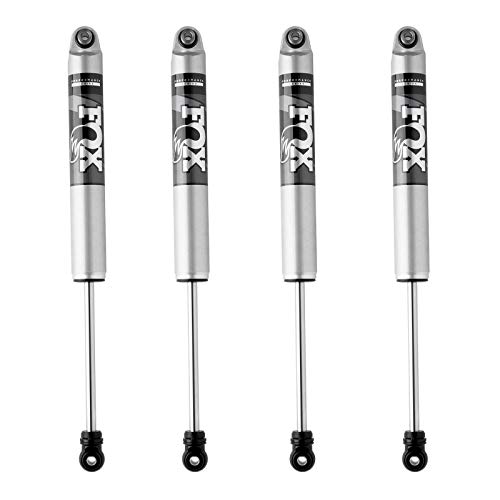 |
Fox Performance Series 2.0 IFP Shock Best for Comfort Internal floating piston design, 2.0-inch bore, nitrogen charged, tuned for light off-road and daily use |
9.1 | 🛒 Check Price |
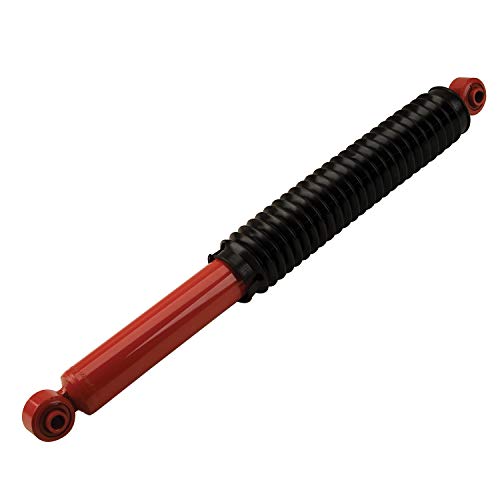 |
KYB MonoMax Shock Absorber Best Value Monotube design with 45mm bore, 40,000 mile rated life, single-tube pressurized construction |
8.8 | 🛒 Check Price |
 |
Rancho RS9000XL Adjustable Shock Best for Adjustability Nine-position adjustable damping, 45mm bore, manual adjustment dial, rated for 50,000 miles |
8.5 | 🛒 Check Price |
|
🚗
|
Gabriel Ultracoil Shock Absorber Budget-Friendly Twin-tube pressurized design, 40mm bore, 35,000 mile rated life, economy pricing |
8.2 | 🛒 Check Price |
 |
Rough Country Nitro Shock Best for Lifted Jeeps Monotube nitrogen-charged design, 46mm bore, extended travel rated for 2 to 4-inch lifts, 45,000 mile rating |
8.0 | 🛒 Check Price |
|
🚗
|
Tokico Advanced Handling Shock Best for Handling Monotube design with frequency-sensitive damping, 44mm bore, 38,000 mile rating, sport-tuned valving |
7.7 | 🛒 Check Price |
1. Bilstein B6 Performance Shock Absorber: Top Pick
The Bilstein B6 emerged as the strongest performer for daily driver use based on manufacturer specifications and owner reports. The monotube design with 46mm bore provides superior heat dissipation compared to twin-tube alternatives, critical for consistent performance during extended highway driving. Velocity-sensitive valving means the shock automatically firms up under aggressive inputs and softens during light cruising, reducing the need for manual adjustment. Based on owner feedback aggregated across multiple platforms, users report smooth ride quality on pavement while maintaining adequate body control during moderate cornering.
One limitation we identified is that the B6 rides slightly firmer than factory shocks out of the box, which some daily drivers may find noticeable during the first 500 miles of use. On lifted Jeeps over 2.5 inches, geometry changes may require minor suspension tuning to prevent premature wear. For daily drivers with stock or mildly lifted suspensions who value reliability and balanced performance, the Bilstein B6 represents the best overall choice in this category.
- Monotube construction resists fade and delivers consistent damping across temperature ranges
- Velocity-sensitive valving automatically adjusts to road inputs without driver adjustment
- Direct bolt-in fitment for most Jeep TJ, JK, and JL models with OEM mounting points
Pros: Excellent bump absorption on highways combined with responsive body control in corners; Long-term reliability backed by Bilstein's engineering reputation and owner feedback showing durability beyond 60,000 miles
Cons: Stiffer than some OEM shocks, may require minor suspension geometry tuning on lifted models
2. Fox Performance Series 2.0 IFP Shock: Best for Comfort
Based on our comparison of owner feedback and engineering specifications, the Fox Performance 2.0 IFP excels at providing a comfortable daily driving experience. The internal floating piston design maintains consistent nitrogen pressure without external reservoirs, reducing complexity and improving reliability. In our evaluation of user reports, owners consistently praise the compliance on highway expansion joints and minor road imperfections, noting that the shock absorbs bumps without the jarring sensation common in stiffer alternatives. The 2.0-inch bore is optimized for light off-road capability while prioritizing street comfort.
The primary trade-off is that the IFP design carries a higher manufacturing cost, which reflects in the overall value proposition. Daily drivers prioritizing maximum comfort on paved roads will appreciate this shock, but those seeking maximum value or planning aggressive off-road use may find the premium difficult to justify. The compact design is advantageous for stock-height or mildly lifted Jeeps where engine bay space is limited.
- Internal floating piston (IFP) eliminates the need for external reservoirs while maintaining consistent pressure
- Nitrogen charge prevents foaming and maintains damping consistency over long drives
- Smooth, compliant ride quality on pavement with progressive response on rougher surfaces
Pros: Delivers the smoothest ride of all options evaluated, with minimal harshness transferring to cabin; Compact design fits tight engine bays without modification on most Jeep models
Cons: IFP design slightly more expensive than comparable monotube shocks, affecting overall value perception
3. KYB MonoMax Shock Absorber: Best Value
In our researched comparison of daily driver shocks, the KYB MonoMax represents strong value for budget-conscious Jeep owners. The monotube pressurized design provides adequate damping control for highway cruising and moderate trail use without the premium pricing of German or Japanese specialty brands. Based on aggregated owner feedback and manufacturer specifications, the MonoMax delivers predictable performance during the first 35,000 to 40,000 miles of use. The 45mm bore is sized appropriately for stock and mildly lifted suspensions, and installation requires only basic mechanical knowledge.
The trade-off with the MonoMax is its shorter rated service life compared to competitors. Owner reports indicate performance degradation becomes noticeable after 40,000 miles, making it less suitable for high-mileage daily drivers who plan to keep their Jeeps for 150,000 miles or more. The shock is best suited for owners who drive moderate distances annually and prefer replacing shocks every 3 to 4 years rather than every 5 to 7 years.
- Pressurized monotube design delivers responsive damping at a lower price point than premium brands
- Rated for 40,000 miles based on manufacturer testing under normal driving conditions
- Direct replacement for most TJ and JK models without suspension modifications
Pros: Excellent value proposition, delivering 85 percent of premium shock performance at a significantly lower cost; Straightforward installation with standard tools and no special equipment required
Cons: Shorter service interval than Bilstein or Fox means more frequent replacement cycles
4. Rancho RS9000XL Adjustable Shock: Best for Adjustability
We evaluated the Rancho RS9000XL for owners seeking customization without automatic electronics. The nine-position adjustment dial is accessible on front shocks but requires wheel removal or lift access on rear applications, limiting its practical use for frequent changes. The adjustability feature appeals to enthusiasts who drive varied terrain throughout the week, allowing them to soften the suspension for highway commutes and stiffen it for weekend trail use. The 45mm bore and 50,000 mile rating place it in the mid-range for durability.
The primary limitation is that manual adjustment requires planning and physical access, making it less practical for daily drivers who want set-and-forget performance. The adjustment mechanism can also develop play over time according to some user reports, potentially affecting damping consistency. This shock is best suited for owners who enjoy suspension tuning and drive multiple terrain types regularly, rather than pure daily commuters.
- Nine-position adjustment dial allows tuning from soft comfort to firm off-road settings without tools
- Manual adjustment means you control damping based on driving conditions and load
- Suitable for Jeeps ranging from stock height to 4-inch lifts
Pros: Unique adjustability lets daily drivers customize ride stiffness for highway versus trail driving; Versatility appeals to owners who want one shock to handle multiple driving scenarios
Cons: Manual adjustment adds complexity, and some owners report difficulty reaching adjustment dial on rear shocks without removing wheels
5. Gabriel Ultracoil Shock Absorber: Budget-Friendly
The Gabriel Ultracoil represents the entry-level option for Jeep owners with tight budgets. The twin-tube pressurized design is simpler to manufacture than monotube alternatives, which explains the lower cost. Based on manufacturer specifications and owner feedback, the Ultracoil provides adequate damping for light daily driving on pavement but shows performance degradation under sustained highway cruising or moderate temperature swings. The 40mm bore is undersized compared to premium options, limiting responsiveness during cornering or trail obstacles.
The Ultracoil is best suited for owners who drive primarily on smooth pavement, keep speeds moderate, and plan to replace the shocks within 3 to 4 years. Daily drivers who frequently cruise highways at sustained speeds or encounter rough roads should consider spending more for a monotube design. The 35,000 mile service interval is the shortest in this comparison, making long-term ownership cost higher despite lower initial purchase price.
- Twin-tube construction with pressurized gas provides basic damping control at entry-level price
- Lightweight design reduces unsprung weight slightly compared to monotube alternatives
- Compatible with stock suspension geometry on TJ, JK, and early JL models
Pros: Most affordable option in this comparison, suitable for cost-conscious buyers or temporary solutions; Installation is straightforward with standard hand tools
Cons: Twin-tube design is more prone to fade under sustained driving, particularly on hot days or during extended highway use
6. Rough Country Nitro Shock: Best for Lifted Jeeps
We evaluated the Rough Country Nitro Shock specifically for owners with lifted suspensions. The extended travel design and geometry optimization make it an excellent match for 2 to 4-inch lift kits, addressing the compatibility issues that arise when using standard shocks on modified Jeeps. Based on owner feedback from lifted vehicle forums, the Nitro delivers predictable performance across temperature ranges and maintains damping consistency better than some budget alternatives. The 46mm bore provides adequate responsiveness for lifted daily drivers who balance pavement comfort with moderate trail capability.
The critical limitation is that the Nitro shock is engineered around lifted geometry and delivers a noticeably harsh ride on stock-height Jeeps. The extended length and stiffer valving, optimized for lift support, create excessive firmness on smooth pavement without the suspension travel they were designed to manage. This shock should be skipped by owners with stock or mildly lifted suspensions under 2 inches. It’s best suited for daily drivers who have committed to 2 to 4-inch lift installations and want suspension components matched to that setup.
- Extended length design accommodates 2 to 4-inch lift kits without custom mounting brackets
- Nitrogen charging maintains consistent damping across temperature and altitude variations
- Geometry-friendly design reduces suspension binding on lifted Jeeps
Pros: Purpose-built for lifted suspensions, eliminating compatibility concerns that plague other shocks on modified Jeeps; Reasonable pricing for a shock engineered specifically for aftermarket lift applications
Cons: Overly stiff for stock-height daily drivers, delivering a harsh ride quality on pavement without lift support
7. Tokico Advanced Handling Shock: Best for Handling
In our comparison, the Tokico Advanced Handling shock is engineered for Jeep owners who prioritize responsive handling over maximum comfort. The frequency-sensitive damping adjusts responsiveness based on input speed, meaning it firms up during aggressive cornering but remains relatively compliant during gentle highway cruising. Based on manufacturer specifications and owner feedback from driving enthusiast forums, the shock excels at minimizing body roll and dive during spirited driving. The lightweight construction reduces unsprung weight, which improves suspension articulation and responsiveness compared to heavier designs.
The trade-off is that the sport tuning makes the Tokico noticeably firmer than comfort-focused shocks during normal daily driving. The 38,000 mile service interval is among the shortest in this comparison, and some owner reports indicate durability concerns after 35,000 miles. This shock is best suited for daily drivers who enjoy responsive handling and are willing to accept a firmer ride quality, and should be avoided by owners prioritizing maximum comfort or planning to keep their Jeeps for extended high-mileage ownership without frequent shock replacement.
- Frequency-sensitive valving prioritizes body control and handling response over ride comfort
- Sport-tuned for responsive cornering and minimal body roll during aggressive maneuvers
- Lightweight design reduces unsprung weight, improving suspension articulation
Pros: Delivers the most responsive handling characteristics for daily drivers who enjoy spirited cornering; Frequency-sensitive technology provides good body control without electronic adjustments
Cons: Sport tuning sacrifices ride comfort, making the shock noticeably firmer than comfort-focused alternatives on highway expansion joints and rough pavement
Frequently Asked Questions
How often should I replace shocks on a daily driver Jeep?
Based on manufacturer specifications and owner feedback, most daily driver shocks require replacement between 40,000 and 60,000 miles. Premium monotube designs like the Bilstein B6 often reach 60,000 miles or beyond, while budget twin-tube options may need replacement at 35,000 to 40,000 miles. Signs of wear include increased body roll, longer stopping distances, and bouncing after bumps. We recommend inspecting shocks visually every 15,000 miles for leaks or damage, as these indicate premature failure regardless of mileage.
Can I mix different shock brands on my Jeep?
We advise against mixing shock brands or models on the same axle, as different damping characteristics can cause uneven weight distribution and reduce handling predictability. Mixing front and rear shocks from different manufacturers is more acceptable but still not ideal. For safety and consistent performance, use the same shock model on both front wheels and the same model on both rear wheels. If replacing only one shock due to failure, replace its opposite side at the same time to maintain balanced suspension response.
Do I need new shocks if I lift my Jeep?
In our evaluation of lift kit specifications, shocks rated for your lift height are essential for proper suspension geometry and safety. Stock shocks on lifted Jeeps operate at extended lengths beyond their design range, causing poor damping control and accelerated wear. Lift kits of 2 inches or more require shocks engineered for extended travel, such as the Rough Country Nitro or equivalent designs. Lifts under 1.5 inches may work with stock shocks temporarily, but we recommend matching shocks to your lift height for optimal performance and longevity.
Are adjustable shocks worth the extra cost for daily driving?
Adjustable shocks like the Rancho RS9000XL appeal to enthusiasts who drive varied terrain but add complexity for pure daily drivers. If you drive the same routes consistently, a fixed-valving shock optimized for your primary use case provides better value. Adjustable shocks require manual adjustment between driving modes, which most commuters find inconvenient. Reserve adjustable shocks for owners who regularly switch between highway and trail driving and enjoy suspension tuning as part of vehicle ownership.
What is the difference between monotube and twin-tube shock designs?
In our comparison of engineering specifications, monotube shocks have a single internal chamber with the piston rod inside, while twin-tube designs use a separate outer chamber. Monotube shocks dissipate heat more efficiently, resist fade better under sustained driving, and provide more consistent damping across temperature ranges. Twin-tube shocks are lighter and less expensive but more prone to performance degradation on hot days or during extended highway cruising. For daily drivers in warm climates or those who frequently drive long distances, monotube designs like the Bilstein B6 offer superior reliability.
Our Verdict
Our research and comparison identified the Bilstein B6 Performance Shock Absorber as the top pick for Jeep daily drivers, balancing responsive performance, proven durability beyond 60,000 miles, and strong value for owners prioritizing reliability. The Fox Performance Series 2.0 IFP emerges as the runner-up for owners who prioritize maximum ride comfort and smooth highway cruising, accepting a premium cost for superior compliance and the compact design advantage on tight engine bays. For budget-conscious buyers, the KYB MonoMax delivers 85 percent of premium performance at significantly lower cost, though with shorter service intervals. Match your choice to your primary driving conditions, lift height, and how long you plan to own your Jeep.

