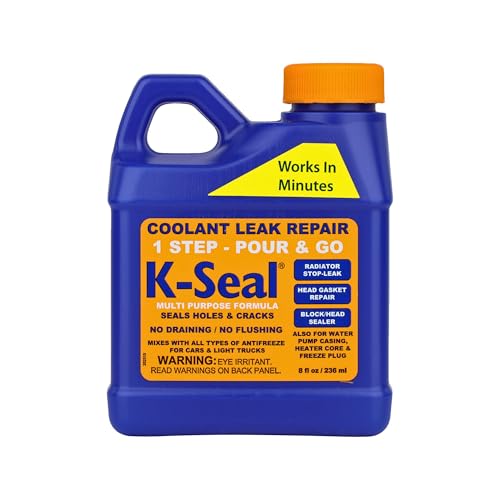
A cracked plastic radiator tank, a weeping seam, or a snapped coolant neck can leave you stranded fast, and not every epoxy survives the brutal mix of heat, pressure, and ethylene glycol inside a cooling system. The right J-B Weld product bonds to the slick polymer and nylon plastics that modern radiators are made from, then holds through repeated heat cycles without letting go. The wrong one peels off the first time the engine gets hot.
We looked at how each formula handles plastic specifically, not just metal, and judged them on adhesion to low surface energy plastic, temperature rating, coolant resistance, set time, and how forgiving they’re to use on a vertical or upside down crack. Below are seven genuine J-B Weld and compatible epoxy options that buyers actually reach for when a plastic radiator, overflow tank, or coolant reservoir splits open.
| Photo | Product | Score | Buy |
|---|---|---|---|
 |
J-B Weld 8237 PlasticWeld Plastic Bonder Syringe Best Overall for Plastic 2-part urethane structural adhesive, sets in 15 min, for low surface energy plastics |
9.5 |
ⓘ We may earn a commission from qualifying purchases made through links on this page, at no extra cost to you.
|
 |
J-B Weld 8272 RadiatorWeld Cooling System Repair Kit Best Purpose-Built Kit Epoxy putty stick plus mesh patch, rated to 250F, coolant and antifreeze resistant |
9.3 | 🛒 Check Price |
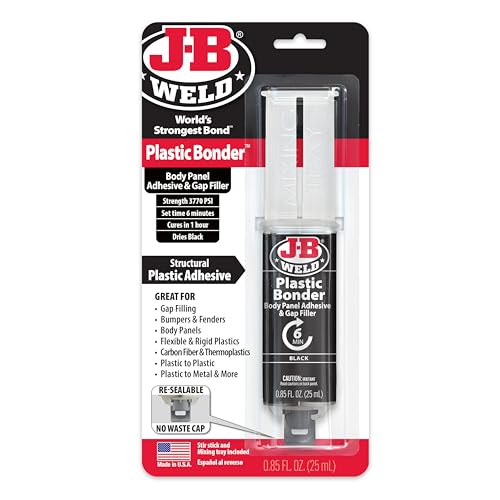 |
J-B Weld 50139 Plastic Bonder Body Panel Adhesive Best for Long Cracks 2-part 25ml structural adhesive, 15 min set, includes mixing nozzles |
9.1 | 🛒 Check Price |
 |
J-B Weld 8265S Original Cold Weld Steel Reinforced Epoxy Best High-Temp Strength 2-part epoxy, cures in 15-24 hrs, rated to 550F, 5020 PSI strength |
8.9 | 🛒 Check Price |
 |
J-B Weld 8276 WaterWeld Underwater Repair Epoxy Putty Best for Wet or Weeping Leaks Hand-mixed epoxy putty, sets in 25 min, cures even underwater, 5300 PSI |
8.7 | 🛒 Check Price |
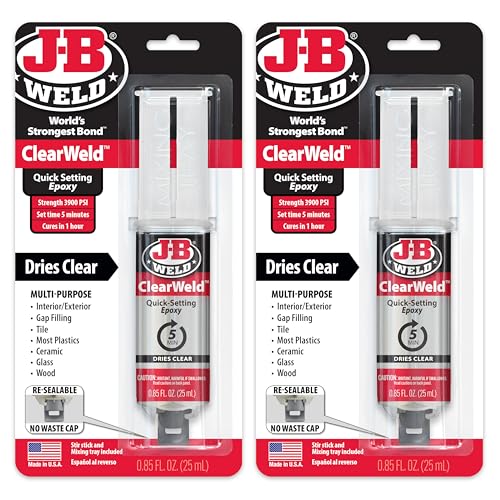 |
J-B Weld 8257 ClearWeld Quick Setting Epoxy Syringe Best Fast Cure 2-part epoxy, sets in 5 min, dries clear, 3900 PSI strength |
8.4 | 🛒 Check Price |
 |
J-B Weld 8281 Professional Size Steel Reinforced Epoxy Best Value Big Batch 2-part steel reinforced epoxy, 10 oz total, rated to 550F, 5020 PSI |
8.2 | 🛒 Check Price |
1. J-B Weld 8237 PlasticWeld Plastic Bonder Syringe: Best Overall for Plastic
J-B Weld’s PlasticWeld bonder is the one product in this lineup that was actually engineered for the problem at hand, which is getting adhesive to stick to plastics that resist almost everything. Radiator tanks, overflow bottles, and coolant reservoirs are frequently molded from polypropylene or filled nylon, and most epoxies simply won’t grab those surfaces. This urethane formula chemically keys into them, which is why it earns the top spot for plastic radiator work. The dual barrel syringe meters both parts evenly, and the black color hides the repair on dark factory plastic.
The honest weakness is the short working window. Once you mix it, you have only a couple of minutes before it starts to firm up, so you can’t dawdle while lining up a long crack. It also isn’t designed to rebuild a large missing chunk of plastic, so think of it as a crack and seam bonder rather than a body filler. Clean and abrade the surface first, clamp or hold the parts together, and you get a bond that flexes with the radiator instead of cracking off the next time the engine heats up.
- Two part urethane adhesive built specifically to bond stubborn plastics like polypropylene and TPO
- Sets in roughly 15 minutes and reaches handling strength fast for quick roadside fixes
- Black formula sands and paints, blending into dark radiator tanks and reservoirs
Pros: Bonds the slick low surface energy plastics most radiators are molded from; Fast 15 minute set gets you back on the road sooner; Flexible enough to absorb the expansion and contraction of heat cycling
Cons: Working time is short, so you must position the parts quickly; Not a gap filler for large missing sections, best on clean mating cracks
2. J-B Weld 8272 RadiatorWeld Cooling System Repair Kit: Best Purpose-Built Kit
If you want a product whose label literally says radiator, this is it. The RadiatorWeld kit combines a hand kneaded epoxy putty stick with a reinforcing mesh patch, so you can both fill a crack and lay a structural bridge across it. That patch is what sets the kit apart for longer splits in a plastic tank, because putty on its own can crack along the same line again under pressure. It’s rated to handle cooling system temperatures and shrugs off contact with coolant and antifreeze, which is exactly what you need on a part that lives in hot glycol.
The catch worth knowing is that the steel reinforced putty was originally tuned for metal radiators, and it bonds to bare aluminum more eagerly than to glossy plastic. On a plastic tank you have to scuff the area aggressively with coarse sandpaper and wipe it clean, otherwise the patch can lift at the edges. The finished repair is also chunkier than a thin liquid bond, so it isn’t the choice when clearance around the tank is tight. Prep it properly, though, and the mesh plus putty combination is genuinely tough on the parts it was named for.
- Kit pairs a steel reinforced epoxy putty stick with a fiber reinforcing patch for tank cracks
- Designed and labeled specifically for radiators, heater cores, and coolant tanks
- Resists antifreeze and coolant and tolerates cooling system operating temperatures
Pros: Made for the exact job, with instructions aimed at cooling system repairs; Reinforcing patch spans larger cracks that putty alone can’t bridge; Putty stick lets you knead and apply by hand without mixing tools
Cons: Putty grabs metal better than it grabs slick plastic, so prep is critical; Bulkier finished repair than a thin liquid bonder
3. J-B Weld 50139 Plastic Bonder Body Panel Adhesive: Best for Long Cracks
This is essentially the same plastic bonding chemistry as the PlasticWeld syringe, packaged in a body shop style cartridge with self mixing nozzles. For a long crack down the side of a radiator tank or reservoir, the cartridge is the better delivery method, because you can lay one continuous, evenly mixed bead instead of fighting a small syringe. The nozzle does the mixing for you, which removes the human error of an uneven hand mix. It bonds the polyolefin plastics that defeat ordinary epoxy, sands flush once cured, and takes paint if you want the repair to disappear.
The practical downside is that it expects an applicator gun. Without one you’re squeezing a stiff cartridge by hand, which is awkward and wastes product. The mixing nozzles are also consumable and you only get so many, so adhesive can cure inside a nozzle if you pause too long mid job. Decide where your bead is going and run it in one pass. Used that way, it’s one of the cleanest ways to seal a long plastic radiator seam.
- Cartridge format with self mixing nozzles meters and blends both parts as you dispense
- Structural urethane bonds plastics, including the polyolefins used in coolant tanks
- Black, sandable, and paintable for a clean finished repair
Pros: Mixing nozzles deliver a perfectly proportioned bead with no guesswork; Good for laying a continuous bead along a long seam or crack; Strong flexible bond that survives heat cycling
Cons: Needs a standard caulk style applicator to use the cartridge; Spare nozzles are limited, so plan your bead before you start
4. J-B Weld 8265S Original Cold Weld Steel Reinforced Epoxy: Best High-Temp Strength
The original black and white J-B Weld is the product most people picture when they hear the name, and it’s a legitimately tough, high temperature epoxy. Its heat rating dwarfs anything a cooling system will throw at it, it resists coolant and fuel, and it cures into a rock hard, machinable mass. On a metal radiator neck or a hard, rigid plastic component that doesn’t flex much, it can make a genuinely permanent repair that outlasts the rest of the part.
Where it struggles is the same place most rigid epoxies do, which is the slick, flexible plastic that radiator tanks are commonly made from. It was formulated to grip metal, and it bonds to polypropylene poorly without serious surface prep, and even then its hard cure doesn’t flex with a tank that expands under heat and pressure. It also takes up to a full day to reach maximum strength, so it isn’t a quick fix. Reach for this on rigid or metal parts, and pick a dedicated plastic bonder for a flexing tank.
- Steel reinforced two part epoxy with very high tensile strength once fully cured
- Handles continuous temperatures around 550F, far above cooling system heat
- Cures hard and machinable for permanent structural repairs
Pros: Extremely strong and heat tolerant once it fully cures; Resists coolant, fuel, and most automotive chemicals; The classic, widely trusted formula many mechanics keep on the shelf
Cons: Long full cure time of up to a day; Rigid cure adheres poorly to flexible low surface energy plastic
5. J-B Weld 8276 WaterWeld Underwater Repair Epoxy Putty: Best for Wet or Weeping Leaks
WaterWeld earns its place because of one trick the others can’t match. It cures even when the surface is wet, which is a real advantage on a radiator or coolant tank that keeps weeping and won’t dry out no matter how long you wait. You cut off a slice, knead it until the color is uniform, and press it firmly over the leak. In around 25 minutes it has set, and it hardens enough to sand, drill, or paint. As an emergency seal to stop a drip and get you to a shop, it’s hard to beat.
Treat it as a strong temporary fix rather than a forever repair on plastic. Like other epoxy putties, it grips metal more confidently than slick polymer, so its hold on a glossy plastic tank is moderate and depends heavily on scuffing the area first. The cured putty is also rigid, so on a part that flexes a lot under pressure it can eventually work loose. For stopping an active weep right now, though, this is the one that will actually stick to a surface you can’t get dry.
- Knead to mix putty that cures even on a damp or actively weeping surface
- Sets in about 25 minutes and reaches full strength quickly for an emergency seal
- Off white cure that can be sanded, drilled, and painted
Pros: Bonds and cures even when the leak won’t fully stop seeping; No tools needed, just cut, knead, and press into place; Great emergency roadside seal to limp the car to a shop
Cons: Adhesion to slick plastic is moderate and best for short term fixes; Rigid cure isn’t ideal for high flex tank areas
6. J-B Weld 8257 ClearWeld Quick Setting Epoxy Syringe: Best Fast Cure
ClearWeld is the speed option, setting in roughly five minutes and drying to a clear finish that hides well on translucent coolant overflow bottles and light plastic reservoirs. The dual syringe makes mixing foolproof, dispensing equal parts every time, and once cured it resists water and many of the fluids found under the hood. For a small crack in a low pressure overflow tank where you want a quick, tidy, nearly invisible repair, it’s a convenient choice to keep in the toolbox.
Its limits matter on a real radiator, though. ClearWeld has a lower temperature rating than the structural epoxies in this guide, so it’s happier on the cooler overflow side of the cooling system than on the hot pressurized radiator core itself. Like other general purpose epoxies, it doesn’t bond strongly to the slick, flexible plastics radiator tanks favor, so the repair can lift over time on a high heat, high pressure part. Use it for quick fixes on low pressure plastic, and step up to a dedicated bonder for anything that runs hot.
- Five minute setting two part epoxy for fast repairs when time is short
- Dries clear so the repair stays nearly invisible on light colored plastic
- Dual syringe meters equal parts for an easy, consistent mix
Pros: Very fast five minute set for quick fixes; Clear finish blends into translucent overflow bottles; Resists water and many common automotive chemicals
Cons: Lower heat tolerance than the structural epoxies here; Bond to flexible low surface energy plastic is limited
7. J-B Weld 8281 Professional Size Steel Reinforced Epoxy: Best Value Big Batch
This is the original steel reinforced J-B Weld in a professional size, giving you a generous 10 ounces of material to work with. If you maintain several vehicles, run a small shop, or simply want enough on hand for repeat repairs, the larger format delivers strong qualitative value because a little goes a long way and you aren’t constantly buying small tubes. The formula is the same trusted high strength, high heat epoxy, so on metal radiator necks, brackets, and rigid components it makes a durable, machinable repair.
The honest caveats are the same as the smaller original, plus one of practicality. Buying 10 ounces to patch one hairline crack in a plastic tank is far more product than you’ll ever use, and the unused portion has a shelf life. More importantly, this rigid, metal focused epoxy doesn’t bond well to the slick, flexing plastic of a radiator tank, so for that specific surface a plastic bonder remains the right call. Choose the pro size when you have volume metal and rigid plastic work ahead, not for a one off tank seam.
- Large 10 ounce two part set for big jobs or repeated repairs over time
- Same proven high strength, high temperature steel reinforced formula as the original
- Cures hard and machinable for durable structural fixes
Pros: Plenty of material for large repairs or many jobs; High strength and high heat tolerance once cured; Strong qualitative value given how much product you get
Cons: Overkill volume for a single small radiator crack; Rigid cure bonds poorly to flexible plastic tanks
Frequently Asked Questions
Will JB Weld actually hold on a plastic radiator?
It can, but only if you choose the right product and prep the surface. Standard steel reinforced J-B Weld is formulated for metal and bonds poorly to the slick, low surface energy plastics radiators are made from. For a plastic tank you want a dedicated plastic bonder like J-B Weld PlasticWeld (8237) or the body panel Plastic Bonder (50139), which chemically grip polypropylene and similar plastics. No matter which you pick, you must scuff the area with coarse sandpaper, clean off all oil and coolant residue, and let it cure fully before pressurizing the system. Done right, a plastic bonder repair can last a long time. Done on a greasy, unsanded surface, almost anything will peel.
What temperature can JB Weld handle in a cooling system?
More than enough for the job, if you pick a heat rated formula. A cooling system typically runs around 200 to 230 degrees Fahrenheit. The original steel reinforced J-B Weld and its professional size are rated to roughly 550 degrees Fahrenheit, far above that. The dedicated RadiatorWeld kit is rated for cooling system temperatures specifically. The faster general purpose epoxies like ClearWeld have lower heat tolerance, so they’re better suited to the cooler overflow side than the hot pressurized radiator core. Always match the product’s temperature rating to where on the system you’re repairing, and remember that a pressurized cap raises the boiling point, so the part can get hotter than plain water would suggest.
How long should I wait before adding coolant and driving?
Follow the cure time on the package, and when in doubt wait longer. Set time and full cure are different things. A product may set in 15 or 25 minutes but still need several hours, or up to a full day for the original epoxy, to reach maximum strength. Adding hot, pressurized coolant before the repair has fully cured is the fastest way to blow it back out. For a cooling system repair, give it the full recommended cure, ideally overnight, before you refill and run the engine. The pressure and heat inside a radiator are unforgiving, so the patience pays off in a repair that actually holds.
How do I prep a plastic radiator before applying epoxy?
Preparation matters more than the product you choose. First, drain the coolant below the damaged area and let the surface dry as much as possible, or use a wet curing putty like WaterWeld if it keeps weeping. Scuff the repair zone thoroughly with coarse sandpaper, around 80 grit, to create a rough mechanical surface for the adhesive to grab. Clean away every trace of oil, coolant, and dust with a suitable cleaner and let it flash off. Then mix and apply the adhesive, and on longer cracks add a reinforcing patch or fiberglass mesh to bridge the gap. Clamp or hold the parts steady while it sets. Skipping the sanding and cleaning is the single most common reason these repairs fail.
Is JB Weld a permanent fix or just to get me home?
It depends on the product, the location, and your prep. On a small crack in a rigid or low pressure part, a properly applied plastic bonder repair can be genuinely long lasting. On a high pressure radiator core, a large split, or a flexing tank, even a good epoxy repair is best viewed as a reliable way to extend the part’s life or get you safely to a shop, not a guarantee forever. Putties that cure on wet surfaces, like WaterWeld, are excellent emergency seals to stop a drip right now. If the radiator is badly cracked, replacement is the only true permanent solution, and an epoxy repair simply buys you time to do it on your own schedule.
Our Verdict
For a plastic radiator specifically, our top pick is the J-B Weld 8237 PlasticWeld Plastic Bonder, because it’s the one formula here actually engineered to grip the slick, flexible plastics tanks and reservoirs are molded from, and it flexes with the part through heat cycling instead of popping off. Our runner up is the J-B Weld 8272 RadiatorWeld Cooling System Repair Kit, whose reinforcing mesh patch lets you bridge longer cracks that adhesive alone can’t span, with a formula built to live in hot coolant. Pick the PlasticWeld bonder for clean seams and cracks, the RadiatorWeld kit for longer splits, and remember that with any of them, aggressive surface prep and a full cure are what separate a repair that holds from one that leaks again.