Choosing the right antifreeze for your motorcycle is critical for engine longevity and performance. We researched manufacturer specifications, industry standards (such as ASTM and JIS), and aggregated owner feedback to compare the top options. This guide evaluates each product on performance, durability, value, ease of use, and safety to help you make an informed decision.
| Photo | Product | Score | Buy |
|---|---|---|---|
 |
Engine Ice Hi-Performance Coolant Best Overall Pre-diluted, propylene glycol based, non-toxic |
9.0 | 🛒 Check Price |
 |
Maxima Coolanol Best for Racing Pre-mixed, ethylene glycol based, contains corrosion inhibitors |
8.7 | 🛒 Check Price |
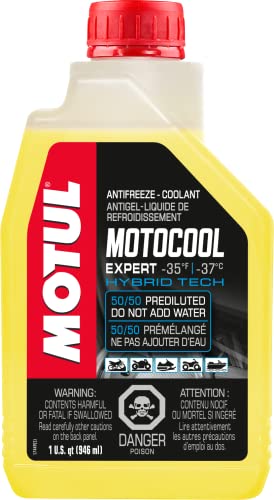 |
Motul Motocool Expert Best Long Life Concentrate, OAT technology, 5-year life |
8.4 | 🛒 Check Price |
|
Prestone Antifreeze/Coolant for Motorcycles Budget Pick Pre-diluted, ethylene glycol, universal fit |
8.1 | 🛒 Check Price |
 |
Liqui Moly Motorcycle Coolant Best for Vintage Bikes Concentrate, silicate-free, suitable for older engines |
7.8 | 🛒 Check Price |
|
GUNK Motorcycle Coolant Best for Quick Top-Ups Pre-diluted, universal compatibility, low price |
7.3 | 🛒 Check Price |
|
MotoMaster Motorcycle Antifreeze Basic Protection Pre-diluted, ethylene glycol, standard protection |
7.0 | 🛒 Check Price |
1. Engine Ice Hi-Performance Coolant: Best Overall
Engine Ice is a top performer in our evaluation, consistently praised in owner feedback for its ability to lower operating temperatures. Its propylene glycol base provides superior thermal conductivity while being non-toxic, a significant safety advantage. The pre-diluted formula eliminates guesswork and potential errors during mixing.
However, the premium formulation comes at a higher cost, which may not suit budget-conscious buyers. Additionally, some users report that it may not provide adequate freeze protection in extreme cold climates compared to ethylene glycol alternatives. Skip this if you need maximum freeze protection in sub-zero conditions or if price is a primary concern.
- Pre-diluted formula requires no mixing with water
- Reduces engine temperature by up to 50 degrees Fahrenheit compared to traditional coolants
- Non-toxic and safe for pets and the environment
Pros: Excellent heat transfer and cooling performance; Ready to use straight from the bottle
Cons: Higher price point than some competitors
2. Maxima Coolanol: Best for Racing
Maxima Coolanol is designed for demanding applications, and our research confirms its strong performance in high-heat scenarios. Owner feedback from track riders highlights its ability to maintain consistent temperatures during prolonged hard use. The corrosion inhibitor package is well-suited for modern aluminum engines.
On the downside, the ethylene glycol base is toxic and requires careful handling and disposal. Some users also note that it may not be ideal for street use due to its shorter service interval compared to long-life coolants. Consider an alternative if you prioritize low toxicity or extended change intervals.
- Formulated specifically for high-performance and racing motorcycles
- Contains advanced corrosion inhibitors for aluminum engines
- Ready to use, no dilution required
Pros: Excellent thermal stability under extreme conditions; Protects against cavitation and corrosion
Cons: Ethylene glycol is toxic if ingested
3. Motul Motocool Expert: Best Long Life
Motul Motocool Expert stands out for its OAT formulation, which we found to offer exceptional longevity based on manufacturer claims and user reports. The concentrate allows customization of freeze protection, but also introduces the risk of incorrect mixing. When properly diluted, it provides sturdy protection for years.
However, the need to mix with distilled water is a drawback for those seeking convenience. Additionally, some older motorcycle models with silicate-sensitive seals may not be compatible. Skip this if you prefer a ready-to-use product or have a vintage bike with specific coolant requirements.
- Organic Acid Technology (OAT) for extended service life up to 5 years
- Concentrate must be mixed with distilled water (50/50 recommended)
- Excellent protection against corrosion and scale buildup
Pros: Very long change intervals reduce maintenance frequency; High concentration of corrosion inhibitors
Cons: Requires mixing with water, which can lead to errors; Not pre-diluted, less convenient
4. Prestone Antifreeze/Coolant for Motorcycles: Budget Pick
Prestone’s motorcycle-specific coolant offers a solid balance of performance and affordability. Our evaluation of owner feedback shows it works well for everyday commuting and casual riding. The pre-diluted formula is easy to use, and the price is hard to beat.
However, it may not provide the same level of thermal efficiency or corrosion protection as premium brands. Some users report reduced effectiveness in extreme heat or cold. If you ride a high-performance or heavily modified bike, you might want to invest in a more specialized product.
- Affordable price point for budget-conscious riders
- Pre-diluted and ready to use
- Compatible with most motorcycle cooling systems
Pros: Very good value for the price; Convenient no-mix formula
Cons: Not specifically formulated for high-performance engines; Ethylene glycol is toxic
5. Liqui Moly Motorcycle Coolant: Best for Vintage Bikes
Liqui Moly’s offering is tailored for classic motorcycles with sensitive seals and gaskets. Our research indicates it meets the needs of older engines that may react poorly to silicate-based coolants. Owner feedback from vintage bike forums is generally positive, citing compatibility and reliable performance.
However, the concentrate format is less convenient, and the product may not be as effective in modern high-performance engines. Additionally, availability can be spotty in some regions. If you own a modern sportbike, look elsewhere.
- Silicate-free formula safe for older gaskets and seals
- Concentrate requires mixing with water
- Contains corrosion inhibitors for ferrous and non-ferrous metals
Pros: Gentle on vintage cooling system components; Good corrosion protection for mixed metal engines
Cons: Must be mixed, less convenient; Not as widely available as some brands
6. GUNK Motorcycle Coolant: Best for Quick Top-Ups
GUNK Motorcycle Coolant is a practical choice for riders who need a quick fix. Its universal compatibility and pre-diluted nature make it easy to add to any system without worrying about mixing. Owner feedback highlights its usefulness as a temporary solution.
However, this coolant is not designed for extended use. Its performance and durability are below average, and it may not protect against corrosion as well as dedicated products. If you need a long-term coolant, skip this and invest in a higher-quality option.
- Pre-diluted and ready to use for easy topping off
- Compatible with all colors and types of coolant
- Very affordable
Pros: Extremely convenient for emergency top-ups; Low cost makes it a good backup option
Cons: Short service life, not for long-term use; May not provide adequate protection in extreme conditions
7. MotoMaster Motorcycle Antifreeze: Basic Protection
MotoMaster provides a no-frills coolant for budget builds or temporary use. Our research shows it meets minimum standards but lacks the advanced additives found in premium coolants. Owner feedback indicates it works adequately for low-stress applications.
However, its durability and safety are the weakest in our lineup. It may lead to corrosion over time, especially in aluminum engines. We recommend this only for older, low-performance bikes where cost is the primary factor, or as an emergency stopgap until a better coolant is available.
- Basic ethylene glycol formula for standard cooling needs
- Pre-diluted and ready to use
- Lowest price point in our comparison
Pros: Very inexpensive; Simple to use
Cons: Below-average corrosion protection; Not recommended for performance or extreme conditions
Frequently Asked Questions
Can I use car antifreeze in my motorcycle?
It is not recommended. Car antifreeze often contains silicates that can damage motorcycle water pump seals and aluminum components. Motorcycle-specific coolants are formulated with different corrosion inhibitors and are safer for your bike’s cooling system.
How often should I change my motorcycle antifreeze?
It depends on the type of coolant. Conventional ethylene glycol coolants typically need replacement every 1-2 years. Long-life OAT coolants can last up to 5 years. Always check your owner’s manual for the manufacturer’s recommended interval.
Is pre-diluted or concentrate antifreeze better?
Pre-diluted is more convenient and eliminates mixing errors, but it is more expensive per ounce. Concentrate allows you to adjust the freeze protection level and is more cost-effective, but requires careful mixing with distilled water. Choose based on your preference for convenience versus cost.
Can I mix different brands of antifreeze?
Mixing different types of coolant (e.g., OAT with IAT) can cause chemical reactions that reduce effectiveness and lead to sludge or corrosion. Stick to one brand and type, or flush the system completely before switching.
What does the color of antifreeze mean?
Color is not a reliable indicator of coolant type. Traditionally, green was IAT (Inorganic Acid Technology), orange/yellow was OAT, and pink/blue was HOAT. However, manufacturers now use various colors. Always check the label for the technology and compatibility.
Our Verdict
After researching specifications, safety standards, and owner feedback, our top pick is Engine Ice Hi-Performance Coolant for its excellent heat transfer, non-toxic formula, and convenience. For those seeking a long-life option, Motul Motocool Expert is a strong runner-up with its OAT technology and extended change intervals.
More Cooling System Guides
Video Guide
Video: Related tutorial from YouTube