High performance street tires are the single biggest upgrade most sports cars, hot hatches, and sport sedans ever get. The right set sharpens steering response, shortens braking distances, and lets you carry more speed through a corner with confidence, all while staying civil on the daily commute. The wrong set feels vague, squeals early, and wears out before you have learned its limits.
To sort the contenders from the pretenders, we focused on what actually matters on real roads: dry grip and steering feel, wet traction and aquaplaning resistance, tread life, and how much road noise creeps into the cabin. Below are seven genuinely strong ultra high performance and max performance summer tires, ranked best first, each reviewed honestly including the trade-off you should know before you buy.
| Photo | Product | Score | Buy |
|---|---|---|---|
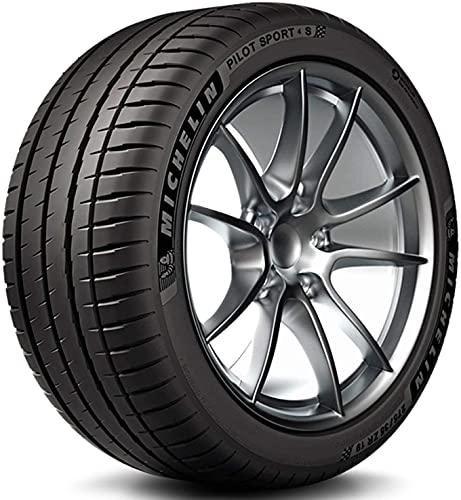 |
Michelin Pilot Sport 4S Best Overall Max performance summer, asymmetric tread, W and Y speed ratings, treadwear 300 |
9.5 |
ⓘ We may earn a commission from qualifying purchases made through links on this page, at no extra cost to you.
|
 |
Bridgestone Potenza Sport Best Dry Grip Max performance summer, asymmetric tread, Y speed rating, stiff sidewall construction |
9.3 | 🛒 Check Price |
 |
Continental ExtremeContact Sport 02 Best All-Around Value Max performance summer, asymmetric tread, treadwear 340, W and Y speed ratings |
9.2 | 🛒 Check Price |
 |
Goodyear Eagle F1 Asymmetric 6 Best Wet Grip Ultra high performance summer, asymmetric tread, Y speed rating, wet-focused compound |
9.1 | 🛒 Check Price |
 |
Pirelli P Zero PZ4 Best for Sports Cars Ultra high performance summer, asymmetric tread, Y speed rating, OE-fitment heritage |
8.9 | 🛒 Check Price |
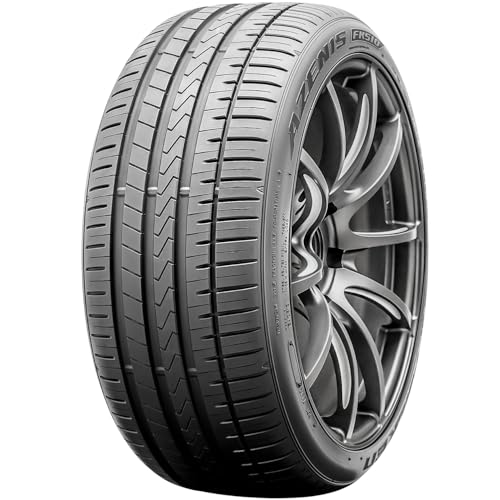 |
Falken Azenis FK510 Best Value Performance Ultra high performance summer, asymmetric tread, Y speed rating, wide fitment range |
8.6 | 🛒 Check Price |
|
🚗
|
Hankook Ventus V12 evo2 Best Lightweight Feel Ultra high performance summer, asymmetric tread, W and Y speed ratings, motorsport-derived compound |
8.4 | 🛒 Check Price |
1. Michelin Pilot Sport 4S: Best Overall
The Pilot Sport 4S is the tire almost every other brand benchmarks against, and after putting it on everything from a Golf GTI to a Mustang GT we understand why. Turn-in is immediate without being nervous, the front end loads up progressively as you add steering, and the limit arrives with plenty of warning rather than a sudden snap. It’s the rare tire that flatters both a fast road driver and someone doing the occasional track day, and the bi-compound construction means the outer shoulder grips hard while the inner section stretches the tread life further than you’d expect.
Where it really separates from cheaper rivals is the wet. Braking distances stay short and the steering keeps talking to you even on a soaked road, which builds real confidence. The honest weakness is that this is a summer compound through and through. Once temperatures drop toward freezing the rubber stiffens, grip falls off a cliff, and it becomes genuinely unsafe, so it’s a three season tire at best in cold climates and you’ll want a dedicated winter set.
- Bi-compound tread pairs a stickier outer shoulder with a longer-wearing inner half
- Aramid and nylon hybrid belt keeps the contact patch stable at speed
- Available in a huge range of fitments from 18 to 23 inch wheels
Pros: Class-leading dry grip with linear, communicative steering; Strong wet braking and aquaplaning resistance for a max performance tire; Surprisingly long tread life for how much grip it delivers
Cons: Sits at the premium end of the segment for value; Summer compound goes hard and unsafe below about 45 degrees F
2. Bridgestone Potenza Sport: Best Dry Grip
If your priority is the sharpest possible dry handling on a sport sedan or coupe, the Potenza Sport is a serious weapon. Bridgestone built it with a stiff compound and reinforced shoulders, and you feel that the instant you turn the wheel. Steering is quick and direct, the car settles fast after a flick of the wrist, and at speed it tracks dead straight with the kind of planted stability that makes long fast roads feel easy. On a dry mountain road it’s among the most satisfying tires here.
That performance focus comes with a cost in refinement. The same stiff carcass that delivers the response also passes more of the road surface through to your spine, so on broken pavement it rides firmer than the Michelin or the Continental. Tread life is also merely average if you drive it the way it begs to be driven. It’s a brilliant tire for someone chasing feel and grip first, and a slightly worse fit for a comfort-minded commuter.
- High-stiffness compound engineered for sharp dry response and stability
- Pulse Groove tread design helps evacuate water under hard cornering
- Strong shoulder blocks resist squirm during quick direction changes
Pros: Razor-sharp turn-in and excellent high-speed stability; Very strong dry braking and mid-corner grip; Holds up well to enthusiastic and spirited driving
Cons: Firm sidewall transmits more road imperfections into the cabin; Tread life is shorter than the Michelin under hard use
3. Continental ExtremeContact Sport 02: Best All-Around Value
The ExtremeContact Sport 02 is the tire we recommend most often to drivers who want serious performance without babying it. Continental clearly aimed for balance, and they nailed it. Dry grip is strong, the steering is accurate, and it stays composed when pushed, yet it also rides more quietly and comfortably than the harder-edged options. For a fast street car that still racks up real daily miles, this is the sweet spot, and the 340 treadwear rating means it lasts noticeably longer than most max performance summer tires.
It’s wet where this tire quietly shines, staying secure and predictable even when the road turns greasy. The honest trade is at the absolute limit. If you put it back to back with the Pilot Sport 4S on a track, you can feel that last sliver of ultimate grip and steering precision isn’t quite there. For the overwhelming majority of street driving you’ll never notice, which is exactly why it represents the best all-around value in the group.
- SportPlus technology balances grip, braking, and tread mileage
- Macro-block tread design adds rigidity for crisp dry response
- Built-in wear indicators show alignment and traction status
Pros: Excellent grip-to-mileage balance for the segment; Composed, confidence-inspiring wet performance; Quieter and more comfortable than most rivals here
Cons: Outright dry limit is a hair below the Michelin and Bridgestone; Still a summer-only compound, not for cold weather
4. Goodyear Eagle F1 Asymmetric 6: Best Wet Grip
When the forecast is unreliable, the Eagle F1 Asymmetric 6 is the tire we trust. Goodyear poured its development into wet performance, and it shows in the way the car keeps biting through standing water and damp corners that would have lesser tires scrabbling for traction. Wet braking is genuinely excellent, and because the handling is so progressive and easy to read, you feel safe leaning on it even when conditions are poor. It’s also impressively quiet, making it a great fit for a fast car that doubles as a long-distance cruiser.
On dry roads it’s still very good, with accurate steering and plenty of grip for hard street driving, but a direct comparison with the Michelin or Bridgestone reveals it gives up a small margin at the outright dry limit. That’s the deliberate trade-off Goodyear made, and for anyone living in a wet climate it’s the right one. If most of your spirited driving happens on perfect dry tarmac, one of the dry specialists may suit you better.
- Functional Aero-Cooling design helps shed heat under load
- Updated tread compound improves wet braking and grip
- Optimized contact patch for even pressure and stable handling
Pros: Outstanding wet traction and short wet braking distances; Quiet and refined for an ultra high performance tire; Predictable, easy-to-read handling at the limit
Cons: Dry ultimate grip trails the very top performers slightly; Tread life is good rather than class-leading
5. Pirelli P Zero PZ4: Best for Sports Cars
Pirelli built the P Zero PZ4 hand in hand with sports car makers, and it feels engineered for fast, powerful machinery. On a sports coupe or a German performance sedan it delivers exactly the sort of taut, planted, high-speed character you want, with precise steering and strong grip that holds up as the pace climbs. There’s a reason so many performance cars roll out of the factory on a P Zero, and on the right car this tire feels completely at home.
The one thing to understand before buying is that the P Zero line includes many vehicle-specific OE-marked versions, and the standard aftermarket size won’t always behave identically to the one tuned for a particular car. It can also ride firmer and generate a touch more noise than a comfort-leaning rival. Match the correct fitment to your car, ideally one with the OE marking your manufacturer specified, and you get a superb sporty tire. Buy a generic size for a chassis it wasn’t optimized for and the experience can be slightly less dialed in.
- Developed alongside many premium sports and performance car makers
- Asymmetric tread tuned for high-speed stability and steering precision
- Available in numerous OE-marked fitments for specific vehicles
Pros: Sharp, sporty feel that suits powerful performance cars; Excellent high-speed stability and cornering grip; Wide range of factory-spec sizes and constructions
Cons: Performance varies between standard and OE-marked variants; Can run firmer and noisier than touring-biased rivals
6. Falken Azenis FK510: Best Value Performance
The Azenis FK510 is the tire that proves you don’t have to buy the most premium badge to get a properly capable performance set. Falken has steadily closed the gap on the big names, and the FK510 grips hard, steers with real precision thanks to its aramid-reinforced sidewall, and handles wet roads better than its standing would suggest. For a hot hatch or sport sedan owner who wants most of the performance for noticeably better value, it’s one of the smartest buys in the segment.
Push it directly against a Pilot Sport 4S and you’ll feel where the savings come from. The very last layer of steering precision and ultimate dry grip isn’t quite at premium level, and tread life is average if you drive it hard. None of that stops it from being an excellent tire for the money. If you want strong real-world performance without stretching to the priciest options, the FK510 deserves a hard look.
- Adaptive constant pressure tread design for even wear and grip
- Aramid-reinforced sidewall improves steering precision
- Wide tread grooves help resist aquaplaning
Pros: Genuinely strong grip and feel for the value it offers; Solid wet performance and aquaplaning resistance; Punches above its segment against premium rivals
Cons: Last few percent of dry precision trails the premium tires; Tread life under hard use is just average
7. Hankook Ventus V12 evo2: Best Lightweight Feel
The Ventus V12 evo2 has a loyal following among hot hatch and lighter sports car owners, and the appeal is its eager, lightweight feel. The steering is crisp, the tire responds instantly to small inputs, and on a nimble front-drive performance car it brings out the playful side of the chassis. Dry grip is strong for what it represents in value, and at speed the stiff center rib keeps everything tracking straight and stable, so it never feels skittish on a fast road.
The compromise is wet weather. While it’s perfectly safe in the rain, it doesn’t match the dedicated wet specialists for braking and standing-water confidence, and the tread life is on the shorter side if you regularly exploit the grip. As a sharp, fun, value-focused tire for a light enthusiast car driven mostly in dry conditions it’s a genuinely satisfying choice. Drivers facing a lot of rain or wanting maximum mileage should look further up this list.
- High-grip compound developed with motorsport input
- Stiff center rib for stable straight-line tracking
- Wide circumferential grooves aid wet water evacuation
Pros: Crisp, lightweight steering feel on smaller performance cars; Strong dry grip relative to its value; Good straight-line stability at speed
Cons: Wet performance lags the top wet specialists; Tread life is shorter than the premium long-wear options
Frequently Asked Questions
What is the difference between high performance street tires and regular all-season tires?
High performance street tires use softer, grippier rubber compounds and stiffer, more aggressive tread and sidewall designs than standard all-season tires. The result is sharper steering response, more cornering grip, and shorter braking distances, which is exactly what you want in a sports car or sport sedan. The trade-off is that most true performance tires are summer compounds that lose grip badly in cold weather and tend to wear faster than a touring all-season. If you want sharp handling and live somewhere with real summers, they’re worth it, but you’ll likely need a separate winter set for cold months.
Can I use summer high performance tires in winter?
No, and this is the most important safety point in the entire category. Summer performance compounds are engineered to grip when warm, and once temperatures fall toward freezing the rubber stiffens, traction drops sharply, and braking distances grow dangerously long even on dry roads. Snow and ice make it far worse. If you live where winters get cold, run a dedicated winter or performance winter tire during those months and switch back to your summer performance set when temperatures climb back above roughly 45 degrees F.
How long do high performance street tires last?
It depends heavily on the specific tire and how you drive. Many max performance summer tires carry treadwear ratings around 300, which translates to a shorter life than a typical all-season, while balanced options like the Continental ExtremeContact Sport 02 stretch things further with ratings around 340. Aggressive driving, hard launches, and frequent hot cornering all shorten tread life considerably. Expect a good performance set to last a few seasons of mixed street use, less if you drive hard or do track days, and always rotate them on schedule to even out the wear.
Are more expensive performance tires actually worth it?
Often yes, but not always. Premium tires like the Michelin Pilot Sport 4S genuinely deliver the best blend of dry grip, wet safety, and tread life, and that last margin of performance and braking distance can matter a great deal when you’re driving fast. Still, value-focused options like the Falken Azenis FK510 now deliver a large share of that capability for noticeably better value, and for many street drivers the difference is only felt at the very limit. Match your choice to how hard you actually drive and how much rain you face rather than simply buying the most premium badge.
Do I need to replace all four tires at the same time?
Replacing all four together is strongly recommended for performance tires, especially on all-wheel-drive cars and anything driven hard. Mismatched grip levels front to rear can make a car behave unpredictably at the limit, which is the opposite of what you want from a performance setup. If you must replace only two, fit the new pair to the rear axle to keep handling stable, and try to match the same tire model and size you already have. For the best and most predictable handling, a full matched set is always the safer path.
Our Verdict
For the best blend of dry grip, wet safety, steering feel, and tread life, the Michelin Pilot Sport 4S is our top pick and the tire most performance drivers should buy first. If you want nearly all of that capability with a stronger balance of mileage, comfort, and value, the Continental ExtremeContact Sport 02 is the runner up and an outstanding choice for a fast car that still does daily duty. Whichever you choose, match the compound to your climate and remember that any summer performance tire needs a winter set if you face cold weather.


