Driving a camper or RV is nothing like driving a car. A standard phone map will happily send you under a low bridge, down a narrow lane with no turnaround, or onto a road your rig legally can’t use. A dedicated camper GPS solves that by letting you enter your height, length, weight, and propane status, then routing you only on roads that fit. That single feature can save you from a stuck, sweaty, three-point-turn nightmare on a dead-end mountain road.
We looked at large readable displays, the accuracy of RV-specific routing, campground and point-of-interest databases, lifetime map updates, and how well each unit handles dual navigation when you’re towing. Below are the seven camper GPS units we trust most, ranked best first, with an honest weakness called out for every one.
| Photo | Product | Score | Buy |
|---|---|---|---|
 |
Garmin RV 1090 Best Overall 10-inch HD touchscreen, RV-specific routing, lifetime map updates |
9.5 |
ⓘ We may earn a commission from qualifying purchases made through links on this page, at no extra cost to you.
|
 |
Garmin RV 890 Best for Most Campers 8-inch display, edge-to-edge glass, RV routing with custom profile |
9.3 | 🛒 Check Price |
 |
Garmin Overlander Best for Off-Grid 7-inch rugged display, on-road plus off-road topo navigation, IPX7 rated |
9.1 | 🛒 Check Price |
 |
Garmin RV 780 Best Value Garmin 7-inch touchscreen, RV routing, built-in dash cam |
8.9 | 🛒 Check Price |
 |
Rand McNally OverDryve 7 RV Best Connected Features 7-inch tablet-style GPS, RV routing, built-in dash cam and SiriusXM ready |
8.6 | 🛒 Check Price |
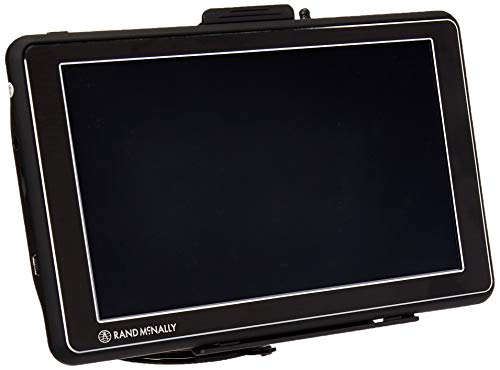 |
Rand McNally RVND 7 Simplest to Use 7-inch display, RV-specific routing, RV-focused points of interest |
8.3 | 🛒 Check Price |
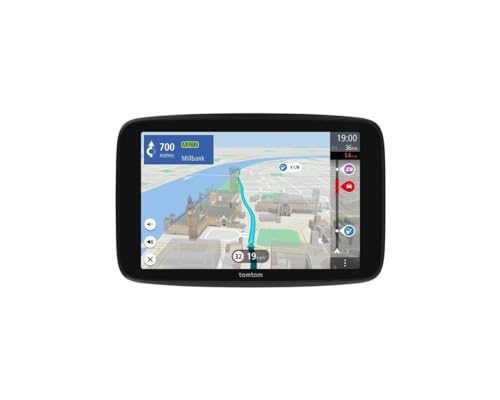 |
TomTom GO Camper Max Best Map Coverage 7-inch screen, camper and caravan routing, worldwide maps with Wi-Fi updates |
8.1 | 🛒 Check Price |
1. Garmin RV 1090: Best Overall
The Garmin RV 1090 is the unit we would hand to a first-time RV owner without hesitation. The 10-inch screen is the headline feature, and it earns its place: glanceable turn arrows, lane guidance, and a split-screen junction view that makes complicated interchanges far less stressful when you have a long trailer behind you. You enter your rig profile once, height, length, weight, and whether you carry propane, and the routing engine keeps you on roads that actually fit. In our experience it reliably steers clear of low bridges and restricted parkways that car GPS units ignore.
The honest weakness is size and ergonomics. That gorgeous big display is physically large, and in a smaller camper van it can block more of your forward view than you want, so mounting position matters a lot. Voice control also lags behind what you get from a phone, so most drivers end up tapping the screen at stops rather than talking to it. Neither flaw undermines the core job, which it does better than anything else here.
- Huge 10-inch edge-to-edge display that stays readable in bright cab light
- Custom routing based on your RV size, weight, and propane restrictions
- Preloaded directory of campgrounds, RV services, and dump stations
Pros: Best-in-class big screen for older eyes and bouncy cabs; RV routing is genuinely conservative and avoids low clearances well; Bluetooth calls plus traffic and weather via the Garmin Drive app
Cons: The large display is bulky and eats a chunk of windshield real estate; Voice commands are less polished than smartphone assistants
2. Garmin RV 890: Best for Most Campers
If the 1090 is more screen than your cab can hold, the Garmin RV 890 is the unit most campers should actually buy. It keeps the same intelligent RV routing, the same campground and services directory, and the same connected features through the Garmin Drive app, just on an 8-inch panel that fits more windshields comfortably. The edge-to-edge glass looks modern, and the magnetic mount is a small touch that you appreciate every time you pop it off to lock it away at a campsite.
The weakness worth flagging is the glossy display, which can throw glare back at you when the sun sits low and dead ahead, forcing you to adjust the tilt. It also lacks an integrated dash cam, which a few rivals include at a similar tier. For pure camper navigation, though, the routing quality and the practical screen size make this the most sensible pick for the majority of buyers.
- 8-inch high-resolution screen that balances visibility and dash footprint
- Detachable magnetic mount makes it easy to stow at campsites
- Garmin Drive app adds live traffic, weather overlays, and photoLive cameras
Pros: Sweet-spot screen size for most motorhomes and trailers; Reliable, conservative RV routing identical in spirit to the 1090; Magnetic mount and clean menus make daily use painless
Cons: No built-in dash cam despite the premium positioning; Glare can be an issue on the glossy glass at certain sun angles
3. Garmin Overlander: Best for Off-Grid
The Garmin Overlander is the pick for campers who leave the paved campground loop behind. It pairs proper RV-style road routing with detailed topographic and off-road maps, so the same device that guides your motorhome down the interstate can also navigate a forest service road to a dispersed campsite. The rugged, water-resistant body and stronger multi-band satellite reception are exactly what you want when cell service is gone and the trail is rough. Preloaded public land boundaries and off-grid site data round out a genuinely adventure-ready package.
The trade-off is that the Overlander tries to do more, and that shows in the interface, which is busier and less beginner-friendly than the streamlined RV 800 series. The 7-inch screen is also smaller than the big RV displays, so if your driving is mostly highway miles to established parks, you’re paying for off-road talent you may rarely use. For overlanders and boondockers, though, nothing else here comes close.
- Combines RV road routing with detailed off-road and topographic maps
- Rugged, water-resistant build rated to survive splashes and dust
- Multi-band GNSS holds a fix on remote trails where others drop out
Pros: Genuinely capable both on the highway and far off the pavement; Tough housing suited to overlanding and boondocking trips; Preloaded public land and off-grid campsite data
Cons: Smaller 7-inch screen than the dedicated RV models; Interface is denser and takes longer to learn
4. Garmin RV 780: Best Value Garmin
The Garmin RV 780 packs the most useful extra of any model here: a built-in dash cam. For campers who want one less device suction-cupped to the glass, getting navigation and incident recording in a single unit is a real win, and the camera automatically saves footage when it detects a hard event. Underneath the camera you still get the full RV routing engine, the campground and services directory, and voice control, so the core navigation experience holds up well.
The honest limitations are size and camera quality. At 7 inches the screen is noticeably smaller than the RV 890 and 1090, which matters more in a tall motorhome cab where the display sits farther from your eyes. The dash cam is genuinely handy but its image quality is good rather than the best you can buy separately. As an all-in-one that covers navigation and recording, though, it delivers a lot of practical value.
- Integrated dash cam records the road and saves clips on incidents
- Full RV custom routing using your rig dimensions and weight
- Voice-activated navigation lets you keep both hands on the wheel
Pros: Built-in dash cam adds real safety value in one device; Compact 7-inch size fits almost any cab; Strong RV routing and campground database at a friendly tier
Cons: 7-inch screen feels small after using the 8 and 10-inch models; Dash cam resolution is decent rather than class-leading
5. Rand McNally OverDryve 7 RV: Best Connected Features
The Rand McNally OverDryve 7 RV takes a different approach, behaving more like a connected tablet than a plain navigator. Beyond solid RV routing that flags low bridges, steep grades, and tight curves, it bundles a built-in dash cam, hands-free calling, backup camera support, and compatibility with SiriusXM traffic and weather. For campers who want their windshield device to be a hub rather than a single-purpose tool, the OverDryve packs in a lot.
The catch is polish. The interface can feel slower and less responsive than Garmin’s, with occasional stutter when loading maps or switching screens, and some of the nicer connected features depend on a subscription to stay useful. The RV routing itself is dependable, so if you value the extra hardware and connectivity and can live with software that’s a step behind, it’s a strong and capable choice.
- Tablet-style interface with built-in dash cam and rich connected services
- RV-specific routing with truck and RV warnings for clearances
- Backup camera ready and SiriusXM weather and traffic compatible
Pros: Feature-packed with dash cam, hands-free calling, and entertainment; Useful RV warnings for sharp curves, steep grades, and low bridges; Backup camera support is great for big rigs
Cons: Software can feel laggy compared to Garmin units; Some connected features lean on a subscription
6. Rand McNally RVND 7: Simplest to Use
The Rand McNally RVND 7 is the unit to recommend when simplicity beats features. It strips the experience back to what a camper actually needs: enter your dimensions, get routing that respects clearances and weight limits, and find RV-friendly stops from a curated points-of-interest list that includes campgrounds and dump stations. For drivers who find modern touchscreens fiddly, the uncluttered menus are a genuine relief.
Where it shows its age is hardware. The display is less crisp and the processor less snappy than the latest Garmin models, so map redraws and searches aren’t as instant. There’s also no dash cam or rich connected suite here. None of that hurts the central task, and if you want a dependable RV navigator with the shortest possible learning curve, the RVND 7 fits that brief neatly.
- Straightforward RV routing built around your rig's dimensions
- Curated RV points of interest including campgrounds and dump stations
- Clean, no-nonsense interface that’s easy for new users to learn
Pros: Very easy to set up and operate for less tech-savvy drivers; Solid RV routing with relevant clearance and weight warnings; Focused feature set with little to get in the way
Cons: Lacks the dash cam and connected extras of pricier models; Display and processor feel dated next to current Garmins
7. TomTom GO Camper Max: Best Map Coverage
The TomTom GO Camper Max is the pick for campers who roam widely, especially those crossing borders or shipping a rig overseas. It offers camper and caravan routing matched to your vehicle profile, a bright 7-inch screen, and a large database of campsites and motorhome stopovers. The standout is map coverage and the painless Wi-Fi update process, which lets you refresh maps over a campground network without ever tethering to a computer.
The weakness for North American buyers is that TomTom’s camper points of interest and routing data are noticeably richer in Europe, where this device originated, than they’re stateside. Some live services also lean on staying connected and within app limits. If your travels are concentrated in the United States, a Garmin will usually feel more dialed in, but for international and cross-continent camping the TomTom is hard to beat on coverage.
- Camper and caravan routing tuned to your vehicle's size and weight
- Worldwide map coverage with easy Wi-Fi updates, no computer needed
- Large database of campsites and motorhome stopover points
Pros: Excellent map coverage for travel beyond North America; Wi-Fi updates are simple and don’t require a cable to a PC; Bright, clear 7-inch display with good camper points of interest
Cons: Camper points of interest are stronger in Europe than North America; Live services depend on staying within app and connection limits
Frequently Asked Questions
Do I really need a special GPS for a camper instead of using my phone?
Yes, if you value your rig and your nerves. A phone map doesn’t know your camper’s height, length, or weight, so it can route you under a low bridge, down a road with a tight weight limit, or onto a narrow lane with no safe turnaround. A dedicated camper GPS lets you enter those dimensions once and then keeps you only on roads that legally and physically fit, plus it adds RV-specific stops like campgrounds and dump stations. Many campers keep their phone as a backup but trust the dedicated unit for the actual driving.
What screen size is best for an RV or motorhome GPS?
For most campers an 8-inch screen, like the Garmin RV 890, hits the sweet spot between readability and dash footprint. In a tall motorhome where the display sits farther from your eyes, a 10-inch unit such as the Garmin RV 1090 is easier to glance at and worth the extra real estate. Smaller 7-inch models work well in camper vans and compact cabs where space is tight or you want a clearer forward view. Think about where it’ll mount and how far it sits from your eyes before deciding.
How accurate is RV-specific routing at avoiding low bridges?
It’s good but not infallible, so treat it as a strong assistant rather than an absolute authority. Garmin and Rand McNally RV units route conservatively around known low clearances and restricted roads when you enter an accurate vehicle profile, and in our experience they reliably avoid the obvious traps. Still, bridge and clearance databases aren’t perfect everywhere, and signage on the road always wins. Enter your true height with a safety margin, watch posted clearance signs, and never blindly follow a route under a structure that looks too low.
Do these camper GPS units come with free map updates?
The major models here include lifetime map updates, meaning free updates for the usable life of the device. Garmin RV units update through the Garmin Express software on a computer or over Wi-Fi on newer models, while the TomTom GO Camper Max updates conveniently over Wi-Fi with no cable required. Keeping maps current matters more for campers than car drivers because new clearance data and campground information get added over time, so it’s worth updating before each big trip.
Can a camper GPS help me find campgrounds and dump stations?
Yes, and this is one of the biggest reasons to choose a dedicated unit. Garmin RV models include a preloaded directory of campgrounds, RV services, and dump stations, and Rand McNally units carry curated RV points of interest as well. You can filter for amenities and route directly to a site that suits your rig. It’s still smart to confirm availability and current conditions by phone or app, since campground status can change, but having the database built into your navigator saves a lot of searching on the road.
Our Verdict
For most campers, the Garmin RV 1090 is our top pick thanks to its huge, easy-to-read 10-inch screen and conservative, trustworthy RV routing that keeps your rig away from low bridges and unfit roads. If that display is more than your cab can hold, the Garmin RV 890 is our runner up and the model most buyers should actually choose, delivering the same intelligent routing on a more dash-friendly 8-inch panel. Off-grid adventurers should look hard at the Garmin Overlander, but for paved campground touring, those two RV-series Garmins lead the pack.