Getting lost on a forgotten two-track or losing the group at a muddy fork is no fun, and your phone usually quits the moment cell signal does. A dedicated off-road GPS solves that. The right unit shows preloaded trails, your exact position, public versus private land boundaries, and where your riding buddies are, all while surviving the vibration, dust, and water that come with a hard day in a side-by-side.
We pulled the most popular SxS and UTV GPS units sold on Amazon and judged each one on screen visibility in bright sun, glove-friendly operation, trail map coverage, durability, and how well it handles riding with a group. Below are the seven that earned a spot, ranked best first, with an honest look at where each one falls short.
| Photo | Product | Score | Buy |
|---|---|---|---|
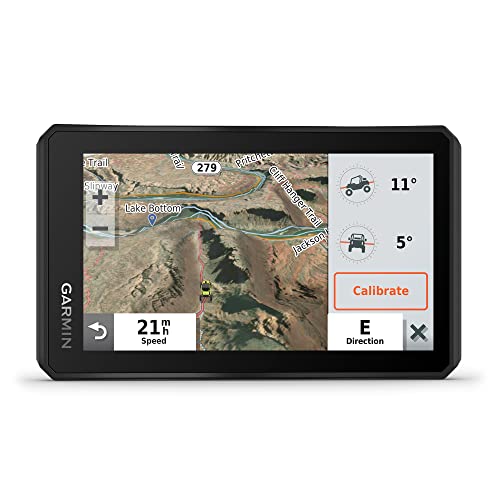 |
Garmin Tread Powersport Off-Road Navigator Best Overall 5.5-inch glove-touch display, IP67 rated, Group Ride Radio, preloaded topo and public land maps |
9.5 | 🛒 Check Price |
 |
Magellan TRX7 CS Pro Trail GPS Navigator Best Trail Database 7-inch rugged touchscreen, IP67 waterproof, 160,000+ preloaded off-road trails, Wi-Fi enabled |
9.2 | 🛒 Check Price |
 |
Garmin Montana 700i Rugged GPS Touchscreen Best for Remote Areas 5-inch sunlight-readable touchscreen, inReach satellite messaging, MIL-STD-810 durability |
9.0 | 🛒 Check Price |
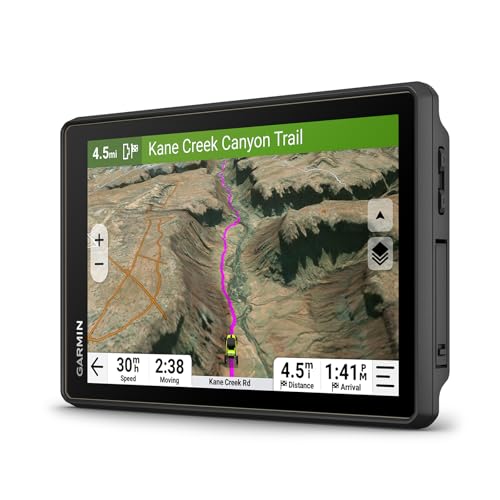 |
Garmin Tread Base Edition Powersport GPS Best Value Garmin 5.5-inch glove-touch display, IP67 rated, preloaded topo maps, BirdsEye satellite imagery |
8.8 | 🛒 Check Price |
 |
Garmin GPSMAP 67 Handheld GPS Navigator Best Battery Life Multi-band GNSS, up to 180-hour battery, 3-inch sunlight-readable display, IPX7 waterproof |
8.6 | 🛒 Check Price |
 |
Garmin Overlander Rugged Multipurpose Navigator Best On and Off-Road Mix 7-inch capacitive touchscreen, topo and street maps, IPX7 rated, satellite imagery support |
8.3 | 🛒 Check Price |
 |
Garmin eTrex SE Rugged Handheld GPS Best Compact Backup Multi-band GNSS, up to 168-hour battery, 2.2-inch display, IPX7 waterproof, AA powered |
8.0 | 🛒 Check Price |
1. Garmin Tread Powersport Off-Road Navigator: Best Overall
The Garmin Tread is the unit we would hand to a friend who wants to stop worrying about getting lost. It was designed from the ground up for off-road powersport riding, so the 5.5-inch display is genuinely bright enough to read with dusty goggles in the middle of the day, and it responds to a wet, gloved finger instead of fighting you. Preloaded topographic maps, trail data, and public land boundaries mean you can leave the trailhead and actually trust where the lines on the screen go.
The standout feature is Group Ride Radio. Paired with the right accessory, it shows everyone in your party as a moving icon, which is the single best way to keep a group together when there is no cell signal for miles. The honest weakness is the learning curve. There are a lot of menus, and the first ride or two will involve some head scratching before muscle memory kicks in. Map coverage is broad but not perfect everywhere, so check your home riding area before you fully rely on it.
- Bright 5.5-inch touchscreen readable in direct sunlight with gloves on
- Group Ride Radio shows fellow riders on the map without cell service
- Preloaded topographic maps plus public and private land boundaries
Pros: Built specifically for powersport and SxS use, not a repurposed car unit; Excellent group tracking that keeps the whole pack together off grid; Rugged mount and waterproof housing handle real trail abuse
Cons: Buttons and menus take time to learn; Maps for some regions need a separate download to fill gaps
2. Magellan TRX7 CS Pro Trail GPS Navigator: Best Trail Database
If your priority is having trails already loaded the moment you power on, the Magellan TRX7 CS Pro is hard to beat. It ships with a huge database of verified off-road trails, so in popular riding areas you can usually find a named route waiting for you instead of staring at a blank map. The 7-inch screen is a real advantage in a side-by-side, where a bigger display makes upcoming turns and trail splits obvious even when the ride gets rough.
It records your own tracks cleanly and lets you upload and download routes through the TRX rider community, which turns it into a discovery tool as much as a navigator. The trade-offs are size and software. This is a chunky unit, so plan your mounting spot accordingly, and the interface, while functional, looks and feels a generation behind the slickest competitors. Riders who care more about trail data than polish will not mind.
- Massive built-in library of over 160,000 verified off-road trails
- Large 7-inch screen with a tough, sealed waterproof housing
- Records your own tracks and shares them through the TRX community
Pros: One of the deepest preloaded trail databases for SxS riders; Big screen makes trail detail and turns easy to read at speed; Strong community trail sharing for discovering new routes
Cons: Bulkier and heavier than smaller handhelds; Software interface feels dated next to newer rivals
3. Garmin Montana 700i Rugged GPS Touchscreen: Best for Remote Areas
The Montana 700i earns its place for riders who go where help is genuinely far away. Its headline feature is built-in inReach satellite technology, which means you can send and receive text messages and trigger an SOS even when you are miles past the last cell tower. For solo SxS adventures or remote trail systems, that safety net is worth a lot. The 5-inch touchscreen is sunlight-readable and works with gloves, and the MIL-STD-810 rated body shrugs off the kind of punishment a trail day dishes out.
Battery life is strong enough for long days, and the rechargeable pack can be swapped for AA cells in a pinch, which is reassuring on multi-day trips. The honest catch is that the satellite features need an active subscription to work, so the safety functions carry an ongoing commitment. It also leans more toward general handheld navigation than purpose-built powersport trail mapping, so dedicated SxS users may want to supplement its maps.
- Built-in inReach two-way satellite messaging and SOS far from cell range
- Sunlight-readable 5-inch glove-friendly touchscreen
- Military-standard durability against shock, dust, and water
Pros: Satellite SOS and messaging add a true safety net deep in the backcountry; Extremely tough build survives serious abuse; Long battery life for full days away from power
Cons: Satellite messaging features require a separate subscription; Trail-specific maps are less detailed than dedicated powersport units
4. Garmin Tread Base Edition Powersport GPS: Best Value Garmin
The Tread Base Edition gives you the core of Garmin’s excellent powersport navigator without the extra hardware you may not need. You still get the bright 5.5-inch glove-friendly touchscreen, the IP67 waterproof and dustproof rating, and preloaded topographic maps with public land boundaries. For a lot of trail riders, that is exactly the right amount of GPS, and it represents strong value within the Tread lineup.
BirdsEye satellite imagery support is a genuine highlight, letting you overlay real terrain photos so you can scout washouts and clearings before you reach them. The clear compromise is that this model leaves off the Group Ride Radio that makes the flagship so good for keeping a pack together. If you usually ride with a crew that needs live position sharing, step up a tier. If you mostly ride solo or with one or two others who stay close, the Base Edition covers you well.
- Same rugged 5.5-inch powersport screen as the flagship Tread
- Preloaded topographic maps with public land boundary data
- BirdsEye satellite imagery support for a real view of the terrain
Pros: Excellent off-road durability and bright daylight visibility; Strong topo mapping without the extra radio hardware cost; Easy to mount and wire into a side-by-side
Cons: Drops the Group Ride Radio found on higher Tread models; Fewer connected features than the flagship version
5. Garmin GPSMAP 67 Handheld GPS Navigator: Best Battery Life
The GPSMAP 67 is the unit you grab when battery anxiety is the enemy. Garmin rates it for up to 180 hours, so a full weekend of riding will not leave you watching a dying meter. Its multi-band GNSS receiver locks on with impressive accuracy, which matters when you are deep in a canyon or under thick tree cover where lesser units drift or lose the trail entirely. The compact body is rugged, waterproof, and operates fine with muddy gloves.
Because it relies on physical buttons rather than a touchscreen, it makes an excellent reliable backup or a primary for riders who distrust touch input in the wet. That same choice is the downside for SxS use. The 3-inch screen and button navigation are less glanceable at speed than a big dash-mounted touchscreen, so many owners run it alongside a larger display rather than as their only navigator. As a rock-solid, accurate, long-lasting tracker, though, it is hard to fault.
- Multi-band GNSS for precise position under heavy tree canopy
- Marathon battery life rated up to 180 hours per charge
- Compact, glove-operable buttons that work soaked or muddy
Pros: Outstanding battery life for multi-day trail trips; Highly accurate tracking even in canyons and dense forest; Pocketable backup that pairs well with a dash-mounted screen
Cons: Button interface instead of a touchscreen; Smaller screen is harder to read at a glance while driving
6. Garmin Overlander Rugged Multipurpose Navigator: Best On and Off-Road Mix
The Overlander is the pick for riders whose adventure starts on the highway and ends on a trail. It carries full street maps for the drive out and topographic off-road maps for once you air down, all on a generous 7-inch capacitive touchscreen that is genuinely easy to read inside the cab. The built-in pitch and roll inclinometer and elevation readouts give you useful awareness on steep, technical climbs where knowing your angle matters.
It bridges the on-road and off-road worlds better than almost anything else, which is exactly the point. The honest weaknesses are sealing and size. The Overlander is rated for water resistance but is not built as tough against full submersion and mud as a dedicated powersport Tread, so the wettest, sloppiest rides ask a lot of it. The large screen also demands a solid mount in a side-by-side, and you will want it positioned to dodge the worst spray.
- Large 7-inch touchscreen covering both highway and off-road maps
- Preloaded topographic and street maps for trailer-to-trail trips
- Pitch and roll inclinometer plus elevation data for technical terrain
Pros: Smooth switch between paved navigation and off-road tracks; Big, clear screen that is easy to read in the cab; Inclinometer adds useful awareness on steep technical sections
Cons: Less waterproof sealing than dedicated powersport units; Large size needs a sturdy, well-placed mount
7. Garmin eTrex SE Rugged Handheld GPS: Best Compact Backup
The eTrex SE is the no-drama backup every SxS rider should consider tucking in a bag. It runs on standard AA batteries, so when your main unit dies you can swap cells from any gas station and keep going. The multi-band GNSS receiver is surprisingly accurate for such a small device, holding a track under canopy that would confuse older basic handhelds, and it is fully waterproof and glove-simple to operate.
This is not the unit you navigate complex trail networks on. The small screen and basic mapping mean it is best at the fundamentals: marking waypoints, recording your track so you can backtrack, and telling you which way is out. The lack of a touchscreen and rich preloaded trails is the obvious limitation, and it is a deliberate one. As an insurance policy that almost never fails and barely sips power, it does its job better than far more expensive gear.
- Runs on common AA batteries for easy field swaps
- Multi-band GNSS keeps tracking accurate under canopy
- Lightweight, pocketable, and simple to operate with gloves
Pros: Extremely reliable and simple to use; AA power means you are never stranded without a charge; Affordable entry into trustworthy off-grid tracking
Cons: Small monochrome-feeling display lacks rich trail detail; No touchscreen and minimal preloaded trail mapping
Frequently Asked Questions
Do I really need a dedicated GPS for SxS trail riding instead of my phone?
For casual rides on well-marked, well-traveled trails near town, a phone with an offline map app can get you by. The moment you head into real backcountry, the gap shows. Phones lose signal, overheat in the sun, drain fast, and rarely survive the vibration, dust, and water of a hard trail day. A dedicated off-road GPS keeps working with no cell service, reads clearly in bright sun, takes gloved and wet input, and is built to be bolted to a shaking machine for hours. If you ride remote trails or with a group, the dedicated unit pays for itself the first time you would otherwise have been lost.
What features matter most when picking a GPS for a side-by-side?
Start with screen visibility, because a display you cannot read in direct sunlight is useless on the trail. Next is glove-friendly operation, since you will rarely be bare-handed. After that, look at trail map coverage and whether public and private land boundaries are included so you stay on legal ground. Durability and a true waterproof rating like IP67 are non-negotiable for mud and stream crossings. Finally, if you ride with others, group tracking that works without cell service is the feature that keeps the whole pack together and is worth prioritizing.
How do group ride tracking features work without cell service?
Units like the Garmin Tread with Group Ride Radio use a short-range radio link between paired devices rather than relying on cell towers or the internet. Each rider in the group appears as a live moving icon on everyone else’s map, so you can see who is ahead, who fell behind, and where the group splits at a fork. Range depends on terrain, but within a typical riding group it is enough to prevent the constant stopping and waiting that ruins a ride. This is the single most useful feature for organized group rides in areas with no coverage.
Are off-road trails already loaded on these units, or do I have to add them?
It varies a lot by model. The Magellan TRX7 ships with one of the largest preloaded trail databases, with well over 160,000 off-road routes ready to go. Garmin Tread units come with topographic maps and public land boundaries preloaded, and you can layer in satellite imagery and downloadable map regions. Simpler handhelds like the eTrex carry basic base maps and expect you to record or import your own tracks. Before you buy, check that your specific riding areas are covered, since coverage is excellent in popular regions and thinner in obscure ones.
How should I mount and power a GPS in my SxS so it survives the trail?
Use a rugged ball-and-socket mount, such as a RAM-style mount, anchored to a solid point on the roll cage or dash rather than anything that flexes. Position the screen where you can glance at it without taking your eyes far off the trail, and angle it to dodge the worst spray and sun glare. Hardwire the unit to your machine’s power if you can, so it charges as you ride and you never lose navigation to a dead battery. Keep cable runs secured and away from pinch points, and choose a unit rated IP67 or better so dust and water crossings are a non-issue.
Our Verdict
For most SxS trail riders, the Garmin Tread Powersport Off-Road Navigator is the best all-around choice. It was built for exactly this job, with a bright glove-friendly screen, preloaded topo and land-boundary maps, and Group Ride Radio that keeps your whole crew together with no cell signal. If you want the deepest library of ready-to-ride trails out of the box, the Magellan TRX7 CS Pro is the runner up and a fantastic pick, with over 160,000 preloaded off-road routes on a large, easy-to-read screen. Choose the Tread for group rides and rugged everyday use, and the TRX7 if discovering new named trails is your priority.
More GPS Navigation Guides
Video Guide
Video: Related tutorial from YouTube