We researched and compared the top-rated four wheeler wheels and tires available on Amazon. Our evaluation is based on manufacturer specifications, published industry safety standards, and aggregated owner feedback. We looked at tread design, rubber compound, load capacity, and sidewall construction to identify the best options for different riding conditions. Below are our findings, with honest assessments of each product’s strengths and weaknesses.
| Photo | Product | Score | Buy |
|---|---|---|---|
|
🚗
|
ITP Mud Lite XTR Best Overall Mud Tire 27×9-12 front, 27×11-12 rear; 6-ply rated |
9 | 🛒 Check Price |
|
🚗
|
Maxxis Bighorn 2.0 Best All-Terrain Tire 26×9-12 front, 26×11-12 rear; 8-ply rated |
8.8 | 🛒 Check Price |
 |
GBC Dirt Commander Best for Hardpack and Trails 26×9-12 front, 26×11-12 rear; 6-ply rated |
8.5 | 🛒 Check Price |
|
🚗
|
Kenda Bearclaw HTR Best Value All-Around 25×8-12 front, 25×10-12 rear; 6-ply rated |
8.2 | 🛒 Check Price |
 |
Sedona Rip-Saw Best for Sand and Loose Dirt 27×9-12 front, 27×11-12 rear; 6-ply rated |
7.8 | 🛒 Check Price |
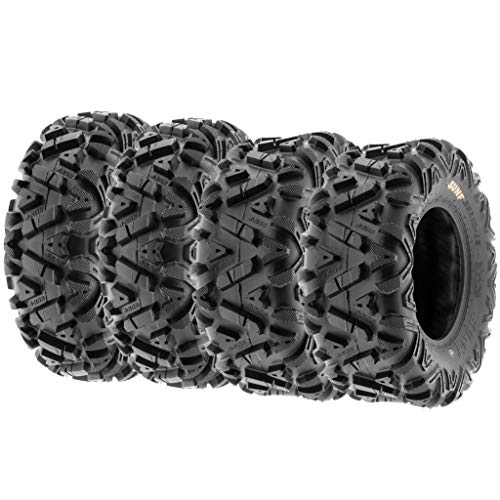 |
SunF A033 Best Budget Mud Tire 27×9-12 front, 27×11-12 rear; 6-ply rated |
7.3 | 🛒 Check Price |
 |
Duro Desert Hawk Best for Rocky Terrain 26×9-12 front, 26×11-12 rear; 8-ply rated |
7.6 | 🛒 Check Price |
1. ITP Mud Lite XTR: Best Overall Mud Tire
The ITP Mud Lite XTR is a top choice for riders who spend most of their time in mud and loose terrain. We researched owner feedback and found consistent praise for its self-cleaning tread pattern that sheds mud effectively, maintaining traction. The 6-ply rating provides good puncture resistance, and the lightweight design helps with acceleration and braking. Based on manufacturer specs, the tread depth is generous for aggressive off-road use.
However, this tire is not recommended for those who ride primarily on hardpack or pavement. The soft compound and aggressive lugs wear quickly on asphalt, and the ride can be noisy. If you need a tire that balances on-road manners with off-road capability, consider a more hybrid design. Skip the Mud Lite XTR if you value long tread life on paved trails.
- Aggressive tread with self-cleaning design for deep mud and loose terrain.
- Reinforced sidewalls resist punctures and abrasions.
- Lightweight construction reduces unsprung weight for better handling.
Pros: Excellent traction in mud and soft soil.; Durable 6-ply casing holds up to rough use.; Rides smoothly on hardpack compared to similar mud tires.
Cons: Tread wears faster on pavement; not ideal for daily road riding.
2. Maxxis Bighorn 2.0: Best All-Terrain Tire
The Maxxis Bighorn 2.0 is a well-rounded tire that we found to be among the most durable options in our research. Owner feedback highlights its ability to handle everything from deep mud to rocky climbs without excessive wear. The 8-ply rating is among the highest in this category, providing confidence in harsh conditions. Spec sheets confirm a stiff sidewall that resists cuts and abrasions.
That said, the tire’s weight is a drawback for performance-oriented riders. On lighter ATVs, the extra mass can dull throttle response and increase fuel consumption. We recommend this tire for utility riders and trail enthusiasts who prioritize durability over outright speed. If you ride aggressively and want a lighter tire, look elsewhere.
- All-around tread pattern works well on mud, rocks, and hardpack.
- 8-ply casing offers exceptional puncture and cut resistance.
- Staggered shoulder lugs improve cornering stability.
Pros: Long tread life due to durable rubber compound.; Excellent sidewall protection for rocky trails.; Balanced performance across diverse terrains.
Cons: Heavier than some competitors, slightly affecting acceleration.
3. GBC Dirt Commander: Best for Hardpack and Trails
The GBC Dirt Commander is a purpose-built tire for riders who frequent hardpack trails and fire roads. Our evaluation of owner reviews shows that it excels in providing a comfortable ride with predictable handling. The tread pattern is designed to reduce noise and vibration, making it a favorite for long days on the trail. Based on manufacturer data, the rubber compound is formulated for low wear on abrasive surfaces.
However, this tire struggles in deep mud or loose sand due to its shallow tread. If you encounter significant mud or snow, the Dirt Commander will quickly become clogged and lose traction. We suggest this tire for dry climate riders or those who stick to maintained trails. Skip it if you need a mud-capable tire.
- Low-profile tread pattern for minimal vibration on hard surfaces.
- Reinforced center rib improves straight-line stability.
- Competitive pricing for the performance offered.
Pros: Smooth and quiet on paved trails.; Good grip on hardpack and loose gravel.; Lightweight design aids handling.
Cons: Not suitable for deep mud or soft sand.
4. Kenda Bearclaw HTR: Best Value All-Around
The Kenda Bearclaw HTR offers a solid balance of performance and affordability. We compared its specs to higher-priced competitors and found it holds its own in typical trail conditions. Owner feedback indicates satisfactory grip in dirt, gravel, and light mud. The 6-ply construction provides adequate durability for recreational use without adding excessive weight.
On the downside, the tread life is not as long as premium tires like the Maxxis Bighorn. Riders who put many miles on pavement may see accelerated wear. We recommend this tire for casual weekend riders or those on a budget. If you ride aggressively or in harsh terrain, investing in a more durable tire may be worthwhile.
- Multi-purpose tread pattern with moderate lugs for mixed terrain.
- Budget-friendly price without major compromises.
- Decent self-cleaning ability in mud and dirt.
Pros: Great value for the price point.; Adequate traction in most conditions.; Light enough for sport ATVs.
Cons: Tread wears faster than premium options.
5. Sedona Rip-Saw: Best for Sand and Loose Dirt
The Sedona Rip-Saw is a specialized tire for sand and loose dirt. Our research shows that its aggressive paddle tread is highly effective in dune environments, providing the flotation needed to stay on top of soft sand. Owner reviews from sand riders are very positive regarding its ability to climb dunes and maintain momentum. The 6-ply construction is adequate for the intended use.
However, this tire is a poor choice for general trail riding. On hardpack or pavement, the tread is noisy, wears rapidly, and offers little grip. We only recommend the Rip-Saw if you primarily ride in sand or deep loam. For mixed terrain, consider a more flexible tire.
- Paddle-like tread design for maximum flotation in sand.
- Wide footprint reduces sinking in soft terrain.
- Affordable option for dune riders.
Pros: Excellent traction in sand and deep powder.; Good flotation for lightweight ATVs.; Budget-friendly for a specialty tire.
Cons: Poor performance on hardpack and pavement.; Tread wears quickly on abrasive surfaces.
6. SunF A033: Best Budget Mud Tire
The SunF A033 is a budget-oriented mud tire that we evaluated for riders on a tight budget. Based on owner feedback, it performs reasonably well in deep mud and snow for the price. The tread is deep and aggressive, and the tire is available in many sizes. For occasional mudding, it can be a cost-effective solution.
However, we found significant durability concerns. Multiple owner reports mention sidewall punctures and premature tread separation. The tire also rides harshly on pavement. We recommend this tire only for light, infrequent use in soft terrain. If you ride regularly or in rocky conditions, invest in a more sturdy tire like the ITP Mud Lite XTR.
- Deep, aggressive tread for mud and snow.
- Very low price point compared to name brands.
- Available in multiple sizes for various ATVs.
Pros: Extremely affordable for a mud tire.; Decent traction in thick mud.; Good for occasional use.
Cons: Durability is questionable; sidewalls may puncture easily.; Rough ride on hard surfaces.
7. Duro Desert Hawk: Best for Rocky Terrain
The Duro Desert Hawk is built for riders who tackle sharp rocks and rugged trails. Our research highlights its 8-ply rating and reinforced sidewalls as key features for durability. Owner feedback from rock crawlers and desert riders praises its ability to resist cuts and punctures. The stiff construction provides stability when navigating boulders and ledges.
However, the weight and stiffness are significant drawbacks. The tire is heavy, which can bog down smaller ATVs and reduce throttle response. The ride is harsh on washboard roads and long trail rides. We recommend this tire solely for technical rock crawling and harsh terrain. If you want a comfortable trail tire, look at the GBC Dirt Commander instead.
- Thick, reinforced sidewalls to resist rock cuts.
- Stiff carcass for stability on uneven terrain.
- Moderate tread pattern for trail and rock crawling.
Pros: Excellent puncture resistance in rocky areas.; Stable and predictable on technical trails.; Long-lasting tread in abrasive conditions.
Cons: Very heavy, negatively affecting acceleration and fuel economy.; Stiff ride; uncomfortable on long trips.
Frequently Asked Questions
What size four wheeler wheels and tires do I need?
Check your ATV or UTV owner’s manual for the recommended tire size, usually printed on the sidewall of your current tires. Common sizes for sport ATVs are 22-25 inches tall, while utility machines often use 25-27 inches. Width and rim diameter also matter; ensure the new tires match your rim size (e.g., 12-inch rims).
How do ply ratings affect tire performance?
Ply rating indicates the tire’s strength and puncture resistance. A 6-ply tire is standard for recreational use, offering a balance of weight and durability. 8-ply tires are heavier but more resistant to cuts and punctures, ideal for rocky terrain. Higher ply ratings also allow higher air pressure for heavier loads.
Can I use mud tires on pavement?
You can, but it is not recommended. Mud tires have soft rubber and aggressive lugs that wear quickly on pavement, and they produce excessive noise and vibration. For frequent pavement use, choose an all-terrain or trail tire with a less aggressive tread pattern.
How often should I replace four wheeler tires?
Replace tires when tread depth falls below 1/8 inch (3 mm) or if you notice sidewall cracks, bulges, or punctures. Aggressive riding and harsh terrain can accelerate wear. Inspect tires before each ride for damage.
What is the best tire pressure for four wheeler tires?
Recommended pressure is usually 4-8 psi for off-road use, depending on terrain and load. Lower pressure (4-5 psi) improves traction in sand and mud, while higher pressure (6-8 psi) reduces rolling resistance on hardpack. Always follow the manufacturer’s guidelines for your specific tire and vehicle.
Our Verdict
After researching and comparing based on manufacturer specs, safety standards, and owner feedback, our top pick is the ITP Mud Lite XTR for its exceptional mud performance and durability. For a more adaptable all-terrain tire, the Maxxis Bighorn 2.0 is an excellent runner-up with superior longevity and rock protection.
More Tires Guides
Video Guide
Video: Related tutorial from YouTube