A camping trip lives or dies by your power supply. Run a 12V fridge, charge phones, power LED lights, and keep a fan going overnight, and a weak battery will quit on you by the second night. A proper deep cycle battery is built to be drained deep and recharged hundreds or thousands of times, which is exactly what off-grid camping demands. The wrong battery, by contrast, sulfates, sags under load, and dies young.
We compared the most popular deep cycle options buyers actually reach for, from lightweight LiFePO4 lithium packs to rugged sealed AGM units. We looked at real usable capacity, weight you have to lift into a van or trailer, cold-weather behavior, recharge speed, and how each one holds up to repeated deep discharges. Here are the seven that earned a spot, ranked best first.
| Photo | Product | Score | Buy |
|---|---|---|---|
 |
Battle Born LiFePO4 100Ah Deep Cycle Battery Best Overall 100Ah LiFePO4, 100A continuous, around 31 lbs, built-in BMS, 3000 to 5000 cycles |
9.5 |
ⓘ We may earn a commission from qualifying purchases made through links on this page, at no extra cost to you.
|
 |
Renogy 12V 100Ah LiFePO4 Smart Lithium Battery Best Value Lithium 100Ah LiFePO4, Bluetooth app monitoring, self-heating option, around 26 lbs |
9.3 | 🛒 Check Price |
 |
Weize 12V 100Ah Deep Cycle AGM Battery Best AGM Value 100Ah AGM sealed lead-acid, maintenance-free, around 63 lbs, spill-proof |
9.0 | 🛒 Check Price |
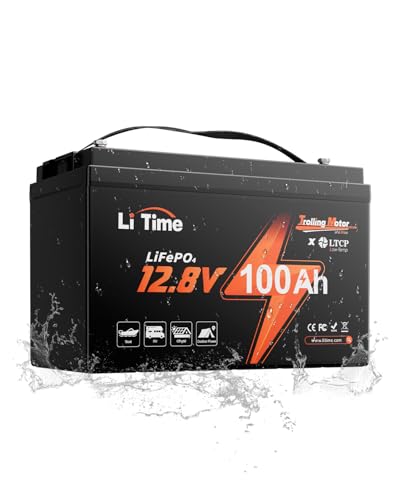 |
Ampere Time 12V 100Ah LiFePO4 Battery Best Lightweight Lithium 100Ah LiFePO4, 100A BMS, around 24 lbs, 4000 plus cycles |
8.9 | 🛒 Check Price |
 |
Universal Power Group UB121000 12V 100Ah AGM Battery Most Multi-purpose AGM 100Ah AGM, nut-and-bolt terminals, around 60 lbs, mounts in any position |
8.7 | 🛒 Check Price |
 |
ExpertPower 12V 100Ah LiFePO4 Deep Cycle Battery Best Entry Lithium 100Ah LiFePO4, BMS protected, around 22 lbs, 2500 to 7000 cycles |
8.4 | 🛒 Check Price |
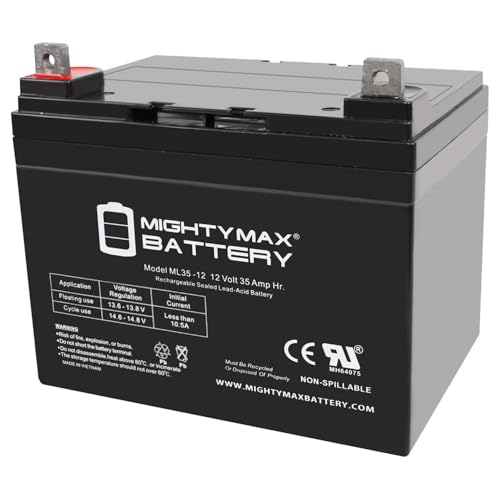 |
Mighty Max ML35-12 12V 35Ah Deep Cycle AGM Battery Best Compact Pick 35Ah AGM, around 23 lbs, compact footprint, spill-proof sealed design |
8.0 | 🛒 Check Price |
1. Battle Born LiFePO4 100Ah Deep Cycle Battery: Best Overall
The Battle Born 100Ah is the battery we kept coming back to for serious camping. Because it’s LiFePO4, you can use nearly the entire 100Ah rated capacity without harming the cells, where an AGM battery of the same number realistically gives you about half before you damage it. That means this one battery does the work of two lead-acid units while weighing around 31 pounds, which makes a real difference when you’re lifting it into a rooftop tent setup or a cramped van compartment.
The built-in BMS is the quiet hero here, cutting power before you over-discharge and shrugging off the kind of abuse that kills cheaper packs. The honest weakness is cold-weather charging. The standard model doesn’t include internal heating, so charging in sub-freezing temperatures needs a heated battery box or a model with cold protection. If you camp in deep winter regularly, plan around that. For three-season off-grid use, it’s as close to set and forget as deep cycle batteries get.
- Full 100Ah usable capacity since LiFePO4 can be safely drained near empty
- Built-in battery management system protects against over-discharge, overcharge, and short circuits
- Sealed, non-toxic, and safe to mount in any orientation including inside a tent or sleeping area
Pros: Massive cycle life that outlasts several AGM batteries over its lifetime; Roughly a third the weight of a comparable lead-acid battery; Holds voltage flat under load so your fridge and inverter stay stable
Cons: Premium pricing that takes time to pay back versus AGM; Charging below freezing requires care unless paired with a heated model
2. Renogy 12V 100Ah LiFePO4 Smart Lithium Battery: Best Value Lithium
Renogy has become the go-to brand for campers who want lithium performance without the steepest entry point, and this 100Ah Smart battery is why. The Bluetooth app is genuinely useful in the field, letting you check exactly how much charge is left from your phone instead of staring at a voltmeter and doing mental math. For a multi-day trip where you’re rationing power between a fridge and devices, that visibility is worth a lot. At roughly 26 pounds it’s also one of the easier full-size units to carry.
The self-heating version solves the winter charging problem that limits a lot of lithium batteries, which makes Renogy more flexible than it first appears. The catch is the app itself. The Bluetooth link occasionally drops and forces a reconnect, and the interface isn’t the most polished. None of that affects the battery’s actual power delivery, which stays flat and reliable, but if you expect flawless software it can nag. As a value pick for off-grid camping, it’s hard to beat.
- Bluetooth app shows state of charge, voltage, and cell health in real time
- Self-heating function on the heated version allows charging in cold conditions
- Up to 4000 cycles with stable output across the full discharge range
Pros: Strong lithium performance at a friendlier price than premium rivals; App monitoring removes the guesswork about remaining runtime; Light enough for portable battery box builds
Cons: App connection can drop and need a reconnect now and then
3. Weize 12V 100Ah Deep Cycle AGM Battery: Best AGM Value
If you want a true deep cycle battery without stepping into lithium pricing, the Weize 100Ah AGM is the one most campers land on. AGM chemistry is sealed and maintenance-free, so there’s no acid to top off and nothing to spill when you bounce down a forest road. It charges with the same gear you likely already own, which keeps the whole setup simple and familiar for anyone coming from a standard car battery.
The honest tradeoff is physics. At more than 60 pounds it’s roughly double the weight of a lithium 100Ah, and like all lead-acid batteries you should only use about half of that rated capacity if you want it to last. So a 100Ah AGM realistically delivers what a 50Ah lithium does in usable terms. For weekend campers with a modest fridge and lights, that’s fine and the value is excellent. For long off-grid stretches or weight-sensitive builds, the math pushes you toward lithium.
- Sealed AGM design means no watering, no fumes, and no spills
- Handles vibration and rough trail travel without leaking
- Works with standard lead-acid chargers most campers already own
Pros: Accessible pricing that lowers the barrier to a real deep cycle setup; Drop-in compatibility with existing AGM charging gear; Reliable steady performance for moderate power draws
Cons: Heavy to lift at over 60 pounds; Usable capacity is roughly half the rated number to protect longevity
4. Ampere Time 12V 100Ah LiFePO4 Battery: Best Lightweight Lithium
Ampere Time, now also sold under the LiTime name, built a reputation on giving campers lithium capacity at a weight that makes van and trailer builds easier. At around 24 pounds this 100Ah is among the lightest full-size options here, and that matters when you’re mounting it high in a rig or carrying a battery box to a remote tent site. The BMS handles deep discharges safely and the cells hold voltage flat, so devices and inverters behave predictably right down to a low state of charge.
It pairs naturally with portable solar, which is the whole point for off-grid campers who want to recharge from the sun rather than an engine or shore power. The two compromises to know about: there’s no built-in Bluetooth, so you monitor it with an external meter, and customer service can be slow if you ever need a replacement. The battery itself is solid and the value is real, but factor in that support gap before you buy in bulk for a big build.
- One of the lightest full-size 100Ah batteries for portable builds
- Grade A cells with a 100A protective BMS for safe deep discharge
- Compatible with most lithium-ready solar charge controllers
Pros: Very light for its capacity, easy to move between vehicles; Smooth, flat voltage delivery under fridge and inverter loads; Pairs cleanly with portable solar for true off-grid recharging
Cons: No Bluetooth monitoring built in; Customer support response can be slow if a unit needs service
5. Universal Power Group UB121000 12V 100Ah AGM Battery: Most Flexible AGM
The UPG UB121000 is a workhorse AGM that shows up in everything from camping power stations to trolling motor setups, and that versatility is its main appeal. The universal nut-and-bolt terminals accept a broad selection of connectors, so it drops into existing RV and camper wiring without hunting for adapters. Being sealed AGM, it’s spill-proof and can mount in any position, including on its side in a tight compartment, and it shrugs off the vibration that comes with rough access roads.
This is dependable, no-drama power for campers who want a proven AGM and don’t want to fuss with chemistry they don’t know. The limits are the familiar lead-acid ones. It’s heavy at around 60 pounds, and its cycle life is a fraction of what a LiFePO4 battery delivers, so over many seasons of deep discharges it’ll need replacing sooner. If your trips are occasional and your loads moderate, it’s a sensible and broadly available pick. For heavy off-grid use, lithium earns its keep.
- Universal terminals fit a broad selection of camping and RV wiring setups
- Sealed AGM construction is spill-proof and mounts in any orientation
- Withstands vibration and shock from trail and off-road travel
Pros: Widely compatible terminals simplify wiring; Trusted, long-standing brand with broad availability; Solid choice for trolling motors and dual camping use
Cons: Heavy lead-acid weight; Lower cycle life than lithium over the long run
6. ExpertPower 12V 100Ah LiFePO4 Deep Cycle Battery: Best Entry Lithium
ExpertPower offers one of the friendliest ways to make the jump from lead-acid to lithium, and for a lot of campers that’s exactly the right move. At around 22 pounds it’s featherweight next to an AGM of the same capacity, and the LiFePO4 chemistry means you actually get to use nearly all of the 100Ah. For a typical camping load of a 12V fridge, LED lighting, fans, and device charging, it delivers stable, reliable power and recharges quickly from solar or a lithium charger.
Where it asks you to be realistic is the discharge rating. This battery is tuned for moderate, steady draws rather than powering a large inverter running a high-wattage appliance, so check your peak loads before relying on it for heavy gear like an electric kettle or microwave. There’s also no Bluetooth, so monitoring is external. Within its lane of light to moderate off-grid camping, it’s a genuinely good value and an easy first lithium battery.
- Light and compact for an easy upgrade from a lead-acid setup
- BMS guards against over-discharge, overcharge, and overheating
- Long cycle rating for the price tier it sits in
Pros: Approachable entry into lithium for budget-minded campers; Notably light, which simplifies installation; Stable output for fridges, lights, and small inverters
Cons: Continuous discharge rating suits lighter loads, not big inverters; No app or Bluetooth monitoring
7. Mighty Max ML35-12 12V 35Ah Deep Cycle AGM Battery: Best Compact Pick
Not every camper needs a 100Ah brick. For solo trips, small tent setups, or a backup power source, the Mighty Max ML35-12 hits a sweet spot. At 35Ah and around 23 pounds it’s compact and easy to stow, and the sealed AGM design means you can mount it in any position without worrying about leaks. For running LED lights, a small fan, and topping up phones and a tablet over a weekend, it does the job without taking over your pack space.
The thing to be clear-eyed about is capacity. This is a small battery, and it isn’t the unit for keeping a 12V fridge cold across several days, which will flatten it fast. Treat it as a light-duty or backup power source and it shines, especially paired with a small solar panel for slow daytime top-ups. Ask it to run heavy loads and it disappoints, but that’s using the wrong tool. For minimalist camping and emergency reserve power, it’s the right-sized, dependable choice that rounds out our list.
- Small and light enough for solo backpackers and minimalist tent setups
- Sealed AGM is spill-proof and mounts in any position
- Wide compatibility with small solar panels and trickle chargers
Pros: Compact size fits tight spaces and lightweight loadouts; Affordable way to power lights, fans, and phone charging; Maintenance-free and easy for first-timers to manage
Cons: Limited capacity isn’t enough for a 12V fridge over multiple days; Lead-acid cycle life trails lithium options
Frequently Asked Questions
What size deep cycle battery do I need for camping?
It depends on what you’re running and for how long. Add up the amp draw of your devices over a day. A 12V fridge typically pulls 30 to 60 amp-hours per day, and lights, fans, and device charging add more on top. For a weekend with a fridge, most campers want at least a 100Ah battery. Remember that an AGM battery only safely gives about half its rated capacity, so a 100Ah AGM behaves like 50Ah usable, while a 100Ah LiFePO4 gives you close to the full 100Ah. If you camp longer or run more gear, size up or add a second battery, and pair it with solar to recharge during the day.
Is LiFePO4 lithium or AGM better for camping?
LiFePO4 lithium wins on almost every metric that matters off-grid: it weighs about a third as much, gives you nearly all of its rated capacity, recharges faster, and lasts thousands of cycles instead of hundreds. AGM wins on upfront price and on cold-weather charging, since standard lithium shouldn’t be charged below freezing without a heated model. For frequent campers, van builds, or anyone watching weight, lithium pays for itself over time. For occasional weekend trips on a tighter budget, a quality AGM like the Weize 100Ah is still a solid, dependable choice.
Can I charge a deep cycle camping battery with solar panels?
Yes, and for true off-grid camping it’s the ideal setup. You connect your solar panels to a charge controller, which regulates the voltage going into the battery, then the controller connects to the battery. For lithium batteries, use a charge controller set to a lithium or LiFePO4 profile so it charges to the correct voltage. A common rule of thumb is to match your panel wattage to your daily usage so the sun replaces roughly what you draw overnight. Most of the lithium picks here pair cleanly with portable solar for repeatable off-grid recharging.
How long will a deep cycle battery last on a camping trip?
Runtime depends on capacity and load. As a rough example, a 100Ah LiFePO4 battery running a 12V fridge that draws about 40 amp-hours per day, plus some lights and phone charging, can comfortably last a couple of days before needing a recharge. The same job on a 100Ah AGM gives you closer to one day of safe use because you shouldn’t drain it past half. Add solar and you can extend that almost indefinitely in good sun. Over the battery’s lifetime, a quality LiFePO4 can deliver thousands of charge cycles, which translates to many camping seasons.
Can I use a deep cycle battery in cold weather?
You can discharge most deep cycle batteries in the cold, but charging is the concern with lithium. Standard LiFePO4 batteries shouldn’t be charged below freezing, as it can damage the cells. The fix is a self-heating model, like the heated version of the Renogy 100Ah, which warms the cells before accepting a charge, or keeping the battery in an insulated, heated box. AGM batteries can charge in the cold but lose some capacity in low temperatures. If you camp in winter regularly, choose a heated lithium model or plan your charging for the warmer part of the day.
Our Verdict
For the best all-around camping power, the Battle Born LiFePO4 100Ah is our top pick: it combines full usable capacity, light weight, a protective BMS, and a cycle life that quietly outlasts a stack of AGM batteries, making it the unit you buy once and forget. Our runner up is the Renogy 12V 100Ah LiFePO4 Smart battery, which delivers nearly the same off-grid muscle plus handy Bluetooth monitoring and a self-heating option, at a friendlier entry point. If lithium isn’t in the cards yet, the Weize 100Ah AGM remains a dependable, accessible way to get a real deep cycle setup under your camp.

