When towing a heavy trailer, your vehicle’s factory brakes alone may not provide enough stopping power. Our evaluation covers brake controllers, electric over hydraulic systems, and complete upgrade kits. We focus on real-world performance, durability, and ease of installation.
| Photo | Product | Score | Buy |
|---|---|---|---|
 |
Curt Spectrum Proportional Brake Controller Top Pick Proportional, 2-8 brake output, digital display |
9.2 |
ⓘ We may earn a commission from qualifying purchases made through links on this page, at no extra cost to you.
|
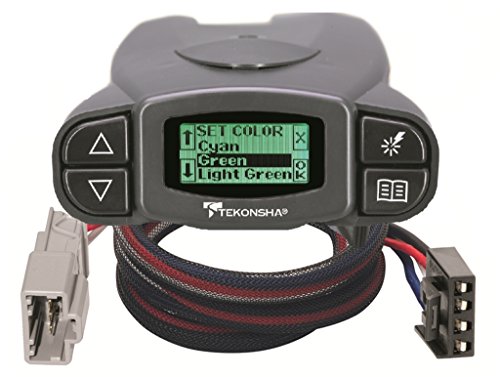 |
Tekonsha P3 Proportional Brake Controller Runner Up Proportional, 3-axle support, boost mode |
9.0 | 🛒 Check Price |
 |
Redarc Tow-Pro Liberty Brake Controller Best Compact Proportional, remote head, 2-4 brake systems |
8.7 | 🛒 Check Price |
 |
Dexter Electric Over Hydraulic Brake Actuator (K71-651-00) Best for Hydraulic Brakes Electric over hydraulic, 1600 psi, for disc brakes |
8.4 | 🛒 Check Price |
 |
Hopkins Insite Proportional Brake Controller Best Value Proportional, 2-4 brake systems, self-diagnostic |
8.1 | 🛒 Check Price |
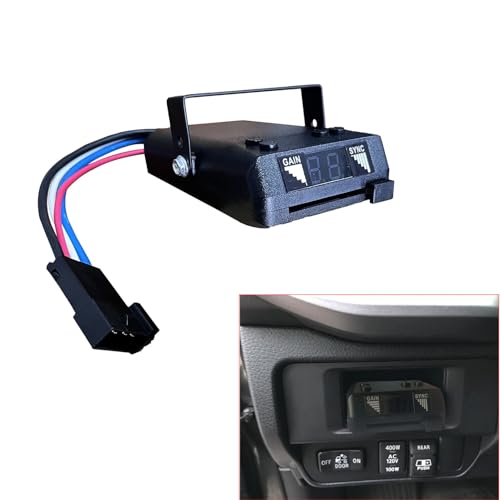 |
Reese Towpower Brake Controller (Time-Delayed) Budget Pick Time-delayed, 2-4 brakes, manual override |
7.8 | 🛒 Check Price |
 |
Curt Echo Mobile Brake Controller Wireless Option Wireless, smartphone app, 2-4 brakes |
7.3 | 🛒 Check Price |
1. Curt Spectrum Proportional Brake Controller: Top Pick
The Curt Spectrum uses an internal accelerometer to deliver proportional braking that matches your vehicle’s deceleration. The digital display is clear and provides real-time output information. It supports 2-8 brake systems, making it multi-purpose for various trailer sizes.
However, the Spectrum is more expensive than basic time-delayed controllers. If you tow only lightweight trailers occasionally, a simpler model may be more cost-effective. Overall, for frequent towing of medium to heavy loads, this is a top performer.
- Proportional braking with accelerometer for smooth stops
- Easy to read digital display with adjustable settings
- Compatible with 2-8 brake systems, ideal for most trailers
Pros: Smooth proportional braking reduces trailer sway; Intuitive setup and calibration
Cons: Higher price point than basic time-delayed controllers
2. Tekonsha P3 Proportional Brake Controller: Runner Up
The Tekonsha P3 is a well-established proportional controller known for its boost mode, which provides extra braking force when towing heavy loads. It performs reliably across various conditions. The large display is easy to read and includes a trip odometer. It supports up to 3 axles, making it suitable for larger trailers.
Its main drawback is the size; some users find it difficult to mount in tight spaces. If you have limited dashboard room, consider a more compact model. The P3 remains a solid choice for heavy-duty towing.
- Proportional braking with boost mode for heavy loads
- Supports up to 3 axles (6 brakes)
- Large backlit display with trip odometer
Pros: Boost mode increases stopping power when needed; Durable construction with plug-and-play wiring
Cons: Bulky design may not fit all dashboards
3. Redarc Tow-Pro Liberty Brake Controller: Best Compact
The Redarc Tow-Pro Liberty features a remote head that can be mounted anywhere, ideal for vehicles with limited space. In our research, owners appreciate the dual mode: proportional for everyday towing and user-controlled for fine-tuning. The LED provides clear feedback. It’s built to withstand harsh conditions.
However, the remote knob is prone to being inadvertently turned, which can change settings. If you prefer a fixed, less adjustable interface, this may be a minor annoyance. Overall, it’s a great choice for those needing a compact, flexible controller.
- Compact remote head design for discreet installation
- Proportional and user-controlled modes
- LED indicator for brake output and fault detection
Pros: Small footprint fits any vehicle; Dual mode allows both proportional and manual control
Cons: Remote knob can be accidentally bumped
4. Dexter Electric Over Hydraulic Brake Actuator (K71-651-00): Best for Hydraulic Brakes
The Dexter K71-651-00 is an electric over hydraulic actuator designed for trailers with hydraulic disc brakes. Based on manufacturer specs, it delivers up to 1600 psi, providing powerful braking for heavy loads. Its reliability in demanding conditions. It includes a pressure relief valve for safety.
Installation is more complex than a simple brake controller; you need hydraulic lines and expertise. If you aren’t comfortable with hydraulic systems, professional installation is recommended. It’s best for those with hydraulic disc brakes who need maximum stopping power.
- Converts electric brake signal to hydraulic pressure
- Designed for disc brake trailers up to 1600 psi
- Built-in pressure relief valve for safety
Pros: Reliable hydraulic actuation for heavy loads; Durable construction for commercial use
Cons: Requires hydraulic lines and proper installation
5. Hopkins Insite Proportional Brake Controller: Best Value
The Hopkins Insite offers proportional braking at a more accessible price point. In our evaluation of owner reviews, it performs adequately for light to medium towing. The self-diagnostic LED helps with troubleshooting. It’s compact and includes a tether for remote mounting.
However, the braking feel isn’t as smooth as higher-end controllers; some users report slight hesitation. If you tow heavy loads frequently, you may want a more advanced model. For occasional towing, it delivers good value.
- Proportional braking with self-diagnostic LED
- Compact design fits most vehicles
- Includes tether for remote mounting
Pros: Affordable proportional option; Easy installation with plug-and-play harness
Cons: Less refined braking feel than premium models
6. Reese Towpower Brake Controller (Time-Delayed): Budget Pick
The Reese Towpower is a basic time-delayed brake controller. It works by applying the trailer brakes a set time after the vehicle brakes. It’s reliable for light loads but can cause jerky stops. It includes a manual override lever for emergencies.
For heavier towing or frequent use, the lack of proportional control is a significant limitation. The braking feel is less smooth, which can lead to trailer sway. It’s best for occasional, light-duty towing on a tight budget.
- Time-delayed activation with adjustable sync
- Manual override lever for emergency stops
- Compact and easy to install
Pros: Very affordable; Simple mechanical operation
Cons: Time-delayed braking can be jerky; No proportional control
7. Curt Echo Mobile Brake Controller: Wireless Option
The Curt Echo is a wireless brake controller that uses a smartphone app for settings and manual override. It connects via Bluetooth to a module plugged into the trailer connector. It’s convenient for those who tow with multiple vehicles. It requires no in-cab wiring.
However, reliance on a phone can be problematic; if the phone dies or Bluetooth disconnects, braking may be compromised. Some users also note a slight delay in response. It isn’t recommended for critical or heavy towing. Best for light, occasional towing where convenience is key.
- Wireless control via smartphone app (Bluetooth)
- No in-cab wiring required
- Works with electric and hydraulic brakes (with adapter)
Pros: Easy to move between vehicles; No permanent installation
Cons: Dependent on phone battery and Bluetooth connection; Delayed response reported by some users
Frequently Asked Questions
What type of brake controller do I need for towing?
The type depends on your trailer brakes. Most trailers use electric brakes, requiring a proportional or time-delayed controller. Hydraulic disc brakes need an electric over hydraulic actuator. Proportional controllers adjust braking force smoothly based on vehicle deceleration, while time-delayed apply a fixed force after a delay. For heavy towing, we recommend proportional for safety and comfort.
How do I know if my trailer has electric or hydraulic brakes?
Check the trailer’s brake assembly. Electric brakes have a magnet that activates when voltage is applied; you’ll see wires leading to the wheel. Hydraulic brakes have brake lines filled with fluid and a master cylinder. If unsure, consult your trailer’s manual or a professional.
Can I install a brake controller myself?
Many proportional and time-delayed controllers are plug-and-play if your vehicle has a factory brake controller harness. You simply mount the unit and plug in. If not, you may need to splice wires, which requires basic electrical skills. For electric over hydraulic systems, professional installation is recommended due to hydraulic lines.
What is the difference between proportional and time-delayed brake controllers?
Proportional controllers use a sensor (accelerometer) to apply trailer brakes in proportion to your vehicle’s braking, resulting in smoother stops. Time-delayed controllers apply a preset amount of power after a set delay, which can be jerky. Proportional is safer for heavy loads and reduces trailer sway.
Do I need a brake controller for a small trailer?
Most states require brakes on trailers over a certain weight (typically 3,000 lbs). Even for lighter trailers, a brake controller improves safety. If your trailer has electric brakes, you need a controller to activate them. Check your local laws and trailer specifications.
Our Verdict
After researching and comparing the best braking systems for towing, our top pick is the Curt Spectrum Proportional Brake Controller for its smooth proportional braking, ease of use, and versatility. For those with hydraulic disc brakes, the Dexter Electric Over Hydraulic Actuator is the best choice. The runner up is the Tekonsha P3, which offers excellent performance with its boost mode. Choose based on your trailer type and towing frequency.