Your motorcycle’s brakes only feel as good as the fluid inside the lines. A small, sealed hydraulic system means heat builds fast during hard stops, and old or cheap fluid soaks up moisture that drops its boiling point and turns a firm lever spongy. Choosing the right brake fluid is one of the easiest ways to sharpen lever feel, restore consistent bite and ride with confidence on the road or track.
We looked at the most trusted brake fluids riders actually run, judging them on dry and wet boiling points, how stable the lever stays after repeated hard stops, corrosion protection for calipers and master cylinders, and how cleanly each one bleeds. Below are our seven top picks, ranked best first, with honest notes on where each one shines and where it falls short.
| Photo | Product | Score | Buy |
|---|---|---|---|
 |
Motul RBF 660 Factory Line DOT 4 Racing Brake Fluid Best Overall DOT 4 racing, dry boiling point 617F, fully synthetic |
9.5 | 🛒 Check Price |
 |
Castrol React SRF Racing Brake Fluid Best for Track Days Racing fluid, very high wet boiling point 518F |
9.3 | 🛒 Check Price |
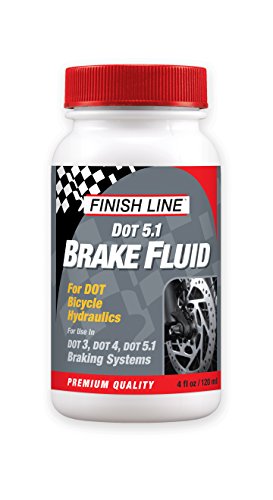 |
Maxima Racing DOT 5.1 Synthetic Brake Fluid Best DOT 5.1 DOT 5.1 synthetic, dry boiling point 509F, ABS compatible |
9.1 | 🛒 Check Price |
 |
Motul DOT 5.1 Brake Fluid Best for ABS Bikes DOT 5.1 synthetic, dry boiling point 518F, low viscosity |
8.9 | 🛒 Check Price |
 |
Bel-Ray Super DOT 4 Brake Fluid Best Everyday DOT 4 DOT 4 synthetic, dry boiling point 509F, anti-corrosion additives |
8.6 | 🛒 Check Price |
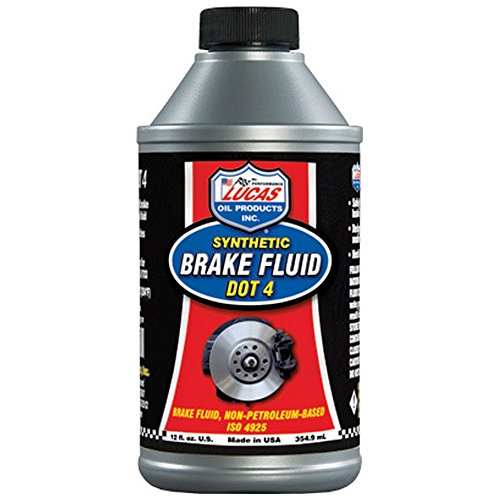 |
Lucas Oil DOT 3 and DOT 4 Brake Fluid Best Value DOT 3 and DOT 4 compatible, dry boiling point 460F minimum |
8.3 | 🛒 Check Price |
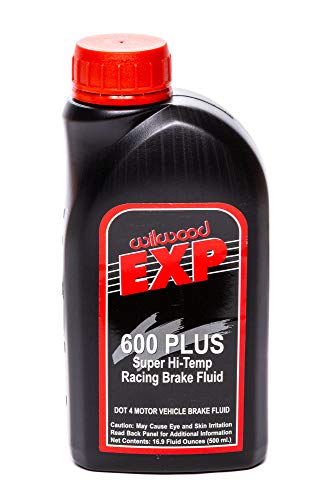 |
Wilwood EXP 600 Plus Racing Brake Fluid Best High Temp DOT 4 DOT 4 racing, dry boiling point 626F, low moisture absorption design |
8.1 | 🛒 Check Price |
1. Motul RBF 660 Factory Line DOT 4 Racing Brake Fluid: Best Overall
The Motul RBF 660 is our top pick because it delivers race grade heat resistance in a fluid that still works perfectly in a normal DOT 4 system. Its 617F dry boiling point means it shrugs off the heat that builds when you are dragging brakes down a mountain pass or hauling a sportbike down from speed repeatedly. The lever stays firm and predictable exactly when you need it most, and that confidence is why it has such a strong reputation among track riders.
The honest weakness is moisture. Because RBF 660 is a high performance ester based fluid, it draws in water faster than a standard street fluid, which lowers the wet boiling point over time. That means you should bleed and replace it more often than a budget fluid, ideally once a season if you ride hard. For a rider who rarely pushes the brakes, that maintenance demand is more than you need, but for spirited and track use it is the benchmark.
- Very high 617F dry boiling point for repeated hard stops
- Low compressibility for a firm, consistent lever
- Fully synthetic ester base resists fade under sustained heat
Pros: Outstanding heat resistance for track and aggressive road use; Keeps lever feel firm lap after lap; Trusted by racers and well documented
Cons: Absorbs moisture quickly so it needs more frequent changes; Overkill for a relaxed commuter who rarely brakes hard
2. Castrol React SRF Racing Brake Fluid: Best for Track Days
Castrol SRF is the fluid you reach for when even high end DOT 4 racing fluids are boiling. Its standout trait is the unusually high wet boiling point, which means that as the fluid inevitably absorbs moisture, it still resists fade far better than rivals. On a hot track day with back to back sessions, that translates to a lever that stays consistent when others have gone soft, and a noticeable margin of safety.
The catch is that SRF is a specialist product and it is not always easy to find on the shelf. For a daily rider or weekend cruiser the extra capability simply will not be tapped, and that is a fair criticism. But if you do regular track days or endurance riding and want the longest interval between worrying about your brakes, SRF earns its place near the very top.
- Exceptionally high 518F wet boiling point holds up as it ages
- Long service life between changes for a racing fluid
- Stable lever feel under extreme sustained braking
Pros: Best in class resistance to moisture related fade; Holds performance longer than most racing fluids; Reassuringly firm lever in extended hard use
Cons: Premium fluid with limited availability; More than most street riders will ever use
3. Maxima Racing DOT 5.1 Synthetic Brake Fluid: Best DOT 5.1
Maxima Racing DOT 5.1 is the smart pick for riders who want a higher boiling point than standard DOT 4 without leaving the glycol based family that their ABS and master cylinder seals were designed around. It is fully compatible with DOT 3 and DOT 4 systems, so you can top up or flush without a complete system overhaul, and the 509F dry boiling point gives a healthy margin for spirited street riding and the occasional track day.
The weakness is the one shared by every glycol fluid: it is hygroscopic, so it pulls in moisture and needs periodic replacement to keep performance up. It can also be a little harder to find than the ubiquitous DOT 4 bottles. Neither issue is unusual, and for anyone running ABS who wants extra thermal headroom, this is among the most sensible upgrades available.
- DOT 5.1 spec for high boiling point and ABS systems
- Backward compatible with DOT 3 and DOT 4 systems
- Synthetic formula with strong corrosion protection
Pros: High boiling point with modern ABS compatibility; Mixes safely with existing DOT 4 fluid; Good all round choice for street and light track
Cons: Like all glycol fluids it absorbs moisture over time; Can be harder to source than common DOT 4
4. Motul DOT 5.1 Brake Fluid: Best for ABS Bikes
Motul’s DOT 5.1 is built around the needs of modern motorcycles with ABS, where low viscosity matters so the pump can cycle fluid quickly and the system reacts cleanly in an emergency stop. With a high 518F dry boiling point and full compatibility with DOT 3 and DOT 4, it gives ABS riders a meaningful step up in thermal performance while keeping the smooth, predictable street manners you want every day.
It is not pitched as an extreme track fluid, so if you are running endurance sessions you would look higher up this list. And as a glycol fluid it remains hygroscopic, meaning the wet boiling point falls as it ages and a regular flush is part of ownership. For the large and growing group of riders on ABS equipped bikes, though, it is one of the easiest fluids to recommend.
- Low viscosity for quick, reliable ABS response
- High 518F dry boiling point for thermal headroom
- Compatible with DOT 3 and DOT 4 systems
Pros: Excellent match for modern ABS motorcycles; Strong boiling point for a street oriented fluid; Smooth, easy bleeding
Cons: Needs regular changes as moisture builds; Not aimed at extreme track temperatures
5. Bel-Ray Super DOT 4 Brake Fluid: Best Everyday DOT 4
Bel-Ray Super DOT 4 is a dependable, no drama choice for the rider who wants a quality motorcycle specific fluid without paying for race grade heat resistance they will never use. The 509F dry boiling point is plenty for street riding and the occasional hard stop, and the anti corrosion package is a real benefit on bikes that sit between rides, helping protect master cylinder bores, caliper pistons and seals from the inside.
Where it gives ground is at the top of the temperature range. If you do serious track work, the higher boiling racing fluids will hold up better when you are abusing the brakes session after session. For the vast majority of road riders, though, Super DOT 4 hits the sweet spot of performance, protection and easy availability, and it bleeds cleanly without fuss.
- Synthetic DOT 4 with a solid 509F dry boiling point
- Anti corrosion additives protect calipers and pistons
- Designed specifically for motorcycle hydraulic systems
Pros: Reliable everyday performance for street riders; Good corrosion protection for the whole brake system; Widely available and easy to use
Cons: Lacks the extreme heat ceiling of racing fluids; Standard moisture absorption over time
6. Lucas Oil DOT 3 and DOT 4 Brake Fluid: Best Value
Lucas Oil’s DOT 3 and DOT 4 fluid is the practical choice when you simply need clean, fresh fluid in the system on a regular schedule without overthinking it. It meets both DOT 3 and DOT 4 specifications, so it works across many older and current bikes, and it delivers the steady, predictable lever feel that everyday commuting and touring demand. The corrosion inhibitors help keep the internals healthy between services.
The trade off for that accessibility is a lower boiling point than dedicated racing fluids, so it is not the fluid to run if you are heating the brakes hard on a track. Used as intended, as a quality routine fluid for street bikes, it does exactly what it should and makes staying on top of brake maintenance painless.
- Meets both DOT 3 and DOT 4 standards for flexible use
- Stable, consistent feel for everyday riding
- Corrosion inhibitors protect seals and metal surfaces
Pros: Great value for routine flushes and top ups; Flexible across DOT 3 and DOT 4 systems; Easy to find and simple to use
Cons: Lower boiling point than premium DOT 4 racing fluids; Not intended for hard track use
7. Wilwood EXP 600 Plus Racing Brake Fluid: Best High Temp DOT 4
Wilwood EXP 600 Plus brings one of the highest dry boiling points on this list at 626F, making it a serious option for riders who push their brakes into temperatures that defeat ordinary fluids. It is engineered to resist moisture uptake better than many competing race fluids, which helps it hold its high temperature performance longer between changes, and the viscosity stays stable so the lever feel remains firm even when the brakes are glowing.
This is unapologetically a performance product, so a casual street rider is paying for capability that rarely gets used, and that keeps it lower in our ranking despite its impressive numbers. To get the best from it you still need a disciplined bleeding routine. For dedicated track and competition riders chasing the highest possible thermal ceiling, though, EXP 600 Plus is a genuine contender.
- Very high 626F dry boiling point for severe heat
- Formulated to resist moisture uptake better than typical racing fluid
- Stable viscosity across a wide temperature range
Pros: Among the highest dry boiling points available; Holds lever feel firm under extreme braking; Slower moisture absorption than many race fluids
Cons: Built for racing rather than everyday economy; Best results require disciplined bleeding schedule
Frequently Asked Questions
What type of brake fluid does my motorcycle need?
Always start with the cap of your master cylinder reservoir or your owner’s manual, because the correct DOT rating is stamped or printed right there. Most modern motorcycles call for DOT 4, while many ABS equipped bikes specify DOT 5.1, which is fully compatible with DOT 3 and DOT 4 glycol systems. The one fluid you must never mix in is DOT 5, which is silicone based and not compatible with glycol systems or standard ABS hardware. When in doubt, match or exceed the spec your manufacturer prints on the reservoir.
How often should I change my motorcycle brake fluid?
For most street riders, a full flush and bleed every one to two years is a sensible interval, because glycol brake fluid is hygroscopic and steadily absorbs moisture from the air even when you are not riding. That moisture lowers the boiling point and can lead to a spongy lever or fade under hard braking. If you ride aggressively or do track days, change it more often, ideally once per season, since high performance fluids absorb moisture faster and you are demanding far more from them.
Can I mix DOT 4 and DOT 5.1 brake fluid?
Yes, DOT 3, DOT 4 and DOT 5.1 are all glycol based fluids and can be safely mixed, so topping up a DOT 4 system with DOT 5.1 will not damage anything. The blended fluid simply takes on properties somewhere between the two. What you must never do is add DOT 5, which is silicone based and incompatible, into a glycol system. For the best and most predictable performance, though, a complete flush with a single fluid type is always preferable to mixing.
What is the difference between dry and wet boiling point?
The dry boiling point is measured with fresh, moisture free fluid straight from a sealed bottle, while the wet boiling point reflects fluid that has absorbed a defined amount of water, around three and a half percent, to simulate aged fluid in service. The wet figure matters most for real world safety because your fluid spends most of its life partway between the two. A fluid with a high wet boiling point resists fade better as it ages, which is exactly why racing fluids with strong wet numbers are valued.
Why does my brake lever feel spongy?
A spongy lever usually means there is air or moisture contaminated fluid in the system. Old fluid that has absorbed water boils more easily under heat, and that vapor compresses where solid fluid would not, giving that soft, vague feel at the lever. Air trapped from a poor bleed does the same thing. The fix is a proper flush with fresh fluid and a careful bleed to remove every bubble. If the sponginess persists, inspect for worn seals or a failing master cylinder.
Our Verdict
For most riders the Motul RBF 660 is our top pick, pairing a very high boiling point with firm, consistent lever feel that inspires confidence on road and track, all while working in a standard DOT 4 system. If you do regular track days and want the longest stretch between worrying about fade, the Castrol React SRF is the runner up thanks to its exceptional wet boiling point. Riders on ABS bikes should look hard at the Maxima or Motul DOT 5.1 options, while Bel-Ray Super DOT 4 and Lucas Oil cover everyday street duty perfectly well.
More Brakes Guides
Video Guide
Video: Related tutorial from YouTube