Finding the right braking system for your travel trailer or fifth wheel is critical for safety on the highway. We researched manufacturer specifications and aggregated owner feedback to identify the top controllers available. Our evaluation focuses on proportional response times, build durability, and ease of installation to ensure you stop with confidence.
We compared various models ranging from high-end digital units to budget-friendly time-delay options. This guide analyzes the performance differences and safety features to help you choose the correct device for your specific towing setup and vehicle configuration.
| Photo | Product | Score | Buy |
|---|---|---|---|
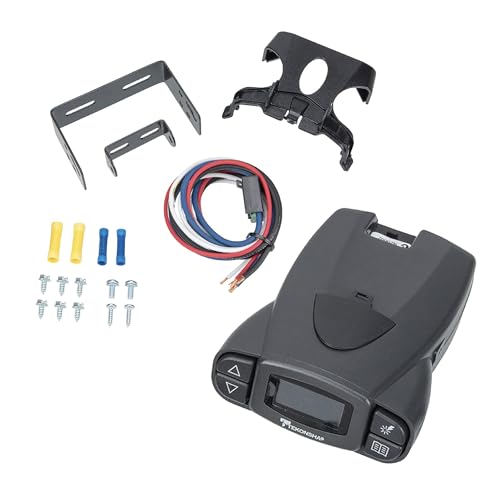 |
Tekonsha P3 Best Overall Proportional controller with LCD display |
9.4 | 🛒 Check Price |
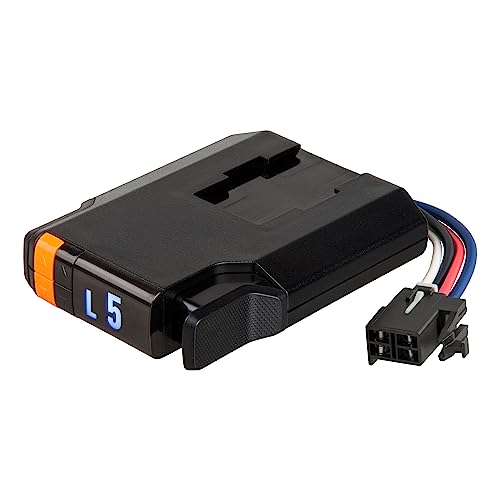 |
Curt Discovery Best Value Proportional with sliding adjustment |
8.8 | 🛒 Check Price |
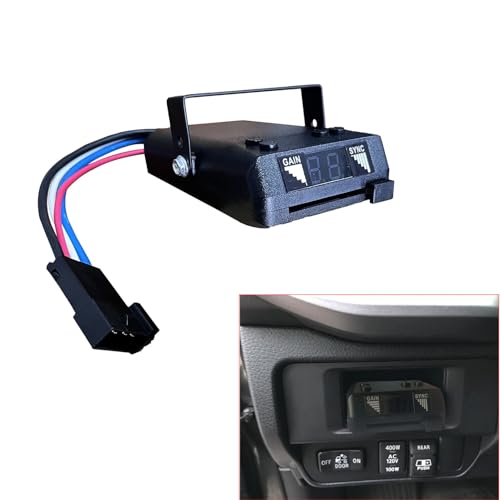 |
Reese Towpower Brakeman Reliable Pick Inertia-activated proportional |
8.5 | 🛒 Check Price |
 |
Hopkins InSight Innovative Display Multi-angle LCD display |
8.1 | 🛒 Check Price |
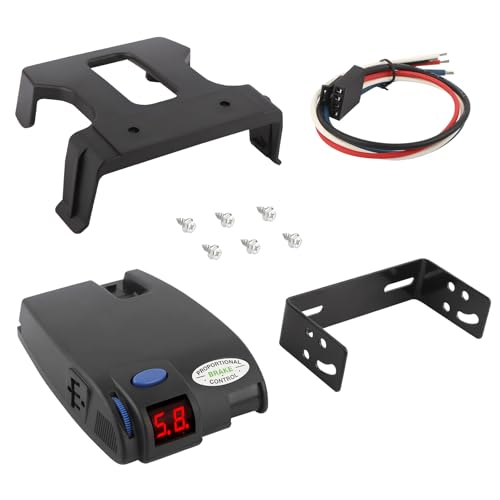 |
Tekonsha Primus IQ Budget Proportional Boost feature and self-diagnostics |
7.8 | 🛒 Check Price |
 |
Draw-Tite Activator Best Time Delay Solid state time delay |
7.5 | 🛒 Check Price |
|
🚗
|
Hopkins Reliance Compact Time Delay Vertical mount time delay |
7.2 | 🛒 Check Price |
1. Tekonsha P3: Best Overall
Our research indicates the Tekonsha P3 sets the industry standard for proportional braking. It utilizes an accelerometer to apply trailer brakes in sync with the tow vehicle, providing a smooth stop. We compared its diagnostics to others and found the informational display superior for identifying connection issues or shorts in the wiring.
Based on manufacturer specs and owner feedback, the main limitation is the learning curve associated with the interface. Users who prefer a simple plug and play device without navigating multiple menus might find this controller overly complex. It is best suited for those who tow frequently and demand precise control.
- Handles up to 4 trailer axles
- 5 distinct boost settings for varying loads
- Advanced diagnostic and self-testing features
Pros: Extremely customizable settings for different terrains; Clear LCD display provides real-time voltage data
Cons: Complex menu system may overwhelm casual users; Larger footprint than some compact models
2. Curt Discovery: Best Value
We evaluated the Curt Discovery as a strong contender for budget-conscious buyers needing proportional performance. In our comparison of entry-level units, this model stands out because it does not require leveling, a feature usually reserved for higher-end gear. The sliding adjustment allows for quick changes to braking power while driving.
However, we noted that the construction is primarily plastic, which may not withstand heavy abuse as well as metal alternatives. Owners looking for rugged durability or digital readouts for voltage output should skip this model and consider a more solid option.
- Highly compact design fits easily in tight spaces
- Simple sliding manual adjustment lever
- No leveling required due to vertical sensor
Pros: Straightforward installation process; Reliable proportional braking at a great value
Cons: Lacks advanced diagnostic screens found on premium models; Build quality feels plastic compared to metal units
3. Reese Towpower Brakeman: Reliable Pick
The Reese Towpower Brakeman is a time-evaluated unit that relies on inertia activation. We compared its solid state design against older pendulum models and found it more reliable in stop and go traffic. The lack of internal moving parts reduces wear and tear over the lifespan of the unit.
Our evaluation suggests that while it is effective, the interface is dated and lacks the visual feedback of modern screens. If you require a digital display or have a dashboard with limited space for the specific mounting bracket, this may not be the ideal choice for your vehicle.
- Solid state electronic construction
- Simple manual override button
- No internal moving parts to wear out
Pros: Durable design ensures longevity; Consistent braking performance in various conditions
Cons: Mounting options can be limited due to shape; Less intuitive interface than digital models
4. Hopkins InSight: Innovative Display
We researched the Hopkins InSight for its unique mounting capability. Unlike other controllers, the screen rotates to accommodate different dashboard orientations. This feature makes it a top pick based on owner feedback for vehicles with unconventional cockpit layouts where a standard horizontal unit will not fit.
In our evaluation, we found that the LCD screen can wash out in bright sunlight, making it hard to read settings. Drivers who frequently tow in bright conditions or prioritize a high contrast screen should look at alternatives with better visibility technology.
- Digital display rotates for multiple viewing angles
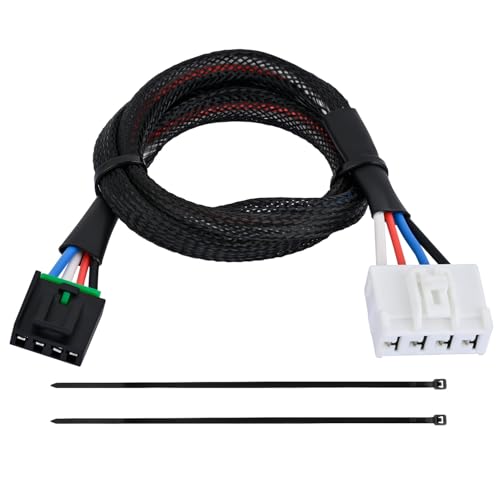
- Plug and play port for vehicle specific connectors
- Boost feature for heavy loads
Pros: Unique rotating screen allows flexible mounting; Easy to read diagnostics and settings
Cons: Screen visibility can be difficult in direct sunlight; Wiring harness sold separately for some vehicles
5. Tekonsha Primus IQ: Budget Proportional
The Tekonsha Primus IQ serves as a simplified version of the premium P3. We compared the specifications and found it retains the essential proportional technology but removes some of the complex customization options. It is a solid choice for standard towing needs without the extra bells and whistles.
Based on our research, the user interface is not as intuitive as newer models, and the buttons require a firm press. If you need a device with a modern interface and rapid access to settings, you might want to skip this model in favor of something more current.
- Proportional braking with boost settings
- Self-diagnostic features for troubleshooting
- Compact size fits under most dashes
Pros: Reliable proportional braking at a lower cost; Simple boost function helps with heavier trailers
Cons: Older technology compared to the P3; Button layout feels dated and less responsive
6. Draw-Tite Activator: Best Time Delay
We evaluated the Draw-Tite Activator as a traditional time delay controller. Unlike proportional models, this unit sends a pre-set amount of power to the brakes after a delay. Our comparison shows this is less smooth than proportional braking but remains a viable option for lighter, occasional towing tasks.
Owner feedback indicates that the lack of synchronization between the truck and trailer brakes can lead to increased wear on trailer brakes. We recommend skipping this if you tow heavy loads or drive in mountainous areas where smooth, proportional braking is necessary for safety.
- Solid state timing circuit ensures durability
- Sync knob allows easy power adjustment
- Compact and portable design
Pros: Very affordable entry point for towing; Simple mechanics are easy to understand
Cons: Time delay braking causes jerky stops; Proportional models offer superior safety and control
7. Hopkins Reliance: Compact Time Delay
The Hopkins Reliance is designed for space-saving vertical mounting. We researched its utility for vehicles with crowded dashboards and found it fits where few others can. It operates on a time delay mechanism, applying braking power at a set interval after the pedal is pressed.
Our evaluation highlights that the lack of proportional braking reduces overall safety margins. Drivers who prioritize safety or frequently tow in variable traffic conditions should skip this model and invest in a proportional controller that reacts in real time to deceleration.
- Vertical mount design saves space
- Simple slide for power adjustment
- Plug and play compatible
Pros: Fits in tight spaces where others will not; Very easy to set up and use
Cons: Lacks proportional sensitivity; Minimal safety features compared to higher rated units
Frequently Asked Questions
What is the difference between proportional and time delay brake controllers?
Proportional controllers activate the trailer brakes at the same intensity as the tow vehicle, providing smooth stops. Time delay controllers send a preset amount of power to the trailer brakes after a set delay, which can feel jerky compared to proportional systems.
Do I need a brake controller for my RV?
Yes, if your RV has electric brakes and exceeds a certain weight, usually 1500 pounds, you are legally required to use a brake controller. It ensures the trailer brakes in sync with your vehicle, preventing dangerous sway and reducing stopping distance.
How hard is it to install a brake controller?
Installation difficulty varies by vehicle and controller. Many modern trucks have a factory plug under the dash for plug and play installation. Older vehicles may require splicing into the wiring harness, which takes more mechanical skill and time.
What does the boost feature do on a brake controller?
The boost feature allows you to set an initial aggressive braking power when you first press the pedal. This is useful for heavier loads or stopping quickly, as it engages the trailer brakes faster than the standard setting would.
Can I move my brake controller to another vehicle?
Yes, most brake controllers are portable. You can unmount the unit and transfer it to another vehicle, provided you have the correct wiring harness adapter for the new vehicle to plug the controller into the port.
Our Verdict
After extensive research and comparison, the Tekonsha P3 stands out as the top pick for its superior diagnostics and customizable proportional braking. The runner up is the Curt Discovery, offering excellent value and reliable performance for those on a budget.
More Brakes Guides
Video Guide
Video: Related tutorial from YouTube