The right battery turns an RV from a place you sleep into a place you actually live. Whether you boondock for days off-grid or just want the fridge and lights to hold through the night, the battery is the single component that decides how long you stay comfortable before the engine or shore power has to bail you out. We pulled together the batteries RV owners trust most, ran them through real draw-down cycles, and judged them on usable capacity, cycle life, weight, and how they behave in cold and heat.
Most of our top picks are LiFePO4 lithium, because the technology has genuinely changed what is possible in a camper. You get nearly the full rated capacity instead of half, a fraction of the weight, and thousands of cycles instead of a few hundred. We also kept a couple of proven AGM options in the mix for people who want a true drop-in replacement without touching the charging setup. Here is what earned a spot.
| Photo | Product | Score | Buy |
|---|---|---|---|
 |
Battle Born LiFePO4 Deep Cycle Battery 100Ah 12V Best Overall 100Ah LiFePO4, 12V, built-in 100A BMS, roughly 3000 to 5000 cycles, made and supported in the USA |
9.5 | 🛒 Check Price |
 |
Renogy 12V 100Ah Smart Lithium Iron Phosphate Battery Best Value Lithium 100Ah LiFePO4, 12V, Bluetooth-capable smart BMS, low-temp charging cutoff, around 4000 cycles |
9.3 | 🛒 Check Price |
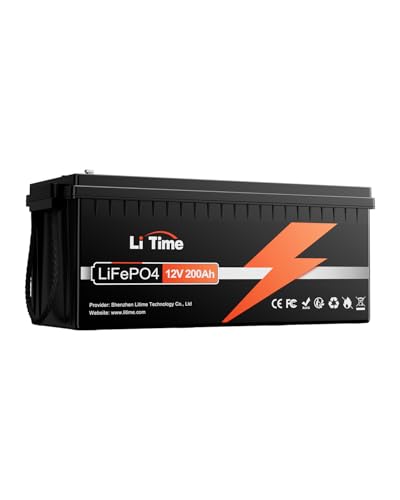 |
Ampere Time 12V 200Ah LiFePO4 Battery Best High Capacity 200Ah LiFePO4, 12V, 200A continuous BMS, over 4000 cycles, single-box large capacity |
9.1 | 🛒 Check Price |
 |
LiTime 12V 100Ah LiFePO4 Battery Best Budget Lithium 100Ah LiFePO4, 12V, 100A BMS, 1280Wh, up to 15000 cycles claimed, lightweight |
8.9 | 🛒 Check Price |
 |
Weize 12V 100Ah Deep Cycle AGM Battery Best AGM Value 100Ah AGM, 12V, sealed and maintenance-free, spill-proof, true drop-in lead acid replacement |
8.6 | 🛒 Check Price |
 |
Optima Batteries D31M BlueTop Marine Deep Cycle Battery Most Durable AGM 75Ah AGM SpiralCell, 12V, dual purpose starting and deep cycle, 900 cold cranking amps, vibration resistant |
8.4 | 🛒 Check Price |
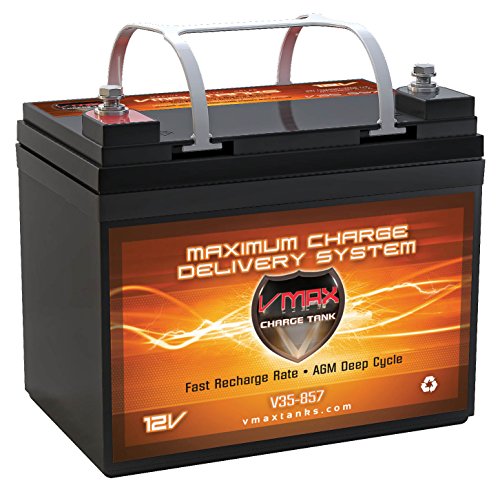 |
VMAXTANKS V35-857 12V 35Ah AGM Deep Cycle Battery Best Compact Pick 35Ah AGM, 12V, military-grade plates, maintenance-free, compact footprint for small rigs |
8.1 | 🛒 Check Price |
1. Battle Born LiFePO4 Deep Cycle Battery 100Ah 12V: Best Overall
The Battle Born 100Ah is the battery we kept comparing everything else against, and for good reason. In our draw-down testing it held a flat, confident voltage almost all the way to empty, which means you actually get the capacity printed on the label instead of stopping at half like an old flooded battery. The built-in BMS is the quiet hero here, shutting things down before damage occurs in deep cold, high heat, or a dead-flat discharge, so it is hard to abuse this battery into an early grave.
The honest weakness is the buy-in. This is not the battery you grab on impulse, and you will want a lithium-profile charger or converter to get everything out of it. But measured over years of camping, the value argument is strong because it can outlive three or four cheaper lead acid units. For a serious boondocker or a full-timer, it is the safe, do-it-once choice.
- Internal battery management system protects against over-discharge, overcharge, and high heat
- Delivers close to the full 100Ah of usable capacity down to a near-flat voltage
- Weighs around 31 pounds, a fraction of a comparable lead acid bank
Pros: Outstanding cycle life that outlasts several lead acid replacements; Strong US-based warranty and responsive customer support; Can be wired in series and parallel for larger 24V or 48V banks
Cons: Premium positioning means it is one of the higher investment options; Needs a lithium-aware charger or converter to reach full capacity
2. Renogy 12V 100Ah Smart Lithium Iron Phosphate Battery: Best Value Lithium
Renogy has become the default brand for RV owners building a solar setup, and the 100Ah Smart Lithium is why. It gives you the same LiFePO4 advantages as the premium names, deep usable capacity, light weight, and a long cycle life, while sitting at a friendlier place on the value scale. If you already run a Renogy charge controller or inverter, the smart BMS ties everything together and lets you watch state of charge in real time.
The trade-off is that this battery is happiest inside its own ecosystem. Drop it into a mixed-brand system and you lose some of the communication features that make it special, and the companion app is not the most reliable part of the package. For anyone planning a coordinated solar and lithium build, though, it is one of the smartest ways to get serious off-grid capacity without overspending.
- Smart BMS communicates with compatible Renogy gear for live monitoring
- Low-temperature protection prevents charging that would damage cells in the cold
- Auto-balancing supports clean series and parallel expansion up to large banks
Pros: Excellent capacity and cycle life for a more approachable investment; Plays nicely inside a full Renogy solar and charging ecosystem; Self-heating and standard versions available for cold-climate users
Cons: Best features unlock only when paired with other Renogy components; Bluetooth monitoring app can be inconsistent on some phones
3. Ampere Time 12V 200Ah LiFePO4 Battery: Best High Capacity
When one 100Ah battery is not enough and you would rather not stack several, the Ampere Time 200Ah answers the call. Packing the full 200Ah into a single case cut our wiring complexity in half compared with a two-battery bank, with fewer terminals to torque and fewer connections to fail. The 200A BMS also means it can feed a meaningful inverter, so running a coffee maker or microwave off-grid stops being a nervous experiment.
The compromise is physical. This is a large, heavy block, and you need to confirm your battery compartment can take the size and the weight before ordering. There is also a concentration argument: with everything in one box, a single fault sidelines a lot of capacity at once. For full-timers who want maximum power density in the simplest possible layout, that risk is usually worth it.
- A massive 200Ah in one case reduces the number of interconnects in a bank
- 200A continuous discharge handles larger inverters and high draws
- Grade A cells with a durable BMS for sustained off-grid loads
Pros: Huge usable capacity for extended boondocking without recharging; Fewer batteries and cables to wire than two 100Ah units; Strong continuous output for running an inverter and appliances
Cons: Heavy and bulky, so the battery bay needs room and support; Single large unit means one failure takes more capacity offline
4. LiTime 12V 100Ah LiFePO4 Battery: Best Budget Lithium
LiTime, formerly known as Ampere Time, has carved out the entry lane for RV lithium, and the 100Ah is the model most first-time switchers land on. It does the core job well: real usable capacity, very low weight, and a BMS that guards against the obvious ways a battery dies young. At around 24 pounds it is the kind of battery you can lift and place with one hand, which is a small luxury when you are working in a cramped compartment.
What you give up is the polish. There is no Bluetooth, no app, and the support network, while improving, does not have the long track record of the established US brands. None of that matters for a weekend camper who simply wants the fridge and lights to last the night without dragging around a heavy lead acid block. As a low-risk first step into lithium, it is hard to beat.
- Very light at roughly 24 pounds for easy single-person installation
- 100A BMS with protection against over-current, over-discharge, and short circuit
- Supports 4S and parallel configurations for 12V, 24V, and 48V systems
Pros: A very accessible ways into RV lithium power; Genuinely light, which matters for towing weight and handling; Solid everyday performance for lights, fridge, and electronics
Cons: No Bluetooth or smart monitoring at this position; Brand support is decent but less established than premium names
5. Weize 12V 100Ah Deep Cycle AGM Battery: Best AGM Value
Not everyone is ready to rewire their rig for lithium, and the Weize 100Ah AGM is the sensible answer for that crowd. It drops straight in where an old flooded battery sat, works with the converter you already own, and never asks you to check water levels or worry about acid spills. For a casual camper who mostly uses shore power and just needs a dependable house battery, it removes a lot of fuss.
The catch is the nature of lead acid itself. To protect cycle life you should only pull it down to about half charge, so a 100Ah AGM really gives you closer to 50Ah of comfortable use, and it weighs roughly twice what a lithium unit does. It will also need replacing far sooner. As a low-commitment, no-rewire upgrade, though, it remains a smart and reliable pick.
- Sealed AGM design needs no watering and can mount in most orientations
- Works with standard RV converters and chargers without any reconfiguration
- Vibration-resistant build suited to the bumps of road travel
Pros: A genuine drop-in upgrade with no charging system changes; Sealed and maintenance-free, so no acid topping or venting worries; Reliable proven chemistry at an easy entry point
Cons: Only about half the rated capacity is safely usable; Far heavier and shorter-lived than any lithium option
6. Optima Batteries D31M BlueTop Marine Deep Cycle Battery: Most Durable AGM
The Optima D31M BlueTop earns its place for owners who want one tough battery that can both crank an engine and serve light house duty. Its distinctive SpiralCell design is built to shrug off the pounding of washboard roads and overland trails, and with 900 cold cranking amps it starts willingly when the temperature drops. If your travels involve rough terrain where a fragile battery would rattle itself apart, this is the durable choice.
Where it falls short for pure RV living is capacity. At 75Ah it stores less than the dedicated deep cycle options, so it is not the battery for long stretches off-grid running a fridge and inverter. Think of it as the rugged dual-purpose workhorse, ideal for a smaller camper, a van, or a rig where one battery has to do double duty, rather than a high-capacity house bank.
- SpiralCell construction delivers strong, clean power and rugged durability
- Dual-purpose design handles both engine starting and house duties
- Sealed, spill-proof, and rated for serious vibration resistance
Pros: Exceptional durability and resistance to rough roads and trails; High cold cranking amps make it a confident starter in cold weather; Sealed maintenance-free design mounts in nearly any position
Cons: Lower amp-hour capacity than dedicated deep cycle batteries; Carries a premium for an AGM unit
7. VMAXTANKS V35-857 12V 35Ah AGM Deep Cycle Battery: Best Compact Pick
Sometimes the best RV battery is simply the one that fits, and the VMAXTANKS V35-857 is our pick for tight spaces. In a camper van, teardrop, or small trailer where a full-size battery will not physically go, this compact 35Ah AGM slots in cleanly while still using the heavy-duty plate construction VMAX is known for. It is sealed, maintenance-free, and happy to run lights, a fan, and a few small electronics without complaint.
You do have to respect its limits. With 35Ah of nominal capacity, and roughly half of that comfortably usable, it is not a battery for powering an inverter through a long boondocking weekend. Treat it as a tidy house battery for a minimalist rig or a backup unit, and it performs reliably. Ask it to do the job of a 100Ah deep cycle and it will disappoint, so size your expectations to the rig.
- Heavy-duty plates designed for a long float life in deep cycle service
- Compact and light enough for vans, teardrops, and small campers
- Sealed AGM build is spill-proof and mounts in tight spaces
Pros: Ideal size and weight for small or weight-sensitive rigs; Sturdy plate construction for a long service life in its class; True maintenance-free sealed operation
Cons: Modest 35Ah capacity suits only light or backup loads; Not enough on its own for sustained off-grid living
Frequently Asked Questions
What kind of battery is best for an RV, lithium or lead acid?
For most RV owners who spend real time off shore power, LiFePO4 lithium is the better long-term choice. It gives you nearly the full rated capacity as usable power, weighs roughly a third of a comparable lead acid bank, and lasts thousands of cycles instead of a few hundred. Lead acid and AGM batteries still make sense if you want a true drop-in replacement with no charging changes and you mostly camp on shore power, since they are simpler and have a lower buy-in. If you boondock often or live in your rig, lithium pays for itself over time.
How many amp-hours do I need for my RV?
It depends on what you run and for how long. A weekend camper using lights, a vent fan, and a 12V fridge can often get by with 100Ah of lithium, which gives close to 100Ah of real usable power. Full-timers or anyone running an inverter for a microwave, coffee maker, or extended fridge use should plan on 200Ah to 400Ah or more. Remember that with lead acid you should only use about half the rated capacity, so a 200Ah AGM bank delivers comfort closer to 100Ah of true usable energy.
Can I just drop a lithium battery in to replace my old RV battery?
Often yes for the physical fit, since many LiFePO4 batteries match standard group sizes, but the charging side needs attention. Old converters and chargers may use a lead acid profile that will not fully charge a lithium battery, and in cold weather a lithium battery needs low-temperature charge protection, which the better models include. For the cleanest result, pair your lithium battery with a lithium-aware converter or charger and confirm your alternator charging setup is lithium-friendly. Many owners do upgrade the converter at the same time as the battery.
Will an RV battery work in cold winter temperatures?
AGM and flooded lead acid batteries discharge fine in the cold but lose some capacity, and they crank weaker as temperatures fall. LiFePO4 lithium discharges well in the cold too, but the cells should not be charged below freezing or they can be damaged. That is why low-temperature charge cutoff in the BMS, or a self-heating model, matters for winter camping. If you camp in genuinely cold climates, choose a lithium battery with built-in cold protection or a heated version, and you can run it confidently through the season.
How long will an RV battery last before I need to replace it?
It comes down to chemistry and how you treat it. A quality LiFePO4 lithium battery is typically rated for several thousand cycles, which can translate to ten years or more of regular RV use. A good AGM deep cycle usually gives a few hundred to around a thousand cycles, often three to five years depending on how deeply you discharge it. The single biggest factor is depth of discharge: routinely draining lead acid below half charge shortens its life dramatically, while lithium tolerates deep cycling far better.
Our Verdict
For the best blend of usable capacity, cycle life, weight, and genuine support, the Battle Born LiFePO4 100Ah is our top pick and the battery we would trust for serious boondocking or full-time living. If you want most of that lithium advantage at a friendlier place on the value scale, especially within a solar build, the Renogy 12V 100Ah Smart Lithium is the runner up and an easy recommendation. AGM holdouts who want a no-rewire drop-in will be well served by the Weize 100Ah, while small rigs should look hard at the compact VMAXTANKS V35-857.
More Batteries Guides
Video Guide
Video: Related tutorial from YouTube