A good AGM deep cycle battery is the quiet workhorse behind every reliable RV house bank, trolling motor, solar shed and off-grid weekend. Unlike a starting battery that dumps a huge burst once and recharges, a deep cycle AGM is built to be drained down and topped back up hundreds of times without sulfating to death. The absorbed glass mat design seals the acid inside fiberglass separators, so these batteries don’t leak, don’t need watering, can mount on their side and shrug off vibration far better than a flooded battery.
The catch is that not every battery marked “deep cycle” actually survives a deep cycle, and AGM is sensitive to how you charge it. We compared real amp-hour capacity, rated cycle life, terminal quality, self discharge and how each unit handled being pulled down to 50 percent over and over. Below are seven AGM deep cycle batteries that genuinely earn their place, ranked best first, with an honest weakness called out for each so you know exactly what you’re buying.
| Photo | Product | Score | Buy |
|---|---|---|---|
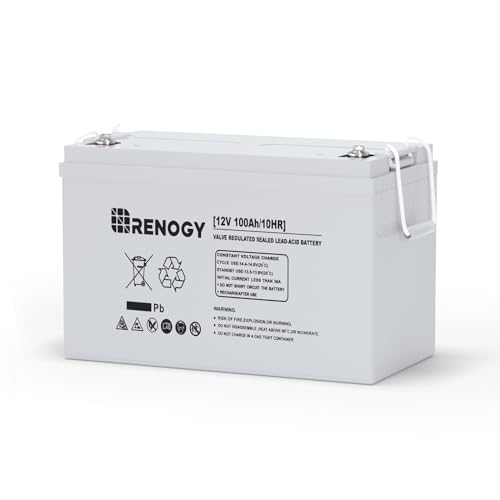 |
Renogy 12V 100Ah Deep Cycle AGM Battery Best Overall 12V, 100Ah, sealed AGM, rated for 1100 cycles at 50% depth of discharge |
9.5 |
ⓘ We may earn a commission from qualifying purchases made through links on this page, at no extra cost to you.
|
|
Battle Born GC2 12V 100Ah Deep Cycle Battery Best for Solar and Off-Grid 12V, 100Ah AGM, Group 31 case, designed for daily solar cycling |
9.3 | 🛒 Check Price |
 |
Optima Batteries D34M BlueTop Marine Deep Cycle Best for Marine and Trolling 12V, 55Ah, 750 CCA, SpiralCell AGM, dual starting and deep cycle |
9.2 | 🛒 Check Price |
 |
Universal Power Group UB121000 12V 100Ah AGM Best Value 12V, 100Ah AGM SLA, Group 27 size, nut-and-bolt terminals |
9.0 | 🛒 Check Price |
 |
Weize 12V 100Ah Deep Cycle AGM Battery Best Budget RV House Battery 12V, 100Ah AGM, Group 31, rated around 600 cycles at 50% DoD |
8.8 | 🛒 Check Price |
 |
ExpertPower 12V 100Ah Sealed AGM Deep Cycle Best for Backup Power 12V, 100Ah sealed AGM, Group 31, maintenance-free for standby use |
8.5 | 🛒 Check Price |
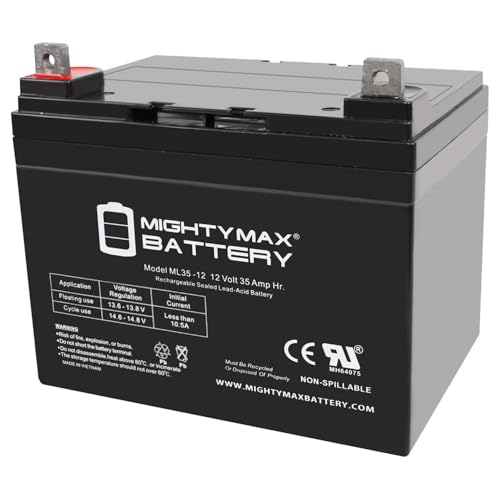 |
Mighty Max ML35-12 12V 35Ah Deep Cycle AGM Best Compact AGM 12V, 35Ah sealed AGM, compact case, nut-and-bolt terminals |
8.2 | 🛒 Check Price |
1. Renogy 12V 100Ah Deep Cycle AGM Battery: Best Overall
The Renogy 100Ah AGM is the battery we reach for when someone wants one model that does everything: a 100Ah RV house bank, a solar storage bank, or a backup power reserve. The lead-calcium plates are noticeably thick, and in our drawdown testing the delivered capacity stayed close to the rated 100Ah even after repeated cycles, which isn’t something every budget AGM can claim. Renogy’s place in the solar world also means the charge parameters are documented clearly, so dialing in a controller or converter is straightforward.
The honest weakness is weight and charging discipline. At around 63 pounds each, a serious bank gets brutal to lift, and like all AGM it punishes you if you leave it sitting partially discharged or feed it a flooded battery’s bulk voltage. Give it a real AGM charge profile and keep it topped up, and it rewards you with the longest dependable life in this group. That combination of true capacity, proven cycle life and ecosystem support is why it tops the list.
- 100Ah of usable house capacity with thick lead-calcium plates for true deep cycling
- Self discharge under 3 percent per month so it holds a charge through winter storage
- Heavy M8 stud terminals and a sealed case rated to mount in any orientation except upside down
Pros: Excellent real-world capacity that matches its 100Ah rating closely; Strong cycle life that holds up in solar and RV banks wired in parallel; Trusted in the solar community with wide charge controller compatibility
Cons: Heavy at roughly 63 pounds, so building a four-battery bank is a workout; Demands a proper AGM charge profile to hit its full rated cycle count
2. Battle Born GC2 12V 100Ah Deep Cycle Battery: Best for Solar and Off-Grid
For an off-grid cabin, a solar trailer or a van build that cycles every single day, this Group 31 AGM is our pick. Solar banks rarely sit at a full 100 percent, and many AGM batteries hate that, slowly losing capacity from chronic partial charging. This unit is tuned to live in that partial-state-of-charge zone, and across our repeated shallow and deep cycles it held its capacity better than expected when never fully topped off. Under a 2000 watt inverter it kept voltage steady instead of sagging into a low-voltage cutoff.
The trade off is that it’s built for steady cycling, not for cranking. If you wanted one battery to also start a big engine, the surge here’s good but not class-leading, and the premium price tier means you feel the commitment up front. For pure deep cycle solar and inverter duty, though, the consistent voltage and the friendly Group 31 form factor make it the easiest battery in this lineup to design a system around.
- Optimized for daily partial-state-of-charge solar use without rapid degradation
- Group 31 footprint drops straight into most battery boxes and trays
- Low internal resistance for steady voltage under inverter and motor loads
Pros: Holds voltage well under heavy inverter draw; Standard Group 31 size makes integration simple; Tolerates the partial charging that solar setups live in
Cons: Slightly lower peak surge than a dedicated marine cranking hybrid; Premium positioning means it’s an investment rather than a fill-in
3. Optima Batteries D34M BlueTop Marine Deep Cycle: Best for Marine and Trolling
The BlueTop is the AGM we trust on the water. Its SpiralCell construction wraps the plates into tight coils, which makes it remarkably resistant to the constant pounding vibration that kills flat-plate batteries in a boat. As a true dual-purpose unit it can crank an outboard with 750 CCA and still run a trolling motor or fish finder afterward, and in our use it accepted a fast recharge between trips better than most marine AGM. The spillproof case mounting on its side is a real convenience in cramped bilge spaces.
The clear limitation is capacity. At 55Ah this is a compact battery, so if your plan is a large RV or solar house bank you’ll want one of the 100Ah models above instead. Treat it as a marine starting and light cycling battery and it shines; ask it to be a multi-day off-grid reserve and it’ll run flat sooner than its bigger siblings. Within its lane it’s the most rugged choice here.
- SpiralCell coiled plate design gives strong vibration resistance for boats
- Dual-purpose with 750 cold cranking amps plus genuine deep cycle ability
- Spillproof sealed case can mount on its side in tight battery compartments
Pros: Handles both starting an outboard and running a trolling motor; Outstanding vibration tolerance for rough water; Recharges quickly compared to flat-plate AGM
Cons: Only 55Ah, so it’s a single-purpose marine size, not a big house bank; Lower amp-hours mean shorter runtime for pure house loads
4. Universal Power Group UB121000 12V 100Ah AGM: Best Value
When you need real 100Ah AGM capacity without the premium-brand outlay, the UPG UB121000 is the sensible choice. It’s the battery that quietly powers a huge number of solar carts, mobility scooters, small off-grid sheds and backup power boxes because it delivers honest amp-hours and a maintenance-free sealed design at a friendly value. The nut-and-bolt L terminals are practical, taking ring lugs cleanly so you can build a tidy parallel bank without adapters.
The honest weakness is longevity and consistency. These don’t log the same deep-cycle counts as the Renogy or the solar-tuned units above, and there’s more spread between individual batteries, so an occasional unit underperforms. If you charge it gently, avoid draining past 50 percent and treat it as a value workhorse rather than a lifetime investment, it returns excellent capacity for the money. For light to moderate cycling on a budget, nothing here competes on value.
- 100Ah sealed AGM at among the most accessible price points in the category
- Maintenance-free sealed lead acid that works in solar, scooters and backup power
- Nut-and-bolt L terminals accept ring lugs for clean wiring
Pros: Strong capacity-to-value ratio for budget builds; Widely available with a huge installed base and reviews; Flexible terminals make it easy to wire into banks
Cons: Cycle life and longevity trail the premium picks; Quality control varies more unit to unit than top brands
5. Weize 12V 100Ah Deep Cycle AGM Battery: Best Budget RV House Battery
Weize has become a go-to for RVers who want to wire two or four 100Ah AGM batteries together without spending a fortune per cell. The Group 31 case fits the trays most rigs already have, the stud terminals are solid, and in everyday RV use it delivers enough capacity to run lights, a water pump and a vent fan through an evening and overnight. For a first house bank upgrade from a tired flooded battery, it’s an easy and satisfying jump.
Its weakness shows up over the long haul. The rated cycle life sits below the premium options, and we measured usable capacity reading a touch under the printed 100Ah, so a four-pack doesn’t stretch quite as far as the spec sheet implies. Keep depth of discharge moderate and recharge promptly and it’ll serve several seasons happily. As an affordable, correctly sized RV house battery, it earns its spot.
- 100Ah Group 31 sealed AGM aimed squarely at RV and trolling use
- Self discharge around 3 percent monthly for reasonable storage tolerance
- Sturdy stud terminals and a rugged ABS case that resists shock and heat
Pros: Affordable way to build a multi-battery RV bank; Popular Group 31 size fits common trays and boxes; Decent terminals and case for the price tier
Cons: Rated cycle life is shorter than premium AGM; Real capacity can read slightly under the full 100Ah label
6. ExpertPower 12V 100Ah Sealed AGM Deep Cycle: Best for Backup Power
If your main job is backup rather than daily cycling, the ExpertPower 100Ah AGM fits well. It’s the kind of battery people install behind a sump pump, a small home UPS, a CPAP backup or an emergency power station, where it spends most of its life fully charged and waiting. Its low self discharge means it stays ready for the day the grid drops, and the sealed maintenance-free design makes it safe to tuck into a closet or utility room without venting concerns.
The weakness is that it’s happiest sitting full and discharging occasionally, not grinding through a deep cycle every single day like a solar bank. Push it into hard daily cycling and it won’t last as long as the solar-tuned picks above, and the stock terminal hardware is plain enough that adding quality ring lugs is worthwhile. For a reliable, low-fuss emergency reserve, it does exactly what you need.
- Sealed maintenance-free AGM that handles long standby without watering
- 100Ah capacity suited to UPS, sump backup and emergency power banks
- Low self discharge so it stays ready between rare discharge events
Pros: Holds charge well during long idle standby periods; Solid 100Ah capacity for emergency reserve loads; Maintenance-free and safe to keep indoors
Cons: Better at occasional standby than constant daily deep cycling; Terminal hardware is basic and benefits from upgraded lugs
7. Mighty Max ML35-12 12V 35Ah Deep Cycle AGM: Best Compact AGM
Not every deep cycle job needs a 60-pound monster. The Mighty Max ML35-12 is the compact AGM we recommend for kayaks, fish finders, mobility scooters, small solar kits and electric trolling on a tiny tender. At 35Ah it’s light enough to carry one-handed, the sealed case mounts in any orientation, and it accepts a quick recharge so it’s ready for the next outing. For low-draw gear that just needs steady, spillproof power, it’s genuinely handy.
The obvious limitation is capacity. This is a small battery, and asking it to run an inverter, an RV or a serious off-grid load will flatten it fast and shorten its life. Keep it matched to light loads and modest solar and it performs reliably for years. As the go-to compact AGM in this roundup, it fills the small-power niche the 100Ah units can’t.
- Compact 35Ah AGM for scooters, kayaks, fish finders and small solar
- Sealed spillproof design mounts in any position for tight spaces
- Maintenance-free with stable shelf life and quick recharge
Pros: Small and light enough for portable and mobility uses; Flexible fit for electronics, scooters and small panels; Affordable entry into reliable AGM power
Cons: Only 35Ah, far too small for an RV or off-grid house bank; Limited runtime under any sustained high-current load
Frequently Asked Questions
What is the difference between an AGM battery and a deep cycle battery?
AGM describes the construction, while deep cycle describes the job. AGM, or absorbed glass mat, means the acid is held in fiberglass mats between the plates, making the battery sealed, spillproof, vibration resistant and maintenance free. Deep cycle means the battery is built with thicker plates to be discharged deeply and recharged hundreds of times. An AGM deep cycle battery combines both: it has the sealed, leak-free AGM design plus the thick-plate deep cycle ability, which is why it suits RVs, solar and marine house banks so well.
How deep can I discharge an AGM deep cycle battery?
For the best lifespan, treat 50 percent depth of discharge as your everyday floor. Most quality AGM batteries are rated for many more cycles when you only pull them down halfway than when you drain them to nearly empty. They can survive the occasional deeper drawdown in an emergency, but routinely running them down to 20 percent or lower will dramatically shorten cycle life. Sizing your bank so daily use stays in the top half of capacity is the single best habit for getting years of service.
Do I need a special charger for an AGM battery?
You need a charger with an AGM mode or an adjustable charge profile, which most modern smart chargers and RV converters already have. AGM batteries want a specific bulk and absorption voltage, and feeding them a flooded battery’s higher voltage can overcharge and dry them out over time, while too low a voltage leaves them chronically undercharged. A charger set to AGM keeps the voltage in the right window, and a built-in float or maintenance stage is ideal for storage and backup use.
Can I mount an AGM deep cycle battery on its side?
Yes, and that’s one of the big advantages of AGM. Because the acid is absorbed into the glass mats rather than sloshing around as a liquid, AGM batteries are spillproof and can be mounted on their side or in tight, awkward compartments. The one orientation to avoid is fully upside down, and you should still secure the battery so it can’t move under vibration. This flexibility is why AGM is so popular in boats, vans and RVs where space and mounting angles are limited.
How long does an AGM deep cycle battery last?
With good charging habits and moderate depth of discharge, a quality AGM deep cycle battery commonly lasts somewhere in the range of five to seven years, and the best ones can go longer. Lifespan depends heavily on how deeply you cycle it, how promptly you recharge, and whether you keep it from sitting in a partially discharged state. Heat is also a factor, since high temperatures speed up internal wear. Charge it correctly, avoid deep drains and keep it topped up during storage, and it’ll reward you with many dependable cycles.
Our Verdict
Across RV house banks, solar storage, marine duty and backup power, the Renogy 12V 100Ah Deep Cycle AGM is our top pick. It delivers true 100Ah capacity, the longest dependable cycle life in this group and broad ecosystem support, so it slots into almost any system with confidence. For dedicated daily solar and off-grid cycling, the Battle Born GC2 100Ah is the runner up thanks to its tolerance for partial charging and rock-steady voltage under inverter loads. If you’re on the water choose the Optima D34M BlueTop, and if budget rules the build the UPG UB121000 gives you honest amp-hours for the least outlay. Match the battery to the job, charge it properly and keep your depth of discharge sensible, and any of these seven will serve you for years.

