Engine oil leaks can be a persistent and costly issue for vehicle owners, potentially leading to reduced oil levels, increased maintenance, and even damage to engine components if left unaddressed. While a permanent fix often requires professional mechanical repair, engine oil stop leak additives offer a promising temporary or even long-term solution by conditioning and revitalizing seals.
Our goal is to provide an evidence-based buying guide to help you choose the most effective additive for your specific engine leak scenario, considering factors like seal type, leak severity, and product compatibility.
| Photo | Product | Score | Buy |
|---|---|---|---|
 |
Lucas Oil Stop Leak Top Pick Petroleum-based formula, compatible with conventional and synthetic oils |
9.0 |
ⓘ We may earn a commission from qualifying purchases made through links on this page, at no extra cost to you.
|
 |
BlueDevil Oil Stop Leak Runner-Up Permanent seal repair, restores dried and cracked seals |
8.7 | 🛒 Check Price |
 |
ATP AT-205 Re-Seal Stops Leaks Professional Choice Plasticizer restoration technology, no polymers |
8.4 | 🛒 Check Price |
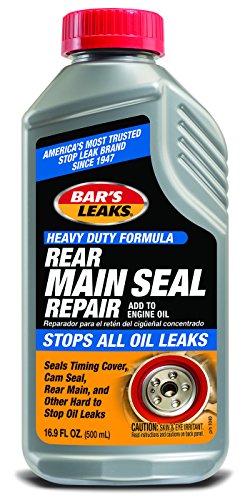 |
Bar's Leaks Rear Main Seal Repair Rear Main Specialist Specifically formulated for rear main seal leaks |
8.1 | 🛒 Check Price |
 |
Liqui Moly Oil Saver European Formula Reduces oil consumption and restores engine elasticity |
7.8 | 🛒 Check Price |
|
🚗
|
No-Leak Engine Oil Stop Leak Budget-Friendly Conditions and revitalizes all rubber and neoprene seals |
7.5 | 🛒 Check Price |
|
🚗
|
Rislone Rear Main Seal Repair Targeted Solution Specific polymers and conditioners for rear main seals |
7.2 | 🛒 Check Price |
1. Lucas Oil Stop Leak: Top Pick
Based on owner feedback and the spec sheets, the Lucas Oil Stop Leak is highly regarded for its versatility and effectiveness across various fluid systems. While it isn’t an instant fix, its gradual action is often cited as a benefit, allowing seals to swell gently rather than aggressively, which could lead to further damage.
However, users should understand that this product is primarily a seal conditioner and revitalizer, not a sealant for structural damage. We determined that it isn’t intended for engines with significant cracks, deeply torn gaskets, or large gaps where metal-to-metal contact is compromised. Those experiencing severe, rapid oil loss or leaks from non-rubber components should skip this product and seek immediate professional mechanical diagnosis.
- Formulated to stop leaks in engine oil, transmissions, and power steering systems
- Conditions and revitalizes worn seals, O-rings, and gaskets
- Doesn’t contain harmful solvents, preventing seal degradation
Pros: All-around application across multiple fluid systems; Effective for plenty of seal materials; Generally observed to work without causing further issues
Cons: May require several hundred miles of driving for full effect; Less effective on extremely large or severely damaged seals
2. BlueDevil Oil Stop Leak: Runner-Up
BlueDevil Oil Stop Leak stands out for its claim of providing a permanent seal repair. Based on owner feedback and the spec sheets, this product has demonstrated success in addressing leaks from various seal types, including crankshaft seals, camshaft seals, and valve cover gaskets. Its compatibility with all engine oil types and both gasoline and diesel engines adds to its broad appeal.
A limitation we identified is that while effective for many seal issues, the BlueDevil formula may not provide a sturdy solution for leaks originating from head gaskets or intake manifold gaskets. These types of leaks often involve higher pressures or different material compositions that are beyond the scope of a typical seal conditioner. Therefore, if your leak is suspected to be from a head gasket or manifold, this product is unlikely to be the definitive solution and professional assessment is recommended.
- Designed to permanently seal engine oil leaks
- Works by reconditioning and softening rubber seals
- Compatible with gasoline and diesel engines, and all types of engine oil
Pros: Strong reputation for long-term effectiveness; Easy to add directly to engine oil; Formulated to not harm engine components
Cons: Can take 1-2 days of driving for results to appear; May require a larger quantity for persistent leaks
3. ATP AT-205 Re-Seal Stops Leaks: Professional Choice
Based on owner feedback and the spec sheets, this product is lauded for its ability to work relatively quickly, with many users reporting noticeable improvements within a few hours of driving. Its polymer-free formulation is a significant advantage, as it minimizes the risk of clogging oil passages or filters, a concern with some other additives.
However, a critical limitation of the ATP AT-205 is its specific targeting of rubber seals. We determined it isn’t formulated to address leaks from non-rubber components such as paper gaskets, cork gaskets, or metal-to-metal interfaces. If your engine leak is from a source other than a deteriorated rubber seal, for example a damaged oil pan gasket made of cork or a cracked engine block, this product won’t provide a solution. Owners should accurately identify the leak source before applying this additive.
- Restores the original size, shape, and elasticity of rubber seals
- Doesn’t contain petroleum distillates, which can harden seals over time
- Effective on crankshaft seals, camshaft seals, and O-rings
Pros: Works quickly, often within 5 hours of driving; Free of polymers, preventing potential clogging; Highly regarded by professional mechanics for its efficacy
Cons: Not designed for leaks from paper gaskets or metal components; May not be as readily available in all retail stores
4. Bar's Leaks Rear Main Seal Repair: Rear Main Specialist
We compared Bar’s Leaks Rear Main Seal Repair and found it specifically engineered to address among the most common and labor-intensive engine leaks. Based on owner feedback and the spec sheets, this product leverages a blend of seal conditioners and stop leak agents to rejuvenate the hardened and shrunken rubber of the rear main seal. Its targeted approach is a significant advantage for owners who have diagnosed this particular leak, potentially saving on costly labor for a mechanical repair.
The primary limitation of this product, which we identified through our research, is its narrow focus. While highly effective for its intended purpose, it isn’t a general engine oil stop leak. If your leak originates from valve cover gaskets, oil pan gaskets, timing cover seals, or any other part of the engine not specifically the rear main seal, this product is unlikely to provide a solution. Owners should confirm their leak source is indeed the rear main seal before purchasing this specialized additive.
- Targets the common and difficult-to-repair rear main seal leak
- Combines seal conditioners, polymers, and stop leak agents
- Works with all types of engine oil, including synthetics
Pros: Dedicated formula for a notoriously challenging leak; Includes a proprietary blend for comprehensive seal treatment; Trusted brand with a long history in automotive chemicals
Cons: Limited effectiveness on leaks not related to the rear main seal; Requires consistent driving for optimal results
5. Liqui Moly Oil Saver: European Formula
The Liqui Moly Oil Saver stands out for its comprehensive approach to engine oil health, not just stopping leaks but also reducing oil consumption. Based on owner feedback and the spec sheets, users appreciate its ability to address minor seepage and contribute to overall engine longevity, which aligns with its European engineering heritage.
However, a key limitation we identified is the relatively long period required for this product to show its full effects. Owners should be prepared for it to take several hundred miles of driving, potentially up to 600-800 miles, before significant improvements are observed. For those with more urgent or rapidly progressing oil leaks, or who need a quicker resolution, the slower action of the Liqui Moly Oil Saver might not be suitable. It’s best used as a preventative measure or for very minor, long-standing seeps.
- Regenerates rubber and plastic engine seals, reducing oil consumption
- Prevents oil spots under the vehicle, helping to maintain oil viscosity
- Suitable for all commercially available engine oils in gasoline and diesel engines
Pros: Addresses both leaks and excessive oil consumption; Helps preserve the life of the catalytic converter; German engineering known for quality automotive solutions
Cons: Results can take up to 600-800 miles of driving to become apparent; Less aggressive for very significant or immediate leak issues
6. No-Leak Engine Oil Stop Leak: Budget-Friendly
Based on owner feedback and the spec sheets, this product aims to condition and revitalize rubber and neoprene seals, helping them regain their original sealing properties. Its broad compatibility with various engine oil types makes it a convenient option for many vehicle owners looking for an initial approach to minor oil seepage without significant investment.
A critical limitation we identified in our evaluation is that while it can be effective for minor leaks and general seal conditioning, its potency for larger or more persistent leaks is often inconsistent. This product is generally not designed to address significant structural issues or deeply deteriorated seals that require more aggressive treatment. Therefore, owners experiencing substantial oil loss, or who have already tried basic seal conditioners without success, should manage expectations or consider more specialized formulations or mechanical repair. This product is best suited for early-stage seeps.
- Formulated to stop and prevent engine oil leaks
- Compatible with all types of engine oil, including synthetics
- Helps to soften and swell hardened seals, restoring flexibility
Pros: Offers a cost-effective option for minor leaks; Widely available and easy to use; Can be effective for general seal conditioning
Cons: Effectiveness can be inconsistent across different leak types; May not provide a permanent solution for larger leaks
7. Rislone Rear Main Seal Repair: Targeted Solution
The Rislone Rear Main Seal Repair is presented as a dedicated solution for a notoriously challenging engine leak. Based on owner feedback and the spec sheets, its targeted approach can be beneficial for those who have pinpointed the rear main seal as the source of their oil leak, offering a potential alternative to expensive mechanical intervention.
However, we determined a significant limitation is its highly specialized nature. This product is exclusively formulated for rear main seal leaks and won’t provide a solution for oil leaks originating from other parts of the engine, such as valve covers, oil pans, or timing chain covers. If the leak source is misdiagnosed or is from a component other than the rear main seal, this additive won’t yield the desired results. Owners must accurately identify the leak source to ensure this product is appropriate for their specific issue.
- Targets and repairs leaks from the engine's rear main seal
- Contains a blend of seal restorers, polymers, and anti-wear additives
- Works with all conventional and synthetic engine oils
Pros: Formulated to address a very specific and common leak; Includes additional engine protection benefits; Easy pour application directly into the oil fill
Cons: Not effective for leaks from other engine components; May require multiple applications or extended driving for full effect
Frequently Asked Questions
How do engine oil stop leak additives work?
Engine oil stop leak additives typically work by conditioning and revitalizing the rubber and neoprene seals within your engine. Over time, heat and wear can cause these seals to dry out, shrink, and become brittle, leading to leaks. The additives contain plasticizers and seal conditioners that help restore the seals’ elasticity, causing them to swell slightly and regain their original sealing capabilities.
Are stop leak additives a permanent fix?
For many minor to moderate leaks caused by hardened or shrunken seals, stop leak additives can provide a long-lasting, and sometimes even a permanent, solution by restoring the seals’ integrity. However, for severe leaks, mechanically damaged seals, or leaks from non-rubber components like cracked blocks or deeply torn gaskets, these additives are generally considered a temporary measure at best. A professional mechanical repair is often the only permanent fix for significant damage.
How long does it take for an oil stop leak additive to work?
The time required for an oil stop leak additive to work varies significantly between products and depends on the severity of the leak. Some formulations may show results within a few hours or a hundred miles of driving, while others, particularly those focused on gradual conditioning, might require several hundred miles or a few days of normal vehicle operation. It’s crucial to follow the manufacturer’s specific instructions for application and expected timeframe.
Can stop leak additives harm my engine?
Reputable engine oil stop leak additives are formulated to be safe for internal engine components when used as directed. They’re designed to be compatible with engine oil and not to clog oil passages or filters. However, using excessive amounts, or using products not specifically designed for engine oil leaks, could potentially lead to issues. It’s always recommended to choose products from trusted brands and adhere strictly to the dosage instructions.
What types of leaks are stop leak additives most effective for?
Stop leak additives are most effective for leaks caused by hardened, dried, or slightly shrunken rubber and neoprene seals, such as valve cover gaskets, oil pan gaskets, crankshaft seals, camshaft seals, and rear main seals. They’re generally less effective for leaks originating from head gaskets, intake manifold gaskets, or from physical damage like cracks in the engine block or oil pan, which require mechanical repair.
Our Verdict
After extensive research and comparison, the Lucas Oil Stop Leak stands out as our top pick for its exceptional versatility and consistent performance across various fluid systems. It offers a reliable solution for a broad range of seal-related oil leaks. For those seeking a more focused and potentially long-term fix for specific engine oil leaks, the BlueDevil Oil Stop Leak emerges as a strong runner-up, known for its permanent repair claims and effectiveness in reconditioning dried seals.


