A clogged condenser coil is among the most overlooked reasons a car air conditioning system blows warm. The condenser sits in front of your radiator, soaking up road grime, bugs, pollen, and oily film, and once those thin aluminum fins are packed with debris the system simply can’t shed heat. A good condenser coil cleaner cuts through that buildup, restores airflow, and often brings back several degrees of cold air without touching the refrigerant.
We put the most popular coil cleaners through real-world use on daily-driver condensers, mini-split units, and home HVAC coils to see which ones foam properly, lift grease, stay gentle on delicate fins, and rinse clean without leaving residue. Below are the seven that earned a spot, ranked best first, with honest notes on where each one falls short.
| Photo | Product | Score | Buy |
|---|---|---|---|
 |
Nu-Calgon EVAP Foam No Rinse Evaporator and Condenser Coil Cleaner Best Overall 18 oz aerosol, no-rinse self-foaming formula, EPA-registered |
9.5 |
ⓘ We may earn a commission from qualifying purchases made through links on this page, at no extra cost to you.
|
 |
Nu-Calgon 4291-08 Nu-Brite Coil Cleaner Concentrate Best Heavy Duty 1 gallon alkaline concentrate, dilutes for light to heavy soil |
9.3 | 🛒 Check Price |
 |
Frost King ACF19 Foaming Coil Cleaner Best Value 19 oz aerosol foam, no-rinse, for condenser and evaporator coils |
9.0 | 🛒 Check Price |
 |
WEB Coil Cleaner Foaming Spray (WCOIL) Best No-Rinse 19 oz aerosol, self-rinsing foam, biodegradable formula |
8.8 | 🛒 Check Price |
 |
DiversiTech TRIO Coil Cleaner Concentrate Best Concentrate 1 gallon concentrate, alkaline foaming, dilutes for multiple uses |
8.6 | 🛒 Check Price |
 |
ComStar CoilShine Coil Cleaner and Brightener Concentrate Best Brightener 1 gallon foaming brightener concentrate, dilutes up to strong ratios |
8.3 | 🛒 Check Price |
|
Nu-Calgon 4171-75 EvapPow'r-C Coil Cleaner Concentrate Best for Tough Grease 1 gallon alkaline foaming concentrate, dilutes for evaporator and condenser |
8.1 | 🛒 Check Price |
1. Nu-Calgon EVAP Foam No Rinse Evaporator and Condenser Coil Cleaner: Best Overall
Nu-Calgon EVAP Foam is the cleaner we kept reaching for because it simply works the way a coil cleaner should. Spray it on and within seconds it blooms into a dense foam that grips vertical condenser fins instead of running off, then it works its way into the packed debris between the fins. On a bug-caked condenser it pulled out a surprising amount of brown sludge, and because it’s a no-rinse formula you don’t need to drag a hose into the engine bay to finish the job.
The honest weakness is value over time. Because it comes as a ready-to-use aerosol rather than a concentrate, one can doesn’t stretch across many vehicles, so anyone cleaning a fleet or doing this seasonally will burn through cans. The propellant also means the spray pattern is fixed, so you can’t dial it back for a light touch-up. For a single car done right, though, nothing in this group beat it.
- Thick clinging foam that expands to lift embedded dirt and oily film
- No-rinse design that drains off through the condensate path
- Self-rinsing chemistry that leaves a fresh deodorizing finish
Pros: Strongest foaming action of anything we researched; No water hookup needed, ideal for tight engine bays; Trusted HVAC-grade brand professionals already use
Cons: Aerosol can empties faster than concentrate options; Scent is noticeable in an enclosed garage
2. Nu-Calgon 4291-08 Nu-Brite Coil Cleaner Concentrate: Best Heavy Duty
When a condenser has been neglected for years and is glazed with oily road film, Nu-Brite is the cleaner that actually moves it. This is a strong alkaline concentrate, the same class of product used on commercial rooftop units, and at heavier dilutions it digests grease that lighter cleaners just smear around. We used it on a truck condenser caked in diesel-soot film and it foamed up black, lifting grime that two passes of a no-rinse foam had barely touched.
That strength is also the catch. This isn’t a gentle, casual product. It’s caustic enough to irritate skin and eyes, it demands a pump sprayer and a thorough rinse, and if you let it sit too long or use it too strong it can dull bright aluminum. It’s overkill for a lightly dirty coil. But for restoration work on a truly filthy condenser, the cleaning power and the per-use value are hard to argue with.
- Industrial alkaline formula that dissolves baked-on grease and grime
- Dilutes from light cleaning to heavy-duty strength as needed
- Foaming brightener action that restores fin appearance
Pros: Tackles the worst, most neglected condensers; A single gallon dilutes into many uses for strong value; Genuinely restores airflow on badly clogged coils
Cons: Caustic, so gloves and eye protection are a must; Requires a rinse and a sprayer, not a spray-and-go option
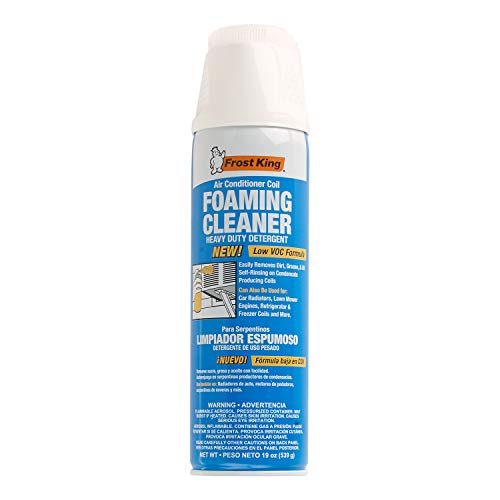
3. Frost King ACF19 Foaming Coil Cleaner: Best Value
Frost King ACF19 is the cleaner we recommend to most people who just want their car AC working better without fuss. It sprays on as a foam, expands into the fins, and breaks down the typical mix of pollen, bug residue, and dust that builds up on a daily driver. As a no-rinse aerosol it’s genuinely simple to use, and it’s widely stocked so you can grab a can almost anywhere. For routine seasonal maintenance it does the job and represents excellent value.
It does have limits. The foam is a touch lighter and less clingy than the Nu-Calgon products, so on a vertical condenser some of it slides before it fully penetrates, and against thick oily grime it needs a second application to keep up. Treat it as a strong general-purpose maintenance cleaner rather than a heavy restoration product and it consistently delivers.
- Expanding foam that penetrates between tight coil fins
- No-rinse formula that flushes away with normal condensate
- Works on both condenser and evaporator coils
Pros: Strong cleaning for an everyday, easy-to-find product; No rinsing or sprayer setup required; Generous can size for the money
Cons: Foam is slightly thinner than premium HVAC brands; Best on light to moderate buildup, not heavy grease
4. WEB Coil Cleaner Foaming Spray (WCOIL): Best No-Rinse
WEB WCOIL is built around convenience, and it delivers exactly that. The foam is engineered to self-rinse, draining away on its own so you can spray a condenser, let it dwell, and walk away. The biodegradable formula is noticeably less harsh than the industrial cleaners, which makes it a comfortable choice for tight spaces and for people who clean their coils often. On a moderately dirty car condenser it lifted dust and pollen cleanly and left no sticky residue behind.
The flip side of that gentleness is muscle. WCOIL is excellent for upkeep but it isn’t the product to throw at a condenser glazed with years of oily film, where it simply runs out of bite. It also takes a fairly heavy coat to blanket a wide automotive condenser, so a single can doesn’t go as far as you might expect. For regular, low-effort maintenance, though, it’s one of the easiest cleaners to live with.
- Self-rinsing foam that needs no water to clear away
- Biodegradable chemistry that’s gentler to handle
- Even spray pattern that coats fins consistently
Pros: Truly hands-off, no hose or rinse required; Gentle enough for frequent use on delicate fins; Pleasant, non-harsh working experience
Cons: Lighter cleaning power on stubborn grease; Needs a generous coat to fully cover a large condenser
5. DiversiTech TRIO Coil Cleaner Concentrate: Best Concentrate
DiversiTech TRIO is aimed at people who clean coils regularly and want to stop buying aerosols. As a foaming alkaline concentrate it dilutes to whatever strength the job calls for, light for a routine refresh and strong for a grimy condenser, and it foams up well in a pump sprayer to cling between the fins. Mixed properly it punches above its weight and the cost per cleaning is very low, which is the whole appeal of going the concentrate route.
The trade-off is effort and setup. There’s no spray-and-walk-away here. You need a sprayer, you need to get the dilution right, and at heavier mixes you need gloves and a rinse, just like any alkaline cleaner. Get the ratio wrong and it either underperforms or risks dulling the aluminum. For a hobbyist who maintains several vehicles or a home HVAC system as well, that bit of extra work pays off in value.
- Foaming alkaline concentrate for condenser and evaporator coils
- Adjustable dilution from light maintenance to heavy cleaning
- Brightening action that lifts grime and improves airflow
Pros: One gallon stretches into a large number of cleanings; Adjustable strength for different jobs; Strong foam that clings well when mixed properly
Cons: You must mix and use a sprayer yourself; Requires rinsing and protective gear at higher strength
6. ComStar CoilShine Coil Cleaner and Brightener Concentrate: Best Brightener
ComStar CoilShine earns its place for the cleaners that want the coil to look as good as it performs. It’s a foaming brightener concentrate, so beyond just lifting grime it tackles the dull gray oxidation that builds on older aluminum fins, leaving them noticeably brighter. On a tired condenser it both improved airflow and made the fins look refreshed, which matters on show cars or any build where the engine bay is on display.
Because it leans on a more aggressive brightening chemistry, handling caution is non-negotiable. It needs proper dilution, gloves, eye protection, and a careful rinse, and on thin automotive condenser fins you don’t want to leave it sitting or use it too concentrated. Used with respect it’s a strong performer, but it’s less forgiving than a simple foaming maintenance cleaner, so it suits a careful user rather than a quick once-over.
- Foaming brightener that restores dulled aluminum fins
- High dilution range for economical heavy use
- Cuts oily film and oxidation in one pass
Pros: Leaves fins visibly brighter and cleaner; Very economical at higher dilutions; Effective on both grime and light oxidation
Cons: Acidic brightener chemistry needs careful handling; Overuse can be aggressive on thin automotive fins
7. Nu-Calgon 4171-75 EvapPow'r-C Coil Cleaner Concentrate: Best for Tough Grease
Nu-Calgon EvapPow’r-C is the grease specialist of the group. It was built to handle heavily soiled coils, the kind coated in greasy, sticky film, and that strength carries over nicely to neglected automotive condensers that have collected oily road residue. Diluted appropriately it foams up thick and works deep into a multi-row coil pack, emulsifying grease that lighter cleaners glaze over. When the buildup is genuinely oily rather than just dusty, this is the tool.
It pays for that power with handling demands and process. This is a serious alkaline concentrate, so gloves, eye protection, careful dilution, and a thorough rinse are all required, and the multi-step routine makes it slower than grabbing an aerosol. It’s more product than a lightly dusty coil ever needs. Reserve it for the heavy, greasy jobs that defeat the foaming sprays, and it won’t let you down.
- High-foaming alkaline formula for greasy, kitchen-grade buildup
- Dilutes across a wide range for different soil levels
- Designed to penetrate deep coil packs
Pros: Excellent at cutting heavy grease and oily film; Generous dilution makes a gallon last; Foams thick to reach deep into the coil
Cons: Strong alkaline mix demands full protective gear; Mixing and rinsing make it slower than aerosols
Frequently Asked Questions
Can I clean my car AC condenser without removing it?
Yes, in most cases you can clean a condenser in place. The condenser sits at the very front of the vehicle ahead of the radiator, so you can usually reach it through the grille or from above once the hood is open. A no-rinse foaming cleaner is ideal here because it lets the dirt drain forward and down without you needing to flood the engine bay with water. For a deeper clean you can remove the front bumper or grille for better access, but for routine maintenance, spraying from the front and letting the foam work is enough to restore most of the lost airflow.
Will a condenser coil cleaner actually make my AC colder?
It can, sometimes dramatically, but only when poor cooling is caused by a dirty condenser rather than a refrigerant or compressor problem. The condenser rejects heat from the refrigerant, and when its fins are packed with bugs and grime it can’t shed that heat, so the whole system runs hot and the vents blow lukewarm. Clearing the fins restores airflow and heat exchange, and many people see several degrees of improvement at the vents. If your system is low on refrigerant or has a mechanical fault, however, no cleaner will fix that, so cleaning is a maintenance step, not a repair for a broken system.
Is no-rinse coil cleaner safe to use on aluminum fins?
Quality no-rinse foaming cleaners are formulated to be safe on the thin aluminum fins found in automotive condensers when used as directed. The key is following the dwell time on the label and not letting an aggressive product sit too long. Gentle self-rinsing foams are the safest for frequent use, while strong alkaline or acidic brightener concentrates clean harder but can dull or etch aluminum if left on too long or mixed too strong. Always start with the mildest product that will do the job, and avoid leaving any cleaner to dry on the fins.
How often should I clean my car's condenser coil?
For most drivers, cleaning the condenser once a year, ideally in spring before the hot season, keeps airflow healthy. If you drive a lot of dusty back roads, log heavy highway miles where bugs accumulate, or live somewhere with heavy pollen, twice a year is worth it. A quick visual check is the best guide: if you can see the fins clogged with bugs, leaves, or a film of grime, it’s time. Regular light cleaning is far easier than waiting until the coil is badly caked and needs a strong concentrate to restore.
Should I bend the fins straight while cleaning the condenser?
If the fins are bent, straightening them helps airflow, but do it carefully and separately from the chemical cleaning. Use a proper fin comb sized to your fin spacing and work gently, because the aluminum is very soft and easy to tear. The cleaning step and the straightening step are different jobs: clean and let the coil dry first, then comb out any flattened areas. Never use a screwdriver or hard tool, and don’t press hard, since damaged fins block airflow just as badly as dirt does.
Our Verdict
For most car owners, the Nu-Calgon EVAP Foam No Rinse Coil Cleaner is the top pick. Its thick clinging foam, no-rinse convenience, and HVAC-grade cleaning power make it the easiest way to restore a dirty automotive condenser without dragging out a hose. If your condenser is badly neglected and glazed with oily film, the Nu-Calgon Nu-Brite concentrate is the runner up and the better restoration tool, trading a little convenience for serious grease-cutting strength and strong value per use. Match the cleaner to how dirty your coil actually is and you’ll get cold air back the easy way.