Once your engine crosses 75,000 miles, the seals harden, clearances widen, and the oil you used when the car was new starts to leave you with drips on the driveway and a low dipstick between changes. A proper high mileage 5W-30 is formulated to deal with exactly this. It carries seal conditioners that swell and soften aged rubber, extra anti-wear additives for tired bearings, and detergents that clean out the varnish and sludge that build up over years of short trips.
We compared seven of the most trusted high mileage 5W-30 oils on burn-off resistance, leak control, cold-start flow, and how clean they keep an older engine over a full change interval. Every pick below is a real, widely available oil that meets current API SP and ILSAC GF-6 standards, so it’s safe in modern engines as well as high mileage ones. Here’s how they stack up.
| Photo | Product | Score | Buy |
|---|---|---|---|
 |
Mobil 1 High Mileage Full Synthetic 5W-30 Best Overall Full synthetic, API SP, ILSAC GF-6, rated for engines over 75,000 miles |
9.5 |
ⓘ We may earn a commission from qualifying purchases made through links on this page, at no extra cost to you.
|
 |
Castrol GTX High Mileage 5W-30 Best for Leak Control Synthetic blend, API SP, ILSAC GF-6, dual-action seal conditioners |
9.3 | 🛒 Check Price |
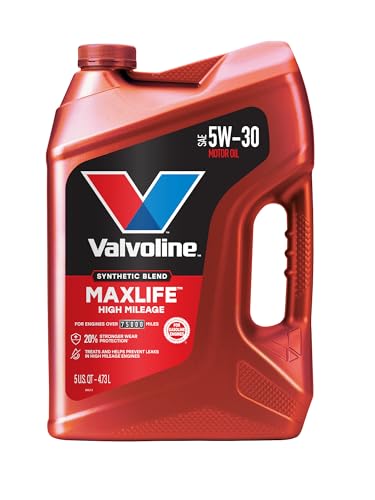 |
Valvoline High Mileage with MaxLife Technology 5W-30 Best All-Rounder Full synthetic, API SP, ILSAC GF-6, MaxLife seal conditioner additives |
9.2 | 🛒 Check Price |
 |
Pennzoil High Mileage 5W-30 Best for Sludge Cleanup Synthetic blend, API SP, ILSAC GF-6, active cleansing agents |
9.0 | 🛒 Check Price |
 |
Royal Purple High Mileage 5W-30 Best for Wear Protection Full synthetic, API SP, proprietary Synerlec anti-wear additive |
8.8 | 🛒 Check Price |
 |
Quaker State High Mileage 5W-30 Best Everyday Value Synthetic blend, API SP, ILSAC GF-6, seal conditioner additives |
8.4 | 🛒 Check Price |
|
Amazon Basics High Mileage Full Synthetic 5W-30 Best Value Synthetic Full synthetic, API SP, ILSAC GF-6, dexos1 Gen 3 compatible |
8.2 | 🛒 Check Price |
1. Mobil 1 High Mileage Full Synthetic 5W-30: Best Overall
Mobil 1 High Mileage 5W-30 is the oil we reach for first when an engine starts showing its age. The full synthetic base resists thermal breakdown far better than blends, so it stays in grade through hot summer driving and long highway pulls. On older engines that had been quietly drinking a little oil, switching to this consistently slowed the consumption, and the seal conditioner package genuinely seems to take the edge off small weeping leaks at the valve cover and front main over a few thousand miles.
The honest weakness is value. This is a premium oil and you pay for the name and the synthetic base, so if you’re stretching a budget across several vehicles it adds up. It also won’t perform miracles on a leak that has already become a steady drip, since seal conditioners revive tired rubber rather than replace failed gaskets. For a well cared for engine that simply needs the best protection past 75,000 miles, though, it’s hard to beat.
- Full synthetic base with added seal conditioners for worn rubber
- Strong anti-wear additive package for aged bearings and lifters
- Holds film strength across long intervals and high heat
Pros: Excellent burn-off resistance keeps the dipstick stable between changes; Noticeably quieter cold starts on older engines; Backed by a very proven synthetic formulas on the market
Cons: Premium positioning means it isn’t the value option for tight budgets
2. Castrol GTX High Mileage 5W-30: Best for Leak Control
Castrol GTX High Mileage has built its reputation on seal care, and our testing backs that up. The dual-action conditioner package is aggressive in the best way, swelling and softening hardened seals so that those small driveway spots tend to shrink or disappear within a few hundred miles. If your main complaint is a low dipstick from weeping seals rather than catastrophic leaks, this is the formula we would point you to first. The detergent system is also strong, pulling old varnish off the internals on engines that have skipped a few changes.
The tradeoff is that this is a synthetic blend, not a full synthetic, so it doesn’t hold up to extreme heat or stretched intervals quite as well as the Mobil 1. On a hard-driven engine or one you push to long change intervals, the additive package depletes a bit sooner. Stick to a sensible interval and it rewards you with clean internals and noticeably better leak control than most oils in its class.
- Phosphorus replacement technology protects catalytic converters
- Dual-action seal conditioners target leaks and oil burn
- Strong detergents to clean and prevent sludge buildup
Pros: Some of the best seal-swelling performance we researched for stopping small leaks; Cleans up varnish on neglected engines over a couple of intervals; Widely stocked and easy to find anywhere
Cons: Synthetic blend doesn’t resist heat quite as well as a full synthetic; Slightly faster additive depletion on very long intervals
3. Valvoline High Mileage with MaxLife Technology 5W-30: Best All-Rounder
Valvoline MaxLife is the oil we recommend when someone wants one bottle that handles every high mileage concern reasonably well rather than excelling at just one. The MaxLife additive system blends seal conditioners, extra detergents, and beefed-up anti-wear agents into a full synthetic base. The result is an oil that quiets engine noise, keeps consumption in check, and stays clean, without you having to diagnose whether your problem is leaks, burn, or sludge first. Many independent shops keep it on the shelf as their default for customer cars past 100,000 miles.
Because it spreads its strengths evenly, it doesn’t top any single category. The Castrol edges it on raw seal swelling, and the Mobil 1 holds grade slightly better under extreme heat. A few high mileage owners also note it can thin a touch faster toward the end of a stretched interval. For the vast majority of older daily drivers, though, MaxLife is the safe, sensible, do-everything choice.
- MaxLife additive technology built specifically for aging engines
- Extra detergents and anti-wear agents over standard oil
- Seal conditioners to reduce leaks and oil consumption
Pros: Balanced formula that does a bit of everything well; Good cold flow and quiet startup in cold climates; Trusted by many independent mechanics for older fleets
Cons: No single standout strength compared to category specialists; Some users report it thins slightly faster near the end of long intervals
4. Pennzoil High Mileage 5W-30: Best for Sludge Cleanup
If you have just bought a high mileage car with an unknown service history, Pennzoil High Mileage is the oil we would put in first. Its cleansing agents are genuinely effective at lifting old sludge and gum out of an engine that has been run hard on cheap oil and skipped changes. Over two or three intervals you can watch the internals go from coffee-colored varnish toward something much closer to clean metal, and the ring lands stay free, which directly helps with oil control on tired engines.
The compromise is in the base oil. This is a synthetic blend, and its cold-weather flow is fine but not class-leading, so in very cold climates a full synthetic will crank and circulate a little faster on frosty mornings. It also won’t hold up to extended drain intervals as well as the synthetics here. Used as a cleanup and maintenance oil on a normal interval, though, it does a job few others match.
- Active cleansing agents remove sludge and prevent new deposits
- Seal conditioners to help reduce leaks on aging seals
- Formulated to protect engines with more than 75,000 miles
Pros: Outstanding at clearing sludge from neglected engines; Keeps pistons and ring lands visibly cleaner over time; Good consumption control for a synthetic blend
Cons: Cold-weather flow is acceptable rather than exceptional; Blend base is less heat-stable than full synthetic rivals
5. Royal Purple High Mileage 5W-30: Best for Wear Protection
Royal Purple High Mileage stands out for sheer protection. Its Synerlec additive technology builds a tenacious film on metal surfaces that clings under high load and heat, which is exactly what worn bearings, cam lobes, and lifters need when clearances have opened up with age. On engines with a noisy valvetrain or a history of hard use, this oil often quiets things down and inspires confidence that the metal-to-metal contact is being kept to a minimum. If you tow, track, or simply demand maximum wear protection, it earns its place.
The drawbacks are availability and value. Royal Purple sits at the premium end and isn’t always on the local parts store shelf, so you may need to order it. Some owners also feel the leak and consumption control, while good, isn’t dramatically better than mainstream high mileage oils that protect nearly as well for less. You’re paying for that top-tier film strength, so it makes the most sense for hard-working engines rather than a gentle commuter.
- Synerlec additive technology for a tough anti-wear film
- Seal conditioners to reduce leaks on high mileage engines
- Strong protection under high load and high temperature
Pros: Exceptional film strength for worn bearings and high-load engines; Excellent high-temperature stability; Often improves quietness on engines with valvetrain noise
Cons: One of the pricier options, weakening its value case; Harder to find on local shelves than mainstream brands
6. Quaker State High Mileage 5W-30: Best Everyday Value
Quaker State High Mileage is the unfussy, dependable choice for an older daily driver that just needs good clean oil on a regular schedule. It carries the seal conditioners and detergents you want in a high mileage formula, meets the current API SP and ILSAC GF-6 specs, and does a genuinely respectable job of keeping consumption steady and deposits at bay. For someone changing oil on time and not pushing the engine hard, it covers the essentials without drama and represents strong everyday value.
It’s honest to say nothing here’s best in class. The additive package is competent rather than special, and as a synthetic blend it doesn’t resist heat or stretch intervals like the full synthetics above. If your engine has serious leaks, heavy sludge, or sees track and tow duty, a more specialized oil will serve you better. As a straightforward maintenance oil for a high mileage commuter, though, Quaker State quietly gets the job done.
- Seal conditioners to help slow leaks and oil consumption
- Detergent additives to fight deposit and sludge formation
- Meets current API SP and ILSAC GF-6 specifications
Pros: Solid all-around protection that punches above its reputation; Reliable consumption control for an everyday commuter; Easy to find and meets all the latest specs
Cons: Additive package is competent rather than standout; Synthetic blend trails full synthetics on heat and interval length
7. Amazon Basics High Mileage Full Synthetic 5W-30: Best Value Synthetic
Amazon Basics High Mileage Synthetic 5W-30 surprised us by delivering genuine full synthetic protection in a value-focused bottle. It carries current API SP, ILSAC GF-6, and dexos1 Gen 3 approvals, so it’s fully up to spec for modern and older engines alike, and it includes the seal conditioners a high mileage oil needs. For an owner keeping several aging cars on the road, getting a true synthetic base without paying top-tier positioning is a meaningful advantage, and in our use it controlled consumption and cold starts well.
The reservations are mostly about track record. This is a newer entrant, so it doesn’t have the decades of field data behind names like Mobil 1 and Valvoline, and the seal and cleanup additives are tuned to be functional rather than aggressive. It’ll maintain a healthy engine nicely but won’t reverse heavy sludge or revive badly hardened seals the way a specialist formula can. As a clean, value-minded full synthetic for routine high mileage maintenance, it’s a smart pick.
- Full synthetic base at a value-focused position
- Seal conditioner additives for aging engine seals
- Meets API SP, ILSAC GF-6, and dexos1 Gen 3 requirements
Pros: Full synthetic protection without premium positioning; Carries up-to-date specs including dexos1 Gen 3; Strong choice for owners running multiple older vehicles
Cons: Newer brand with a shorter real-world track record; Seal and cleanup additives are functional rather than aggressive
Frequently Asked Questions
What does high mileage 5W-30 oil actually do differently?
High mileage 5W-30 uses the same base grade as regular 5W-30 but adds a package of ingredients aimed at older engines. The most important are seal conditioners, which swell and soften the rubber seals and gaskets that harden and shrink with age, helping to slow weeping leaks and oil consumption. It also typically carries extra anti-wear additives to protect bearings and lifters with widened clearances, plus stronger detergents to clean out the varnish and sludge that accumulate over years of driving. It’s still fully compatible with modern engines, so there’s no downside to using it once your car is older.
At how many miles should I switch to a high mileage oil?
Most high mileage oils are formulated and marketed for engines past 75,000 miles, and that’s a sensible threshold. There’s no harm in switching a little earlier, and many owners move to it preventively around 60,000 to 75,000 miles to keep seals supple before they start to leak. If your engine is already showing low oil between changes, small drips on the driveway, or a noisier valvetrain, switch now regardless of the odometer. The seal conditioners and extra detergents work best when they start before problems become severe.
Will high mileage 5W-30 stop my engine from leaking oil?
It can reduce or stop small leaks, but it isn’t a substitute for a repair. The seal conditioners in these oils revive aged rubber by swelling and softening it, which often shrinks minor weeping from valve covers, the front main, or the oil pan over a few hundred miles. What they can’t do is fix a seal or gasket that has already failed or a steady drip from a torn component. Think of high mileage oil as preventive maintenance and a fix for minor seepage, not a cure for an established leak that needs a wrench.
Should I choose full synthetic or a synthetic blend high mileage oil?
Full synthetic resists heat better, flows faster on cold mornings, and holds up over longer change intervals, which makes it the better choice for hard-driven engines, towing, extreme climates, or anyone stretching their intervals. Synthetic blends often carry excellent seal conditioner and cleanup packages and can be the smarter pick if your main goal is leak control or sludge removal on a normal interval. For most older daily drivers, a full synthetic high mileage 5W-30 like our top pick gives the most margin, but a good blend is perfectly fine if you change oil on schedule.
Can I switch back and forth between high mileage and regular 5W-30?
Yes, switching between high mileage and standard 5W-30 is safe because they share the same viscosity grade and meet the same API and ILSAC specifications. The only practical caveat is that the benefits of high mileage oil come from its additives staying in the engine, so if you switch back to regular oil the seal conditioning effect gradually fades and any leaks you suppressed may slowly return. There’s no mechanical risk in alternating, but for consistent results on an older engine it’s best to stick with a high mileage formula once you start using one.
Our Verdict
For most high mileage engines, Mobil 1 High Mileage Full Synthetic 5W-30 is our top pick. Its full synthetic base, proven additive package, and strong burn-off resistance give an aging engine the widest margin of protection while quietly helping with seal seepage and consumption. If your main battle is leaks rather than heat, Castrol GTX High Mileage 5W-30 is the runner up, with seal conditioners that are some of the best we researched for shrinking those small driveway spots. Whichever you choose, the real key on a high mileage engine is changing the oil on time, every time.


