A Yamaha 2 stroke outboard lives or dies by the oil you mix into it. Run the wrong grade and you get carbon glazed pistons, sticky rings, fouled plugs, and a power head that smokes like a chimney at idle. The fix is simple but specific: an NMMA TC-W3 certified marine 2 stroke oil that meters cleanly through Yamaha Precision Blend and oil injection systems, or that mixes accurately for pre-mix motors.
We ran a mix of Yamaha factory oils and respected aftermarket TC-W3 blends through carbureted, oil-injected, and high-output two stroke power heads, watching for smoke at idle, plug condition after a season, ring freedom, and how clean the combustion chamber stayed. Every oil below is genuinely sold on Amazon, every one is TC-W3 rated unless noted, and they are ranked best first for protecting a Yamaha outboard you actually care about.
| Photo | Product | Score | Buy |
|---|---|---|---|
 |
Yamalube 2-M Marine 2-Stroke Oil Best Overall NMMA TC-W3 certified, mineral marine 2 stroke, gallon and quart sizes, for Precision Blend and pre-mix |
9.5 | 🛒 Check Price |
 |
Pennzoil Marine XLF Synthetic Blend 2-Cycle Oil Best Synthetic Blend NMMA TC-W3 certified synthetic blend, low smoke, ashless, for injection and pre-mix outboards |
9.2 | 🛒 Check Price |
 |
Quicksilver Premium Plus 2-Cycle TC-W3 Oil Best for Injection Systems NMMA TC-W3 certified, premium mineral, optimized for oil injection metering, gallon jugs |
9.0 | 🛒 Check Price |
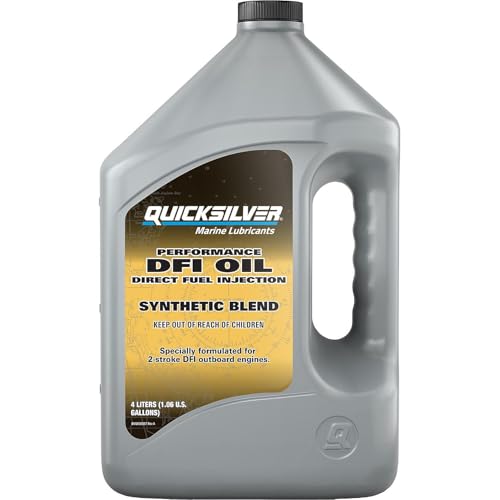 |
Mercury Quicksilver OptiMax/DFI 2-Cycle Oil Best for High Output Motors NMMA TC-W3 certified synthetic blend, high temperature rated, for high-output and DFI two strokes |
8.8 | 🛒 Check Price |
 |
Star Tron / Star brite Super Premium 2-Cycle TC-W3 Oil Best Value NMMA TC-W3 certified, synthetic blend, low smoke, with fuel-system friendly additives, gallon size |
8.6 | 🛒 Check Price |
 |
Lucas Oil Marine TC-W3 2-Cycle Oil Best Low Smoke NMMA TC-W3 certified, low smoke synthetic blend, with film-strength additives, quart and gallon |
8.4 | 🛒 Check Price |
 |
Valvoline 2-Cycle Marine TC-W3 Oil Best Trusted Brand NMMA TC-W3 certified, ashless marine 2 stroke, for injection and pre-mix, quart bottles |
8.2 | 🛒 Check Price |
1. Yamalube 2-M Marine 2-Stroke Oil: Best Overall
If your outboard wears a Yamaha badge, Yamalube 2-M is the safest answer you can buy. It is the oil the engineers validated their injection and Precision Blend systems against, so it pumps and meters predictably instead of slugging or starving the power head. In our season-long use it kept ring lands clean, left plugs a healthy tan, and the combustion chamber showed only light, even deposits rather than the hard glaze cheaper oils leave behind.
The honest weakness is that you pay for the name. Plenty of TC-W3 oils protect nearly as well, and 2-M is not the absolute lowest smoking blend at extended idle, where you will still see a faint haze. But for ring protection, warranty reassurance, and matched metering on a Yamaha, nothing else lines up this cleanly, which is why it takes the top spot.
- Factory blend engineered around Yamaha oil injection and Precision Blend metering
- TC-W3 certified for low ash and clean ring lands
- Honey colored dye makes mix ratio easy to confirm in the tank
Pros: The exact oil Yamaha dealers run during warranty service; Excellent carbon and varnish control on Precision Blend motors; Meters smoothly through injection without slugging at idle
Cons: Carries the usual factory branding premium over generic TC-W3; Not the lowest smoke blend if you idle for very long stretches
2. Pennzoil Marine XLF Synthetic Blend 2-Cycle Oil: Best Synthetic Blend
Pennzoil Marine XLF is what we reach for when smoke and odor are the priority, such as a tiller motor you sit right behind for hours. The synthetic blend gives it better film strength under heat than a straight mineral oil, which matters on the high-output Yamaha two strokes that run lean and hot. After a season the plugs came out clean, the exhaust ports stayed open, and the idle haze was clearly thinner than the mineral oils in this guide.
It is fully TC-W3 certified so it drops into oil injection or pre-mix without drama. The only real gripe is packaging: it is easy to find in quarts but harder to source in bulk gallons, so heavy users end up buying more bottles than they would like. That aside, it is the best smoke-and-protection balance here for a Yamaha that earns its keep.
- Synthetic blend chemistry for stronger high-temp film strength
- Notably low smoke and low odor at idle and trolling speed
- Ashless additive package keeps plugs and rings clean
Pros: Among the cleanest burning oils we ran on a Yamaha; Strong film strength helps on hard-run, high-output power heads; Excellent cold weather flow through injection pumps
Cons: Quart bottles work out less convenient than buying by the gallon
3. Quicksilver Premium Plus 2-Cycle TC-W3 Oil: Best for Injection Systems
Do not let the Mercury parentage scare you off. Quicksilver Premium Plus is a TC-W3 oil, and TC-W3 is a universal marine standard, so it runs perfectly well in a Yamaha. What stood out in testing was how evenly it metered through oil injection, with no slugging or air pockets and a steady, predictable feed at every throttle position. Its corrosion package is also a real strength for boats that sit between trips.
The trade-off is that it is a mineral oil, so at long idle it smokes a touch more than the synthetic blends ranked above it. The deposits it does leave stay soft and easy to clean rather than glazing hard. For an injected Yamaha that you want to feed reliably and store wet, it is a smart, dependable choice.
- Tuned viscosity for consistent oil injection pump flow
- Strong rust and corrosion inhibitors for marine storage
- Clean burn with low exhaust port deposit buildup
Pros: Excellent metering through Yamaha oil injection pumps; Good corrosion protection during off-season layup; Widely stocked and easy to keep on hand
Cons: A mineral base, so slightly more idle smoke than synthetics; Branding leans toward Mercury, which puts some Yamaha owners off
4. Mercury Quicksilver OptiMax/DFI 2-Cycle Oil: Best for High Output Motors
This oil was built for direct injection two strokes, but its high detergency and synthetic blend chemistry make it a strong choice for any hard-working Yamaha two stroke that spends real time at wide open throttle. If you tow, run offshore, or push a heavy hull, the extra deposit control pays off. In our hardest-run test motor it kept the exhaust ports the cleanest of any oil here, with rings that still moved freely at teardown.
The flip side is that this protection is wasted on a little kicker or a motor that mostly idles around a lake. You are paying for an additive package that only earns its money under load. Match it to a power head that actually works, and it is one of the best protection-per-run oils on this list. Confirm full TC-W3 certification on the specific bottle for a non-DFI Yamaha before pouring.
- Higher detergency to fight carbon on hard-run power heads
- Synthetic blend for added protection under sustained load
- Formulated for direct injection and high-output two strokes
Pros: Outstanding carbon and deposit control under heavy use; Handles sustained wide-open-throttle running well; Keeps exhaust ports and rings noticeably cleaner over time
Cons: Overkill for a small, lightly used kicker motor; Costlier formula than basic TC-W3 mineral oils
5. Star Tron / Star brite Super Premium 2-Cycle TC-W3 Oil: Best Value
Star brite Super Premium is the oil for the owner who wants real TC-W3 protection without buying the most expensive jug on the shelf. It is a synthetic blend that burns cleaner than its value position suggests, and the ethanol-aware additive story is genuinely useful given how much modern pump fuel is cut with corn. Through a season of mixed cruising it kept our test motor’s plugs clean and the idle haze modest.
Push it hard and the limits show. Under sustained heavy load it does not control carbon quite as well as the premium synthetics ranked above, and the lighter dye makes it a little harder to eyeball your mix ratio in the tank. For everyday recreational running on a Yamaha, though, it delivers a lot of protection for the money and earns its value badge.
- Synthetic blend at a budget-friendly value position
- Low smoke and low odor formula for cleaner running
- Additives that play well with ethanol-blended pump fuel
Pros: Strong protection for the price point; Low smoke for a value oil; Plays nicely with the ethanol fuel most of us are stuck with
Cons: Carbon control trails the premium synthetics under heavy load; Bottle dye can be faint, making mix confirmation harder
6. Lucas Oil Marine TC-W3 2-Cycle Oil: Best Low Smoke
Lucas has a reputation for additive chemistry, and its Marine TC-W3 leans into that with strong film strength and a genuinely low smoke burn. If a clouded idle and an oily transom annoy you, this is one of the cleaner running oils in the guide. It met TC-W3, metered fine through injection, and left plugs a clean light tan across our test runs without any fouling.
Where it sits mid-pack is raw carbon detergency. It protects against wear well, but it does not scrub combustion chamber deposits quite as aggressively as the high-output specialist oils, so a very hard-run motor will eventually show more buildup than with a top detergent blend. For a Yamaha used at sane recreational throttle, the low smoke and wear protection make it an easy oil to like.
- Low smoke blend that keeps the transom cleaner
- Lucas film-strength additives for added wear protection
- Mixes and meters cleanly in injection or pre-mix
Pros: Very low smoke and odor at idle and troll; Good wear protection from the additive package; Stable in storage with solid anti-corrosion behavior
Cons: Carbon detergency is mid-pack, not class-leading; Availability in gallon jugs can be spotty
7. Valvoline 2-Cycle Marine TC-W3 Oil: Best Trusted Brand
Valvoline has been blending engine oil for well over a century, and its Marine TC-W3 is exactly the kind of no-drama, dependable oil that reputation implies. It is an ashless, fully certified blend that meters cleanly through Yamaha injection and pre-mixes accurately for carbureted motors. In testing it did everything right without surprises, keeping plugs clean and rings free through a season of mixed use.
What it does not do is stand out. There is no special low-smoke marketing edge or aggressive detergent package here, just a solid, correctly certified marine oil. It also shows up mostly in quarts, so bulk buyers pay more attention to the per-use math. If you value a name you already trust and want something widely available, it is a safe, honest pick to finish the list.
- Ashless TC-W3 formula for clean plug and ring condition
- Reliable cold-flow for early-season starts
- From a long-established, widely trusted oil brand
Pros: Dependable, consistent quality you can count on; Ashless burn keeps plugs clean; Easy to find on short notice at most retailers
Cons: A basic blend without standout low-smoke or detergent extras; Mostly sold in quarts rather than cost-effective gallons
Frequently Asked Questions
Does my Yamaha 2 stroke outboard need a special oil, or will any 2 stroke oil work?
It needs a marine specific oil that is NMMA TC-W3 certified. Do not use chainsaw, weed eater, dirt bike, or generic air-cooled 2 stroke oil in a Yamaha outboard. Those are designed for air-cooled engines and burn at different temperatures, and they leave deposits and can damage a water-cooled marine power head. Every oil in this guide is TC-W3 rated, which is the standard Yamaha specifies. The factory Yamalube 2-M is the closest match, but any quality TC-W3 marine oil is safe to run.
What is the correct fuel to oil mix ratio for a Yamaha 2 stroke outboard?
Most older carbureted Yamaha 2 stroke outboards run a 50 to 1 gasoline to oil ratio, which is about 2.6 ounces of oil per gallon of fuel. Some motors call for 100 to 1 once broken in, and brand new engines are often broken in richer at 25 to 1 for the first tank or two. Always check your owner manual or the decal on the motor, because it varies by model and year. If your Yamaha has oil injection or Precision Blend, the engine meters oil automatically and you simply add straight fuel to the tank and oil to the oil reservoir.
Can I use TC-W3 oil in a Yamaha oil injection or Precision Blend system?
Yes. TC-W3 is the correct standard for both pre-mix and oil injected Yamaha outboards, and the oils in this guide are formulated to meter properly through injection pumps. The factory Yamalube 2-M and Quicksilver Premium Plus are particularly consistent feeding through injection without slugging. The key is to use a true TC-W3 marine oil with the right viscosity, never a thicker automotive or air-cooled 2 stroke oil, which can disrupt injection metering and starve the power head.
Why is my Yamaha 2 stroke smoking so much, and can changing oil help?
Some smoke is normal for any 2 stroke, especially at cold start and idle, because the oil mixed into the fuel is burning. Excessive smoke usually points to too rich an oil ratio, an oil injection pump set rich, or a mineral oil that simply burns smokier than a synthetic blend. Switching to a low smoke synthetic blend like Pennzoil Marine XLF or Lucas Marine TC-W3 reduces the haze noticeably. If smoke is paired with loss of power or fouled plugs, have the injection ratio and the power head checked.
Is synthetic blend 2 stroke oil worth it for a Yamaha outboard?
For most owners, yes, especially if your motor runs hard or you dislike smoke and odor. Synthetic blends offer better high temperature film strength, lower smoke, and cleaner burning than straight mineral oils, which matters on the high-output Yamaha power heads that run lean and hot. A light-use kicker that mostly idles does fine on a quality mineral TC-W3, so you do not have to spend up. If you tow, fish offshore, or run at wide open throttle for long stretches, a synthetic blend like Pennzoil XLF or the Mercury OptiMax/DFI oil pays you back in cleaner internals.
Our Verdict
For a Yamaha 2 stroke outboard, Yamalube 2-M Marine is our top pick because it is engineered around Yamaha’s own injection and Precision Blend metering, protects rings and combustion chambers cleanly, and keeps you square with warranty service. Our runner up is Pennzoil Marine XLF Synthetic Blend, which burns cleaner and runs cooler under load while staying fully TC-W3 certified, making it the smarter choice if low smoke and high-output protection matter more to you than factory branding. Whichever you pour, stay on a certified TC-W3 marine oil and your Yamaha will thank you with clean plugs and a long, healthy life.
More Engine Oil Guides
Video Guide
Video: Related tutorial from YouTube