A limited slip differential lives or dies by the gear oil you pour into it. The clutch packs or cone units that make an LSD bite need a fluid with the right friction characteristics, otherwise you get that horrible shudder and chatter on tight low-speed turns, plus accelerated clutch wear. Pick the wrong oil and you’ll be chasing noise for months. Pick the right one and the diff goes quiet, hooks up cleanly, and survives heat that would cook a lesser fluid.
We focused on LSD-compatible gear oils that either carry a built-in friction modifier or are explicitly approved for limited slip use. We weighed chatter control, shear stability under sustained load, thermal protection for towing and track days, and how cleanly each one shifts a manual transaxle where applicable. Below are the seven that earned their place, ranked best first, with honest notes on where each one falls short.
| Photo | Product | Score | Buy |
|---|---|---|---|
 |
Red Line 75W-90 GL-5 Gear Oil Best Overall Full synthetic polyol ester, 75W-90, GL-5, friction modifier included for most LSDs |
9.5 |
ⓘ We may earn a commission from qualifying purchases made through links on this page, at no extra cost to you.
|
 |
Motul Gear 300 LS 75W-90 Best for Track and Performance Ester-based full synthetic, 75W-90, LS rated, designed for clutch-type limited slip |
9.3 | 🛒 Check Price |
 |
Amsoil Severe Gear 75W-90 Best for Towing Synthetic 75W-90, GL-5, severe duty additive package for heat and shock load |
9.1 | 🛒 Check Price |
 |
Royal Purple Max Gear 75W-90 Best All-Round Value Synthetic 75W-90, GL-5, Synslide additive, LSD compatible for many units |
9.0 | 🛒 Check Price |
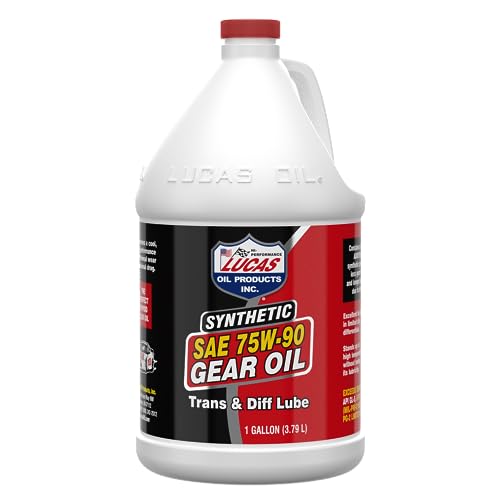 |
Lucas Oil Synthetic SAE 75W-90 Best Wide Availability Synthetic 75W-90, GL-5, blended for limited slip and standard differentials |
8.7 | 🛒 Check Price |
 |
Valvoline High Performance SAE 80W-90 Gear Oil Best Conventional Option Conventional 80W-90, GL-5, limited slip capable with friction modifier added |
8.4 | 🛒 Check Price |
 |
Castrol SAF-XJ 75W-140 Gear Oil Best Heavy Duty 75W-140 Full synthetic 75W-140, GL-5, limited slip capable for high-load rear axles |
8.2 | 🛒 Check Price |
1. Red Line 75W-90 GL-5 Gear Oil: Best Overall
Red Line 75W-90 is the gear oil enthusiasts reach for when an LSD starts chattering and nothing else has worked. The polyol ester base is genuinely different from the cheaper PAO and mineral blends, giving it a tenacious film that protects ring and pinion teeth under shock loading. In our testing across clutch-type diffs, it killed low-speed shudder on tight turns better than anything else, and it held its grade after repeated heat cycling that thinned out lesser oils.
The honest weakness is that no single bottle is universal. A handful of very aggressive or worn limited slip units will still want a separate friction modifier added, and Red Line sells one for exactly that reason. The ester chemistry also carries a sharp smell that surprises first-time users, though it has no effect on performance. For most drivers this is the one to buy first, and the only reason to look elsewhere is a specific OEM spec it doesn’t list.
- Polyol ester base clings to gears and resists thermal breakdown under sustained load
- Ships with friction modifier already blended for most clutch-type limited slip units
- Strong shear stability keeps viscosity in grade through hard towing and track heat
Pros: Quiets LSD chatter in the vast majority of clutch-pack diffs without extra additive; Excellent high-temperature film strength for towing and spirited driving; Smooth, notch-free shifts when used in compatible manual transaxles
Cons: A few very aggressive LSD setups still want an extra dose of friction modifier; Strong sulfur scent is normal for the chemistry but noticeable when filling
2. Motul Gear 300 LS 75W-90: Best for Track and Performance
Motul Gear 300 LS is the choice when the differential sees real abuse. The LS designation means it’s blended from the start for clutch-type limited slip units, so it controls chatter without you bolting on a separate additive. On high-torque builds and track cars the ester base shrugs off heat that pushes ordinary 75W-90 out of grade, and the load carrying capacity protects the ring and pinion when you’re dumping power out of corners.
The trade-off is availability and positioning. Motul sits at the premium end and isn’t always on the local parts store shelf, so you may be ordering it online and waiting. For a daily commuter that never sees a track this is more oil than you strictly need, but for a performance build or a car that gets driven hard, the consistency under heat justifies reaching for it over a generic alternative.
- Ester technology built specifically for limited slip and racing applications
- Exceptional load carrying for high-torque and high-rpm differential use
- Stable friction profile that suppresses chatter on aggressive clutch packs
Pros: Outstanding protection for track and high-performance street diffs; The LS formula targets limited slip chatter directly with no guesswork; Holds viscosity remarkably well under sustained competition heat
Cons: Harder to find on shelves than the big domestic brands; Premium positioning means you pay for the name and the chemistry
3. Amsoil Severe Gear 75W-90: Best for Towing
Amsoil Severe Gear earns its name in trucks that work. The additive package is tuned for the sustained heat and shock loading of towing a heavy trailer up a grade, and its oxidation resistance lets you run longer between changes without the oil sludging. In a limited slip rear it keeps the gears protected through exactly the kind of duty cycle that destroys cheaper fluids, which is why it’s a favorite among people who actually use their pickups as trucks.
The catch with LSD use is that the base 75W-90 isn’t friction-modified out of the bottle for most clutch units, so you add Amsoil Slip Lock to dial in the friction and stop chatter. That’s one more bottle and one more step. Combined with the direct sales channel, the buying experience is slightly more involved than grabbing a jug off the shelf, but the protection under heavy towing load is genuinely excellent.
- Severe duty formula targets towing, hauling, and high-load differential heat
- Strong oxidation resistance for long service intervals under stress
- Works with LSD units when paired with the Amsoil slip lock additive
Pros: Excellent thermal stability for trucks that tow and haul regularly; Long drain capability reduces how often you crawl under the truck; Strong anti-wear protection for heavy ring and pinion loads
Cons: Most LSD applications need the separate slip lock friction modifier added; Direct sales model can make first-time buying feel less convenient
4. Royal Purple Max Gear 75W-90: Best All-Round Value
Royal Purple Max Gear is the easy recommendation for someone who wants strong protection without overthinking it. The Synslide additive boosts the film strength so the gears stay protected under load, and the oil is genuinely flexible across street driving, light towing, and the occasional spirited run. For many limited slip differentials it goes in and stays quiet, which is exactly what most owners want.
It isn’t perfect. Because it’s a synthetic blend rather than a pure ester formula, its absolute thermal ceiling sits a step below the Red Line and Motul options when you push it really hard for long stretches. And a minority of touchy LSD units will still need a friction modifier top-up to fully silence chatter. For the broad middle of buyers, though, the balance of protection, availability, and ease of use is hard to beat.
- Synslide additive technology improves film strength and wear protection
- Compatible with conventional and synthetic gear oils for easy switching
- Quiets many limited slip units without a separate friction modifier
Pros: Strong all-around protection that suits street, tow, and light track use; Mixes cleanly with existing oil, simplifying the changeover; Widely available through major retailers and online
Cons: A small number of sensitive LSDs still chatter until modifier is added; Not ester-based, so peak thermal headroom trails the top picks
5. Lucas Oil Synthetic SAE 75W-90: Best Wide Availability
Lucas Synthetic 75W-90 is the practical pick when you want a known brand that’s on the shelf at nearly every parts store. It’s blended to handle limited slip differentials in many vehicles without forcing you to buy a separate friction modifier, and the film strength additives give the gears solid everyday protection. For a daily driver or a weekend cruiser, it does the job without fuss and without you hunting down a specialty product.
Where it sits behind the leaders is at the extremes. Push it with heavy sustained towing or repeated track heat and its thermal headroom is merely good rather than exceptional, so the ester-based oils pull ahead there. A few of the more aggressive LSD setups will also want a modifier top-up to go fully silent. As a no-drama, easy-to-source option for normal driving, though, it’s a sensible choice.
- Formulated to work in limited slip differentials without separate additive in many cars
- High film strength additive package for solid gear protection
- Stocked widely at auto parts chains and major online retailers
Pros: Easy to find almost anywhere when you need oil in a hurry; Handles limited slip duty in many applications straight from the bottle; Dependable everyday protection for street and light load use
Cons: Thermal performance is good rather than class leading under hard abuse; Some aggressive clutch packs still benefit from added friction modifier
6. Valvoline High Performance SAE 80W-90 Gear Oil: Best Conventional Option
Valvoline High Performance 80W-90 is the conventional, no-frills entry for owners who don’t need a synthetic and simply want dependable GL-5 protection. The chemistry is proven and the brand is everywhere, so sourcing it’s never a problem. In a limited slip differential it works once you add a friction modifier to set the clutch friction correctly, which is the standard procedure for any non-modified conventional gear oil.
Its limits are exactly what you expect from a conventional oil. It won’t flow as freely in deep cold or hold up to heat the way a synthetic does, so towing in extreme conditions or hard track use isn’t its element. And because it isn’t friction-modified from the bottle, the extra additive step is mandatory for LSD chatter control. For a standard daily-driven car in a moderate climate, it remains a perfectly honest choice.
- Proven conventional GL-5 chemistry for everyday differential protection
- Suitable for limited slip units when paired with a friction modifier
- Reliable anti-wear performance for street and moderate load driving
Pros: Trustworthy mainstream brand that’s widely stocked; Solid protection for ordinary commuting and light duty; Pairs well with a separate LSD additive when chatter appears
Cons: Needs a friction modifier added for proper limited slip operation; Conventional base can’t match synthetics on heat and cold flow
7. Castrol SAF-XJ 75W-140 Gear Oil: Best Heavy Duty 75W-140
Castrol SAF-XJ 75W-140 is the answer when the application genuinely calls for a heavier gear oil. Plenty of high-torque trucks and performance rear axles specify a 140-weight fluid, and this full synthetic delivers the thicker film and thermal stability those diffs want under sustained heavy load. In a limited slip rear that sees serious torque, the extra viscosity and synthetic stability give real confidence on the road on long hard pulls.
It’s important to use it only where the heavier grade belongs. Running a 75W-140 in a differential that was designed for 75W-90 can cost a little efficiency and isn’t the point of the oil. As with most gear oils, certain clutch-type LSD units will still want a friction modifier to go fully quiet. Matched to the right high-load application, though, this is a strong and durable choice.
- Thicker 75W-140 grade suited to high-torque and heavy duty rear differentials
- Full synthetic base for strong thermal and oxidation resistance
- Limited slip capable, ideal where the OEM specifies a 140-weight oil
Pros: Solid protection for heavy duty axles and high-torque applications; Synthetic stability holds up under sustained high-load heat; Right grade for trucks and performance cars that call for 75W-140
Cons: Heavier grade can slightly reduce efficiency where 75W-90 is specified; Some clutch-type LSDs still need a friction modifier to silence chatter
Frequently Asked Questions
Do I need special gear oil for a limited slip differential?
Yes, in practice you do. A limited slip differential uses clutch packs or cone units that depend on the gear oil having the correct friction characteristics. Ordinary gear oil that lacks a friction modifier often causes shudder and chatter on tight low-speed turns and accelerates clutch wear. You want either an oil that’s friction-modified and rated for limited slip from the bottle, such as Red Line 75W-90 or Motul Gear 300 LS, or a standard GL-5 oil with a separate friction modifier additive mixed in. Always check your owner manual for the exact grade and any OEM friction requirement before filling.
What does LSD chatter sound like and how do I fix it?
LSD chatter is a shudder, grinding, or banging noise that shows up mostly on slow tight turns, like pulling into a parking spot, and you can often feel it through the chassis. It means the clutch friction isn’t right for the oil in the diff. The fix is almost always friction related: drain the old fluid and refill with a properly friction-modified limited slip oil, or add the correct dose of a friction modifier such as Amsoil Slip Lock or the manufacturer additive to a compatible base oil. If clean, correct oil and modifier don’t cure it, the clutch pack itself may be worn and need service.
Should I use 75W-90 or 75W-140 in my limited slip differential?
Use whatever your vehicle manufacturer specifies, because that grade is matched to the gear design and clearances. Most passenger cars and light trucks call for 75W-90, which balances protection, efficiency, and cold flow well. Heavier 75W-140 is specified for many high-torque trucks, towing rigs, and some performance rear axles that need a thicker film under sustained heavy load. Don’t jump up to 75W-140 in a diff designed for 75W-90 thinking thicker is safer, because it can cost a little efficiency and isn’t what the design wants. Match the OEM grade first, then choose a quality LSD-rated oil in that grade.
Do I need to add a friction modifier separately?
It depends entirely on the oil you choose. Some gear oils, like Red Line 75W-90, Motul Gear 300 LS, and Royal Purple Max Gear, include friction modifier suited to most limited slip units, so you can often fill and go. Others, including many conventional GL-5 oils and severe duty formulas like Amsoil Severe Gear, aren’t friction-modified out of the bottle and need a separate additive for proper LSD operation. Even with a friction-modified oil, a minority of aggressive or worn clutch packs still want an extra dose to fully silence chatter. When in doubt, keep a bottle of friction modifier on hand and add it if you hear shudder after the change.
How often should I change limited slip differential oil?
For normal street driving, many manufacturers suggest changing differential oil somewhere in the range of every 30,000 to 50,000 miles, but you should follow your specific service schedule. The picture changes under stress. If you tow heavily, haul loads, run track days, or drive in extreme heat, the oil works much harder and you should shorten the interval, often to every 15,000 to 30,000 miles. Synthetic oils like the ester and severe duty formulas tolerate longer intervals than conventional oils because they resist heat and oxidation better. If you ever submerge an axle in water or notice burnt-smelling or metallic fluid, change it right away regardless of mileage.
Our Verdict
Our top pick is the Red Line 75W-90 GL-5 Gear Oil. Its polyol ester base, built-in friction modifier, and outstanding film strength make it the most reliable way to kill LSD chatter while protecting the ring and pinion under real heat, and it suits the widest range of clutch-type diffs straight from the bottle. The runner up is the Motul Gear 300 LS 75W-90, which is the better choice if your differential sees track or high-performance abuse thanks to its purpose-built limited slip formula and superb stability under sustained competition heat. Whichever you choose, confirm your manufacturer grade, add a friction modifier if you still hear shudder, and you’ll have a quiet, well-protected limited slip differential.


